𝗛𝗼𝘄 𝘁𝗼 𝗔𝗰𝗵𝗶𝗲𝘃𝗲 "𝗭𝗲𝗿𝗼 𝗥𝗲𝘁𝘂𝗿𝗻𝘀" 𝗯𝘆 𝗦𝗼𝗹𝘃𝗶𝗻𝗴 𝘁𝗵𝗲 "𝗩𝗶𝘀𝘂𝗮𝗹 𝗕𝗹𝗶𝗻𝗱𝗻𝗲𝘀𝘀" 𝗣𝗿𝗼𝗯𝗹𝗲𝗺 𝗶𝗻 𝗔𝗽𝗽𝗮𝗿𝗲𝗹 𝗪𝗮𝗿𝗲𝗵𝗼𝘂𝘀𝗲𝘀
تفاصيل العمل
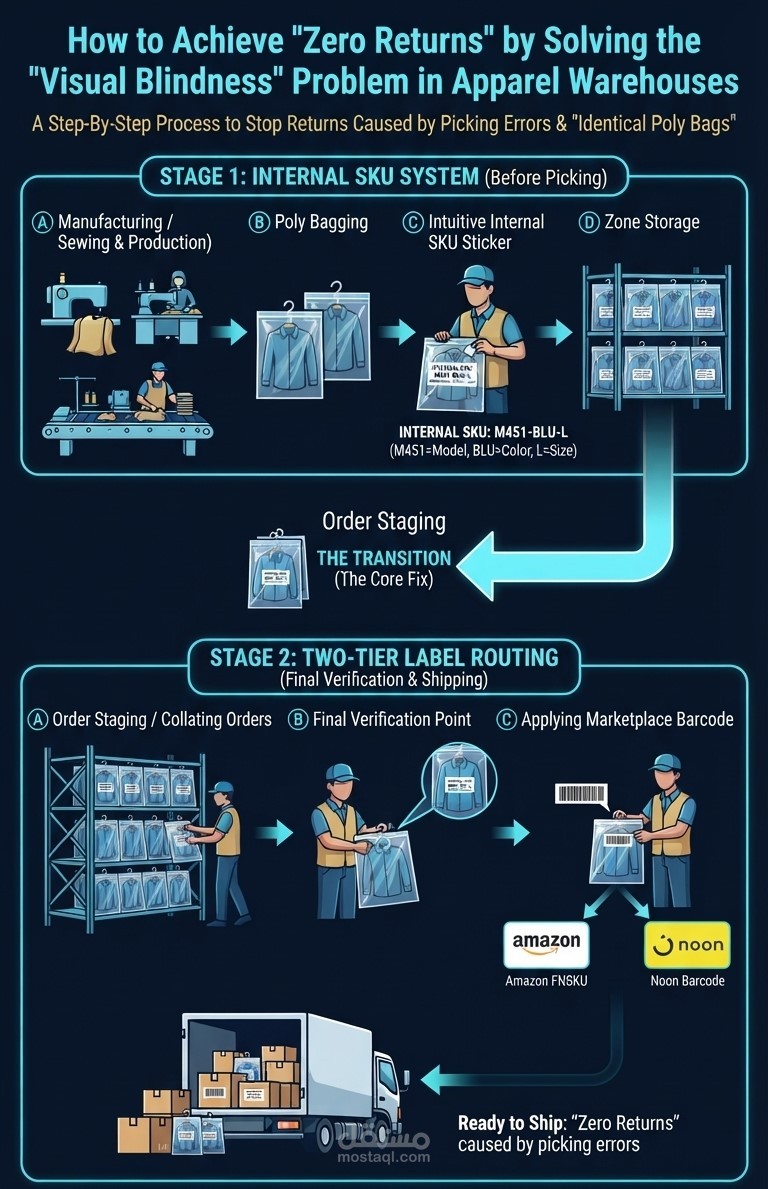
If your factory supplies its products to both retail channels and e-commerce platforms, your biggest warehouse challenge isn't marketing—it’s the "visual blindness" happening right inside your floor operations.
When managing over 1,000 SKUs (spanning multiple models, colors, and sizes), the post-packaging storage phase turns into an operational nightmare. The moment garments are placed inside identical packaging, they look 100% identical to the human eye. It becomes literally impossible to identify a single item without physically opening the package, as all design details disappear inside the wrapping.
This is where the problem lies. Relying on global barcodes (like GTIN or EAN) inside the warehouse is only effective if your team uses handheld scanners.
In the absence of these devices, picking errors skyrocket. A worker might pick the wrong item, but because it appears to the worker that the external barcode looks correct for him , the error slips through unnoticed all the way to the customer.
The result? Unnecessary returns, high costs, frustrated buyers, and low platform ratings.
To cure this "visual blindness" and achieve a "zero returns" rate—under conditions where barcode scanners are unavailable—we implemented a simple internal workflow that starts from the cutting stage and continues all the way to final packaging:
1️⃣ 𝗠𝗲𝗮𝗻𝗶𝗻𝗴𝗳𝘂𝗹 𝗜𝗻𝘁𝗲𝗿𝗻𝗮𝗹 𝗦𝗞𝗨:
We used a sequential internal code that carries a clear meaning for the staff. Just by glancing at the sticker on the package, the worker instantly recognizes the exact specifications of the product.
(For example: The code TS-BLK-XL-01 immediately shows them that the product is a T-Shirt - Black - Size XL - Model 01).
2️⃣ 𝗧𝘄𝗼-𝗧𝗶𝗲𝗿 𝗟𝗮𝗯𝗲𝗹 𝗥𝗼𝘂𝘁𝗶𝗻𝗴 𝗦𝘆𝘀𝘁𝗲𝗺:
* Phase 1: Directly after manufacturing, this clear internal sticker (carrying the internal SKU) is applied to the package to ensure accurate and fast storage and picking based on designated storage zones.
* Phase 2: The platform’s mandatory barcode (like Amazon’s FNSKU sticker or the "Noon" label) is applied only during the final verification phase right before shipping.
This protocol acts as a final checkpoint, ensuring that what is printed on the outside matches the physical garment inside before it leaves the warehouse gates.
Concept & Design:
Ehab Hassan Ali