Superstore sales and shipping analysis
تفاصيل العمل
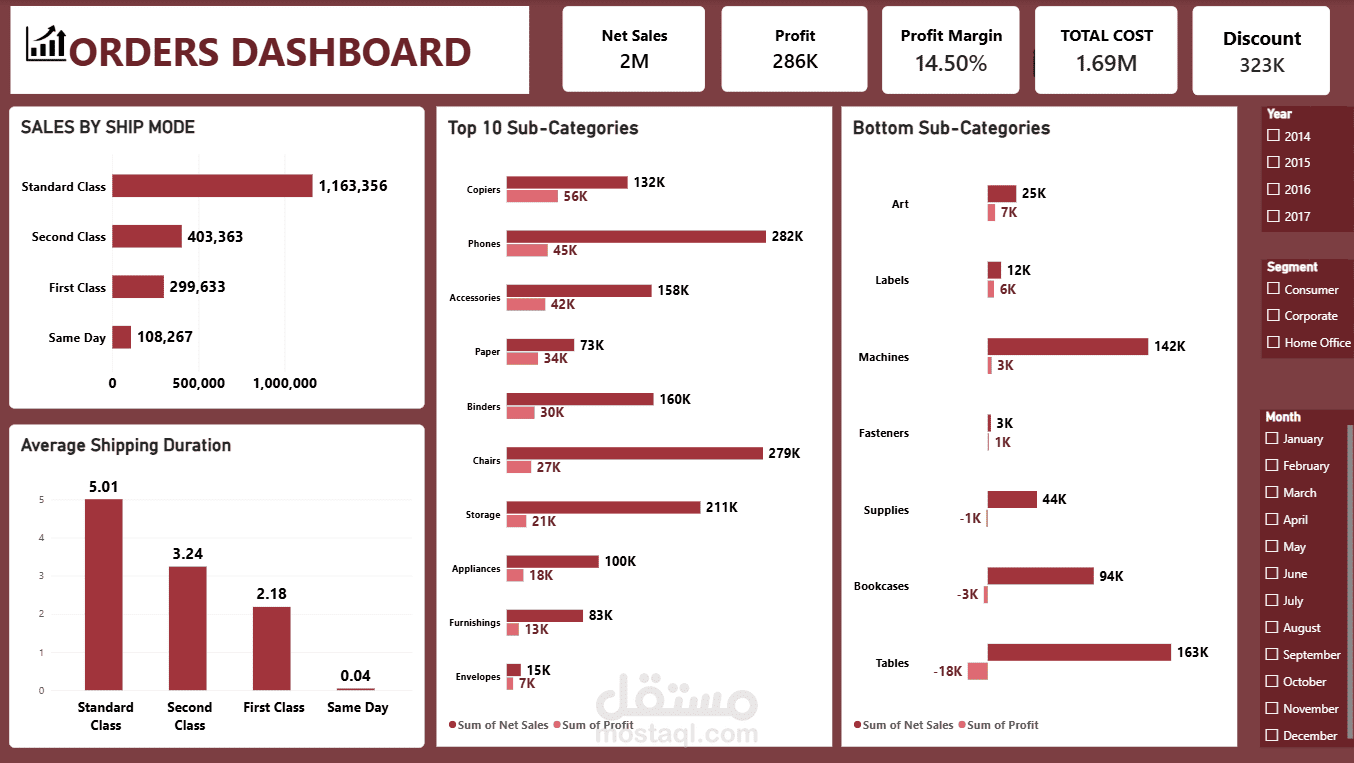
Overview & Data Preparation
Data cleaning and transformation were performed using Excel (Power Query) before importing the data into Power BI to build the interactive dashboard.
Key Metrics
Net Sales: 2M
Profit: 286K
Profit Margin: 14.50%
Total Cost: 1.69M
Discount: 323K
Business Questions & Analysis
1. What is the most used shipping mode, and how can we leverage these insights to optimize logistics and profitability?
Standard Class is the most used shipping mode with 1,163,356 in Net Sales and an average shipping duration of 5.01 days.
Second Class: 403,363 Net Sales (3.24 days average duration).
First Class: 299,633 Net Sales (2.18 days average duration).
Same Day: 108,267 Net Sales (0.04 days average duration).
2. Which products drive our profit, and which ones are lagging behind?
Top Profit Drivers:
Copiers: 56K Profit (132K Sales)
Phones: 45K Profit (282K Sales)
Accessories: 42K Profit (158K Sales)
Paper: 34K Profit (73K Sales)
Fasteners: 1K Profit (3K Sales)
Lagging & Loss-Making Products:
Tables: 163K Sales, but recorded a loss of -18K (Discounts reached 44,192, product costs around 180,000).
Bookcases: 94K Sales, lost -3K.
Supplies: 44K Sales, lost -1K.
Product Recommendations
1. Tables – The Main Problem
Tables is the biggest problem in our product analysis. Although it made 162,773 in sales, it recorded a loss of around 18,000. Discounts reached 44,192, while product costs were around 180,000. These numbers show a serious problem with this product and the need to review its discounts, costs, and selling prices.
Review why such high discounts were given and whether they were part of company offers or sales decisions.
Find out who approved these discounts and check if the decisions followed company rules.
Talk to suppliers to get better purchase prices.
Review selling prices and set clear rules for approving discounts to protect profit.
2. Other Products Making Losses
Tables is not the only product with a profit problem. Bookcases made around 94,000 in sales but lost 3,000, while Supplies made around 44,000 in sales but lost 1,000. This shows that high sales do not always mean high profits.
Review product costs, selling prices, and discounts for both products.
Find the main reasons behind these losses.
Take action to improve profits before making decisions to stop selling these products.
3. Products with Good Profit and Growth Opportunities
On the other hand, some products made good profits. Copiers made around 56,000 in profit, followed by Phones with 45,000, Accessories with 42,000, and Paper with 34,000. Fasteners also made around 1,000 in profit, even though its sales were only around 3,000.
Focus more on products with high profits while keeping their current profit levels.
Find ways to increase Fasteners sales without giving unnecessary discounts.
Review products with high sales but lower profits, such as Chairs and Storage, to find ways to improve their profits.
4. Final Management Decision
The company should focus not only on increasing sales, but also on making more profit from each product. The main priority should be reviewing discounts and product costs for Tables, fixing the problems in Bookcases and Supplies, and increasing sales of products that bring higher profits. The goal is not just to sell more, but to make more profit from every sale.
Logistics & Shipping Recommendations
Look for Better Shipping Companies: Look for other shipping companies that can offer the same service at lower prices and faster delivery times. Compare their prices, delivery speed, service quality, and coverage areas before making a decision. This can help reduce business costs and improve delivery service.
Improve After-Sales Service: Follow up with customers after they receive their orders. Respond quickly to complaints and help solve any problems. This can build customer trust, improve customer loyalty, and encourage them to buy again.
Improve Standard Class Shipping Efficiency: Increase investment in improving Standard Class shipping by reviewing delivery operations, improving shipment distribution, and monitoring delayed orders more closely. The goal is to reduce delivery time, improve customer satisfaction, and increase customer loyalty, as improving the most widely used shipping method will have the greatest impact on the customer experience.
Customer Segment Strategy: Maintain Standard Class as the main shipping option across all customer segments, while reviewing the relatively higher use of Same Day shipping among Corporate customers.
Same Day – Maintain Premium Service: Maintain Same Day delivery as a premium option for urgent orders, while monitoring demand and operating costs.