Plant-Disease-Diagnosis-Treatment-RAG-System
تفاصيل العمل
Plant-Disease-Diagnosis-Treatment-RAG-System
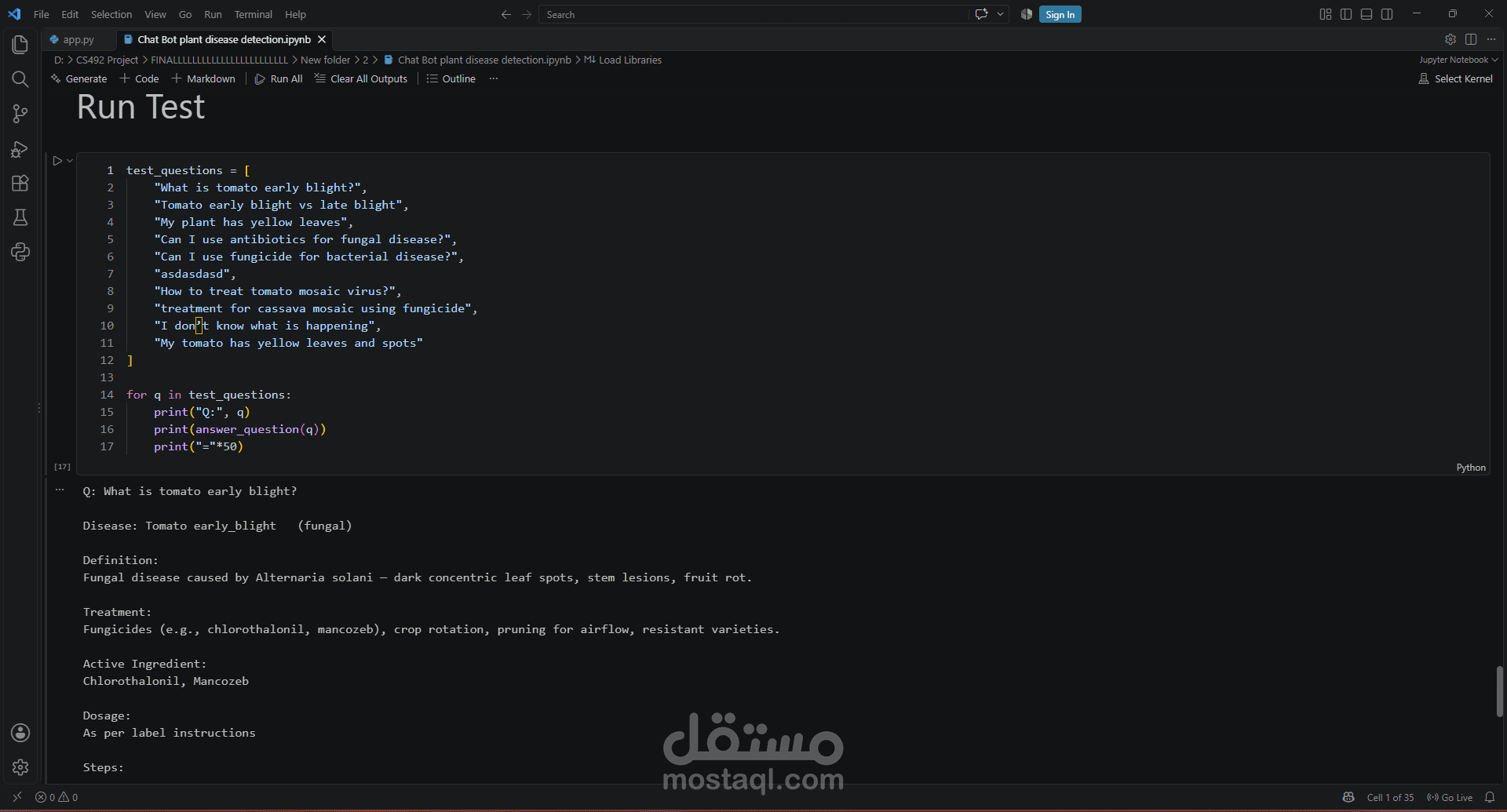
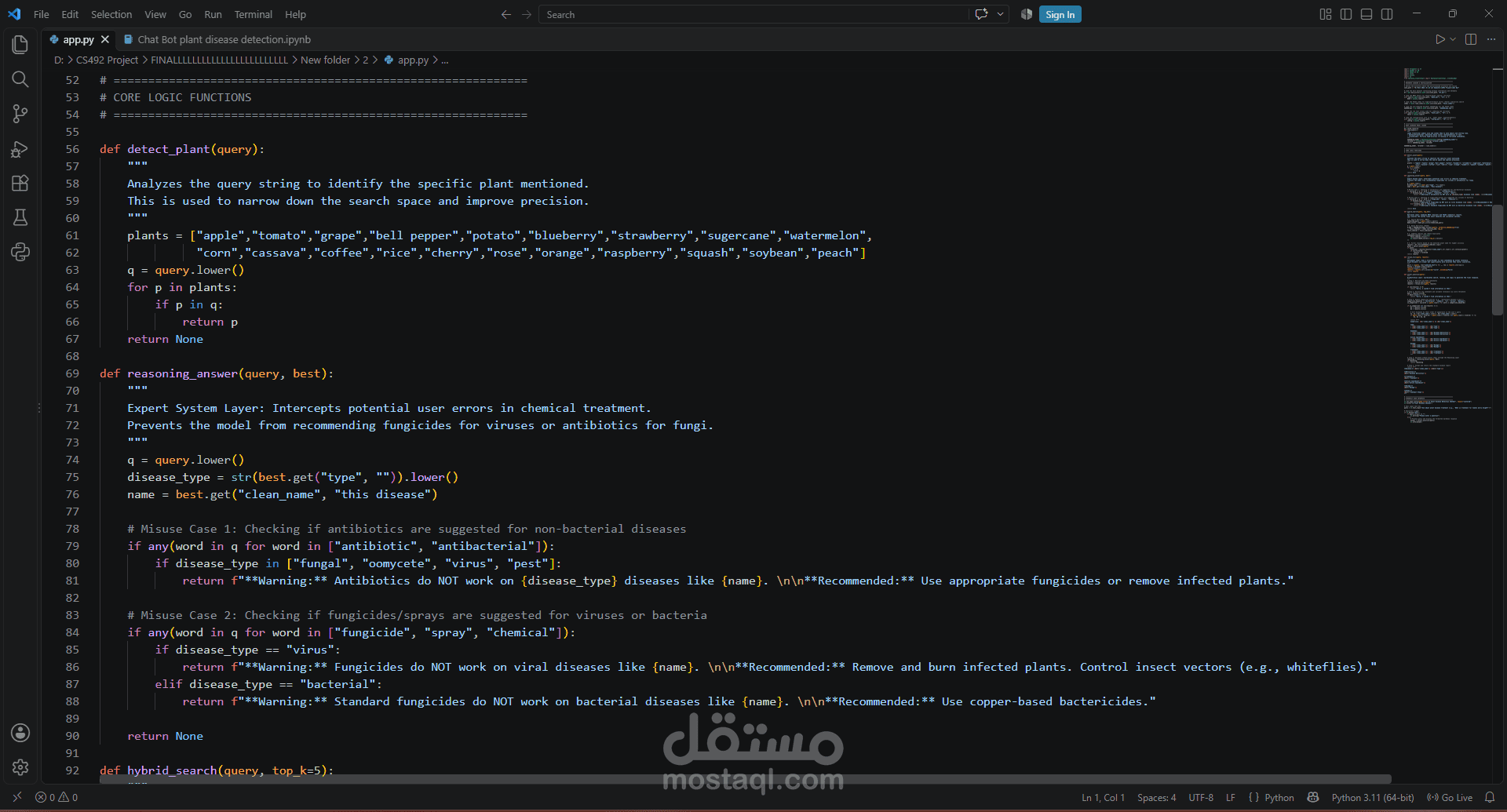
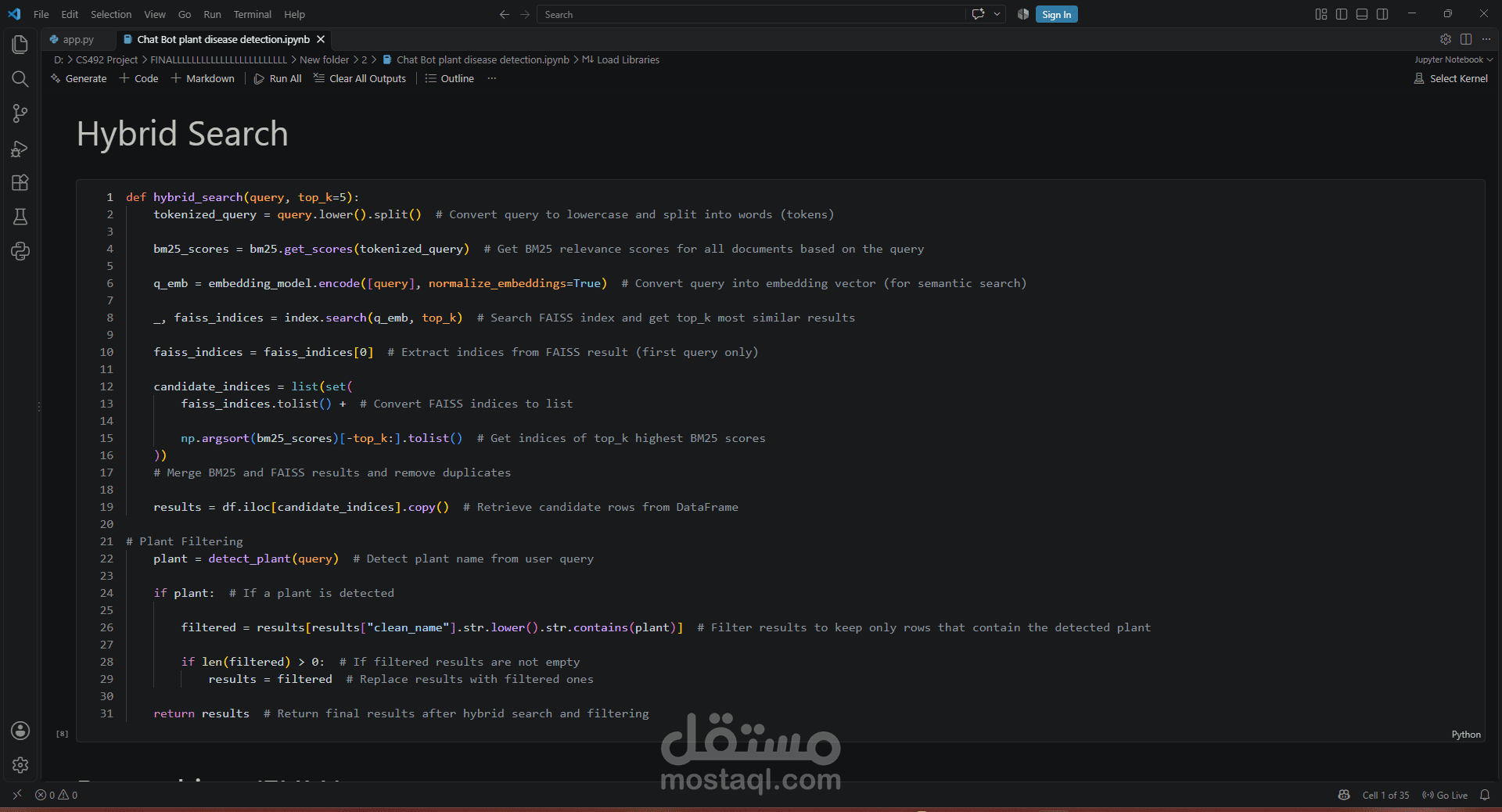
Built an end-to-end RAG system for plant disease diagnosis and treatment recommendations using Streamlit, FAISS, BM25, and Cross-Encoder re-ranking. Includes hybrid retrieval, disease comparison, and treatment validation to prevent inappropriate chemical recommendations.
🌱 Plant Disease Diagnosis & Treatment RAG Chatbot
An intelligent, safety-conscious Retrieval-Augmented Generation (RAG) system and interactive Streamlit dashboard designed to assist farmers, agronomists, and researchers in identifying plant diseases, retrieving accurate treatment protocols, comparing pathologies, and preventing chemical misuse.
📁 Repository Structure & Components
File Type Description
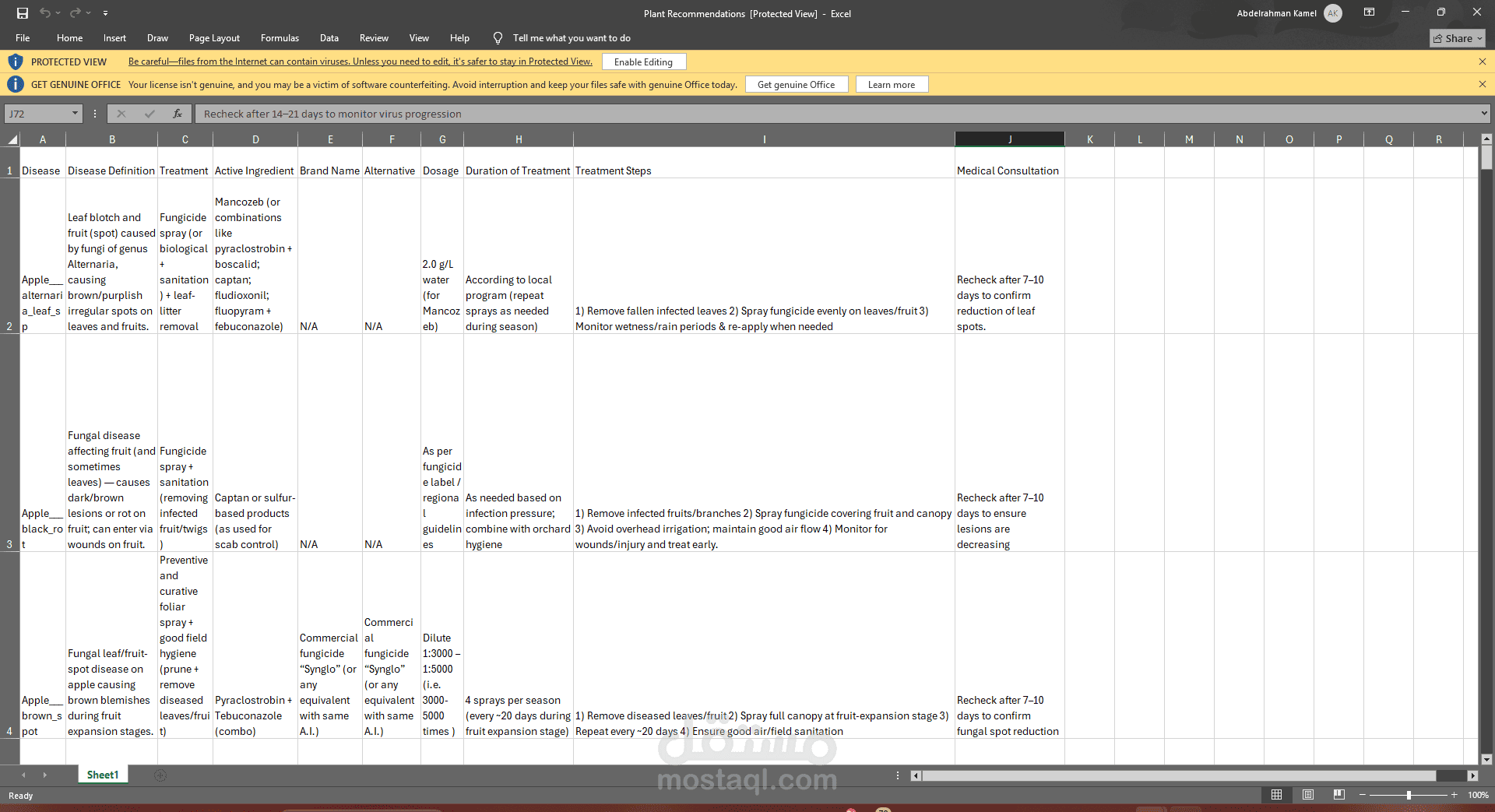
Plant Recommendations.xlsx Knowledge Base Comprehensive dataset containing 71 plant disease records with structured fields for symptoms, treatments, active ingredients, dosages, and step-by-step guidelines.
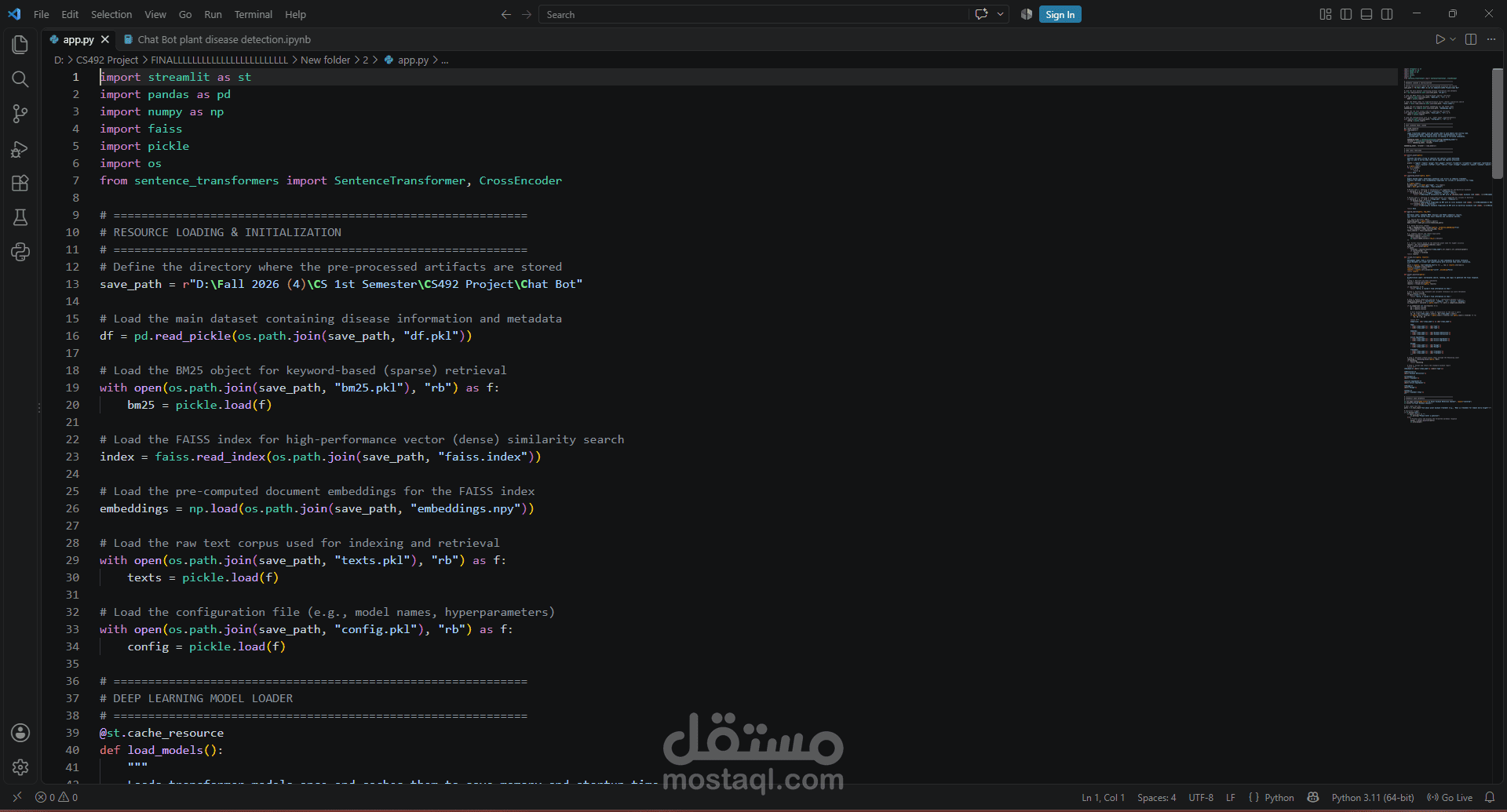
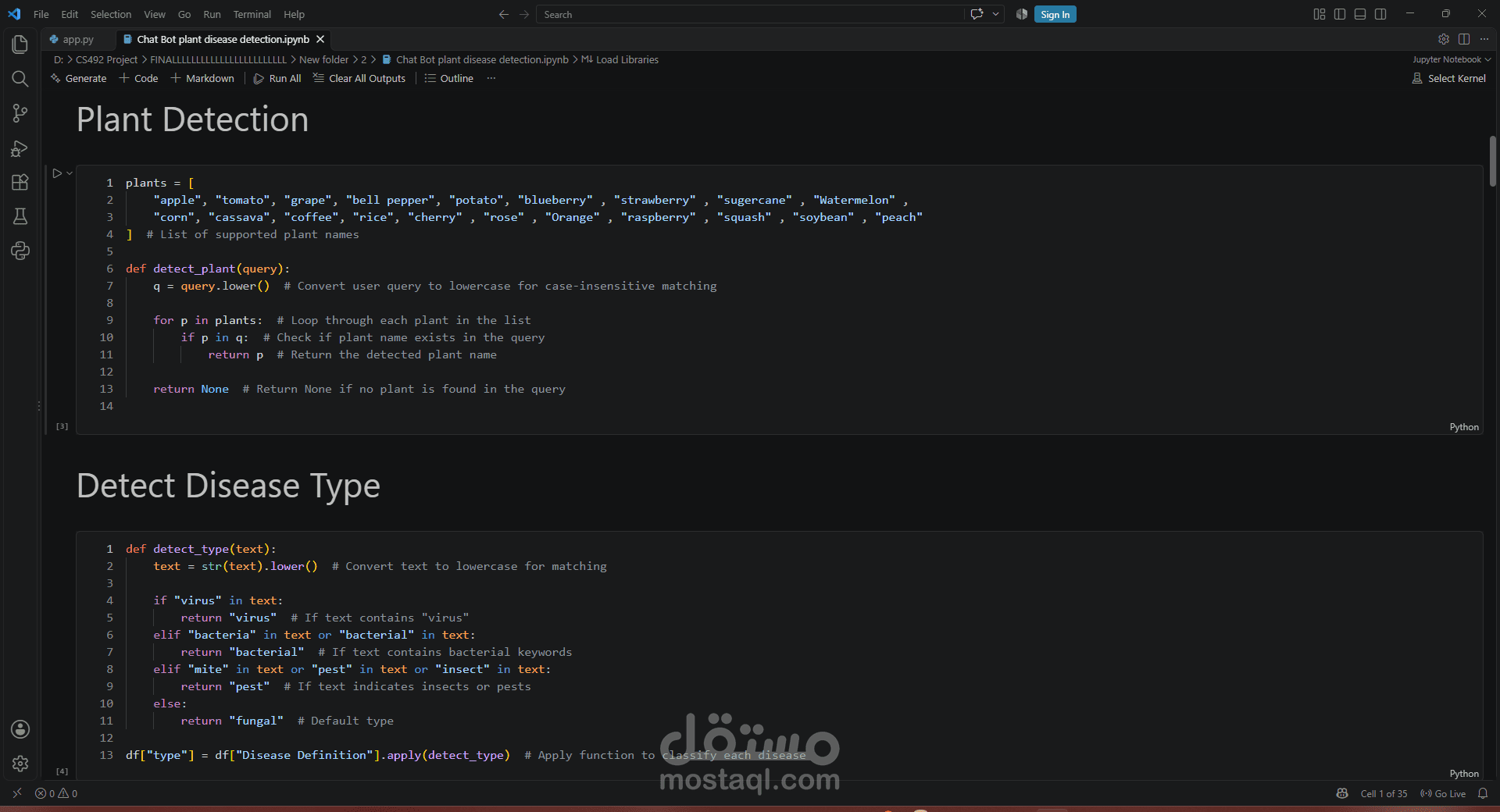
Chat Bot plant disease detection.ipynb Training & Indexing Notebook Development notebook for data preprocessing, dense/sparse index generation (FAISS + BM25), Cross-Encoder setup, expert safety rules design, and artifact serialization.
app.py Web Application Production-ready Streamlit interface providing real-time disease Q&A, side-by-side pathology comparisons, and treatment verification warnings.
📊 Dataset Overview (Plant Recommendations.xlsx)
The dataset serves as the grounded knowledge base for the RAG retriever. It contains 71 agricultural disease entries across 20 host plants (e.g., Tomato, Potato, Apple, Grape, Corn, Cassava, Coffee, Sugarcane) structured into 10 key attributes:
Disease: Standardized disease identifier (e.g., Apple___alternaria_leaf_sp).
Disease Definition: Detailed description of causal organisms, visual symptoms, and environmental triggers.
Treatment: Recommended agricultural and chemical management strategies.
Active Ingredient: Specific active chemicals or biological control agents (e.g., Mancozeb, Chlorothalonil, Copper hydroxide).
Brand Name & Alternative: Commercial product names and alternative organic control methods.
Dosage: Precise chemical application rates and dilution ratios.
Duration of Treatment: Application frequency and seasonal timing rules.
Treatment Steps: Sequential, step-by-step instructions for field execution.
Medical Consultation: Follow-up inspection schedules and disease reduction benchmarks (e.g., "Recheck after 7–10 days").
🧠 Model Architecture & Pipeline (notebook & app.py)