Atbara Trade:- a full-stack website that utilize both backend and frontend developing to build an online store place.
تفاصيل العمل
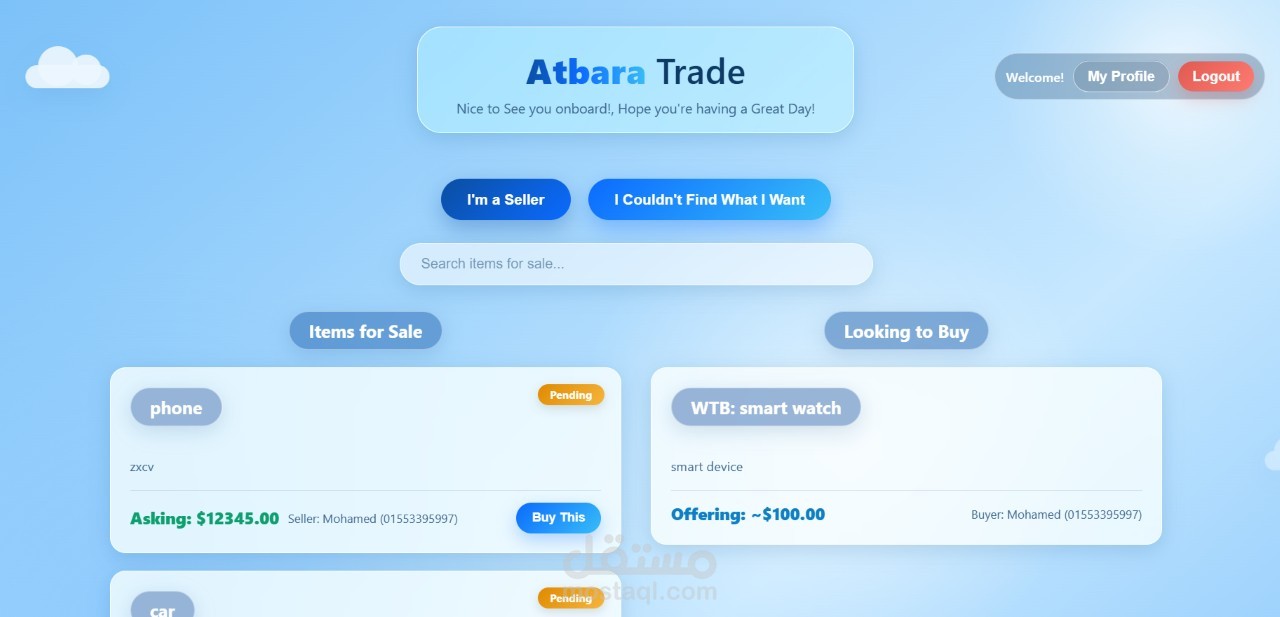
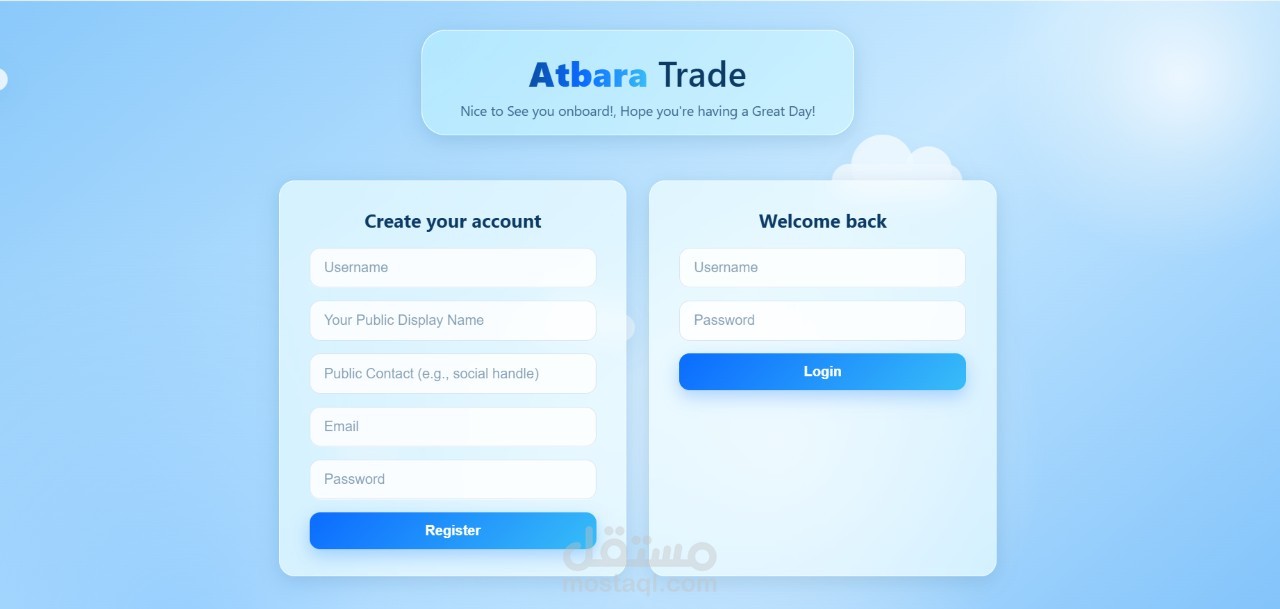
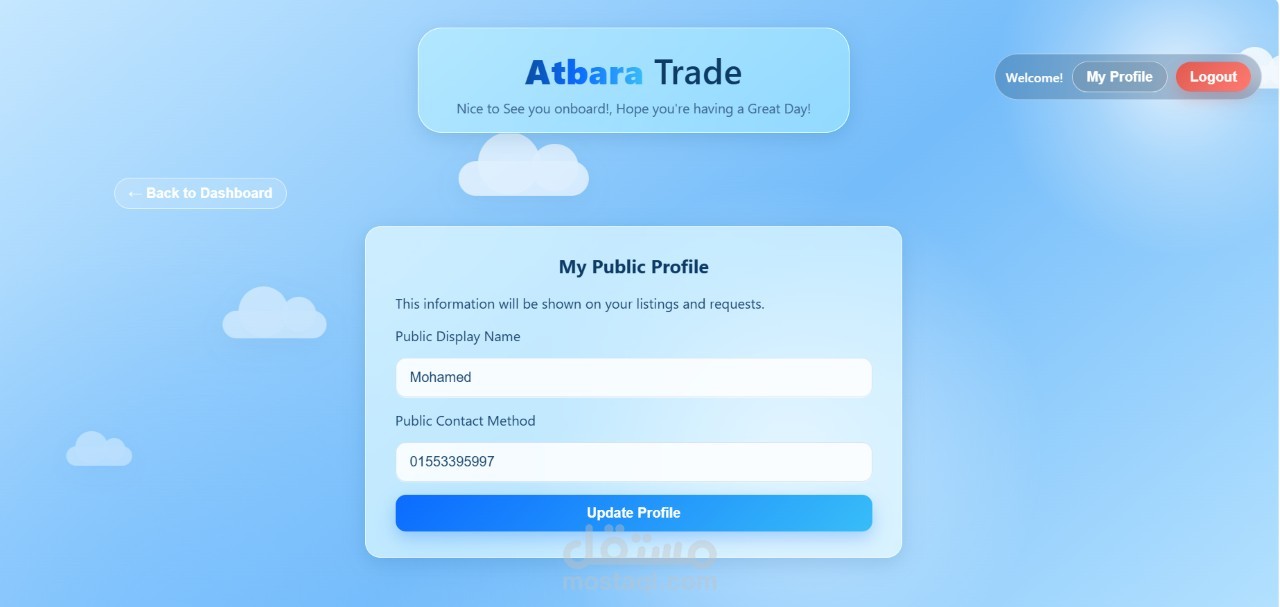
Atbara Trade
Where offers and wishes land on the same board.
Most marketplaces only let people sell. Atbara Trade lets both sides post — sellers list what they have, buyers publish what they're hunting for — so an offer and a wish finally land on the same board.
Listings carry a live status (available, reserved, sold) so nobody chases a ghost. A single click on "Buy This" starts a trade, and every profile carries a display name and direct contact details, so deals finish between two people — not in a dead-end form.
The storefront is sky-blue and glass-clean, with real search and boards that refresh as items move. It looks like a proper shop, built for a small town with a big appetite.
Under the Hood
Backend: a Django 5.2 REST API with token authentication via Simple JWT, running on MySQL — the same code locally and on PythonAnywhere. Every credential is read from the environment with python-decouple, so no password ever lives in the source code.
The interesting part happened mid-build. I gave listings a status field that moves from available to reserved to sold, then designed a whole PurchaseRequest model so buyers could post what they wanted. Because new users get a profile created automatically by a Django signal, I wrote a one-line backfill so older accounts were migrated too — no lost data, no broken pages.
The API serves paginated, filterable product feeds wired to a debounced search box, plus a custom initiate-trade action on each listing.
Frontend: hand-written HTML, CSS, and JavaScript — no framework. The glassy cards use backdrop-filter with a fallback for older browsers, the animated sky is pure CSS gradients, and the whole design runs on CSS custom properties, media queries, and prefers-reduced-motion.
UI and API ship from the same Django app, so the site is one origin — fast, simple, and versioned in Git from first commit to live release.