Network Intrusion Detection System
تفاصيل العمل
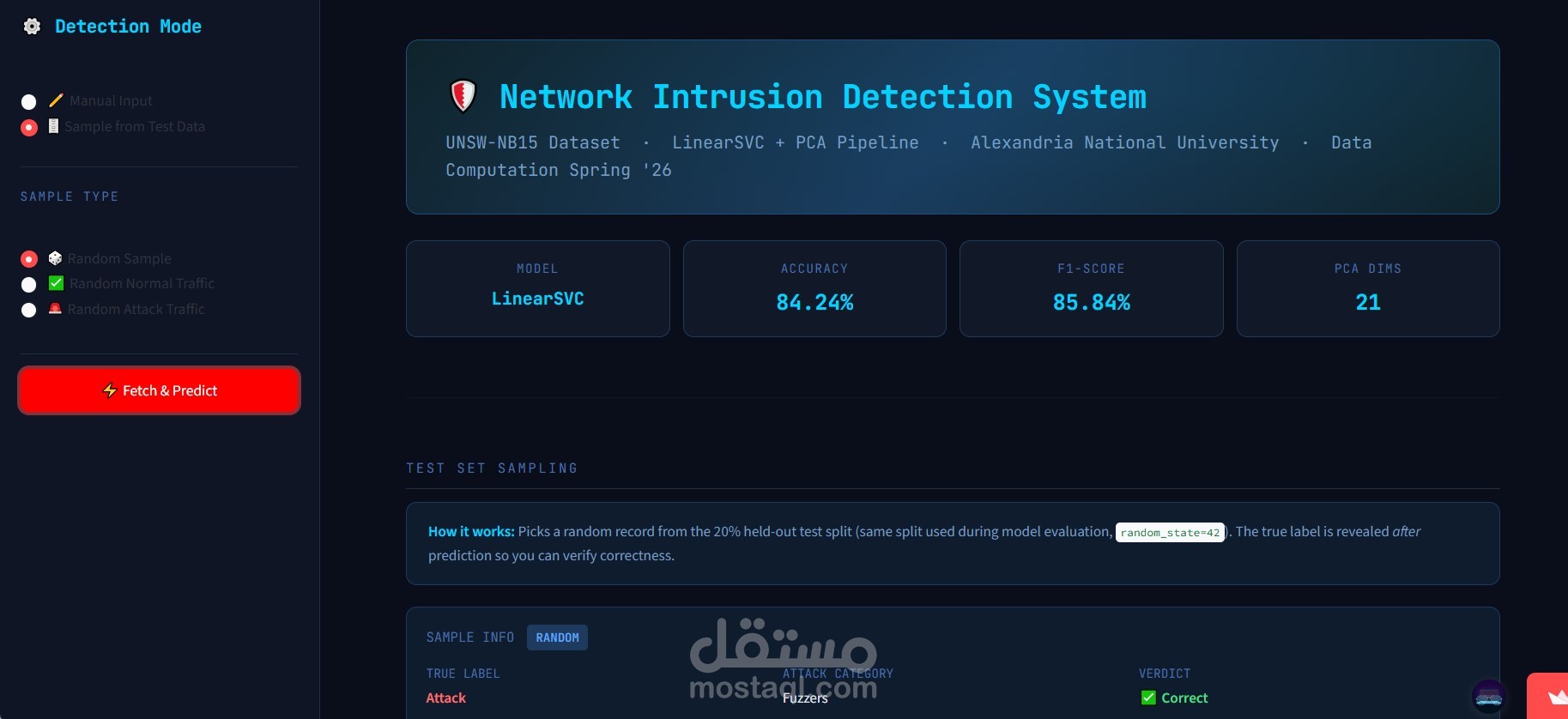
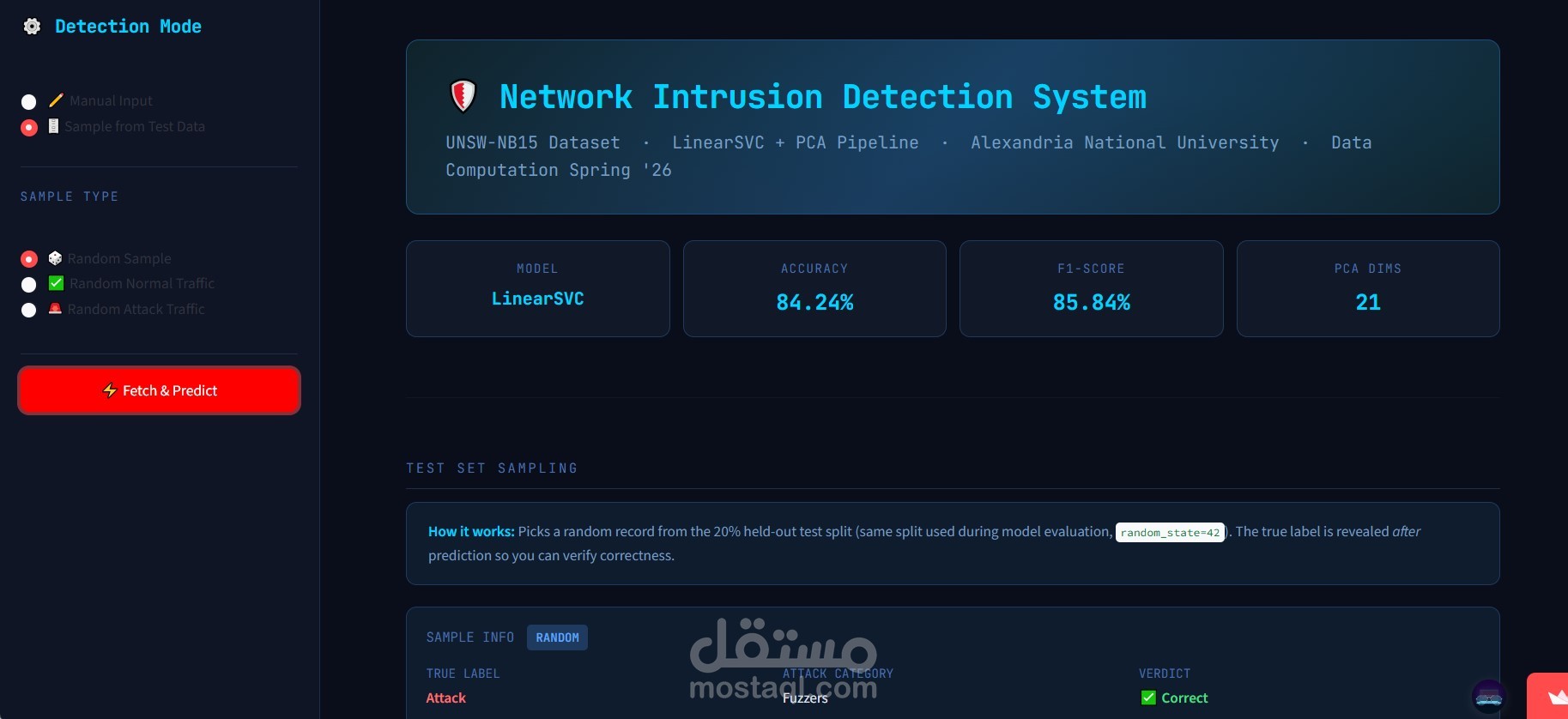
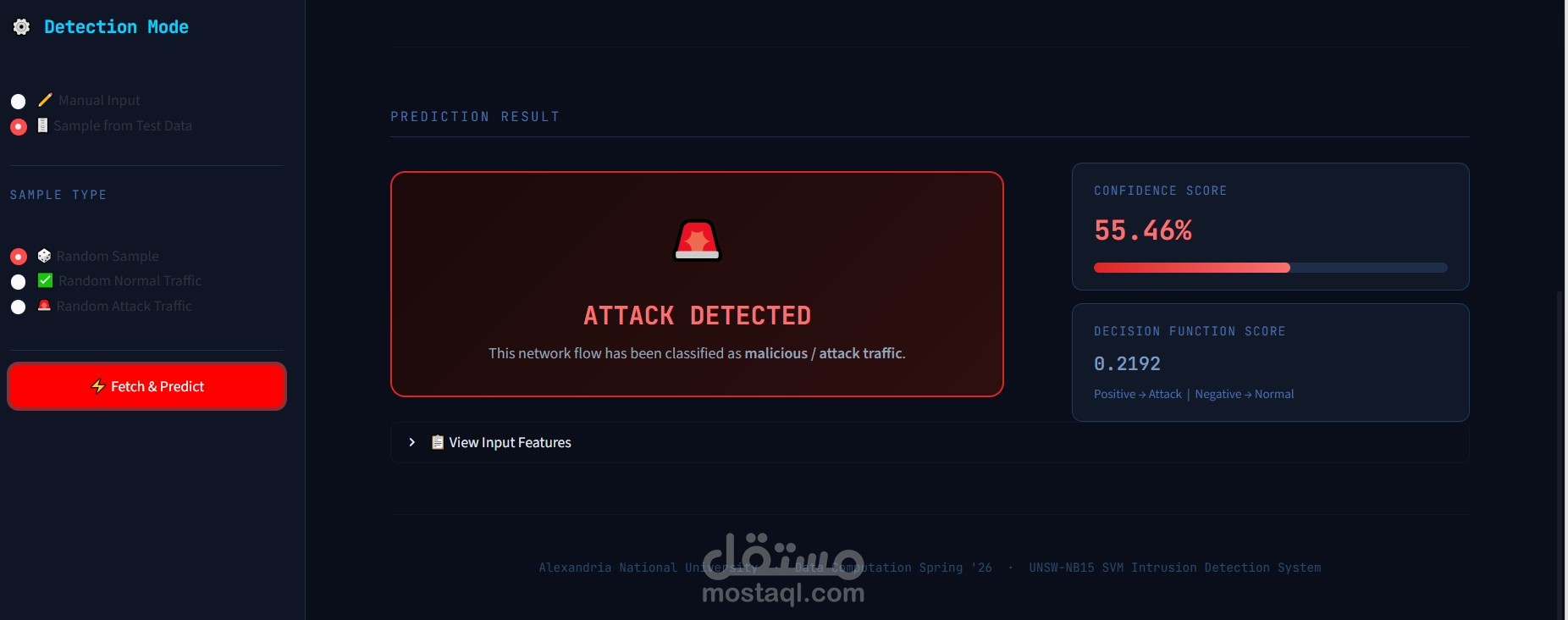
Developed an AI-powered Network Intrusion Detection System (NIDS) capable of detecting and classifying malicious network traffic using machine learning techniques. The system was trained on the UNSW-NB15 cybersecurity dataset and utilizes a LinearSVC + PCA pipeline to efficiently distinguish between normal and attack traffic while reducing data dimensionality for improved performance.
Key Features:
Real-time network traffic classification.
Detection of normal and malicious network activities.
Classification of multiple attack categories.
Data preprocessing, feature engineering, and normalization.
Dimensionality reduction using Principal Component Analysis (PCA).
Machine learning model training and evaluation using LinearSVC.
Interactive dashboard for testing predictions with manual input or random test samples.
Performance metrics including Accuracy, F1-Score, and model statistics.
Technologies Used:
Python
Scikit-learn
Pandas
NumPy
PCA (Principal Component Analysis)
LinearSVC
Streamlit
Matplotlib
Model Performance:
Accuracy: 84.24%
F1-Score: 85.84%
PCA Components: 21
Outcome:
Built an intelligent cybersecurity solution capable of accurately identifying network intrusions and distinguishing legitimate traffic from cyberattacks. The project demonstrates the practical application of machine learning in network security, threat detection, and real-time cyber defense.