About this project
Business Objective:
Understand the distribution of customer balances across different demographics.
Identify trends in account balances by job classification and region.
Support strategic decision-making for customer engagement and product offerings.
Stakeholders:
Bank Management Team
Financial Analysts
Marketing Team
Customer Service Representatives
2. Data Sources
Data Origin: Data for this project is sourced from internal bank databases, including customer records and transaction data.
Data Files/Databases:
Customer_Data: Contains details of customers including customer ID, gender, job classification, and region.
Balance_Data: Captures account balance information tied to each customer ID.
Key Data Fields:
Customer ID: Unique identifier for each customer.
Account Balance: Total balance held by a customer.
Gender: Gender identification (e.g., Male, Female, Other).
Job Classification: Categorizes customers based on employment type (e.g., Employed, Self-Employed, Retired, Student).
Region: Geographic location of the customer (e.g., city, state, or country).
3. Data Model
Data Relationships: The data model connects Customer_Data and Balance_Data through the Customer ID field, ensuring that each balance entry is correctly associated with demographic information. The following relationships have been established:
Customer Data ↔ Balance Data: Customer ID is the primary key used for joining these datasets.
Data Integrity Checks:
Validated that each customer ID has a corresponding balance entry.
Checked for duplicates and removed any redundant entries.
Ensured consistency in region naming conventions for accurate mapping.
4. Visualizations & Reporting
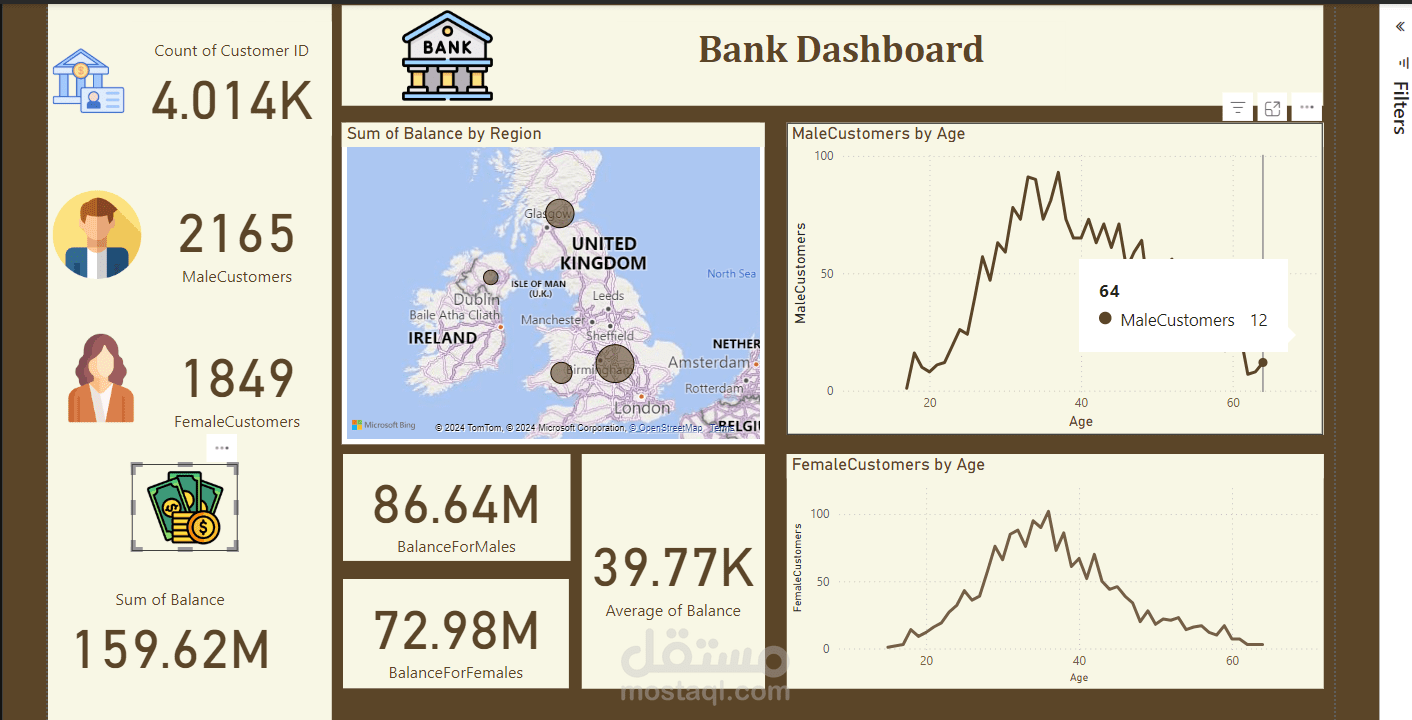
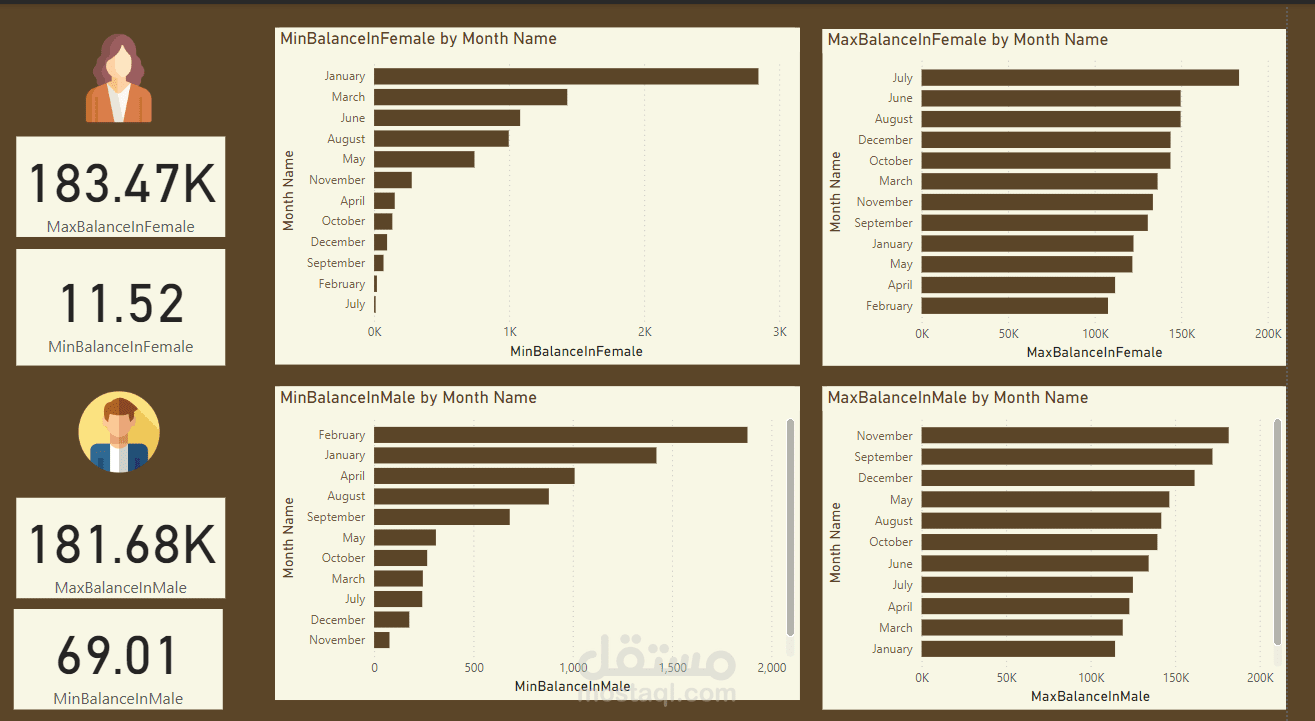
1. Balance Overview Dashboard:
Visualization Type: Line graph or bar chart.
Description: Displays the total balance across all customers, with dynamic filters for gender, job classification, and region.
Purpose: To provide a high-level view of customer balances and allow users to drill down into specific segments.
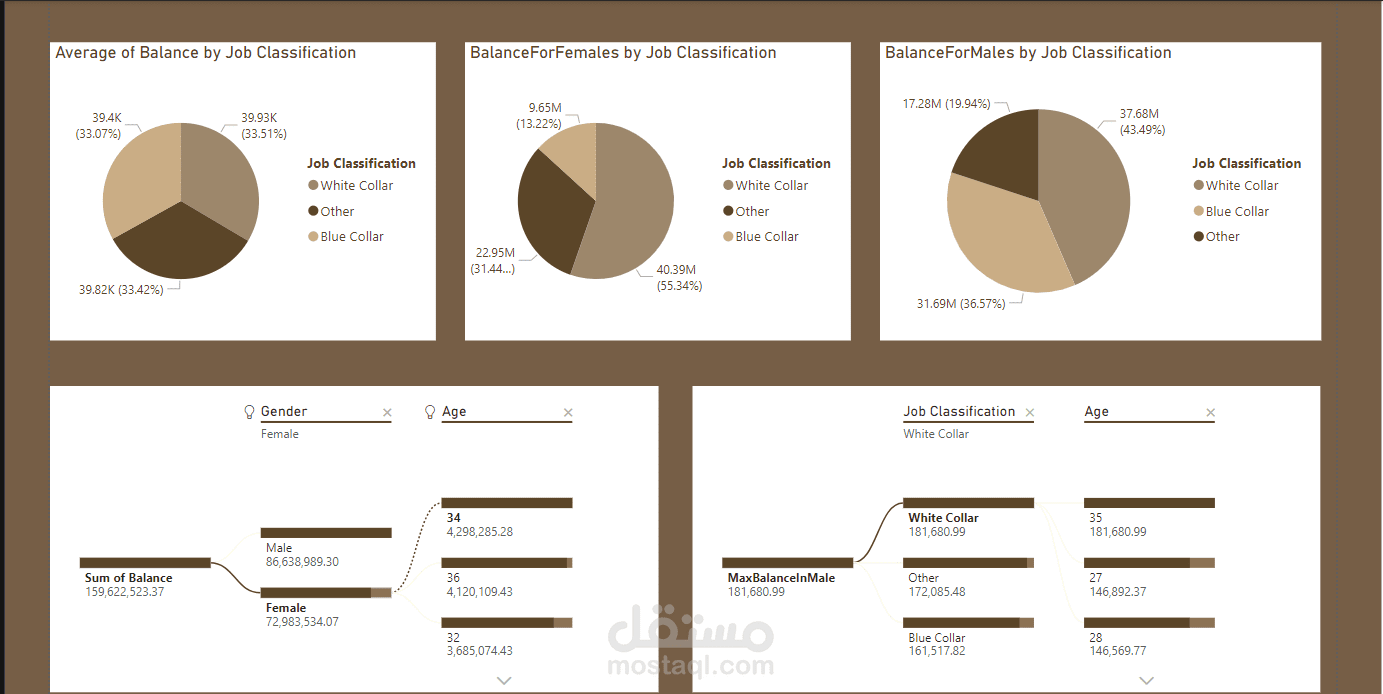
2. Gender Segmentation:
Visualization Type: Pie chart.
Description: Shows the distribution of account balances across different genders.
Purpose: Helps identify balance trends among male, female, and other identified genders.
3. Job Classification Analysis:
Visualization Type: Stacked bar chart.
Description: Compares average and total balances held by different job classifications.
Purpose: To understand which job groups tend to hold higher balances, supporting targeted marketing campaigns.
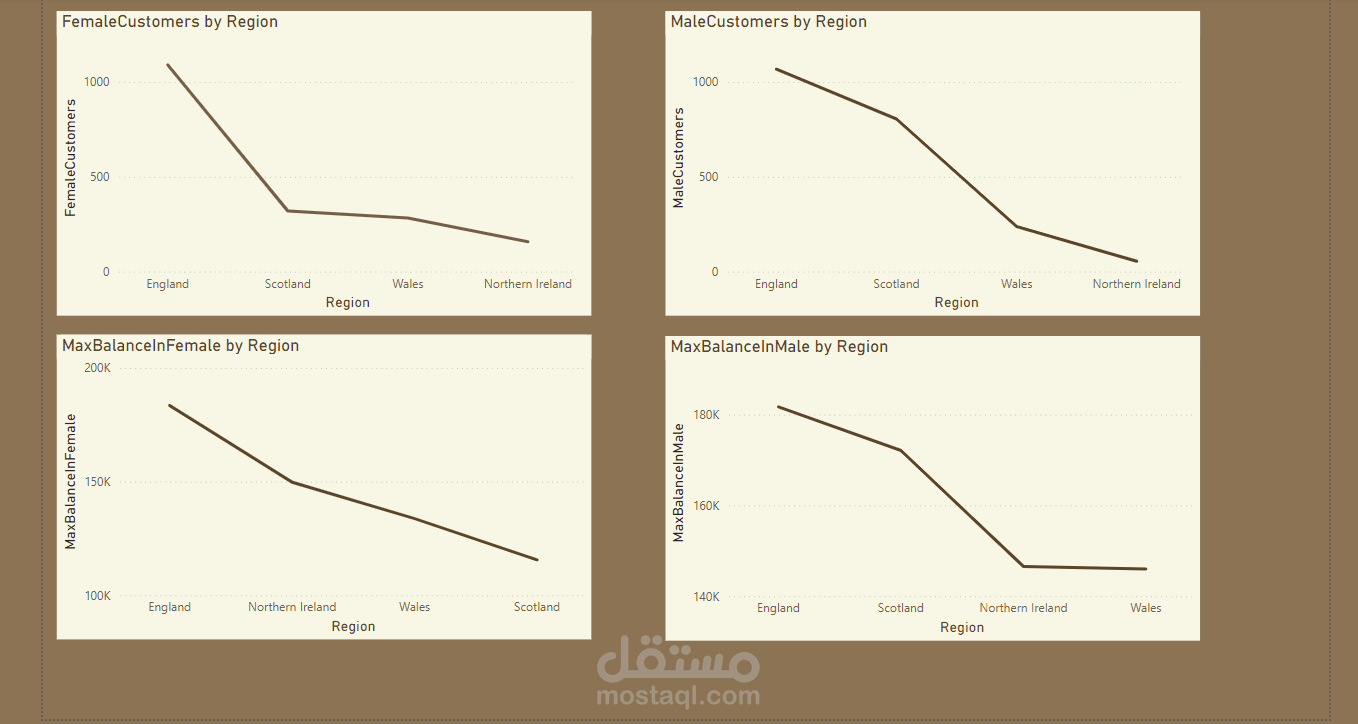
4. Regional Heat Map:
Visualization Type: Geographical heat map.
Description: Visualizes the concentration of customer balances across regions, with color gradients representing balance ranges.
Purpose: Enables regional managers to identify areas with higher deposits and potential regions for customer growth.
5. Demographic Insights Table:
Visualization Type: Interactive table.
Description: Displays detailed data for each customer segment, including average balance, gender, job classification, and region.
Purpose: Allows users to perform detailed analysis and comparisons across various demographic combinations.
5. User Guide
Navigating the Dashboard:
Use the dropdown filters to select specific genders, job classifications, or regions.
Click on data points within charts to drill down for more detailed insights.
Hover over visualizations to view tooltips with additional information.
Generating Custom Reports:
Select the desired filters to customize the view.
Use the export feature in Power BI to download visuals as images or PDFs for presentations.
Data tables can be exported to Excel for further analysis.
Saving Custom Views:
Create personalized views by adjusting filters.
Save these views for easy access during future sessions.
6. Technical Specifications
Power BI Version: Specify the version used for development.
Data Refresh:
Frequency: Daily/Weekly/Monthly (Specify as per the project setup).
Method: Automatic refresh through Power BI Service.
Data Refresh Source: Bank's internal database connections.
Security:
Data access is restricted to authorized personnel through Power BI role-based access.
Sensitive customer information is masked to ensure compliance with data privacy regulations (e.g., GDPR, CCPA).
7. Key Insights & Findings
Customer Balances by Region: Regions X, Y, and Z have the highest average customer balances, indicating concentrated wealth in these areas.
Gender Trends: Male customers hold a slightly higher average balance than other genders, but the female segment shows consistent growth in deposits.
Job Classification Patterns: Retired and self-employed individuals tend to maintain higher account balances compared to other job classifications, suggesting potential for targeted retirement planning products.
Potential Growth Opportunities: Underrepresented regions with low balance averages could be targeted with new product offerings or campaigns to boost engagement.
8. Conclusion
The Bank Customer Balance Dashboard serves as a vital tool for understanding customer financial behavior and demographics. By leveraging the insights provided by this dashboard, bank management can make informed decisions to optimize customer relationships, improve service delivery, and identify new opportunities for growth.