Smart timetable scheduling
تفاصيل العمل
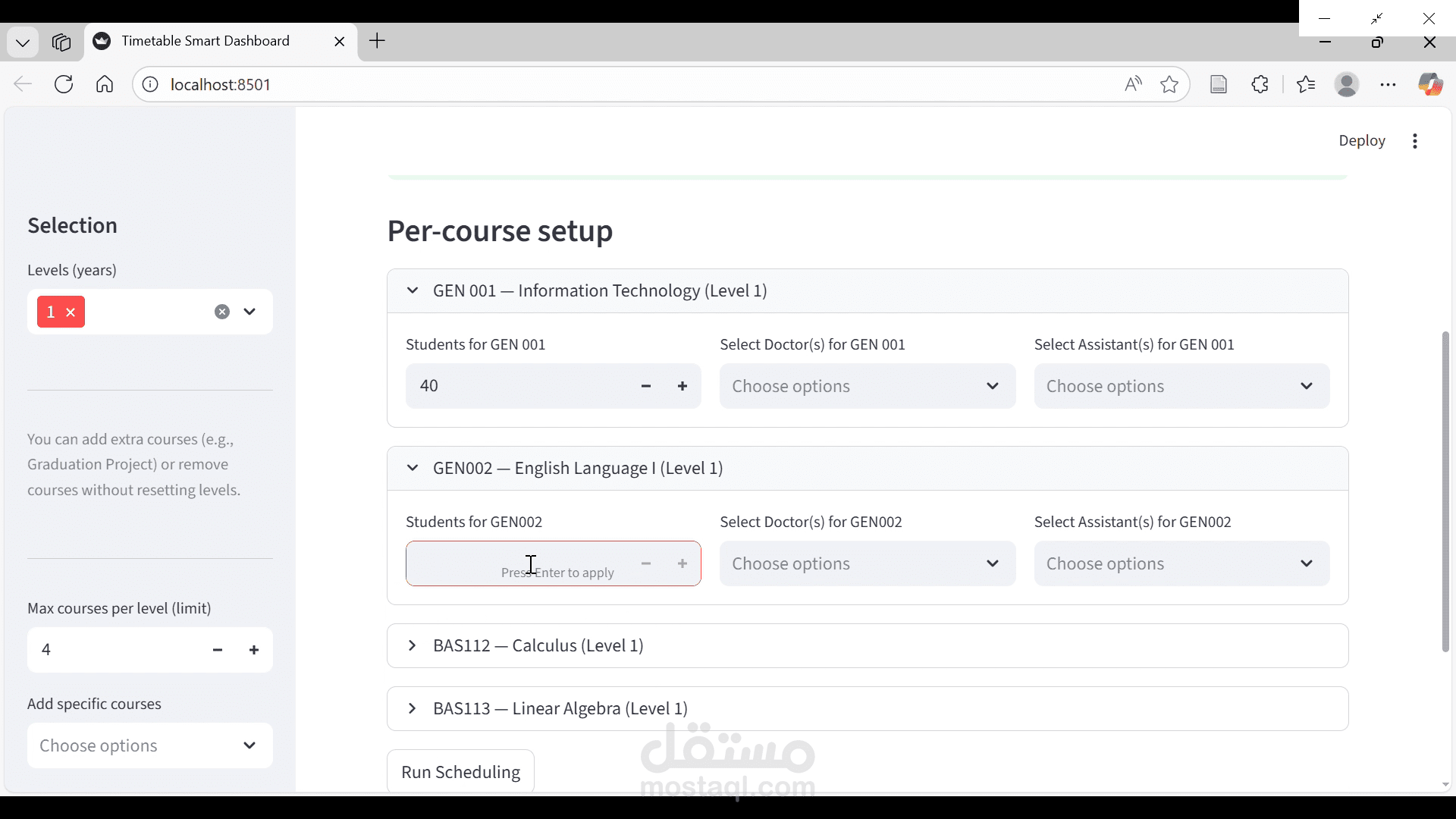
Project Overview
The Smart Timetable Scheduling System is an intelligent academic scheduling solution designed to automatically generate optimized university timetables while minimizing conflicts and improving resource utilization. The system replaces manual scheduling with an AI-driven approach that ensures fairness, efficiency, and scalability.
Problem Statement
Manual timetable creation is time-consuming, error-prone, and difficult to scale with increasing numbers of courses, students, instructors, and rooms. Common issues include overlapping lectures, instructor conflicts, unbalanced schedules, and inefficient room usage.
Proposed Solution
This project uses Artificial Intelligence optimization techniques to generate high-quality timetables automatically. The system models scheduling as an optimization problem and applies Genetic Algorithms (GA), optionally enhanced with Reinforcement Learning (RL), to iteratively improve timetable quality.
Key Features
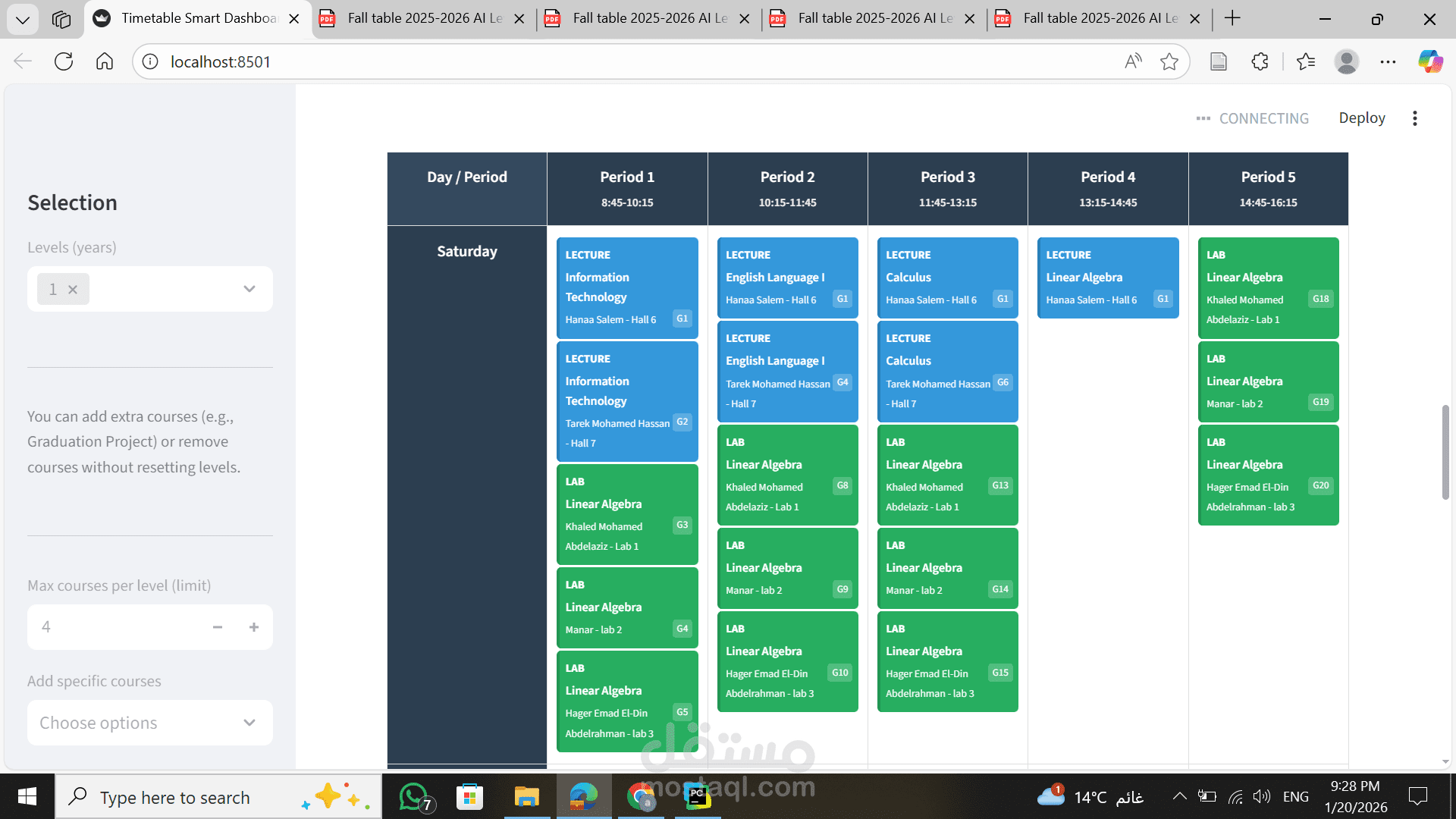
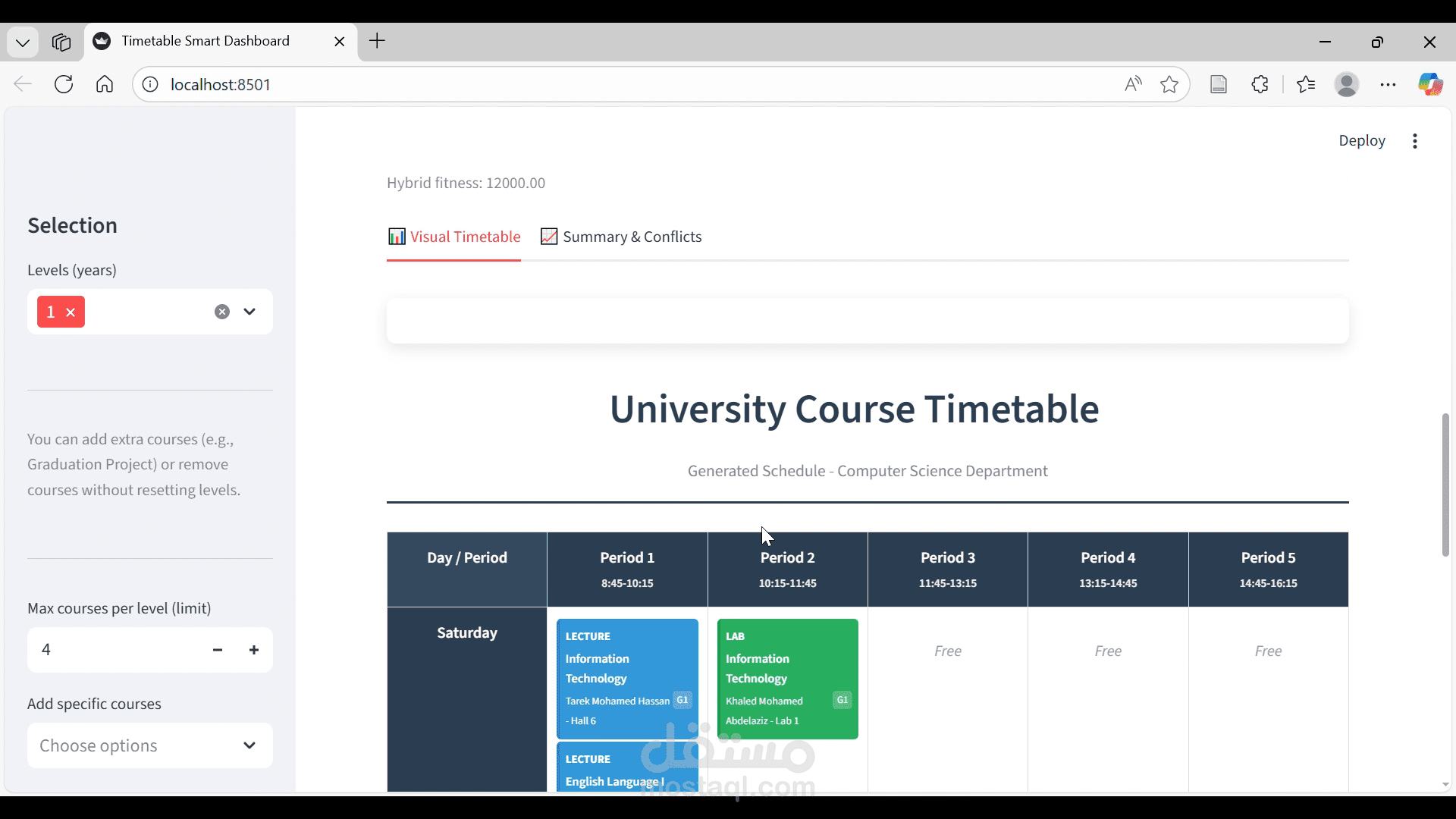
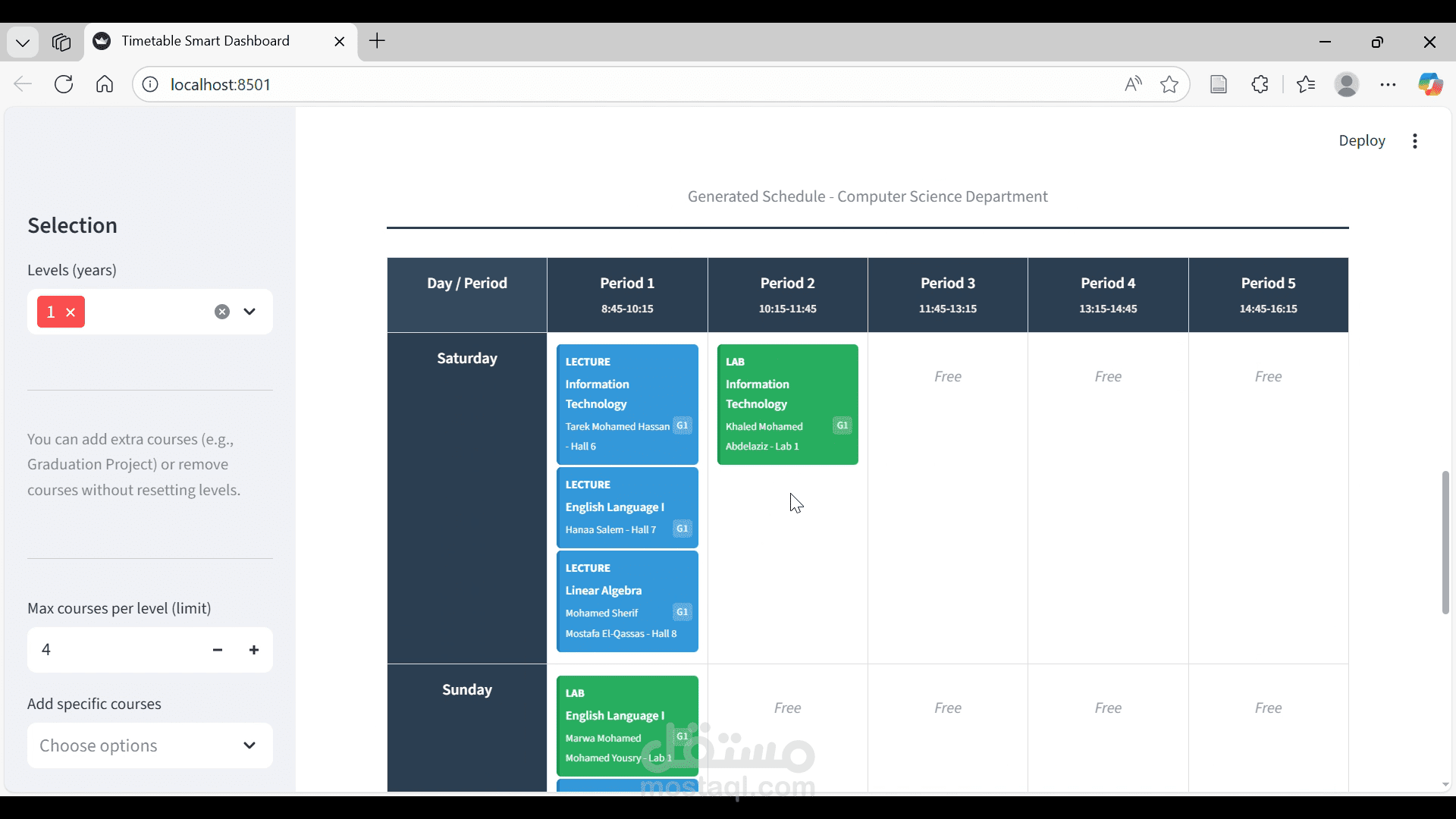
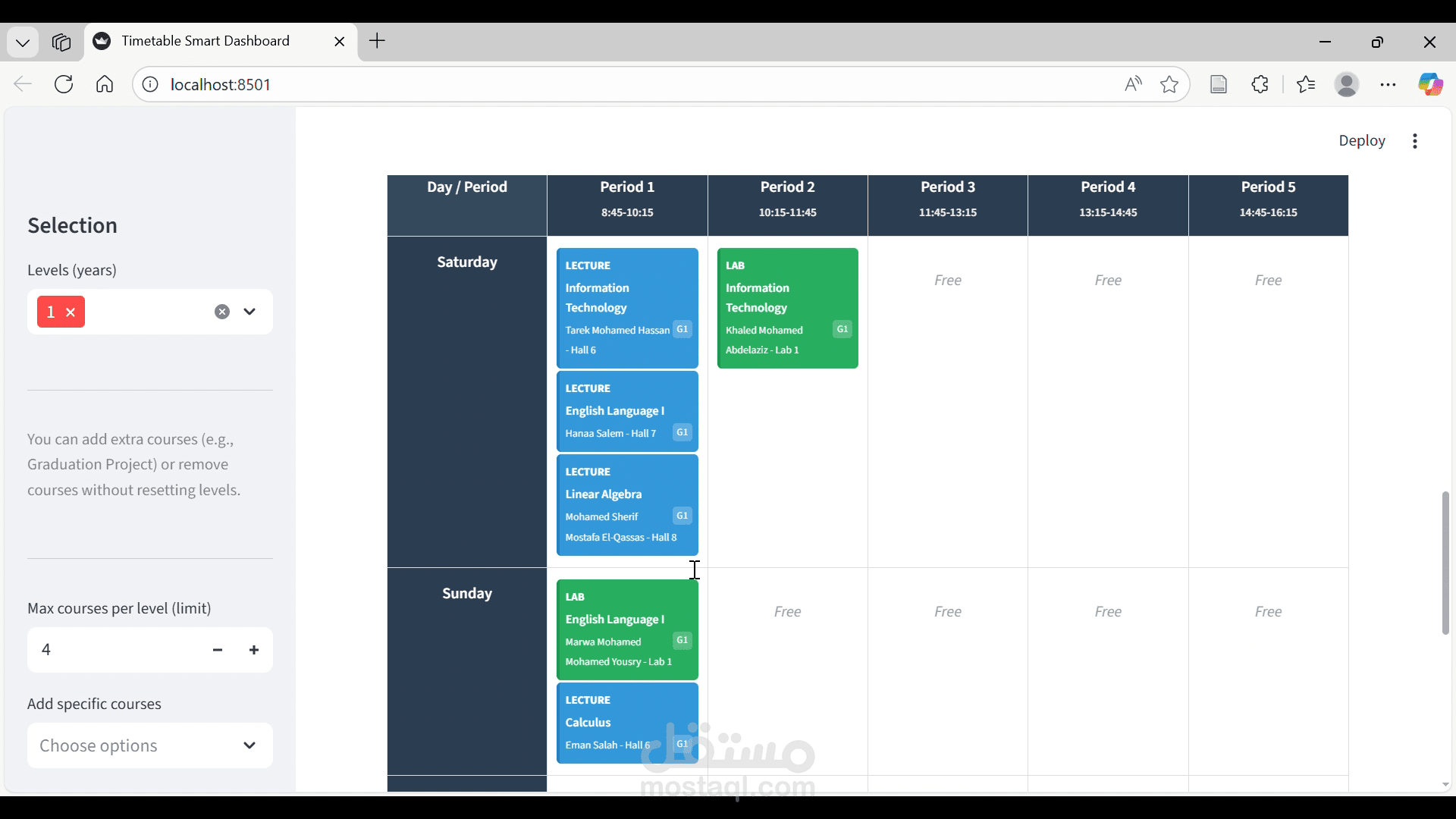
Automatic generation of weekly timetables (Saturday–Thursday).
Conflict-free scheduling for courses, instructors, rooms, and student groups.
Support for large student numbers with group and subgroup allocation.
Balanced distribution of lectures, sections, and labs across the week.
Conflict detection and reporting for review.
Clean, user-friendly timetable visualization.
Technologies Used
Python
Genetic Algorithms for optimization
Reinforcement Learning (optional enhancement)
Pandas & NumPy for data processing
Streamlit for interactive visualization
Outcome
The system significantly reduces scheduling time, eliminates human errors, and produces optimized, realistic university-style timetables suitable for academic institutions