خطة متكاملة لتنمية قطاع الخدمات بشركة الإمارات للطيران
تفاصيل العمل
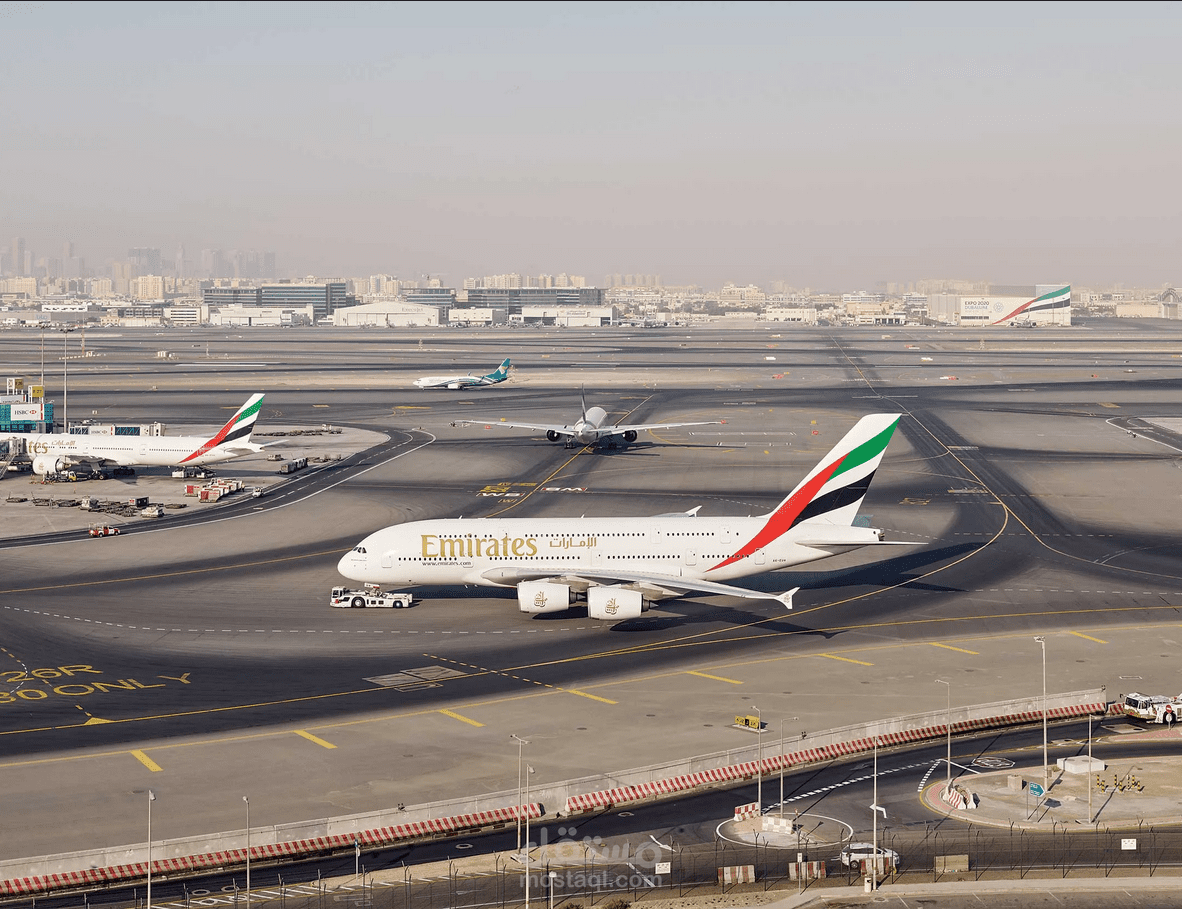
Strategic Competitive Strategy Plan for Emirates Airlines, Being an Engineering Organization
Table of Contents
Executive Summary
An Overview
Market Analysis
Competitor Profiling
Internal Analysis
Understanding the Balanced Scorecard in Emirates Airline
Executive Summary
Developing an exactly accurate strategic plan is vital for aviation industry, which currently faces serious challenges, making efficiency and safety crucial elements. Improving aircraft welfare and decreasing the aviation emission are eventually considered the conclusive solutions that can improve the airline business’s capabilities and elevate the potentials, which the aviation activities hold.
An Overview
As known, Emirates Airlines, founded in 1985 with just two aircrafts; one Boeing 737 and another Airbus 300 B4, is an eminent leader in the aviation world. The company was initially supported by few investors, and soon turned to an incredibly busy transport center. Emirates Airlines also became an impressively well-planned engineering strategist that managed to maintain the lead, during years of its operations. By constantly embracing innovation and sustainability, the company definitely boosted reliability and reinforced reputation. This was smoothly achieved, as the company implemented recent technologies, reduced the fuel usage, and become greener. The company considered the efficiency and sustainability aspects, applying totally different engineering strategies. It additionally launched initiatives designed to make the large fleets run smoothly and to keep MRO systems properly function, particularly after the major competitors, such as Qatar Airways and Etihad, made significant investments in the aircraft upgrades and eco-friendly solutions.
Market Analysis
There are several external forces that shape Emirates Airlines’ plans. For example, the regulations concerning safety standards and environmental rules demand that Emirates pursues stricter procedures than ever. Another example is the world economy that heavily influenced the flights’ profits. In addition, the geopolitical issues including the political tensions and regional conflicts affected routes and supply chains. This requires that Emirates should always become flexible and prepared. In fact, the company enjoys an absolutely strong group of engineers and high-tech facilities. The maintenance centers are also equipped with the latest tools and laboratories suitable for aircraft innovation. Partnerships that brought the company together with original equipment manufacturers (OEMs) and tech companies also promoted the properties and potentials. These resources made the fleet fly safely and efficiently. Despite that, there are also several challenges. One of them is represented in updating aging fleets. Many aircrafts are to be replaced and modernized. Managing costs while improving quality is tough. In parallel, excessive eco-friendly practices requires that Emirates Airlines approves budgets allocated for specialized training and equipment. In similar, finding solutions, which can cut emissions, is another key challenge that demands smarter practices.
Competitor Profiling
Emirates Airlines’ competitors witnessed distinguished successes. For instance, Qatar Airways applied acceptable standards in aircraft maintenance and green engineering. Etihad invests heavily in sustainable fuel and advanced tech for engine efficiency. This indicates that Emirates should consider engineering as an elemental core part, which directs the company’s vision and policy. The company should also strive to sustain its leading position in safety, innovation, and eco-friendliness. Every effort is to be made to meet such an influential mission; pushing the bounds of possible and reaching the prospectives. Here are some suggested strategies that Emirates should follow in order to gain the competitive edge: