Data Warehouse and Analytics Project
تفاصيل العمل
Data Warehouse and Analytics Project
This project demonstrates a comprehensive data warehousing and analytics solution, from building a data warehouse to generating actionable insights. Designed as a portfolio project, it highlights industry best practices in data engineering and analytics.
?️ Data Architecture
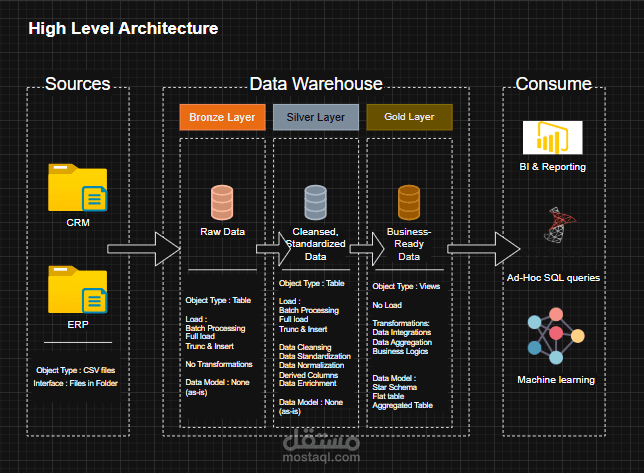
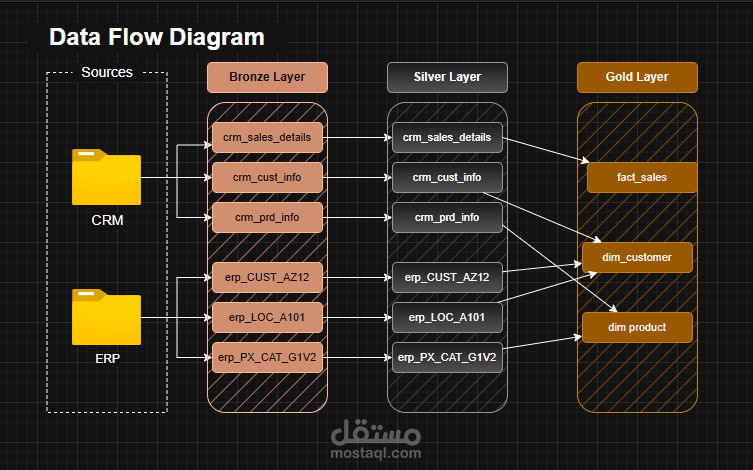
The data architecture for this project follows Medallion Architecture Bronze, Silver, and Gold layers:
Bronze Layer: Stores raw data as-is from the source systems. Data is ingested from CSV Files into SQL Server Database.
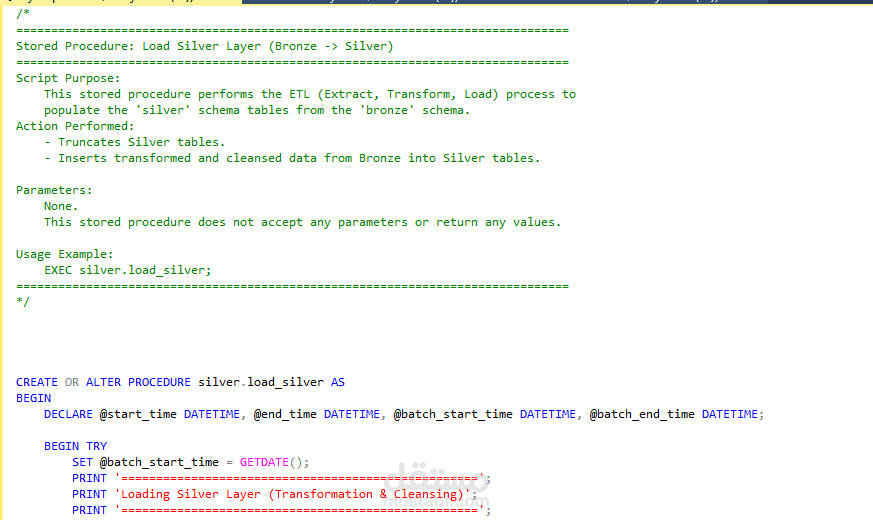
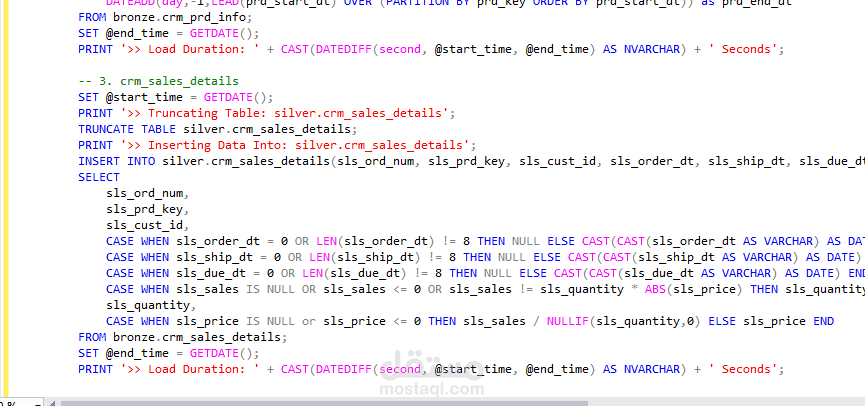
Silver Layer: This layer includes data cleansing, standardization, and normalization processes to prepare data for analysis.
Gold Layer: Houses business-ready data modeled into a star schema required for reporting and analytics.
? Project Overview
This project involves:
Data Architecture: Designing a Modern Data Warehouse Using Medallion Architecture Bronze, Silver, and Gold layers.
ETL Pipelines: Extracting, transforming, and loading data from source systems into the warehouse.
Data Modeling: Developing fact and dimension tables optimized for analytical queries.
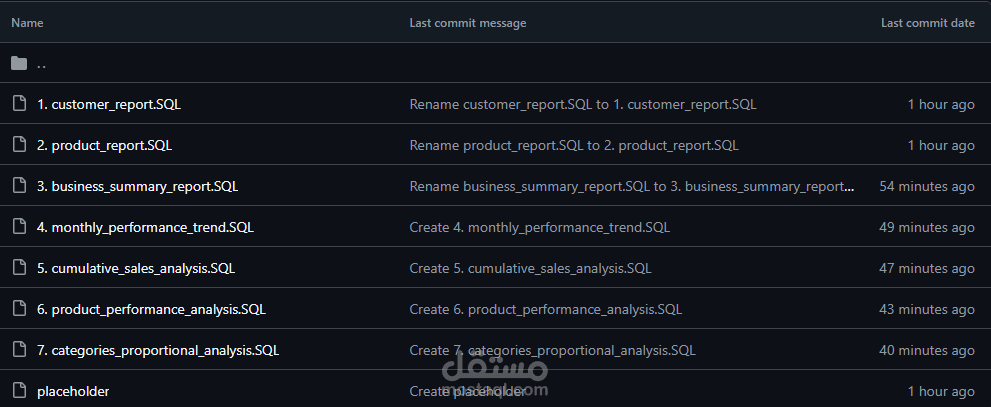
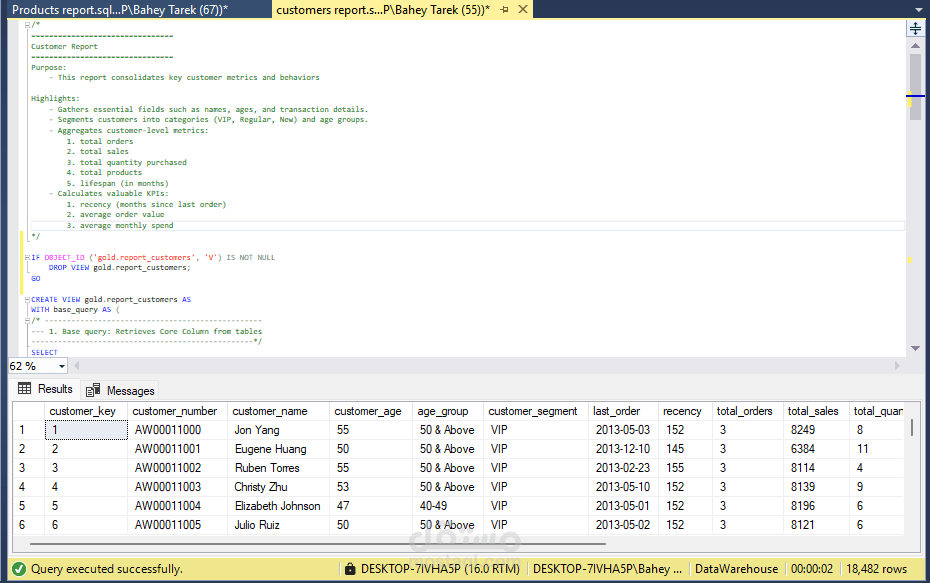
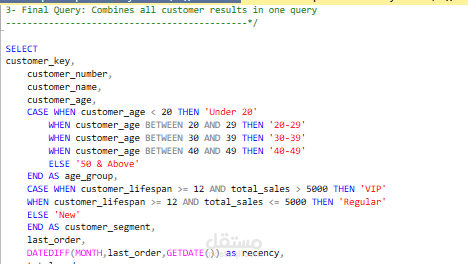
Analytics & Reporting: Creating SQL-based reports and dashboards for actionable insights.
? This repository is an excellent resource for professionals and students looking to showcase expertise in:
SQL Development
Data Architect
Data Engineering
ETL Pipeline Developer
Data Modeling
Data Analytics
?️ Important Links & Tools:
Datasets: Access to the project dataset (csv files).
SQL Server Express: Lightweight server for hosting your SQL database.
SQL Server Management Studio (SSMS): GUI for managing and interacting with databases.
Git Repository: Set up a GitHub account and repository to manage, version, and collaborate on your code efficiently.
DrawIO: Design data architecture, models, flows, and diagrams.
Notion: All-in-one tool for project management and organization.
Notion Project Steps: Access to All Project Phases and Tasks.
? Project Requirements
Building the Data Warehouse (Data Engineering)
Objective
Develop a modern data warehouse using SQL Server to consolidate sales data, enabling analytical reporting and informed decision-making.
Specifications
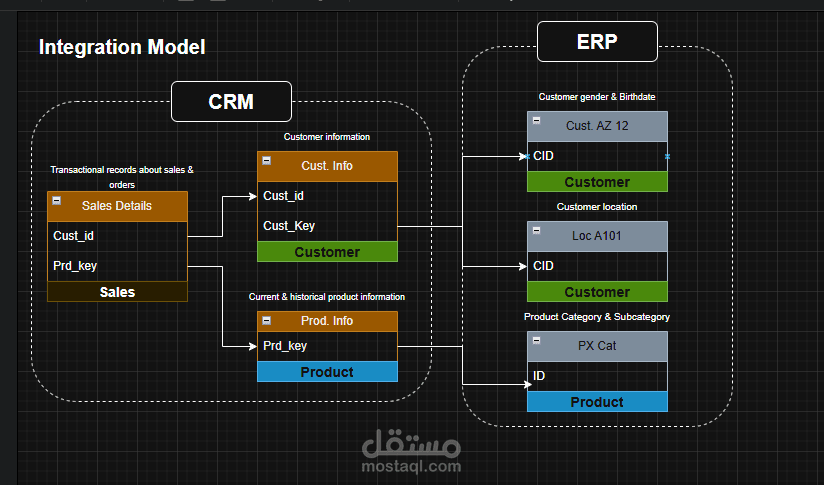
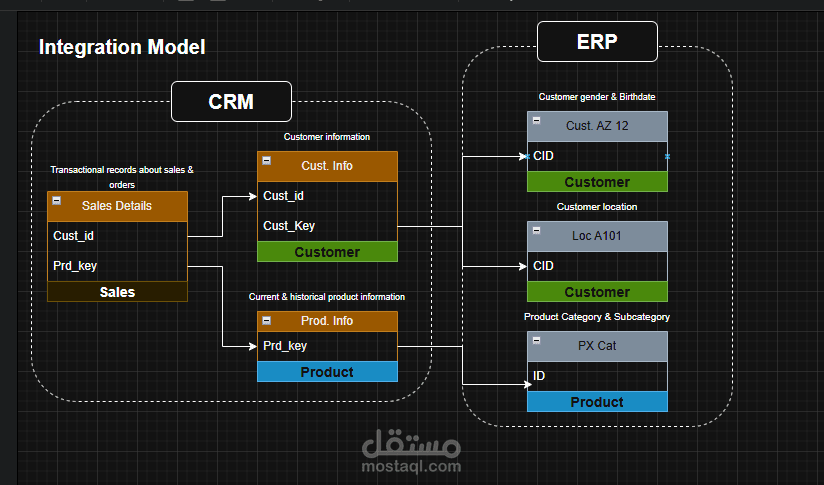
Data Sources: Import data from two source systems (ERP and CRM) provided as CSV files.
Data Quality: Cleanse and resolve data quality issues prior to analysis.
Integration: Combine both sources into a single, user-friendly data model designed for analytical queries.
Scope: Focus on the latest dataset only; historization of data is not required.
Documentation: Provide clear documentation of the data model to support both business stakeholders and analytics teams.
BI: Analytics & Reporting (Data Analysis)
Objective
Develop SQL-based analytics to deliver detailed insights into:
Customer Behavior
Product Performance
Sales Trends
These insights empower stakeholders with key business metrics, enabling strategic decision-making.