Production of biochar by using sheep bones via Pyrolysis
تفاصيل العمل
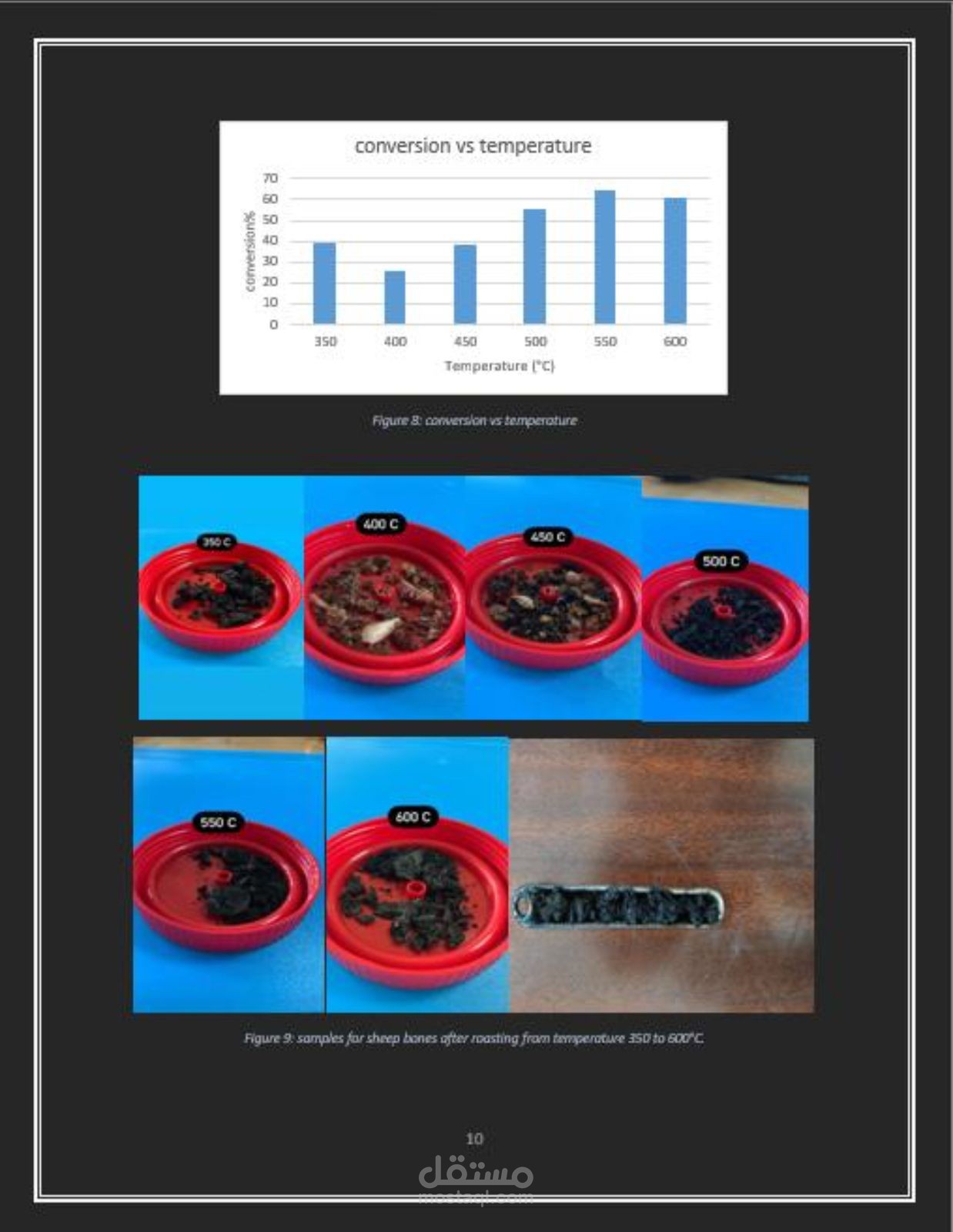
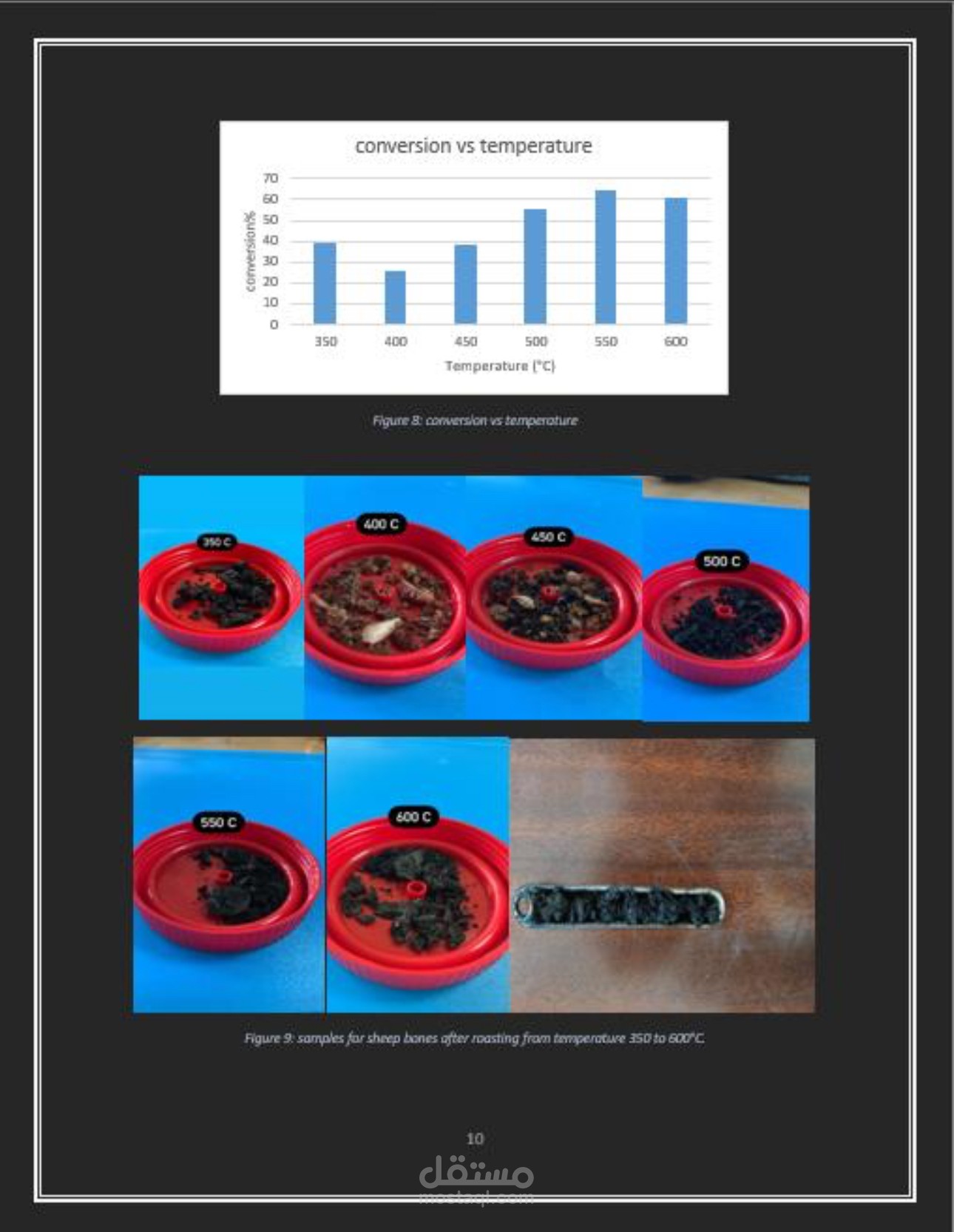
Biochar is a carbon-rich material produced through the pyrolysis of organic waste, such as biomass. Sheep bones, a byproduct of livestock farming, can be transformed into biochar using this process. Pyrolysis involves heating the bones in the absence of oxygen, causing thermal decomposition without combustion.
By increasing microbial activity, nutrient availability, and water retention, biochar improves soil fertility in agriculture. It can also function as a carbon sink, storing carbon in the soil for a long time and assisting in the mitigation of climate change.