Employee Attrition Analysis
تفاصيل العمل
Employee Attrition Analysis with Power BI
I recently completed an in-depth Employee Attrition Analysis using Power BI, where I uncovered key factors contributing to employee turnover and proposed actionable insights to help organizations boost retention. Here's a quick overview of my approach, findings, and recommendations:
Step-by-Step Approach:
1- Created a Fact Table to store numerical metrics and measurements.
2- Built 5 Dimension Tables containing descriptive attributes by duplicating the original dataset and selecting relevant columns.
3- Established relationships in the Power BI model view, connecting the Fact Table to the Dimension Tables using the EmployeeNumber column as the primary key.
Key Insights:
1- Training & Attrition:
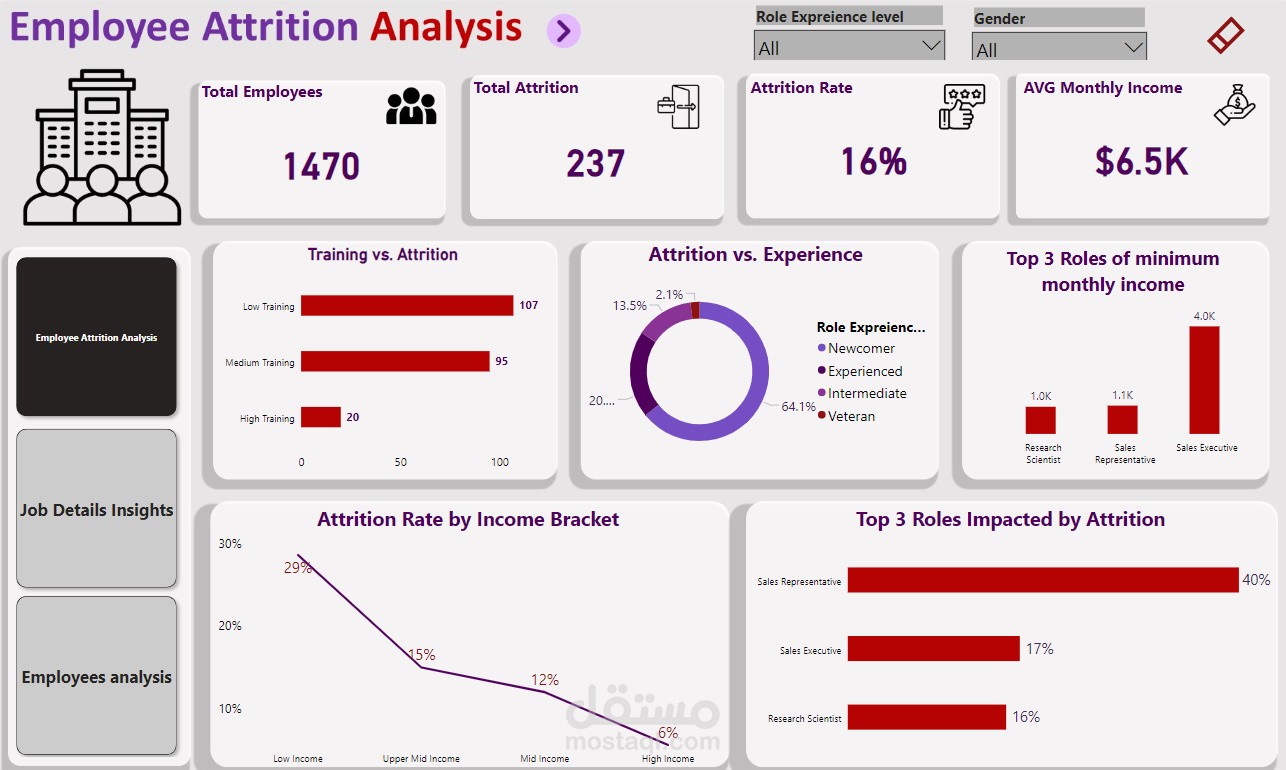
Employees with low training had the highest attrition rate.
Medium training also showed significant attrition, highlighting the need for comprehensive training programs.
2- Experience Level & Attrition:
Newcomers (employees with less experience) showed the highest attrition rate, followed by experienced employees, suggesting onboarding challenges and role misalignment.
3- Job Role & Income:
Sales Representatives face a 40% attrition rate with a minimum income of $1,052, while Sales Executives have a 17% attrition rate at $4,001.
4- Income Brackets & Attrition:
Low income: 29% attrition
Medium income: 12% attrition
5- Business Travel:
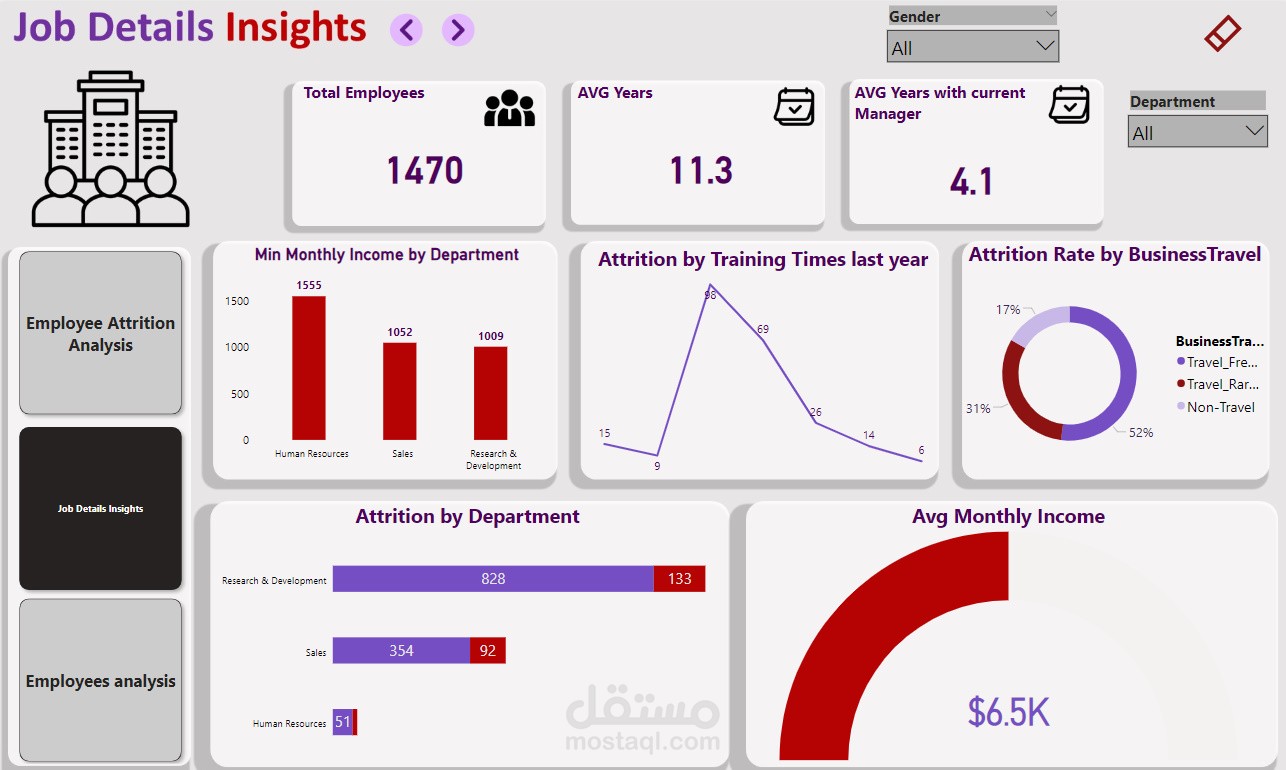
Employees who travel frequently face a 52% attrition rate vs. 17% for non-traveling employees.
6- Commute Distance:
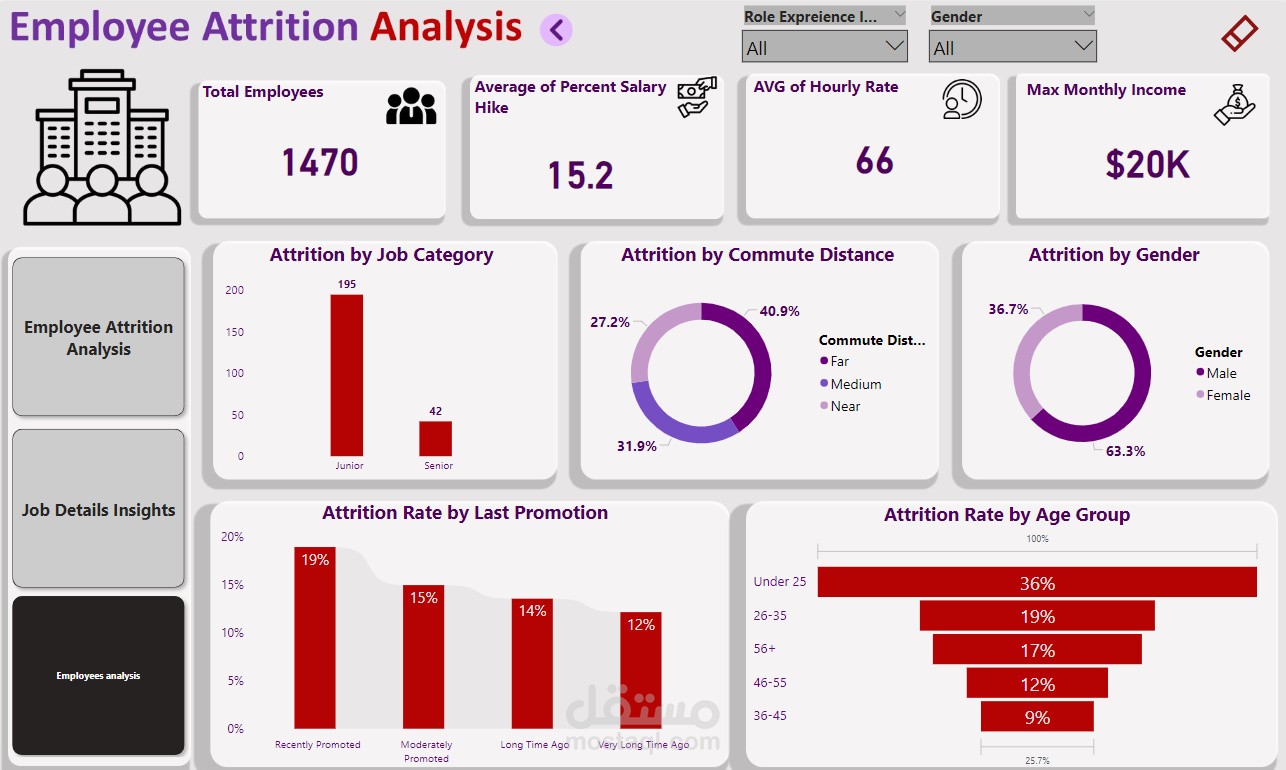
Employees commuting long distances have the highest attrition at 40%.
7- Last Promotion:
Recently promoted employees had the highest attrition rate at 19%, potentially indicating post-promotion dissatisfaction.
Recommendations for Reducing Attrition:
Enhance Training Programs: Invest in regular, structured training to reduce disengagement.
Improve Onboarding: Focus on mentorship and role clarity for newcomers.
Salary Adjustments:
Increase pay for Sales Representatives and low-income employees.
Align compensation with industry standards for departments like Sales & R&D.
Reduce Travel Frequency: Offer hybrid work and flexible options.
Support Commuters: Provide allowances, flexible hours, or remote work options.
Mentorship for Promotions: Pair newly promoted employees with mentors to ensure smoother transitions.