investigate-no show appointments-dataset
تفاصيل العمل
Introduction
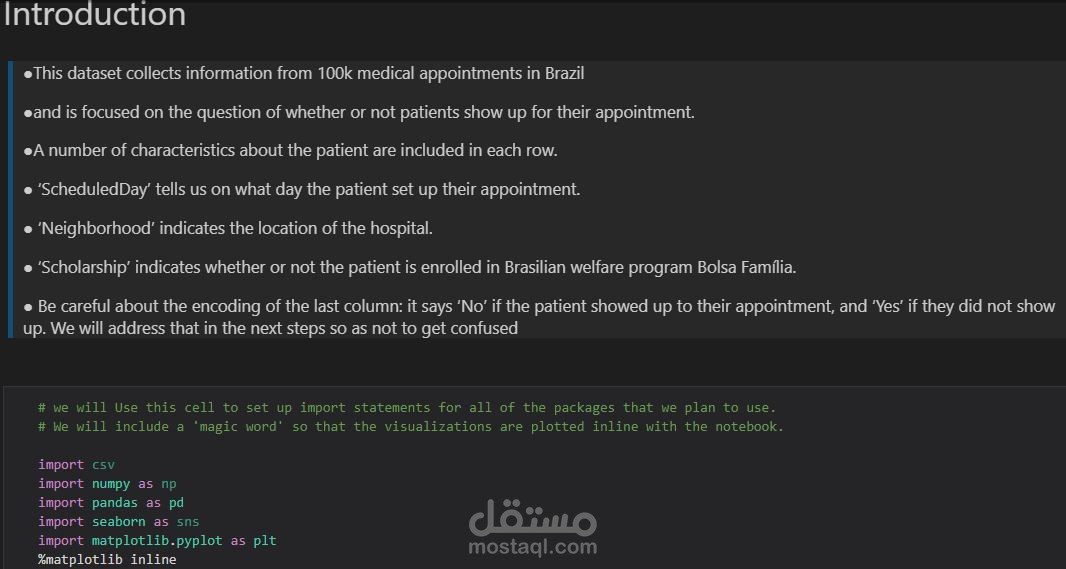
●This dataset collects information from 100k medical appointments in Brazil
●and is focused on the question of whether or not patients show up for their appointment.
●A number of characteristics about the patient are included in each row.
● ‘ScheduledDay’ tells us on what day the patient set up their appointment.
● ‘Neighborhood’ indicates the location of the hospital.
● ‘Scholarship’ indicates whether or not the patient is enrolled in Brasilian welfare program Bolsa Família.
● Be careful about the encoding of the last column: it says ‘No’ if the patient showed up to their appointment, and ‘Yes’ if they did not show up. We will address that in the next steps so as not to get confused
Questions
•attendance ratio
•which features affect in attendance
Data Wrangling
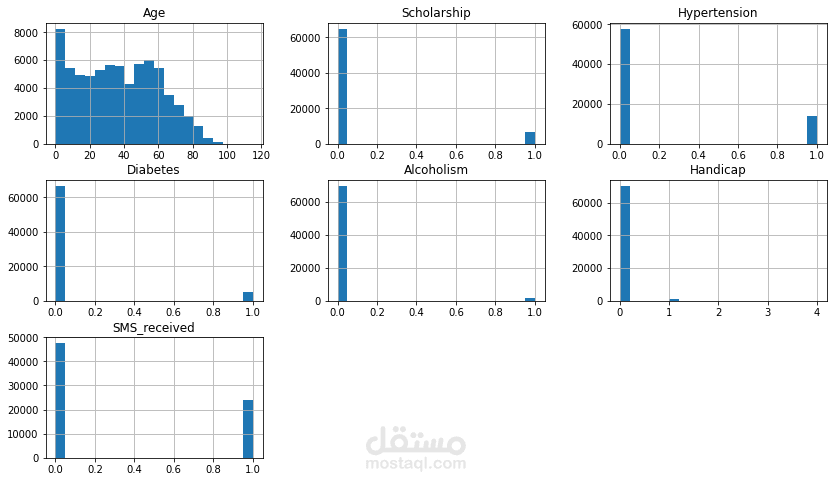
•In this part, we are going to view the data
•There is no Missing Data
•There is no duplicate Data
•There is a wrong age as it cannot be less than zero
•Finding wrong age
•Finding Duplicate attendance status for patients
Data Wrangling
•Deleting wrong age
•Deleting Duplicate attendance status for patients
•Deleting unimportant columns
•Fixing columns name
The data is now ready to explore
Exploratory Data Analysis
Now that we've trimmed and cleaned the data, we move on to exploration. Calculate statistics and create visualizations address the questions we asked in the Introduction section.
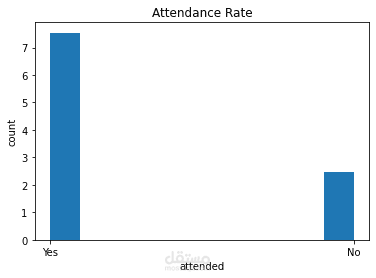
•Research Question 1 (attendance rate)
oIt turns out that the attendance rate is high
o Let's explore what are the features affecting attendance rate
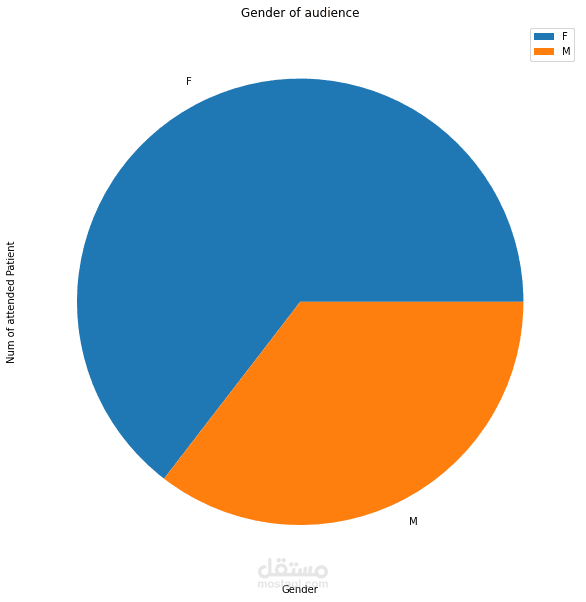
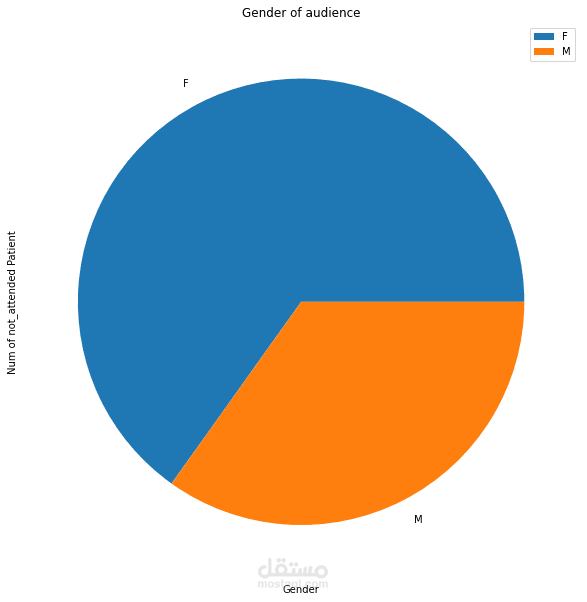
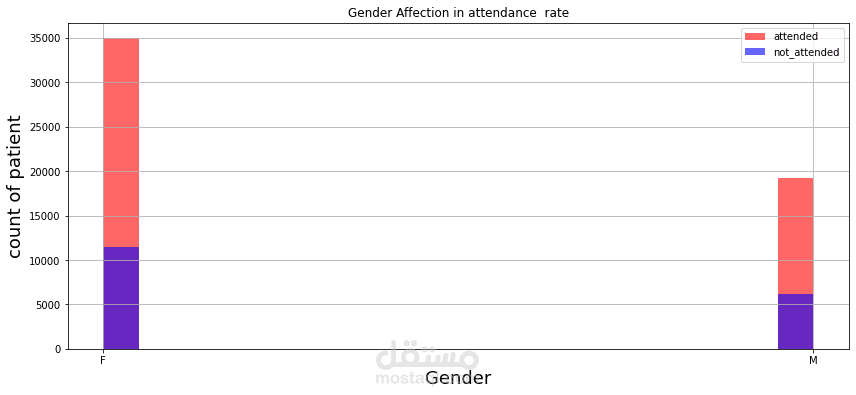
•Research Question 2 (Gender affection in attendance rate)
oGender has no obvious effect on attendance rate
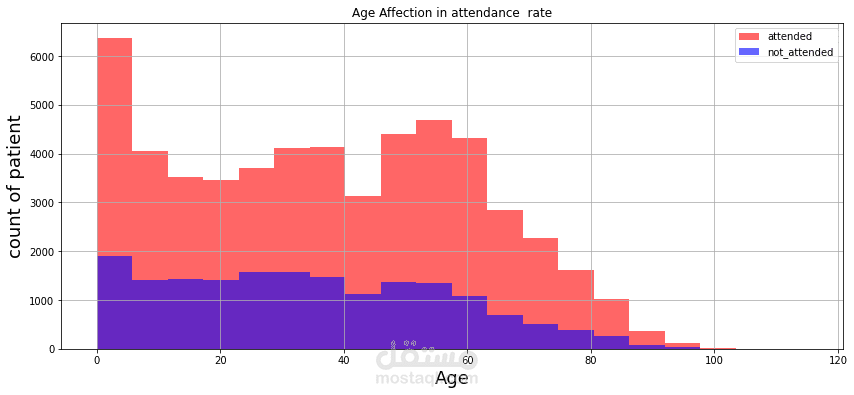
•Research Question 3 (age affection in attendance rate)
oAt a young age, the interest in attendance increased
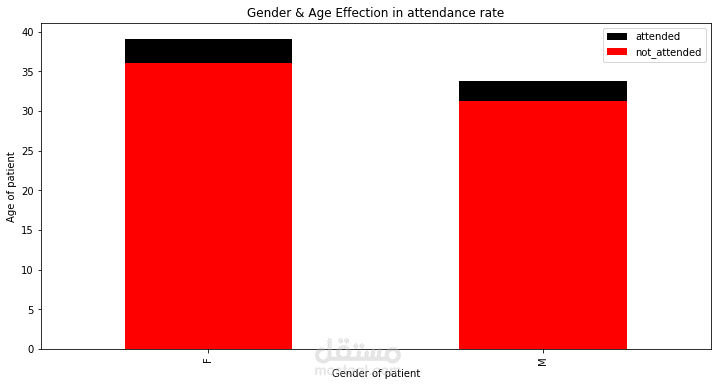
•Research Question 4 (Gender & Age affection in attendance rate)
oThere is no Affection
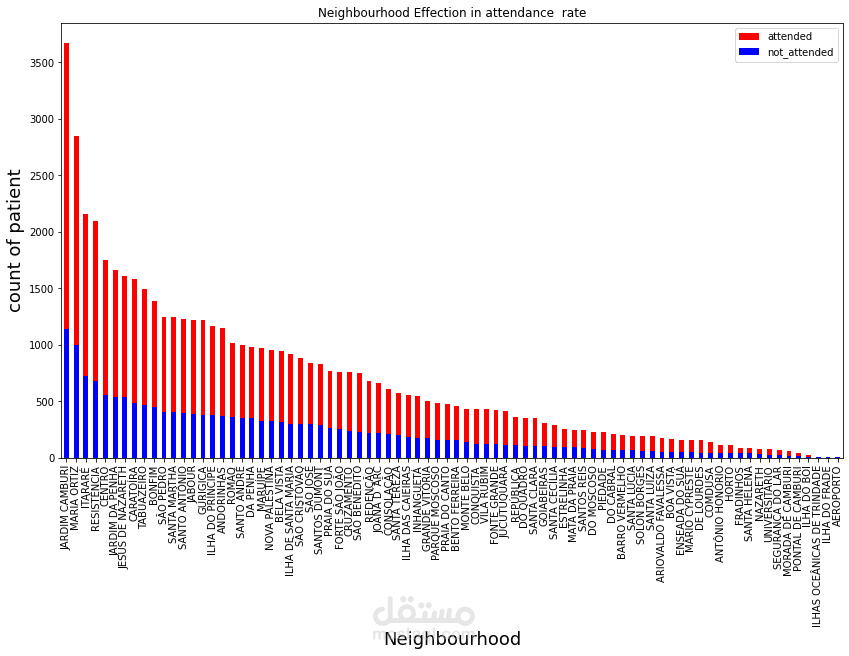
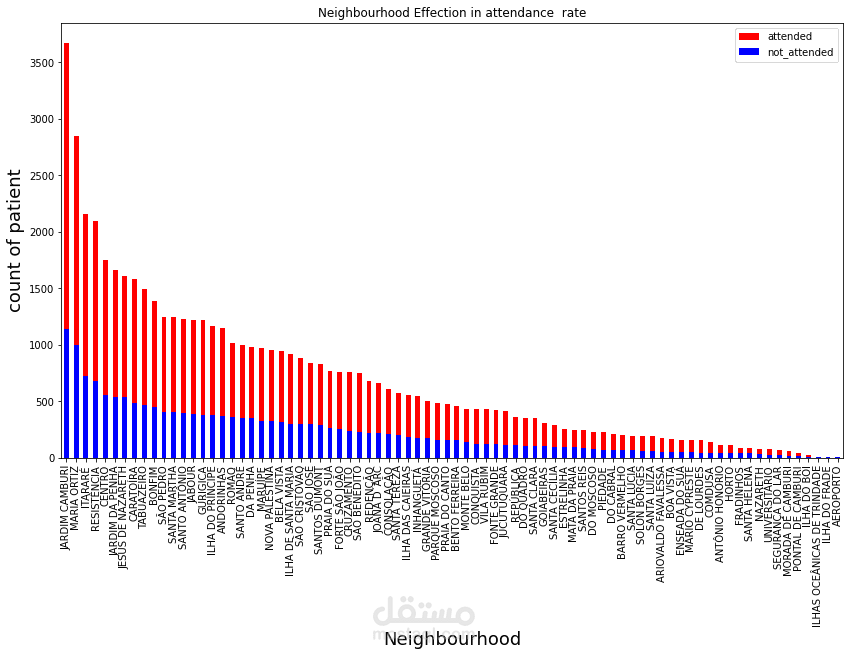
•Research Question 5 (Neighbourhood affection in attendance rate)
oIt is clear that the patient's place of residence reflects positively and negatively on his response to attendance
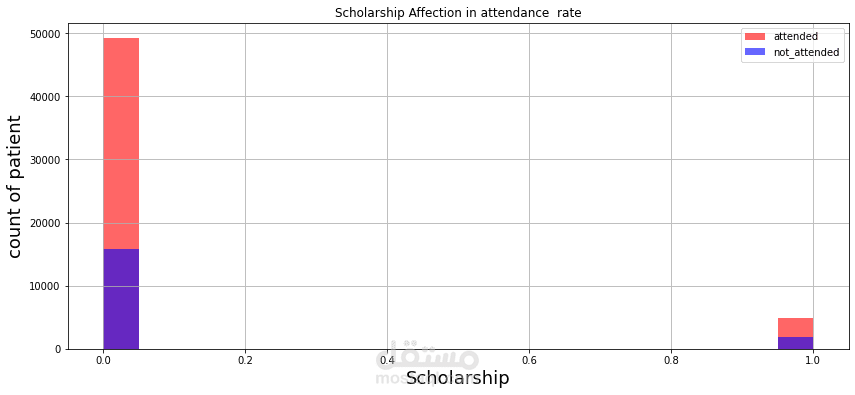
•Research Question 6 (Scholarship affection in attendance rate)
oScholarship has no effect on attendance rate
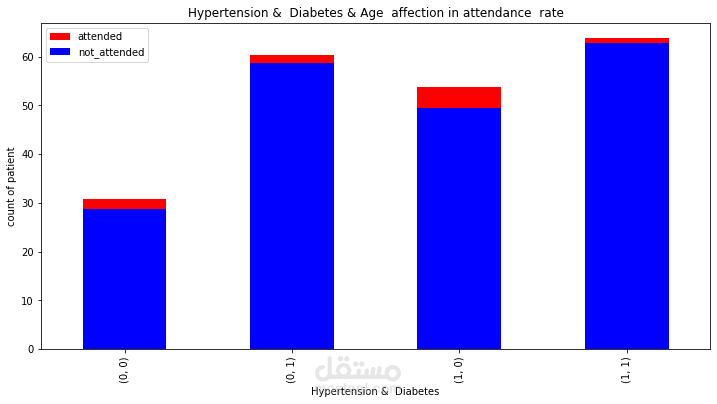
•Research Question 7 (Hypertension & Diabetes & Age affection in attendance rate)
oThese chronic diseases do not have a clear effect on attendance rate
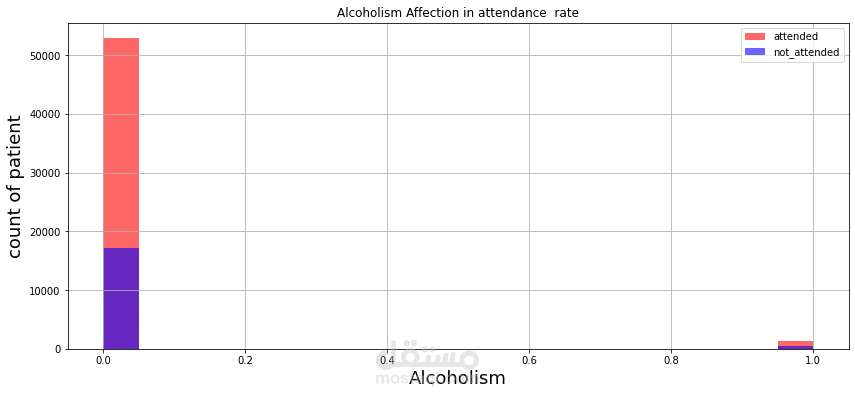
•Research Question 8 (Alcoholism Affection in attendance rate)
oAlcoholism has no clear effect on attendance rate
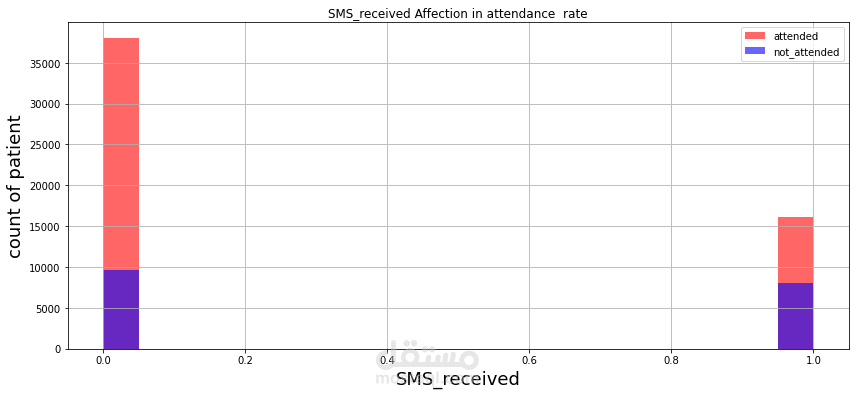
•Research Question 9 (SMS_received affection in attendance rate)
oSMS_received has no clear effect on attendance rate
Conclusions
• It turns out that the attendance rate is high
• Gender has no obvious effect on attendance rate
• At a young age, the interest in attendance increased
• It is clear that the patient's place of residence reflects positively and negatively on his response to attendance
• Scholarship has no effect on attendance rate
• These chronic diseases do not have a clear effect on attendance rate
• Alcoholism has no clear effect on attendance rate
• SMS_received has no clear effect on attendance rate