Understanding Internal Audit, External Audit, and Audit Fees
تفاصيل العمل
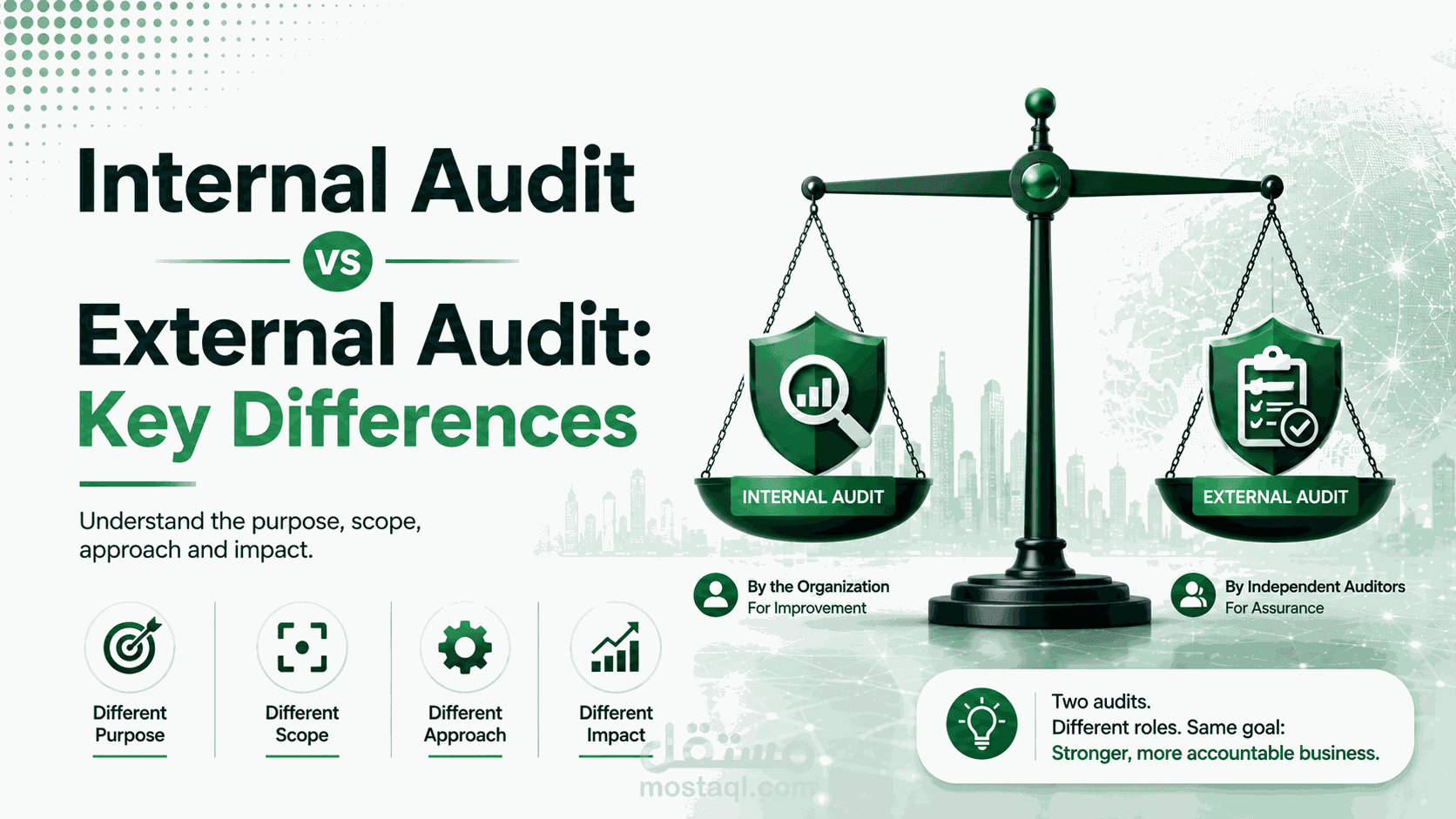
Burstiness in Audit Roles
The burstiness of internal audit tasks can be likened to a detective analyzing clues within the organization's operations.
In contrast, external audit burstiness is akin to a financial doctor, who meticulously examine the organization's financial statements overall health in order to diagnose irregularities and discrepancies. The perplexity of audit fees lies in the intricate evaluation of organizational size, complexity, and risk profile. It involves a comprehensive analysis, which investigates the resources and efforts required to conduct a thorough audit, balancing the need for assurance with the cost-effectiveness of community engagement.
Internal audit, external audit, and audit fees all have a crucial role in the organizational financial management processes (Zhang et al., 2007).
Understanding the three forms of audits’ tasks and assignments is considered an essential procedure for effective financial governance and decision-making (Krishnan, 2005). For instance, internal audit is regarded as an independent, objective assurance and consulting activity designed to add value that can aptly improve an organization's operations (Frankel et al., 2002). The primary role of internal audit functions is to evaluate and enhance the risk management efficiency and efficacy, as well as control methods, and governance approaches (Stewart & Munro, 2007). Internal auditors provide insights and recommendations that deeply mitigate risks and sustain the logistical performance (Ostrower & Bobowick, 2006). Their tasks include assessing internal controls, compliance with regulations, and business procedures (Alexander & Lee, 2006).
On the other hand, external audit is the examination stage, which inspects the financial statements and other financial information, presented by the company (Vermeer et al., 2006).
The primary role of external audit is to provide an opinion on the financial reporting fairness, in accordance with the applicable framework (Iyer & Watkins, 2008). External auditors assess the data reliability and accuracy, ensuring that the organization provides a true and fair review, which outlines in detail the financial position and achievement (DeZoort et al., 2002).
As for audit fees, the concept refers to the compensation paid to external auditors for their professional services (Al-Najjar, 2011).
These fees are typically based on the task complexity and size of organization, as well as the scope of an audit engagement (Hillman & Dalziel, 2003). The audit fees can also vary depending on the extent of work required, including the level of risk, operations intricacy, and regulatory requirements (Broberg et al., 2013).
An elaborate study conducted by Anna Gold discussed the intricacies of internal audit, external audit, and audit fees, trying hard to understand the relationship between internal audit, external audit, and audit fees (Gold et al., 2020). The study clarified that internal audit and external audit are two crucial components of a company's financial management. While the internal audit always focuses on evaluating and improving the organization's governance processes, the external audit is mainly performed by an independent accounting firm to provide an opinion on the company's financial statements validity and consistency.
Both audits contribute to ensuring that the company's financial records are transparent and compliant with existing regulations.
Another study by Jukka Karjalainen paid a considerable interest in analyzing the synergy between internal audit, external audit, and audit fees, confirming that the relationship between internal audit and external audit is complementary (Karjalainen et al., 2011). The internal audit assists the company in identifying and mitigating potential risks, thus providing valuable insights to the external auditors.
This synergy enables the external auditors to focus on critical areas. This enhances the audit efficiency, and thereby streamlining the entire audit processes.
The study touched upon the impact of internal audit and external audit on audit fees, proving that the relationship between internal audit, external audit, and audit fees is intricate.
Companies with a robust internal audit function can potentially reduce their external audit fees. This is because the external auditors can draw on the consulting activity performed by the internal audit, leading to a more efficient external audit process. In contrast, insufficient internal audit procedures may result in increased fees, as the external auditors may need to dedicate additional resources to completely compensate for the deficiencies resulting from the inadequate internal audit.
Another study by Kam-Wah Lai analyzed the key factors affecting internal audit, external audit, and audit fees, including the complexity of the business operations, the level of regulatory scrutiny, the industry-specific risks, and the quality of the internal controls (Lai, 2013). The intricacy of financial transactions, the geographical dispersion, and the extent of involvement of third-party service providers also contribute to the determination of audit fees.
The study suggested that it is imperative for companies to evaluate these factors and to invest in robust internal audit functions in order to optimize their external audit costs.
The study concluded that well-functioning internal audit departments add value to the organization, as they provide independent and objective assurance, which embrace the risk management tools, control methods, and governance processes. By proactively identifying areas for improvement, the internal audit can reduce the overall audit fees.
In addition, a strong internal audit function enhances the company's risk management capabilities, thereby promoting a culture of compliance and integrity, which dominates the entire business. This urges the companies to recognize the significance of a synergistic approach that considers the dynamics between internal audit, external audit, and audit fees, as a prelude to optimize their expenses and ensure the financial reporting accuracy and transparency.
● Intricacies of Burstiness and Perplexity in Audits
Burstiness in internal audits refers to the irregular and unpredictable occurrence, arising from audit activities.
This phenomenon often presents challenges related to resource allocation and planning, as the auditing sporadic nature can actually lead to periods of intense workload followed by relative calm. The perplexing nature of burstiness in internal audits demands a strategic approach to optimize resource utilization and maintain efficiency.
The burstiness in internal audits can stem from various factors, such as regulatory requirements, operational changes, and specific events within the organization.
Understanding and analyzing these underlying causes is an essential step towards developing effective strategies for managing and mitigating the probable risks impacts on internal audits outcomes. Although both internal audit and external audit steadily focus on providing independent assurance, there are key differences in their roles and tasks.
Internal audit is primarily focused on providing recommendations and insights to improve internal processes, while external audit is excessively focused on estimating the financial reporting fairness. Internal auditors work within the organization and they continuously report to management, while external auditors are independent and they only send reports to the shareholders and regulatory bodies.
The perplexity of audit fees was the center of attention of a research study by Kamil Omoteso and Musa Obalola (Omoteso & Obalola, 2015).
The authors successfully managed to unveil the complex determinants of audit fees, stating that the audit perplexing nature is strongly influenced by various intricate determinants.
The complexity of audit fees arises from factors such as the audited entity size and complexity, the scope of the audit engagement, regulatory requirements, and the level of assurance sought by stakeholders. Deciphering the perplexity of audit fees necessitates a comprehensive understanding of such multifaceted determinants.
In a study by Patrick Krauß, the results demonstrated that the audit enigmatic nature underscores the significance of transparent communication and mutual understanding between auditors and clients (Krauß et al., 2014). Through engaging in open discussions and aligning on the key drivers, which control the audit fees, organizations can effectively manage expectations and optimize the value derived from audit services.
In another study by Cassell, Myers, and Seidel, the authors handled the intricacies of burstiness in internal and external audits, coupled with the perplexing nature of audit fees (Cassell et al., 2015). By delving into the dynamics of burstiness and audit fee determinants, the authors found that stakeholders can navigate these complexities with informed strategies and collaborative approaches, ultimately enhancing the audit quality. In conclusion, internal audit, external audit, and audit fees have distinct yet interconnected roles in ensuring the financial management integrity and transparency.
Recognizing the similarities and differences in their roles and tasks is essential for stakeholders to make well-informed decisions and to develop the financial governance. Through embracing the burstiness and perplexity inherent in these aspects of audits, organizations can effectively manage risks and optimize the financial performance while ensuring compliance with regulatory requirements.