Fyodor Dostoevsky, the melancholic writer
تفاصيل العمل
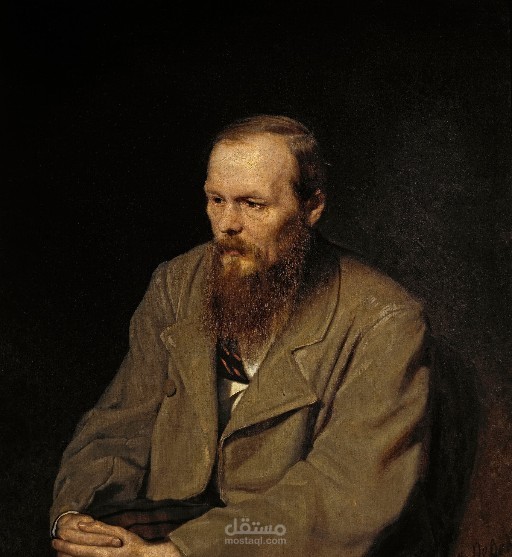
This text is a structured personal essay and biographical tribute dedicated to the famous 19th-century Russian author Fyodor Dostoevsky. The essay is written in a clear, accessible five-paragraph format, blending factual historical events with personal reflection to explain why Dostoevsky serves as a role model and creative inspiration for the author.
Core Structure & Organization
Paragraph 1: Introduction & Thesis
Introduces Fyodor Dostoevsky as the subject, stating the primary reason for admiration: his deep psychological insight into human nature, thoughts, and complex moral questions.
Paragraph 2: Early Life & Literary Beginnings
Outlines Dostoevsky's origin in Moscow (1821), his background at a military engineering school in Saint Petersburg, his shift toward literature, and his immediate success with his debut novel, Poor Folk (1846).
Paragraph 3: Life Hardships & Masterpieces
Details the pivotal crisis of his life—his 1849 arrest, mock execution, and exile to Siberia—followed by his return to writing and the creation of world-renowned masterpieces such as Crime and Punishment and The Brothers Karamazov.
Paragraph 4: Literary Significance & Key Themes
Analyzes what makes Dostoevsky unique as an author, emphasizing his ability to portray internal human struggles, fears, guilt, suffering, and morality.
Paragraph 5: Conclusion & Personal Impact
Summarizes his legacy following his death in 1881, highlighting the central takeaway: adversity does not stop personal greatness. The author concludes with a personal pledge to read more, think critically, and refine their own writing voice.