Data Cleaning and Preparation
تفاصيل العمل
Data Cleaning & Preparation | Kaggle Survey 2020
Tools: Python, Pandas, Object-Oriented Programming (OOP)
Cleaned and restructured the Kaggle Machine Learning & Data Science Survey 2020 dataset into analysis-ready datasets using a reusable, object-oriented Python workflow.
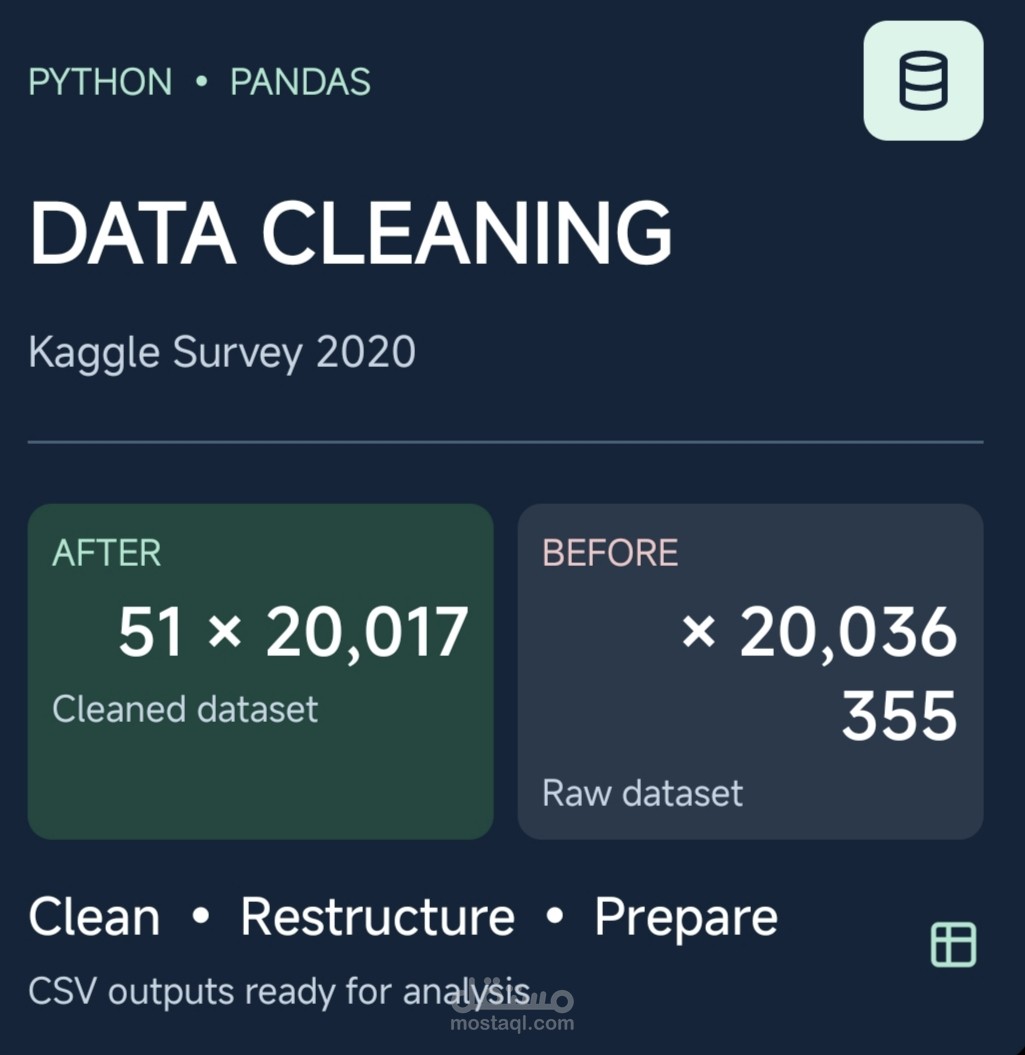
Before & After
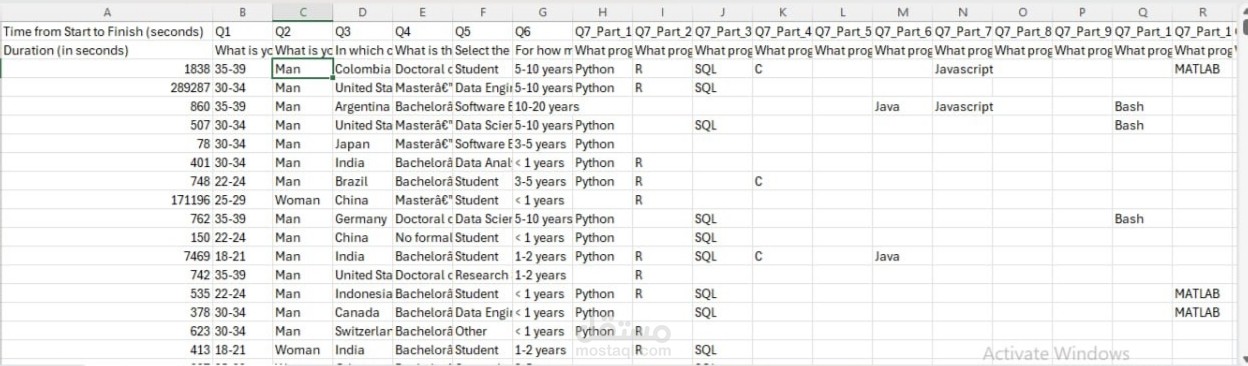
- Raw dataset: 20,036 rows × 355 columns.
- Cleaned main dataset: 20,017 rows × 51 columns.
- Long-format dataset: 560,323 rows × 5 columns.
Key Tasks
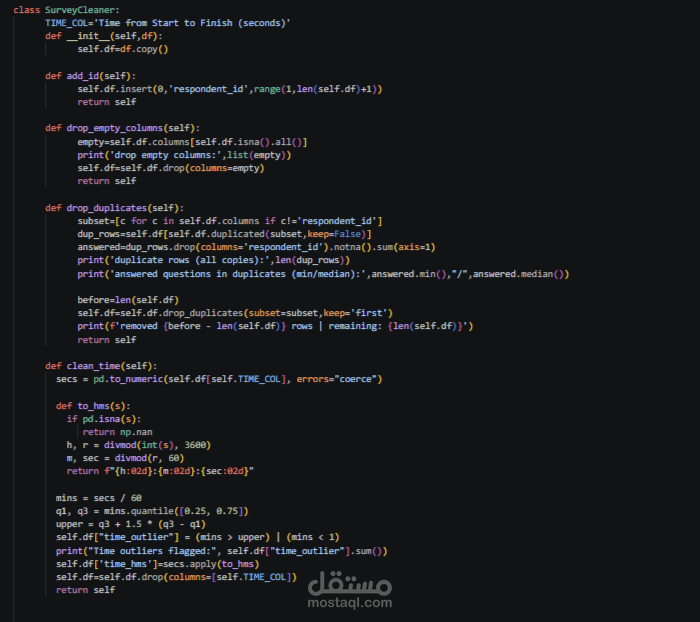
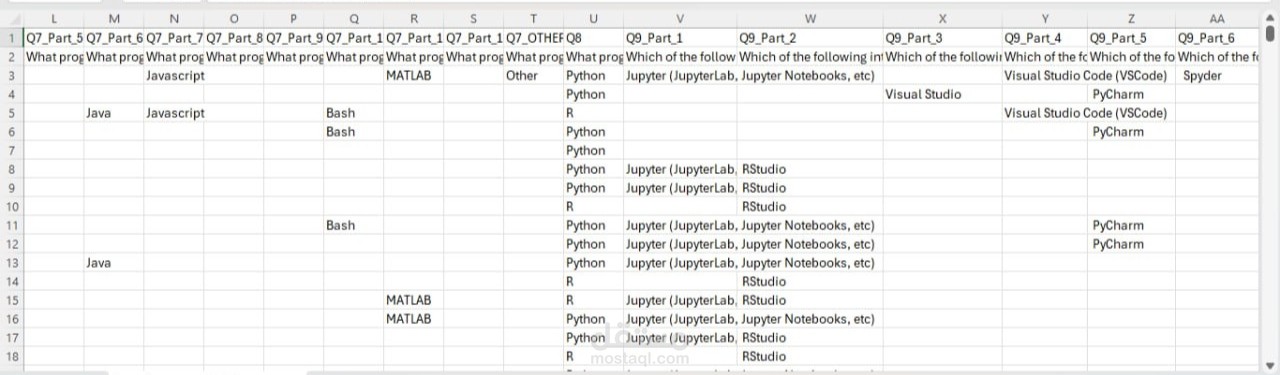
- Removed the extra question-text header row, 19 exact duplicate responses, and fully empty columns.
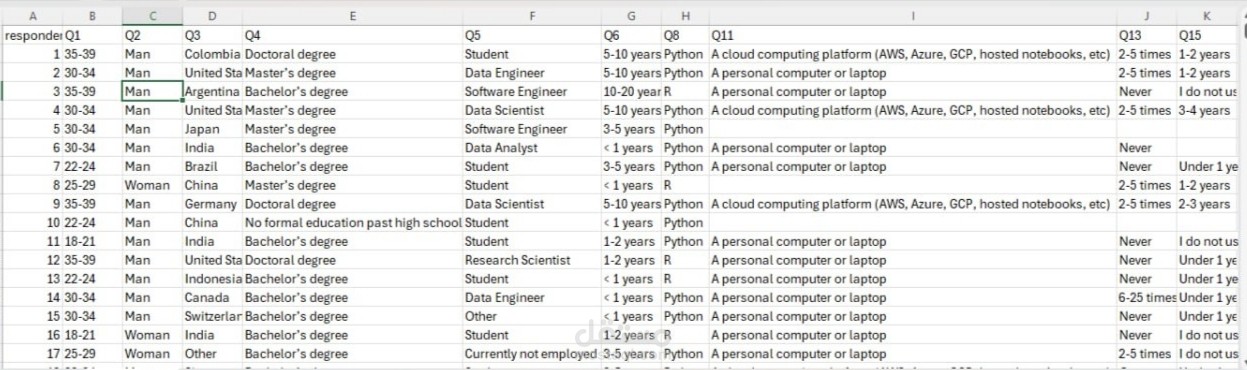
- Added a unique "respondent_id" to link records across datasets.
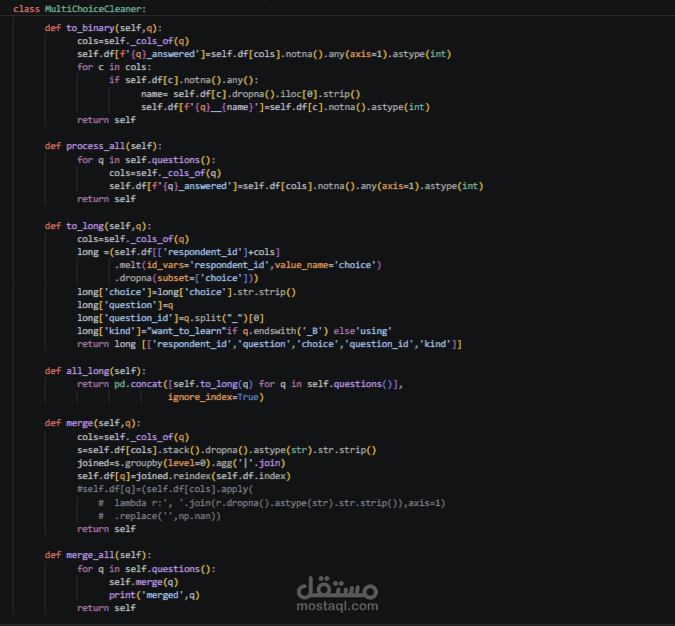
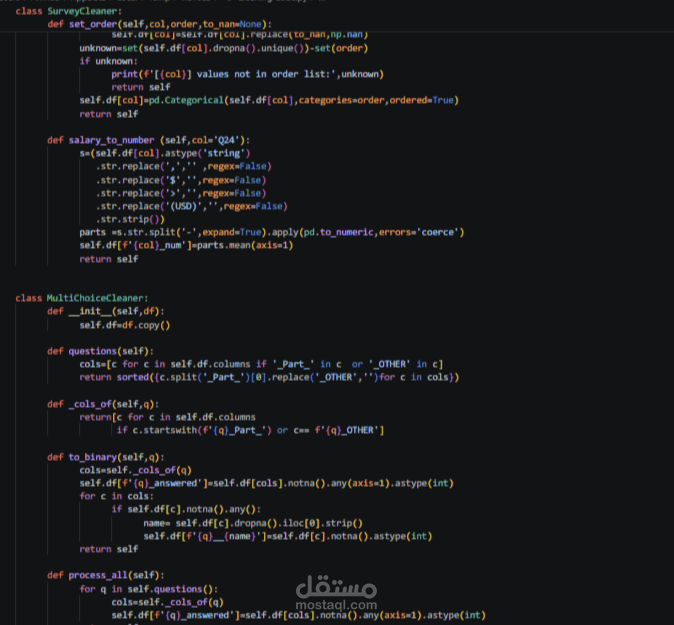
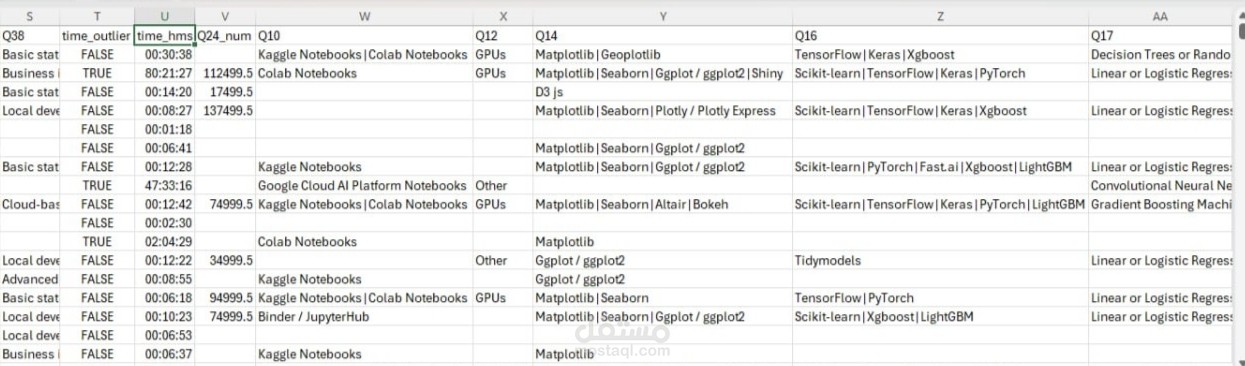
- Restructured 29 multiple-choice questions by consolidating their answers into single columns, with multiple answers separated by "|".
- Transformed multiple-choice responses into a long-format dataset containing "respondent_id", "question_id", "question", "kind", and "choice", supporting accurate counting and visualization.
- Used the "kind" column to distinguish between technologies respondents currently use and those they want to learn.
- Converted salary ranges into numeric midpoint values for quantitative analysis.
- Converted survey completion times to "HH:MM:SS" and flagged potential time outliers, including durations under one minute and unusually long responses.
- Standardized the logical ordering of education and experience categories.
- Preserved missing values where they represented unanswered or inapplicable survey questions.
Deliverables
- "survey_clean.csv" — cleaned main dataset, with one row per respondent.
- "survey_long.csv" — long-format dataset, with one row per multiple-choice answer.
- Python cleaning script — reusable, object-oriented implementation of the cleaning workflow.
- Data notes — documentation describing the output columns.
Outcome
Produced two structured, analysis-ready datasets suitable for further exploration, reporting, and visualization in Excel, Power BI, or Python.