Heart Disease Prediction Using Machine Learning | Logistic Regression, Random Forest & XGBoost
تفاصيل العمل

## Heart Disease Prediction Using Machine Learning
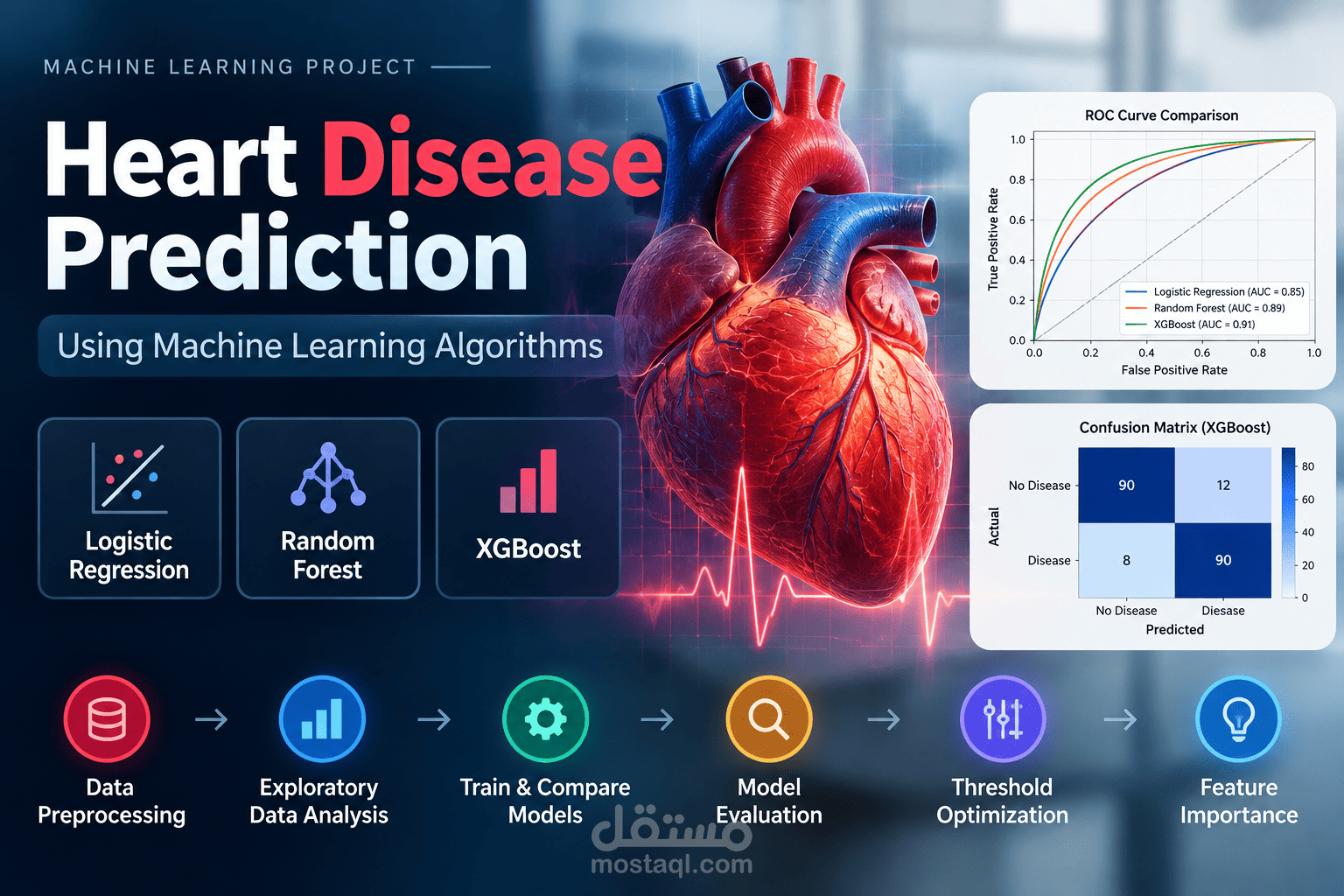
Developed a Machine Learning classification project to predict the presence of heart disease using patient medical data from the UCI Heart Disease Dataset.
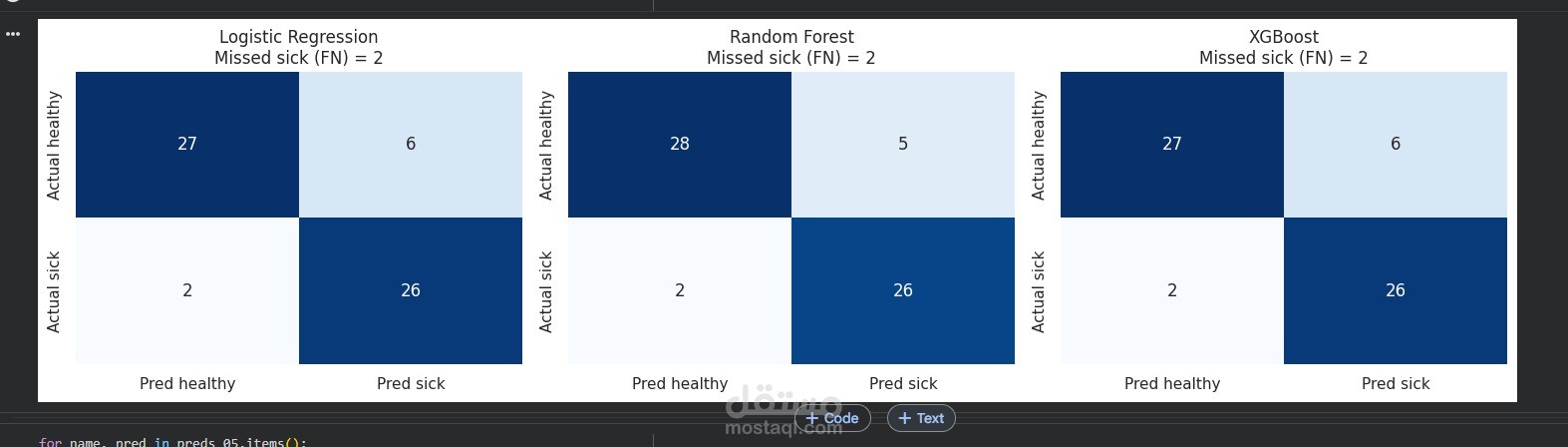
The project compares three machine learning algorithms: **Logistic Regression, Random Forest, and XGBoost**, with a strong focus on improving Recall and reducing False Negatives (missed heart disease cases).
### Key Features
- **Data Preprocessing:** Handling missing values, categorical encoding, and feature scaling.
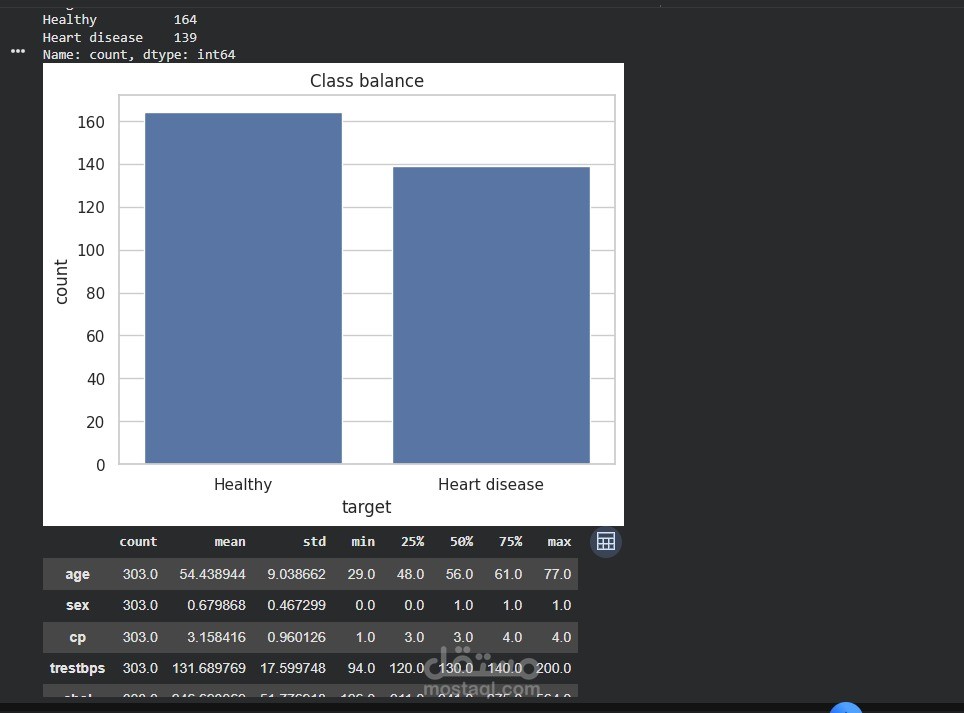
- **Exploratory Data Analysis (EDA):** Analyzing patient data and visualizing class distribution.
- **Machine Learning Models:** Training and comparing Logistic Regression, Random Forest, and XGBoost.
- **Model Evaluation:** Measuring Accuracy, Precision, Recall, F1-Score, and ROC-AUC.
- **Cross-Validation:** Using Stratified 5-Fold Cross-Validation for model comparison.
- **Threshold Optimization:** Adjusting classification thresholds to improve the detection of heart disease cases.
- **Data Visualization:** Creating Confusion Matrices, ROC Curves, and Precision-Recall Curves.
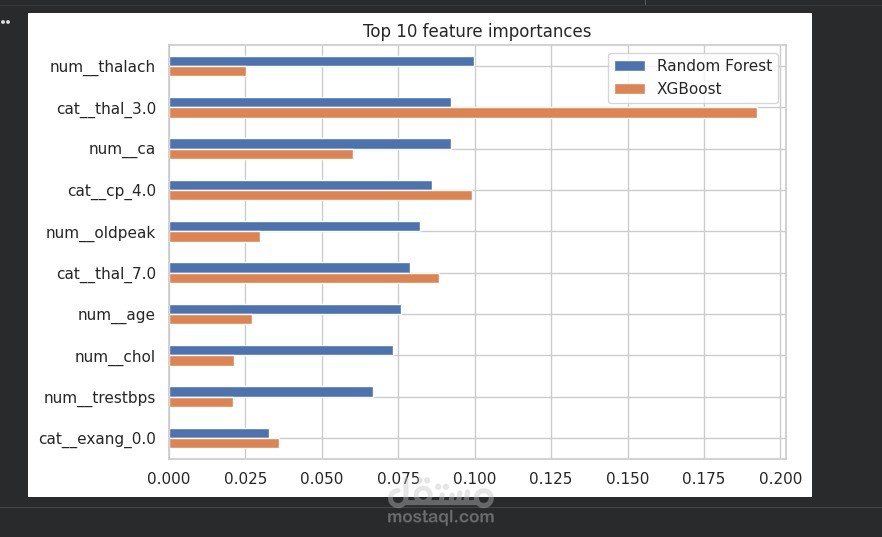
- **Feature Importance:** Identifying the most influential features in model predictions.
### Technologies Used
Python, Pandas, NumPy, Scikit-learn, XGBoost, Matplotlib, Seaborn, and Jupyter Notebook.
### Project Outcome
Built and evaluated three classification models, compared their performance, and implemented threshold optimization to prioritize identifying patients with heart disease.
The project demonstrates practical skills in machine learning, data preprocessing, classification, and model evaluation.
*This is an educational machine learning project, not a clinically validated diagnostic system.*