Genetic Disorder Clustering (Haemochromatosis)
تفاصيل العمل
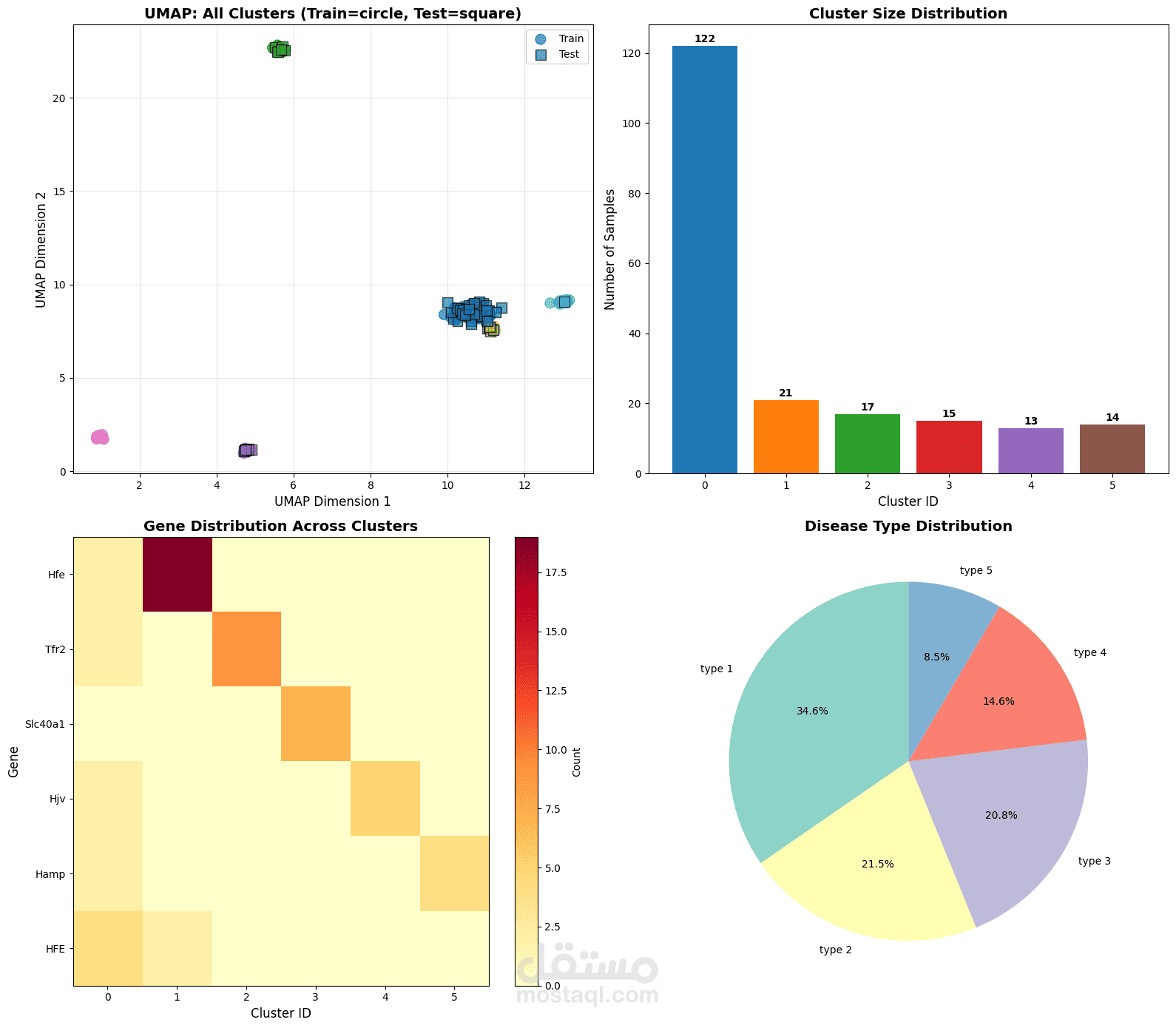
Hemochromatosis is a hereditary metabolic disorder characterized by dysregulated iron homeostasis, leading to the excessive accumulation of iron in body tissues and organs. This progressive iron overload results from mutations in genes responsible for iron regulation, most commonly in the HFE gene, which disrupts the body's ability to properly control dietary iron absorption. In healthy individuals, iron balance is maintained through a sophisticated regulatory system involving intestinal absorption control, the hormone hepcidin, iron recycling from senescent red blood cells, and storage in ferritin complexes. However, in hemochromatosis patients, genetic defects impair this regulation, causing unconstrained iron uptake despite adequate body stores. The disorder manifests in several forms, classified primarily as hereditary (genetic) or secondary (acquired due to other medical conditions). Hereditary hemochromatosis includes multiple types (Types 1-5) distinguished by their causative genes: HFE (Type 1), HJV/HAMP (Type 2), TFR2 (Type 3), SLC40A1 (Type 4), and FTH1 (Type 5). Each type presents with varying clinical severity, age of onset, and inheritance patterns, though all share the common pathophysiology of iron accumulation. Clinically, hemochromatosis often progresses insidiously, with early symptoms including fatigue, joint pain, and abdominal discomfort, progressing to more severe complications such as liver cirrhosis, diabetes mellitus, cardiomyopathy, and endocrine dysfunction if left untreated. Diagnosis combines genetic testing, biochemical markers (elevated ferritin and transferrin saturation), and clinical evaluation. Current management focuses on therapeutic phlebotomy to reduce iron stores, with iron chelation therapy as an alternative, alongside treatment of organ-specific complications. Despite being one of the most common genetic disorders in populations of Northern European descent, hemochromatosis remains underdiagnosed, with many patients presenting only after irreversible organ damage has occurred. The rising recognition of this condition, coupled with advances in genetic testing and understanding of iron metabolism pathways, has created an urgent need for improved diagnostic tools, personalized treatment approaches, and comprehensive classification systems. This project addresses this need by developing a computational framework for accurate genetic classification of hemochromatosis subtypes using machine learning approaches, specifically unsupervised clustering methods to identify patient subgroups that may not align with current classification schemes.