The TDAH Sensory Sanctuary
تفاصيل العمل
The Challenge:
Designing a supportive environment adapted to children with TDAH required creating a space that reduces distractions while encouraging concentration, emotional regulation, and independence. The challenge was to balance functionality, comfort, and sensory needs within a welcoming atmosphere.
The Design Strategy:
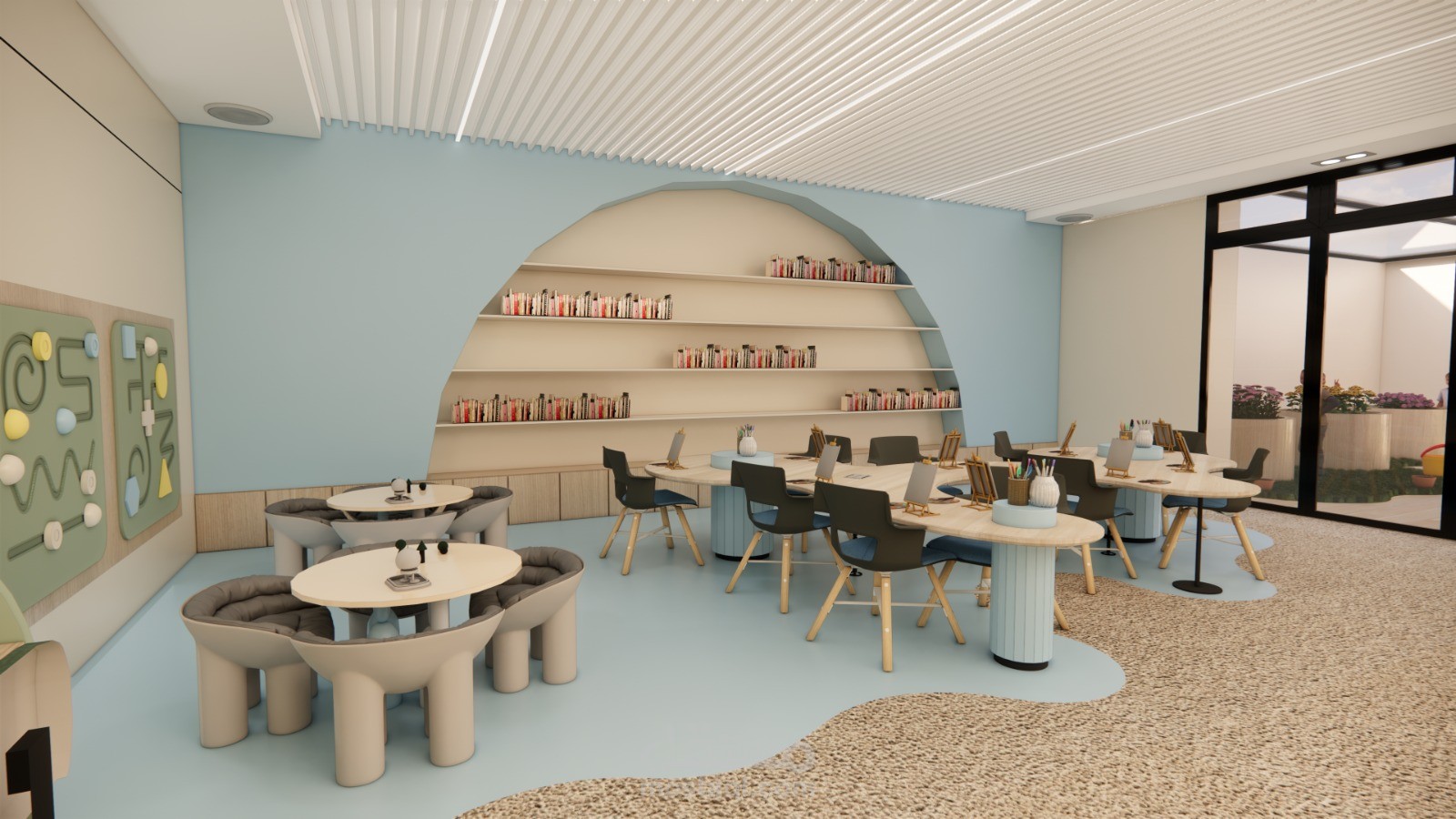
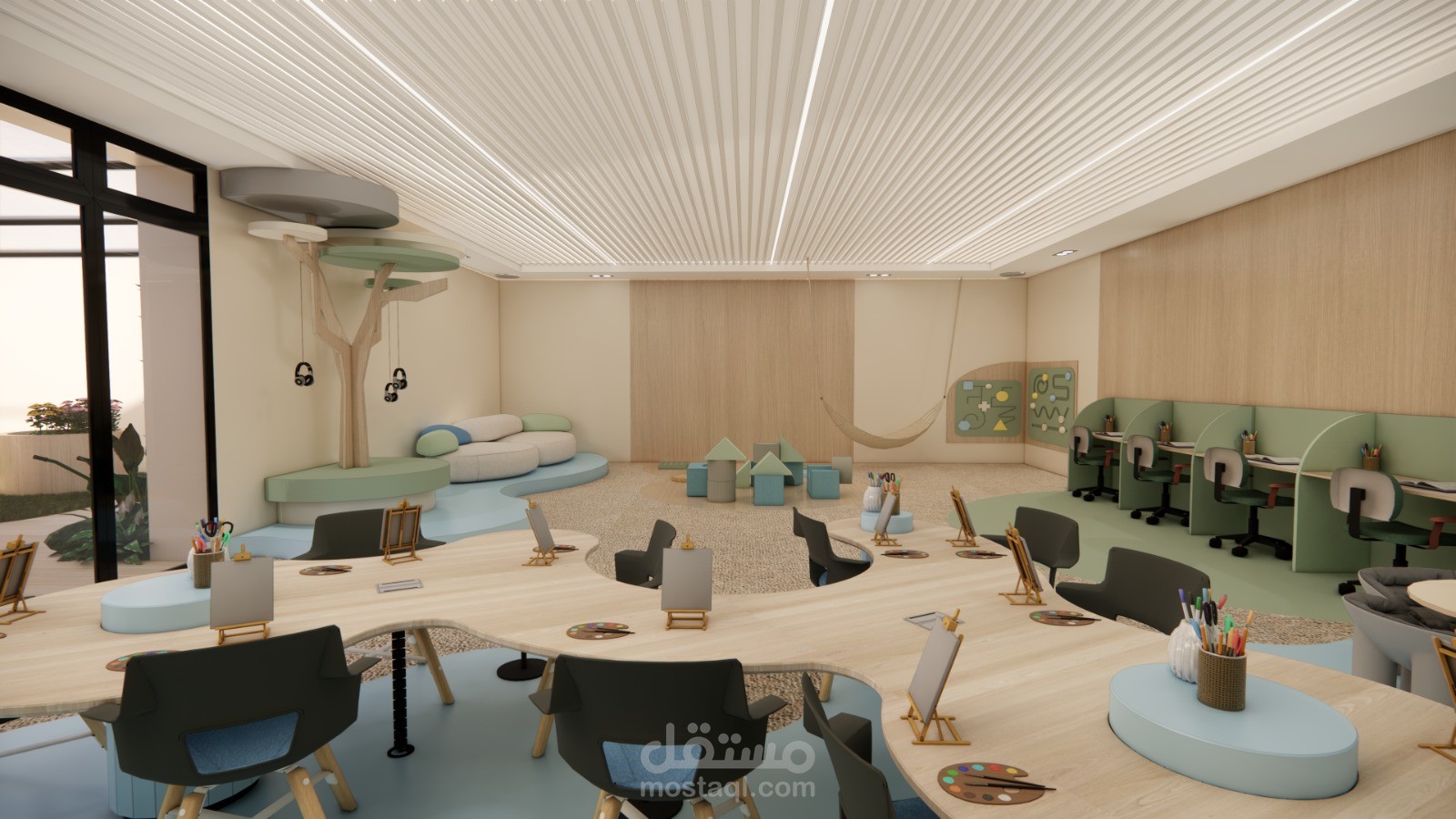
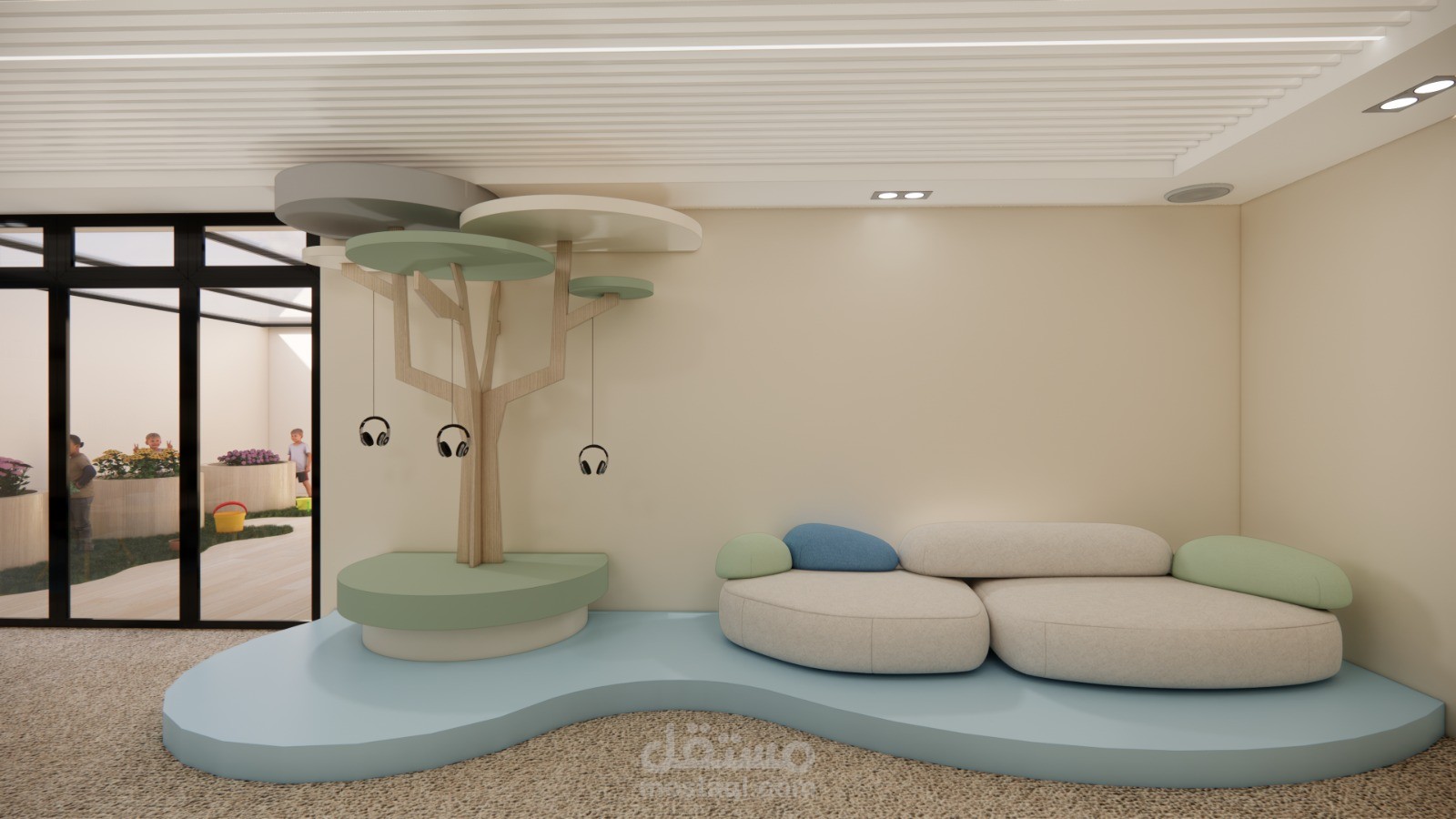
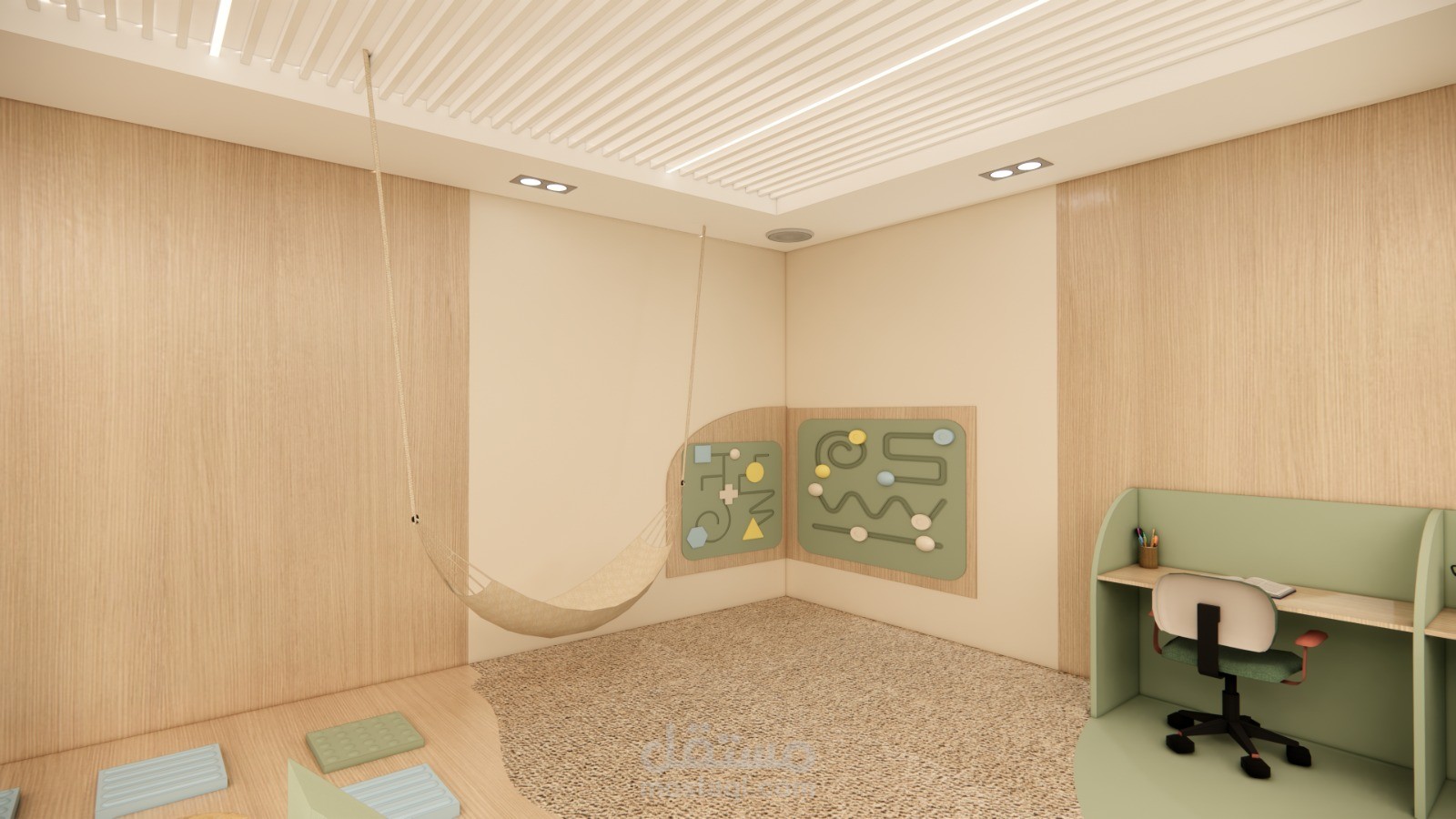
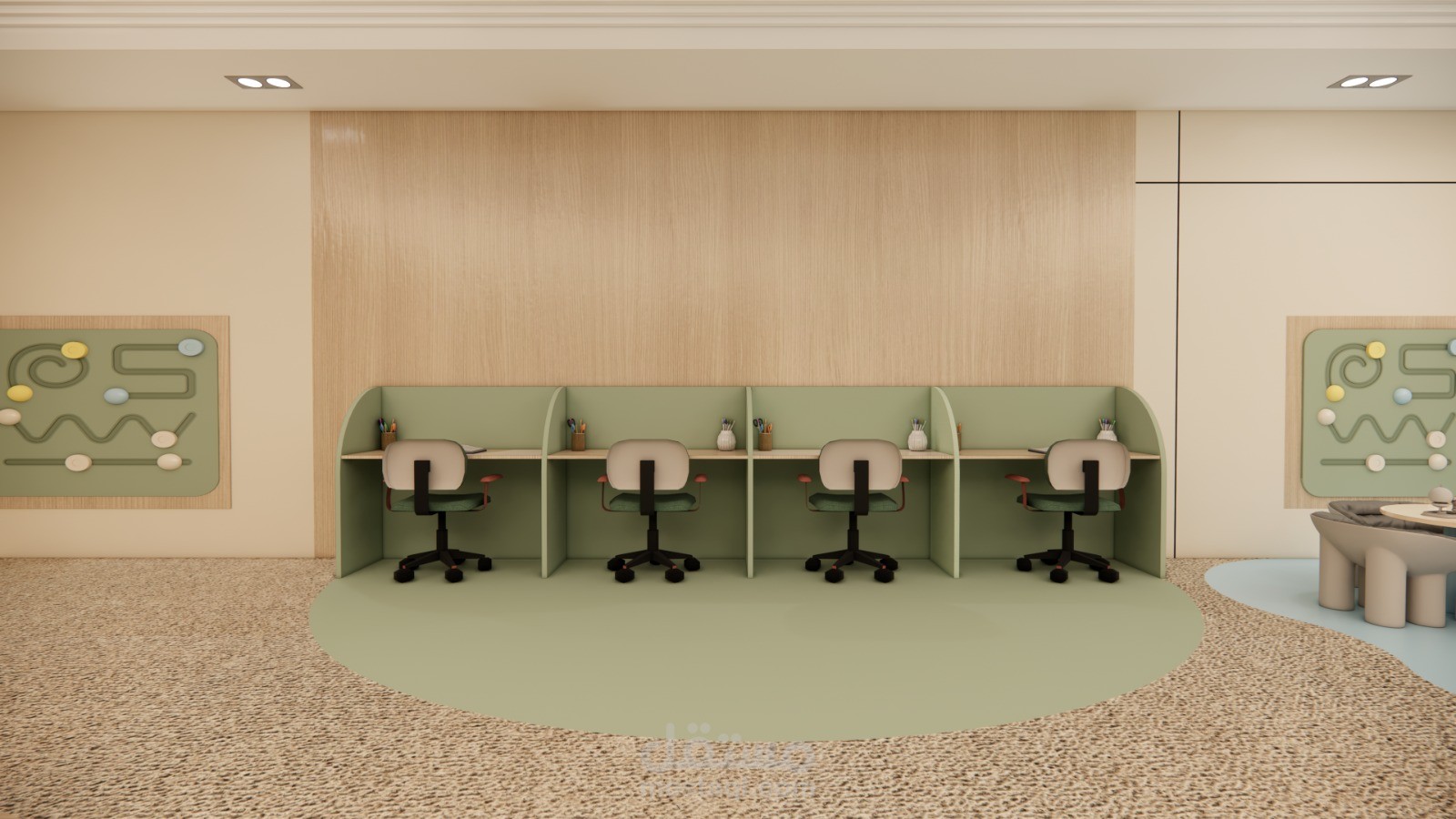
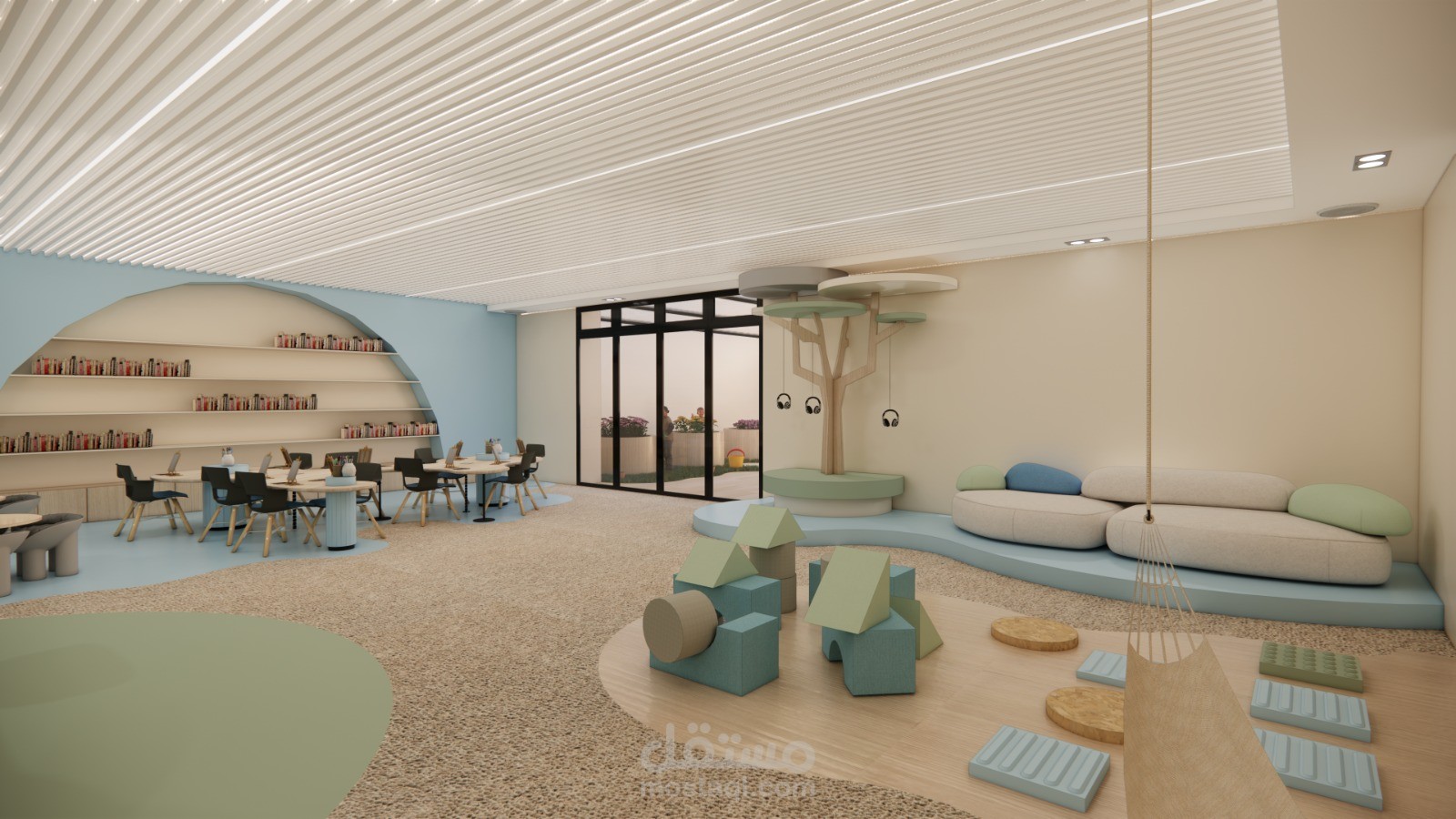
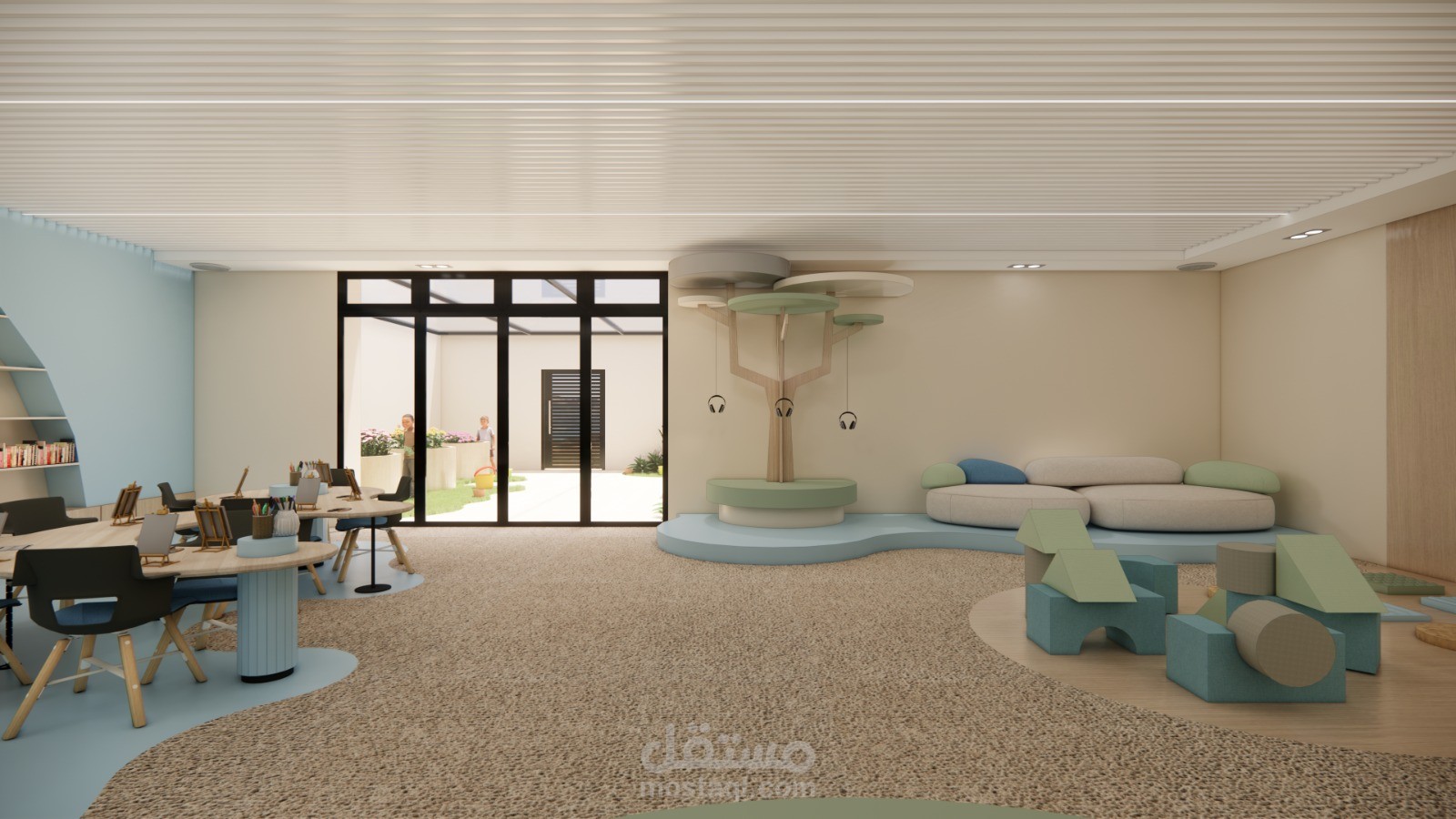
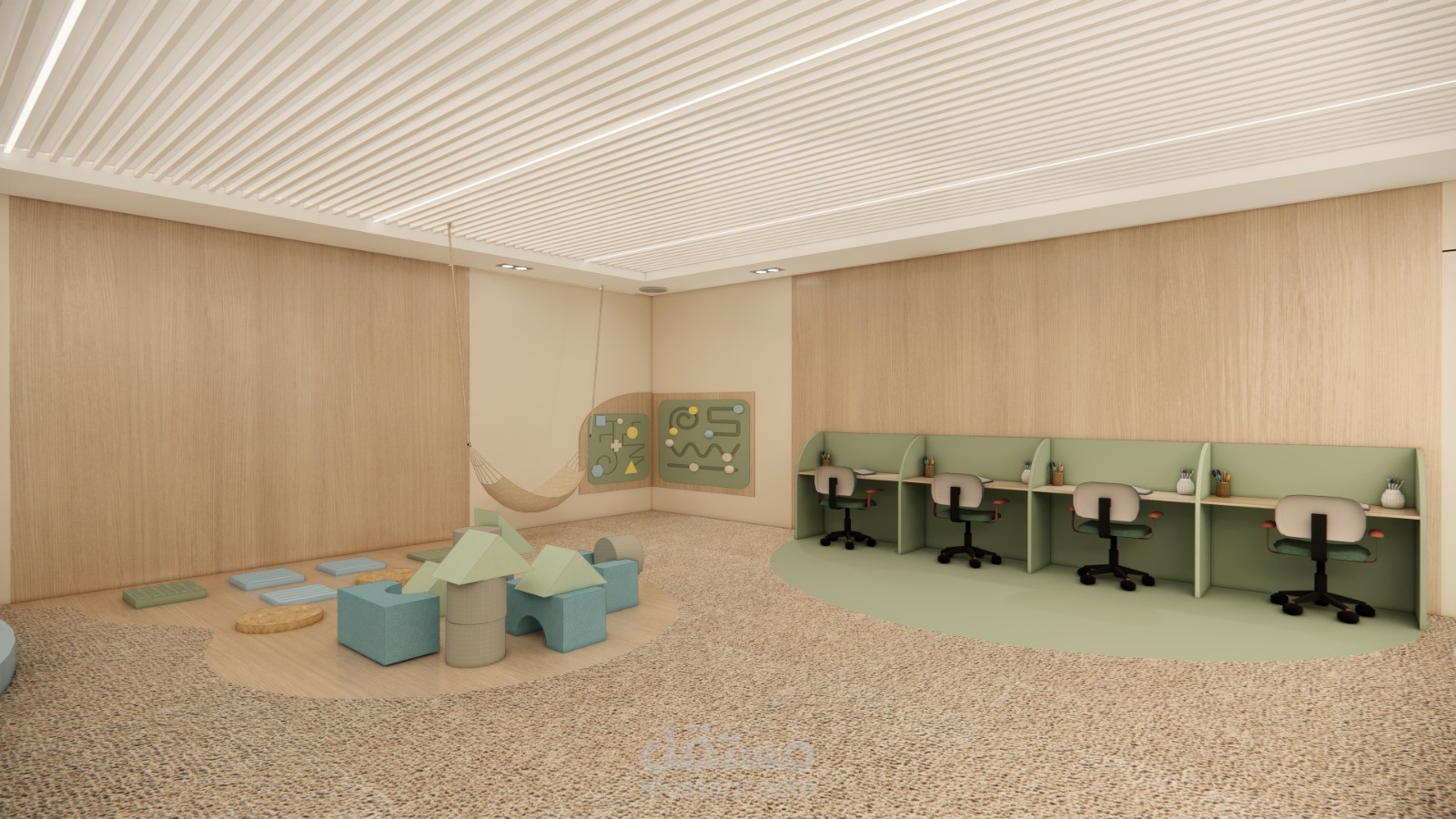
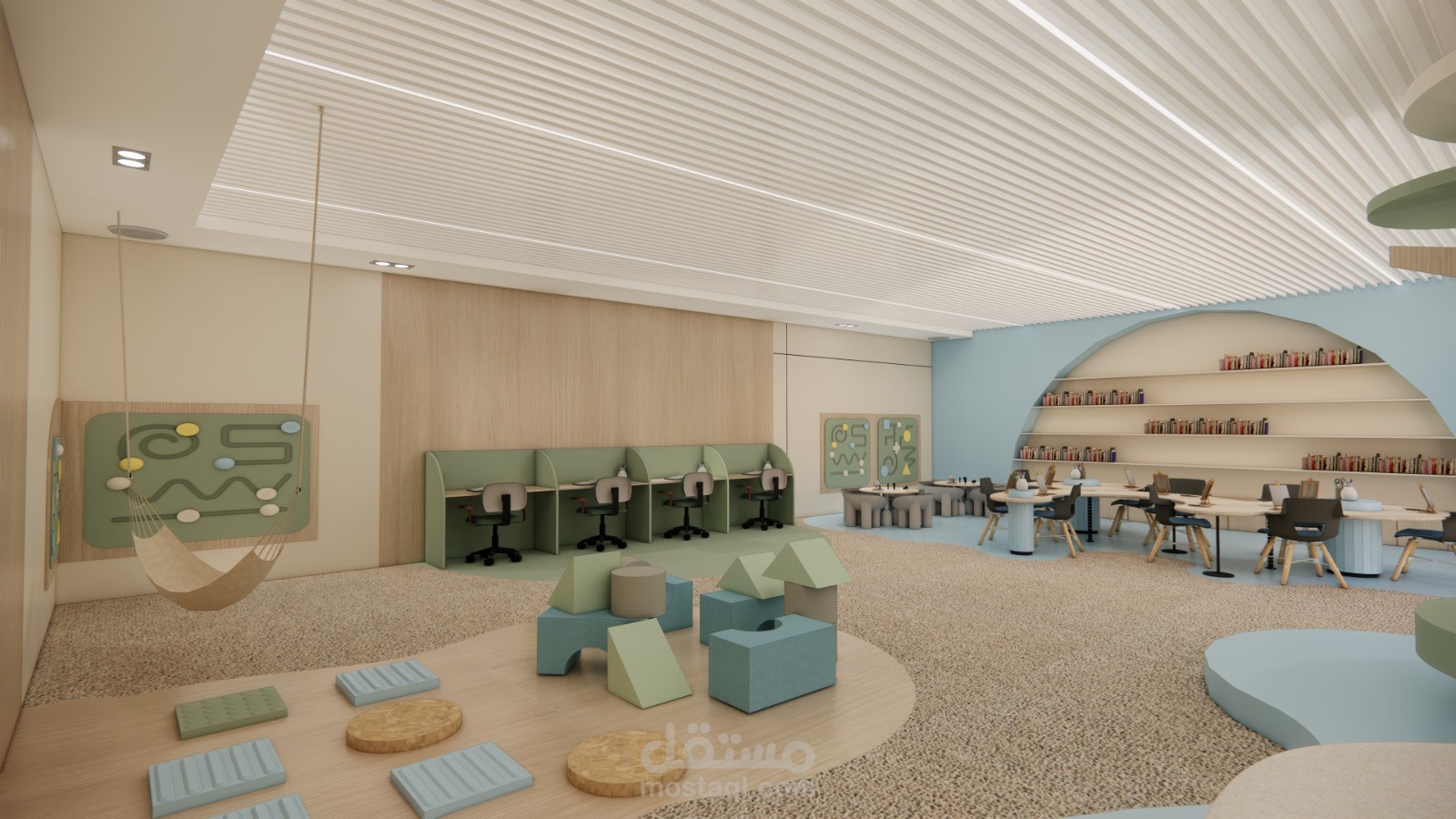
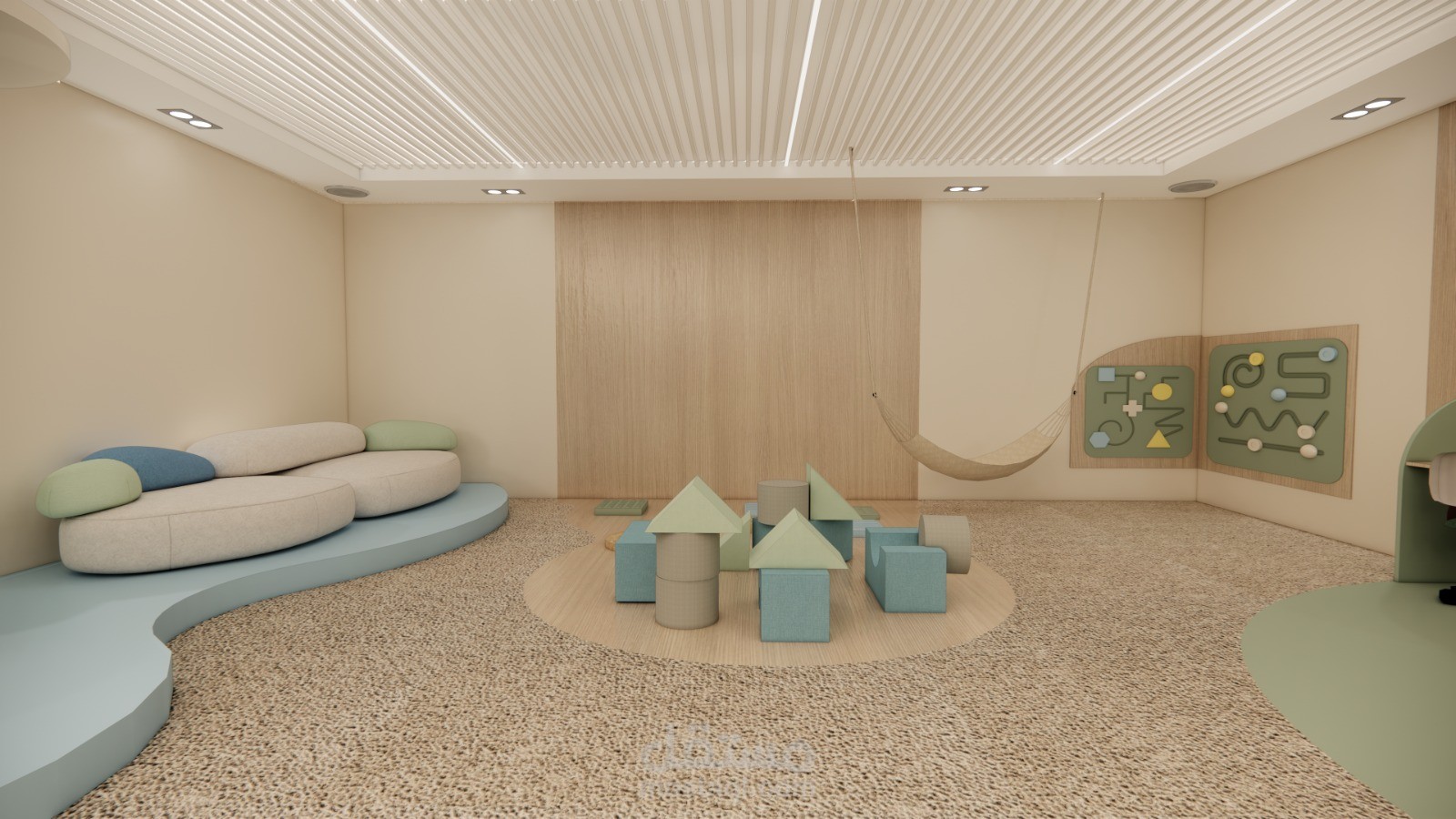
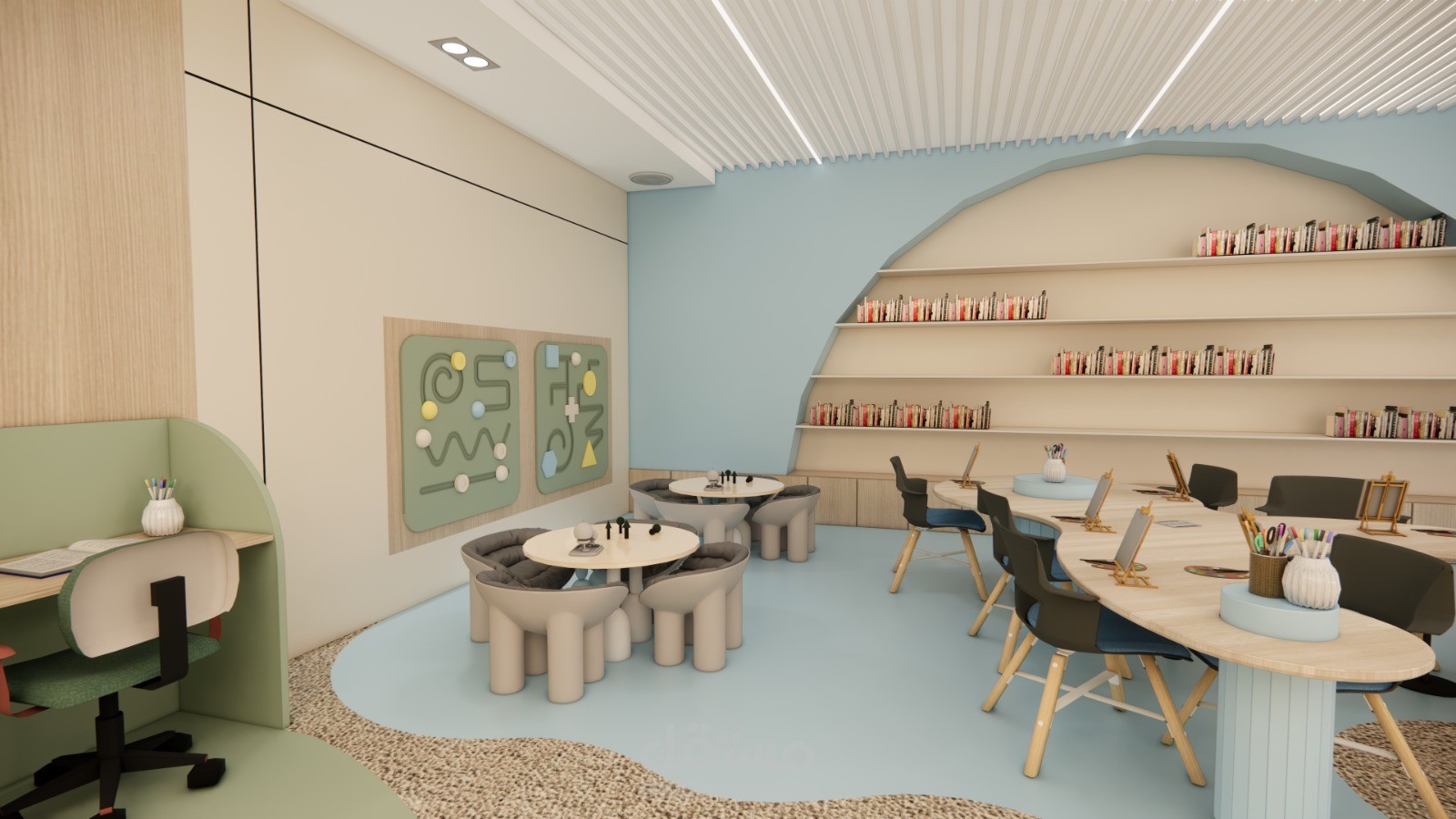
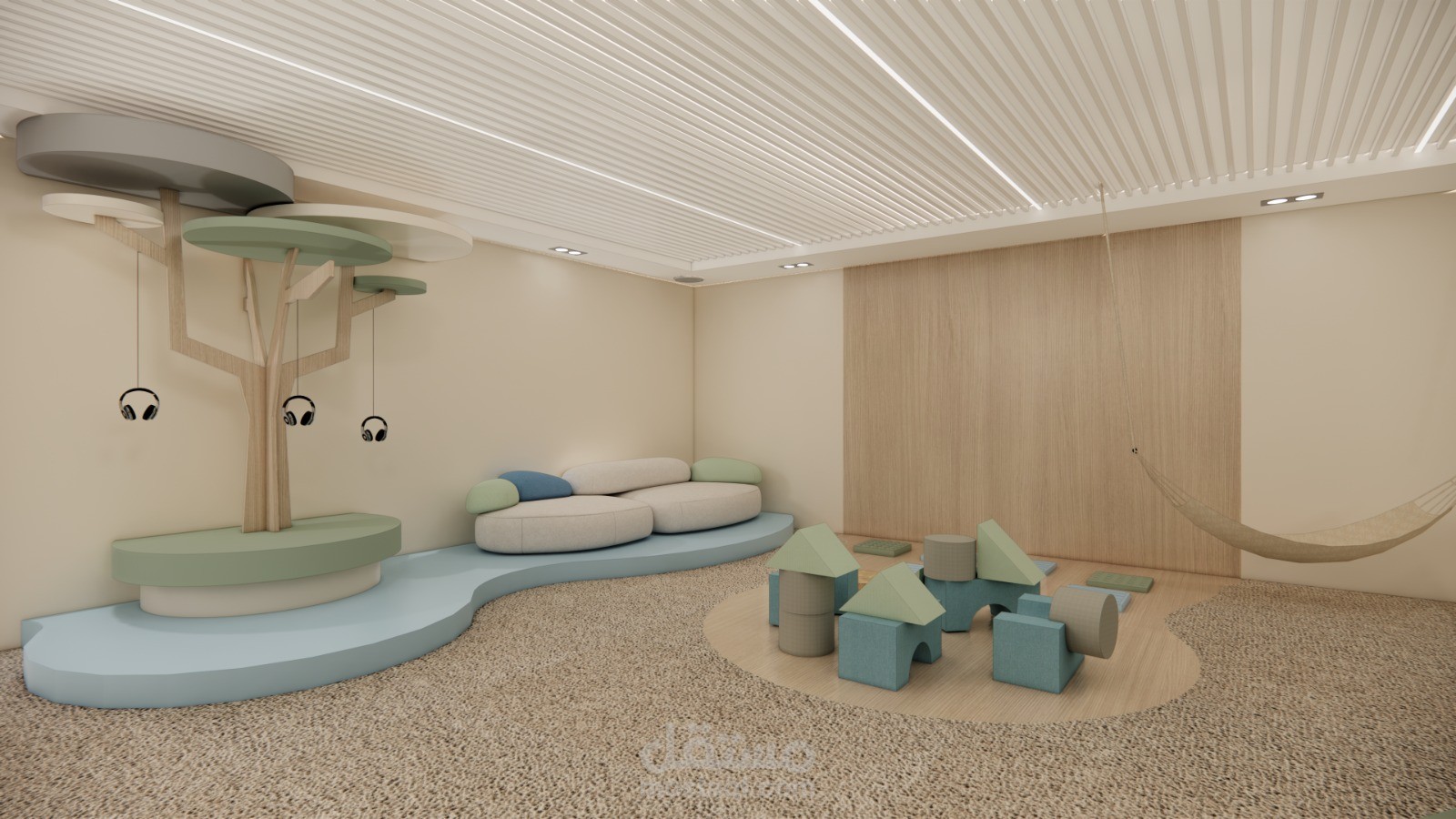
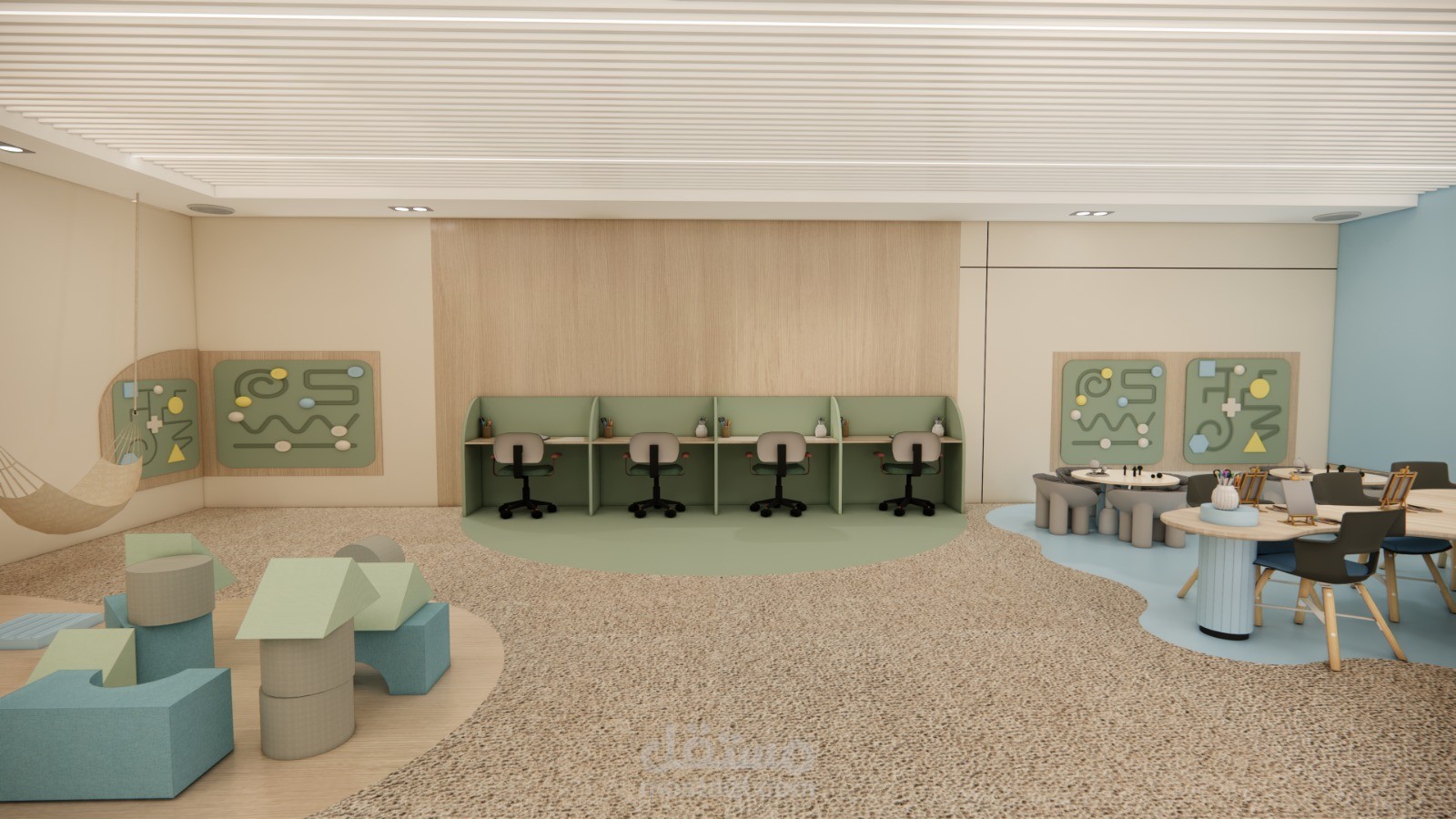
The design approach focuses on creating a calm and structured environment through soft colors, organic shapes, and natural materials. A soothing palette of sage green, light blue, beige, and neutral tones was selected to promote relaxation and focus. Acoustic textures, ergonomic furniture, and dedicated sensory areas were integrated to provide a comfortable and stimulating yet controlled experience.
The Execution:
The space was carefully organized into different functional zones: learning areas, relaxation corners, sensory activities, and storage solutions. Rounded furniture, soft finishes, indirect lighting, and sound-absorbing materials were incorporated to enhance safety, comfort, and usability.
The Transformation:
The final result reveals a harmonious and inclusive space designed around the specific needs of children with TDAH. The combination of calming colors, thoughtful layouts, and sensory-friendly elements creates an environment that supports focus, creativity, and emotional well-being.
Design Concept:
A space where every detail contributes to creating a safe, inspiring, and supportive experience for children.