CRM || Real State
تفاصيل العمل

Real Estate CRM Dashboard
Project Overview
A modern CRM platform designed to help real estate sales teams manage properties, leads, agents, and business performance from one centralized workspace. The goal was to simplify daily operations, improve visibility across departments, and support faster, data-driven decisions.
-------------------------
1. Problem
Real estate teams deal with large amounts of inventory, multiple lead sources, and different sales activities every day. Most existing systems feel cluttered, making it difficult to find information quickly, monitor performance, and move efficiently between tasks.
---
2 . Solution
We designed a scalable CRM that organizes complex workflows into clear, connected experiences. By focusing on usability, information hierarchy, and AI-assisted interactions, the platform helps users complete their tasks faster while keeping business insights easily accessible.
---
3. User Flows
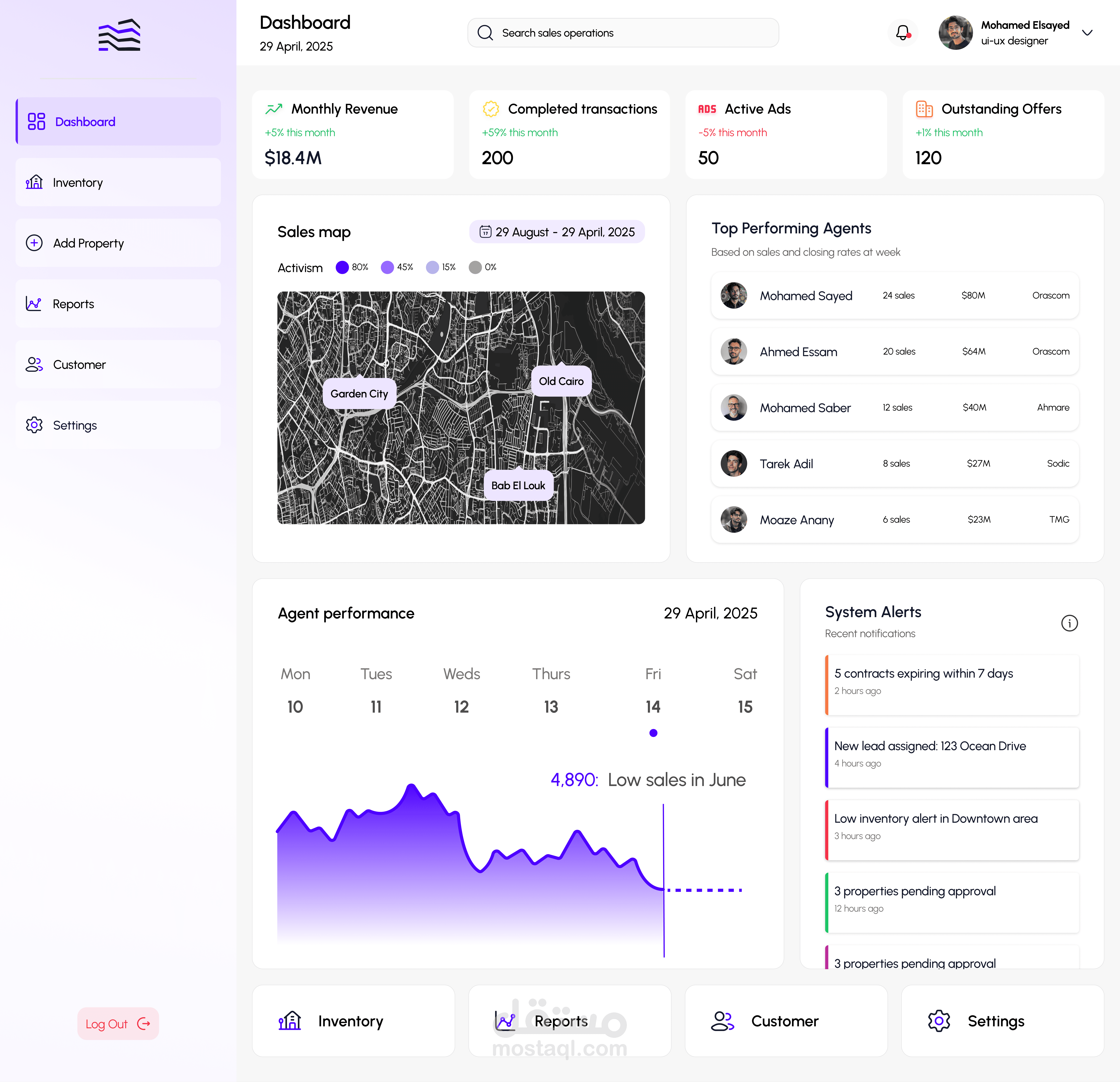
3.1. Dashboard
A central overview of the business with key KPIs, sales activity, top-performing agents, regional heat maps, and system alerts to support quick decision-making.
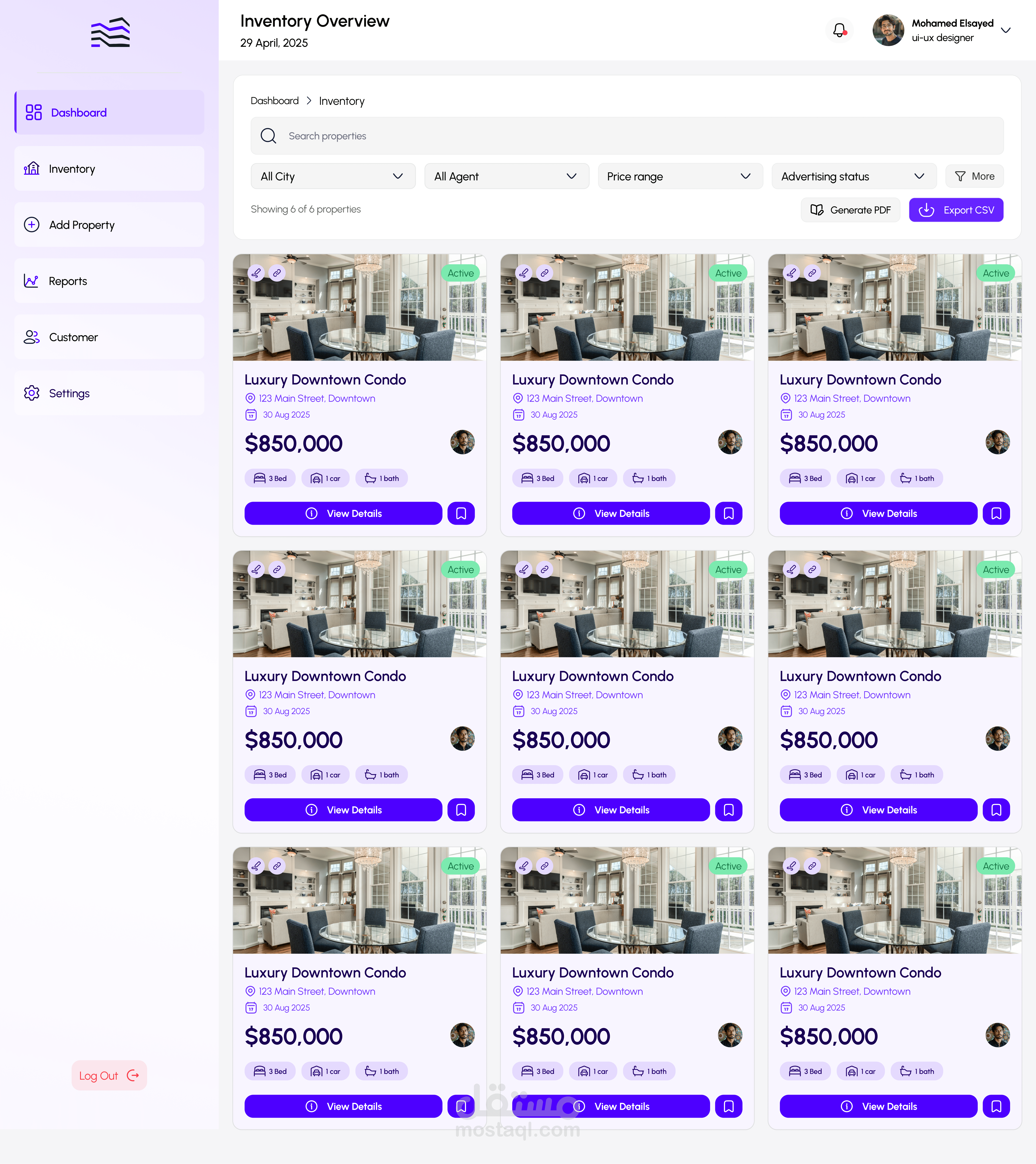
3.2. Property Management
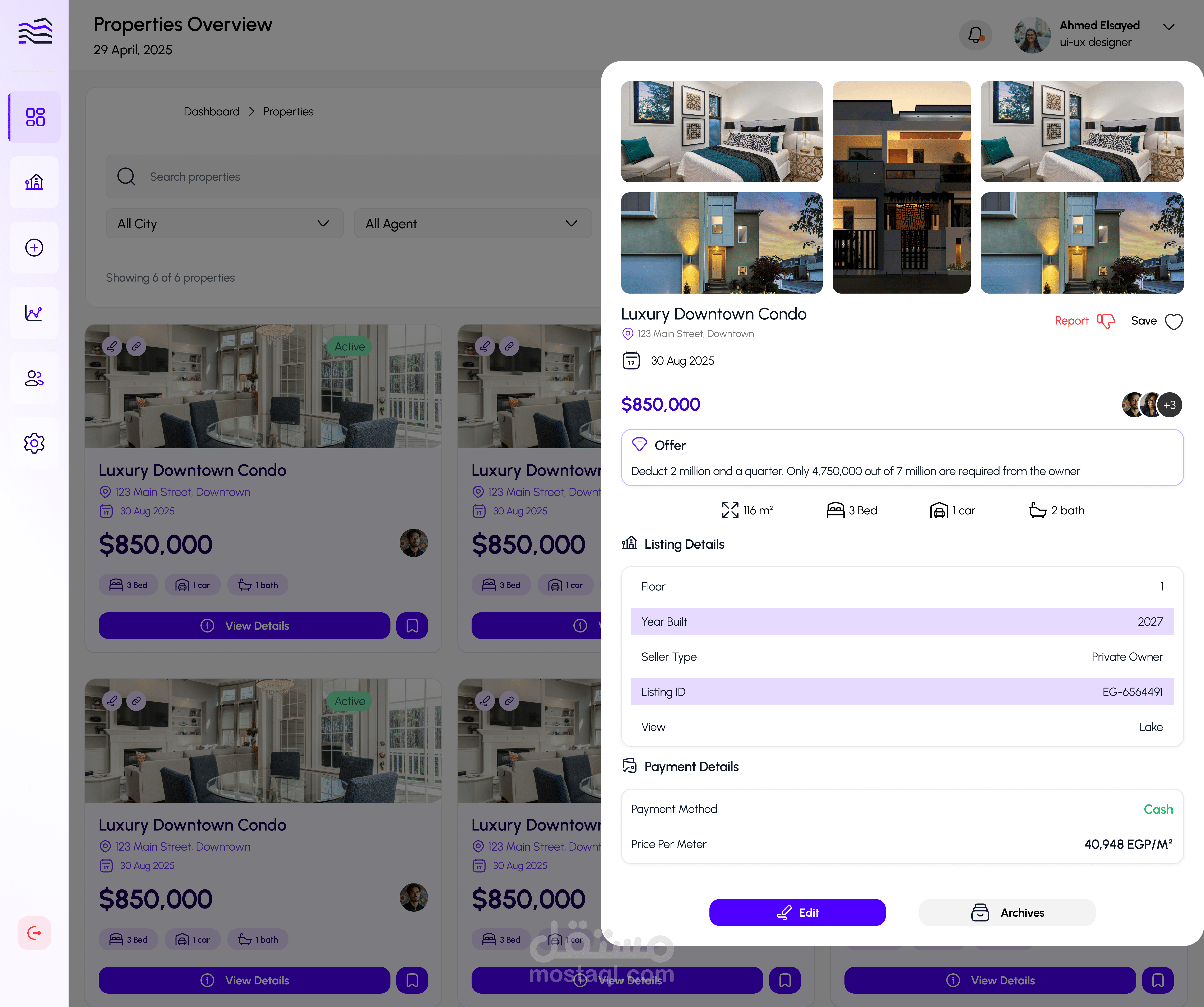
A dedicated workspace to browse, search, filter, and manage property inventory with quick access to property details and developer information.
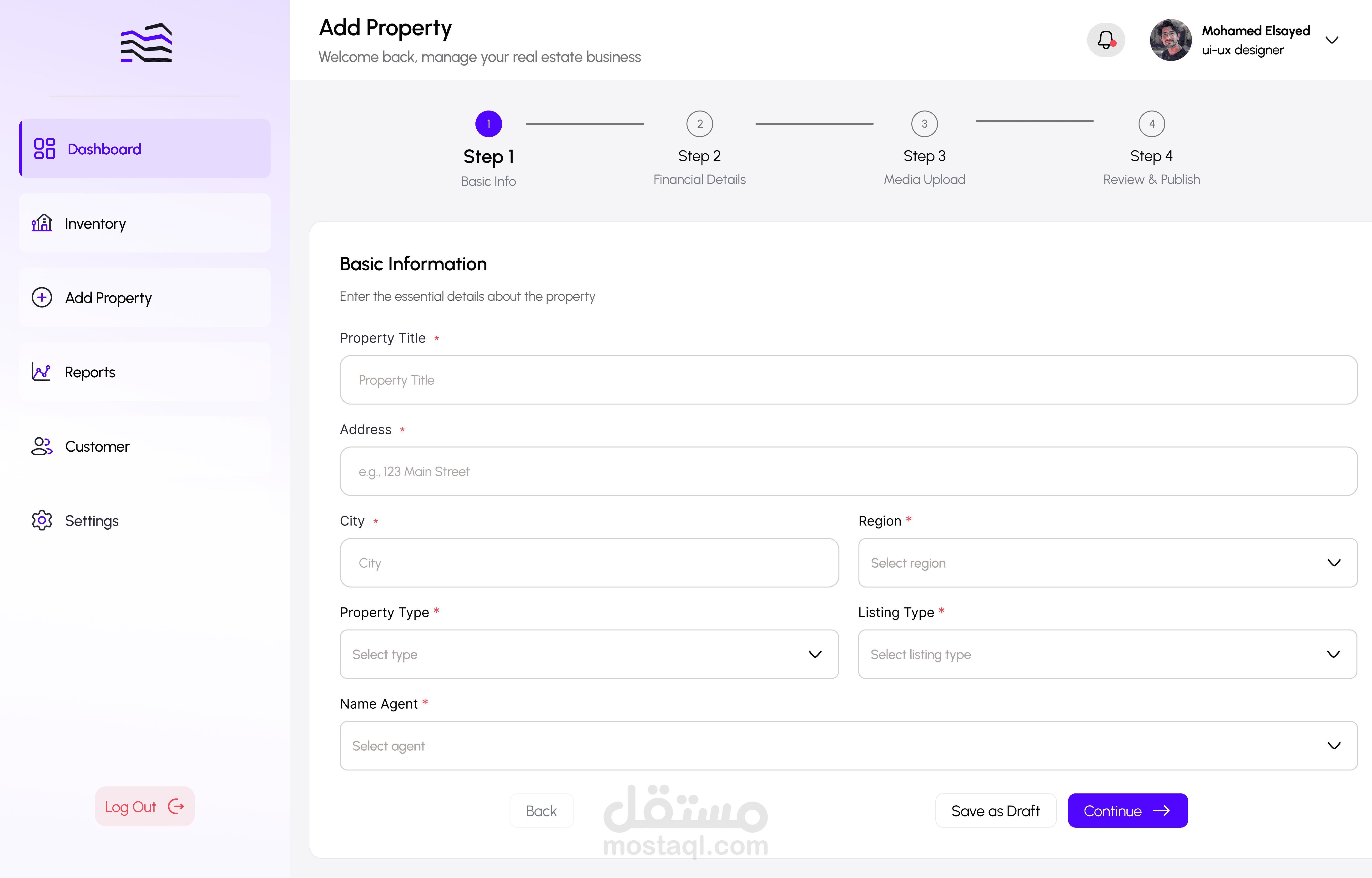
3.3. Add Property
A guided workflow that simplifies adding new properties by breaking the process into clear, manageable steps.
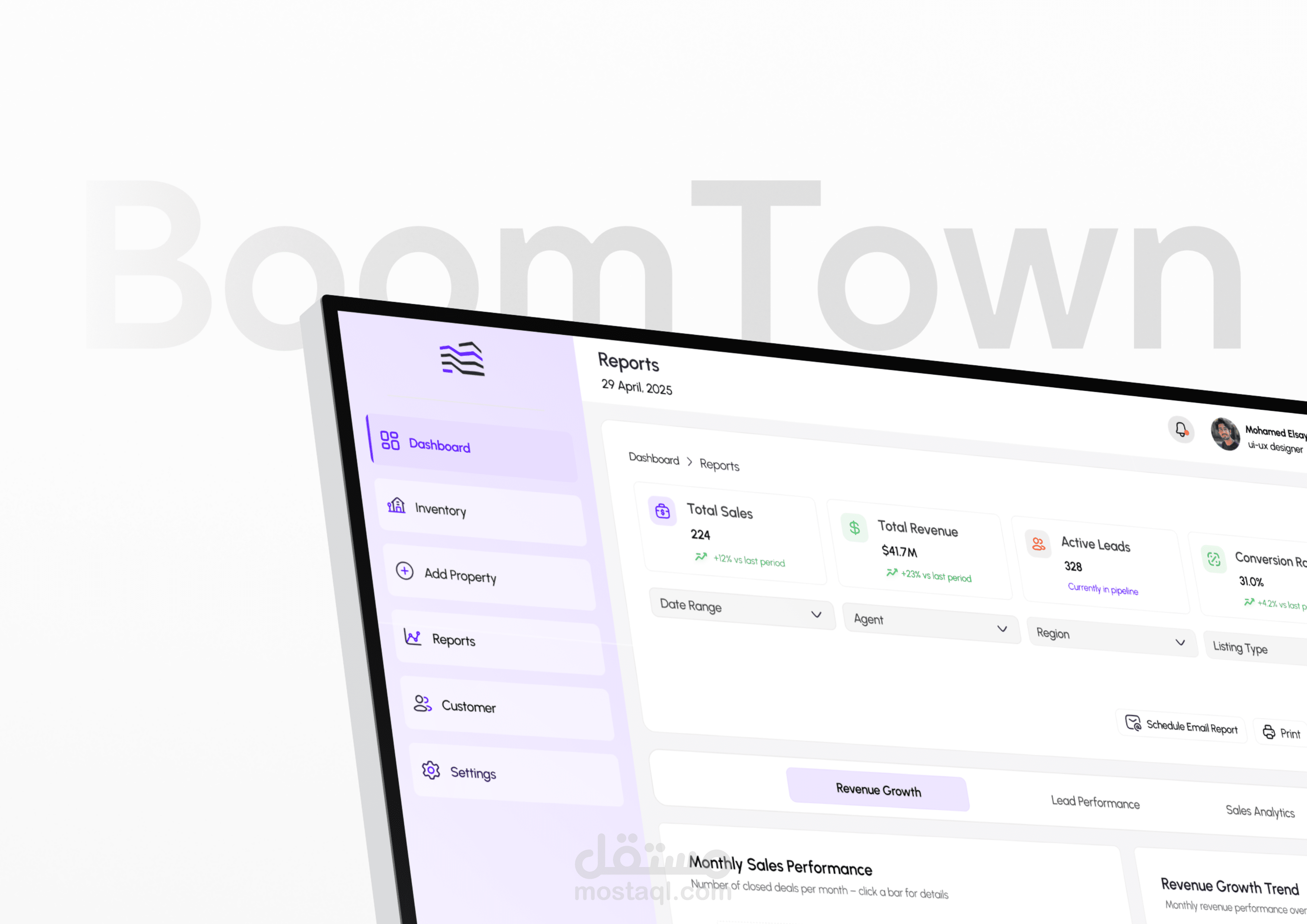
3.4. Reports
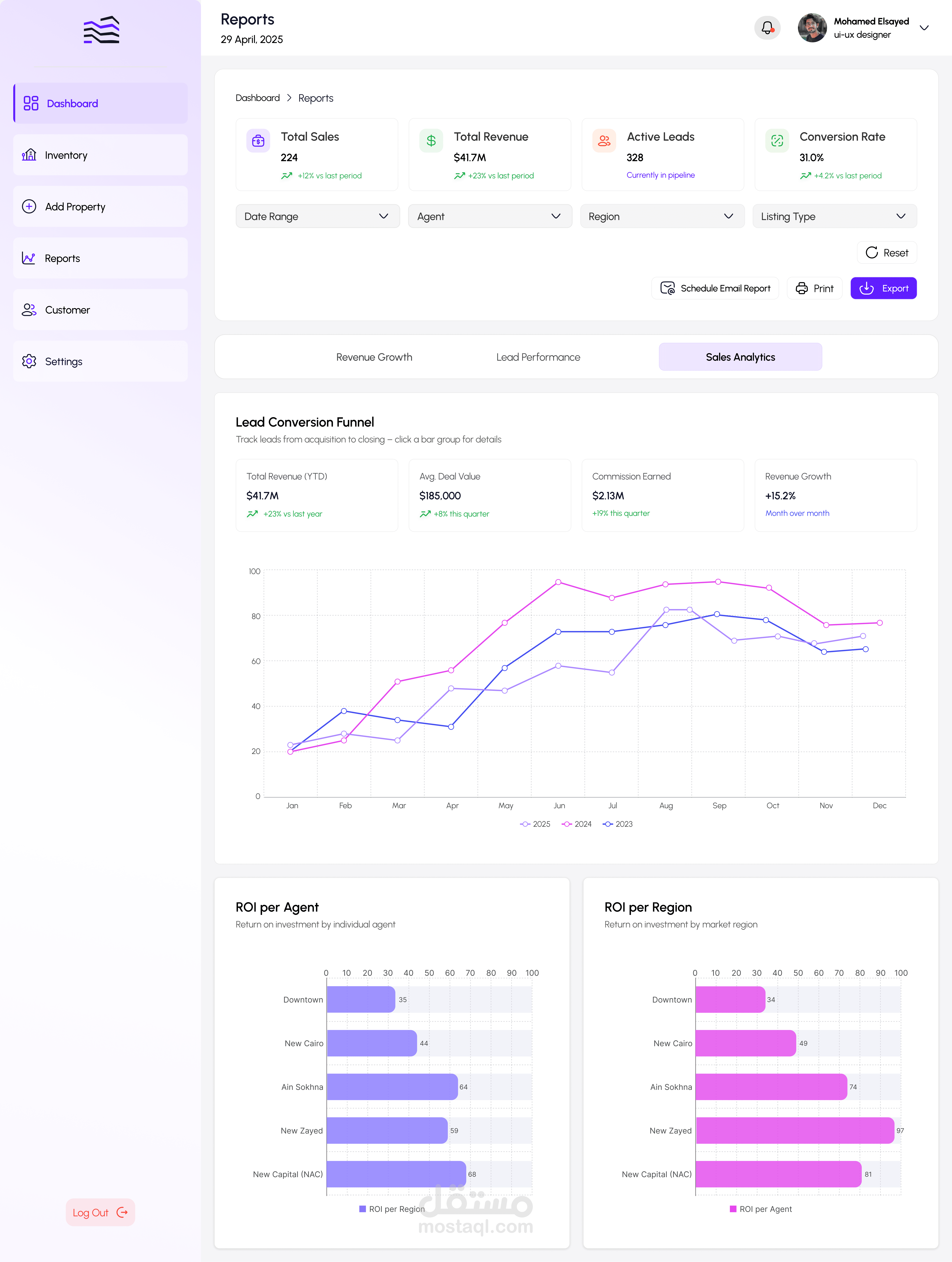
Provides an overview of company performance through KPIs, sales reports, and exportable data, helping management track business growth and make informed decisions.
3.5. Lead Analytics
Measures lead performance across different channels, tracks agent productivity, and helps identify the most effective lead sources.
3.6. Sales Analytics
Offers insights into sales performance, revenue, ROI, and regional growth through visual dashboards and business metrics.
3.7. Settings
Allows administrators to manage users, permissions, roles, and personalize the CRM experience based on different access levels.
---
4. UX Challenges
* Simplifying complex real estate workflows.
* Making large datasets easy to scan and navigate.
* Supporting different user roles within one system.
* Keeping analytics accessible without overwhelming users.
------------------------
5. Design Decisions
* Prioritized the most common daily tasks.
* Organized information using a clear visual hierarchy.
* Standardized components and interactions across the platform.
* Reduced unnecessary navigation between related features.
* Integrated AI to improve search, recommendations, and workflow efficiency.
---------------------
6. Outcome
The result is a clean and scalable Real Estate CRM that enables sales teams to manage inventory, monitor performance, and make faster business decisions through a more intuitive and efficient user experience.