Car Double Wishbone Suspension Design
تفاصيل العمل
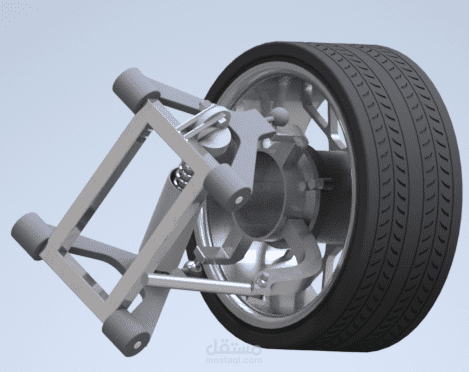
A double-wishbone is an independent suspension design that can be
found at the front, rear, or all four wheels. In this context, “independent”
means that a single wheel’s movement is not affected by the other three
wheels. In other words, it’s free to move (somewhat) independently of the
chassis.
This design offers several advantages, specifically in high performance
on- and off-road environments. The key benefit is that, unlike a similar
MacPherson strut setup, a double wishbone design doesn’t significantly
affect wheel camber with suspension travel.
That means a consistent tire contact patch with the road, regardless of
body roll or road bumps.
• The wishbone type is the most popular independent suspension system.
• It consists of two (occasionally parallel) wishbone-shaped arms to locate the
wheel. Each wishbone or arm has two mounting points on the chassis and one
joint at the knuckle.
• The shock absorber and coil spring mount to the wishbones to control vertical
movement.
• The vehicle weight is transmitted from the body and the cross member to the
coil spring through which it goes to the lower wishbone member.
• The wishbones not only position the wheels and transmit the vehicle load but
also rest acceleration, braking and cornering forces.