WearCasr (virtual try on)
تفاصيل العمل
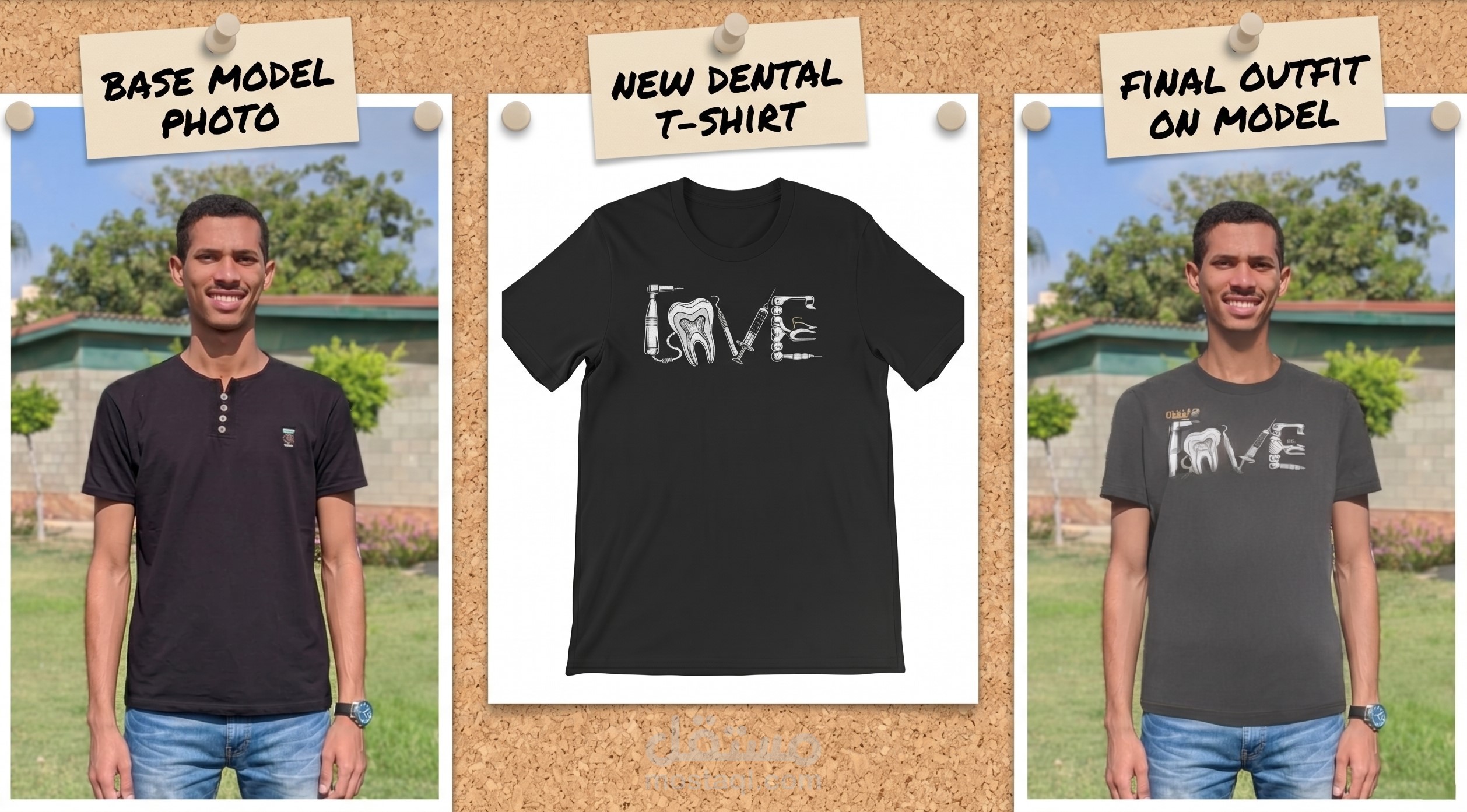
WearCast: Advanced Virtual Try-On (VTON) System
WearCast leverages state-of-the-art generative AI and diffusion models to provide a seamless, highly realistic virtual fitting room experience for e-commerce. Below is a breakdown of exactly what the underlying AI models do to generate the final image:
Precise Human and Garment Segmentation:
Before any rendering occurs, the models analyze the input images to map the user's body shape, pose, and existing clothing. They generate highly accurate masks that isolate the target area (e.g., the upper or lower torso) so the system knows exactly where the new garment belongs without altering the user's body or the background.
Intelligent Garment Warping and Alignment:
The system doesn't just overlay a flat image. The underlying models calculate the geometry of the user's pose and body contours, digitally stretching and reshaping the 2D clothing item so it wraps naturally around their specific frame.
Diffusion-Based Blending and Generation:
Using advanced diffusion techniques (leveraging the capabilities of architectures like IDM-VTON, CatVTON, and OOTDiffusion), the models synthesize the new garment onto the user. This process meticulously generates natural-looking fabric folds, wrinkles, and drape, ensuring the clothing interacts realistically with the user's body.
Lighting and Shadow Synchronization:
To make the try-on look authentic, the models adapt the lighting on the digital garment to match the ambient lighting, shadows, and contrast of the user's original photograph.
Identity and Detail Preservation:
While the clothing is completely transformed, the models employ specialized networks (including identity-preserving tools like FaceFusion) to guarantee that the user's face, skin tone, hair, and non-targeted accessories remain completely intact and unaltered.
By synchronizing these complex computer vision and generative processes, WearCast allows users to see an accurate, high-fidelity representation of how clothing will look and fit on their own bodies, directly bridging the gap between online browsing and the physical fitting room.