Sales Data Warehouse & ETL Pipeline (SSIS Project)
تفاصيل العمل
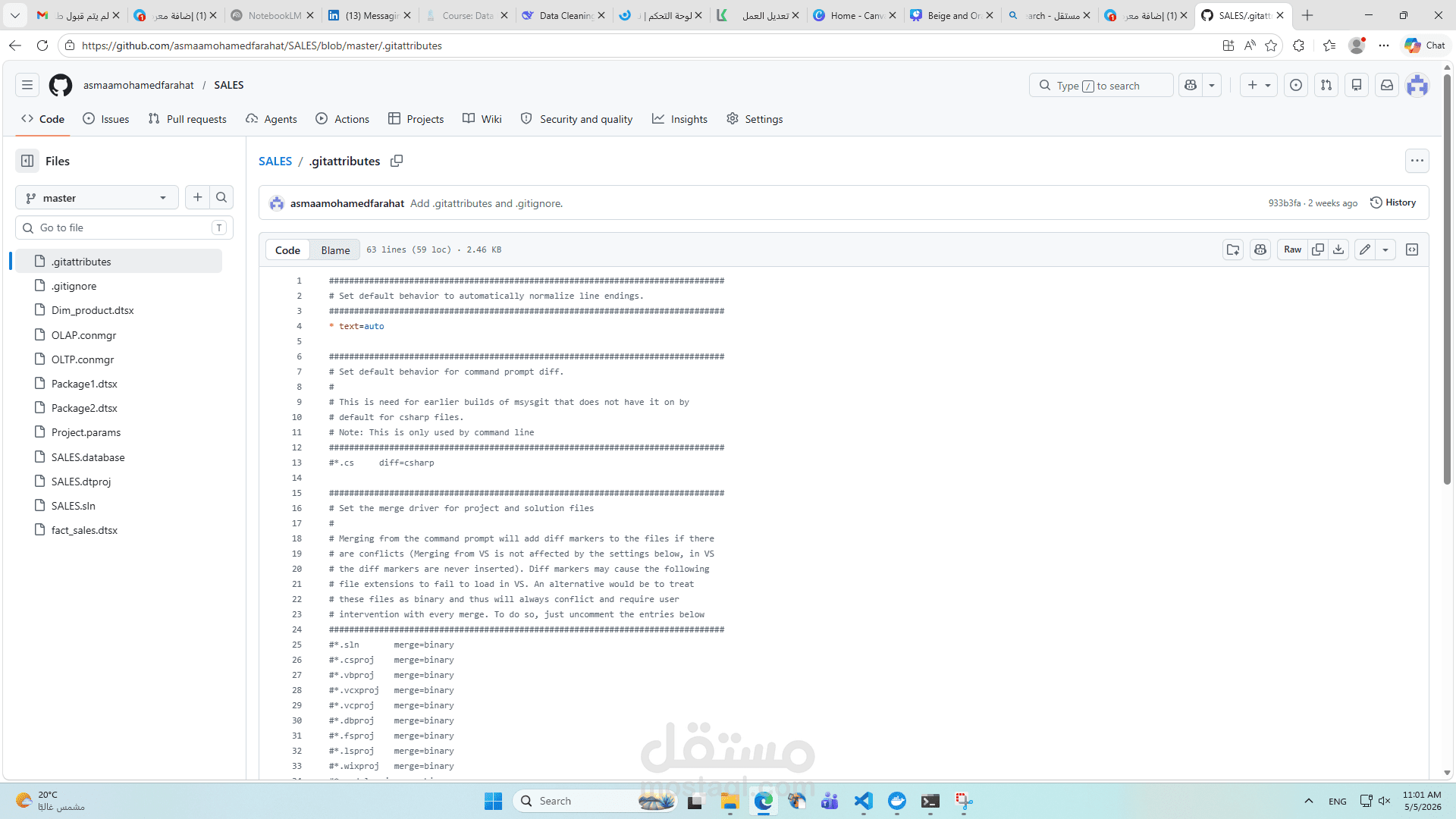
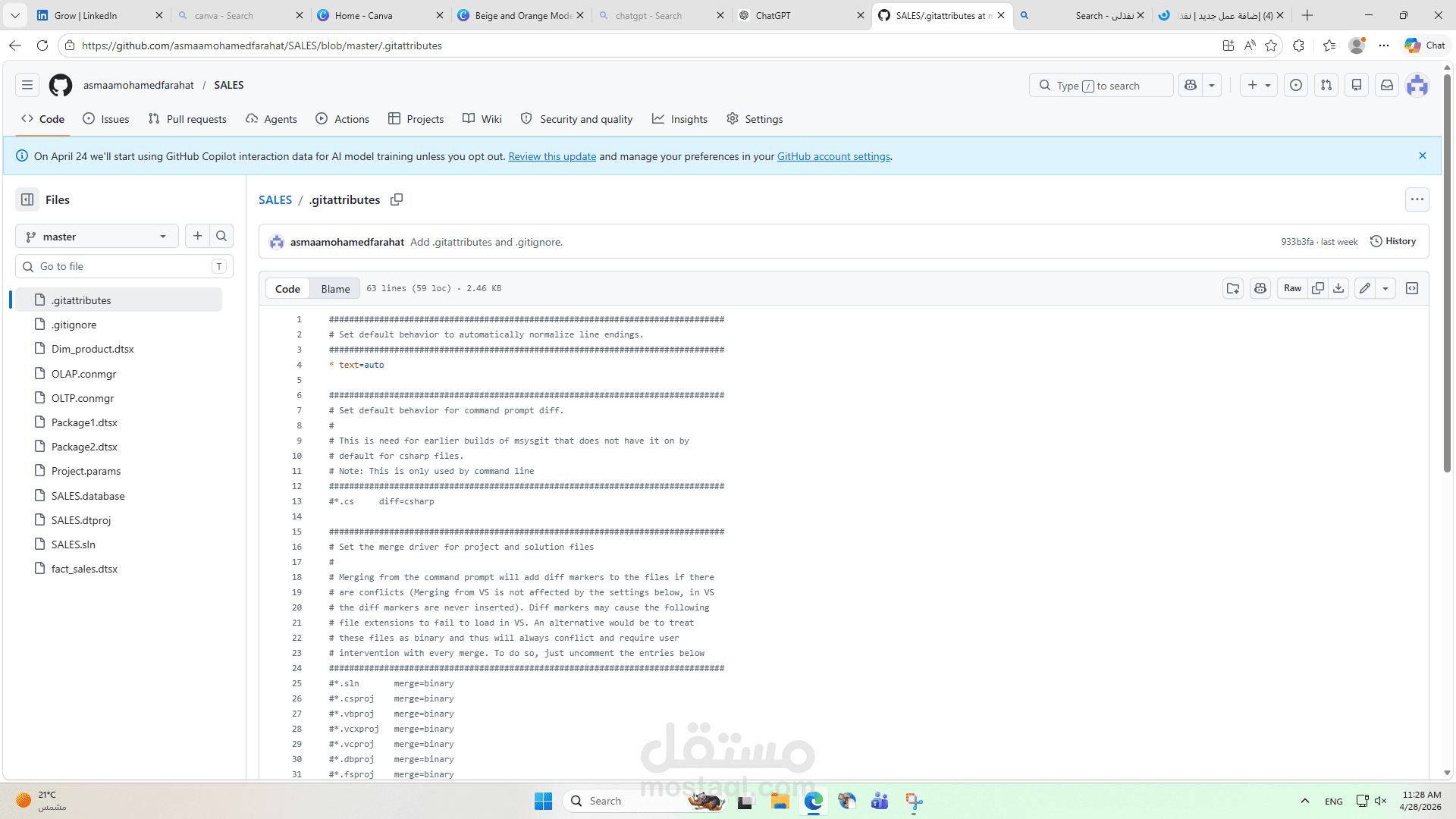
Project Overview
Designed and implemented a Sales Data Warehouse solution using ETL processes to integrate and transform data from OLTP systems into an analytical OLAP structure.
The project focuses on building a structured data model to support business intelligence and reporting.
Problem Statement
Raw sales data stored in transactional systems (OLTP) is not optimized for analysis or reporting.
This project solves the problem by transforming and loading data into a data warehouse for efficient querying and decision-making.
Architecture Overview
Source System: OLTP Database (Transactional Data)
ETL Layer: SSIS Packages
Target System: OLAP/Data Warehouse (SALES Database)
Technologies Used
SSIS (SQL Server Integration Services)
SQL Server
Data Warehouse Modeling (Star Schema)
ETL Pipelines
Git (Version Control)
⚙ Key Components
OLTP.conmgr → Connection to source transactional database
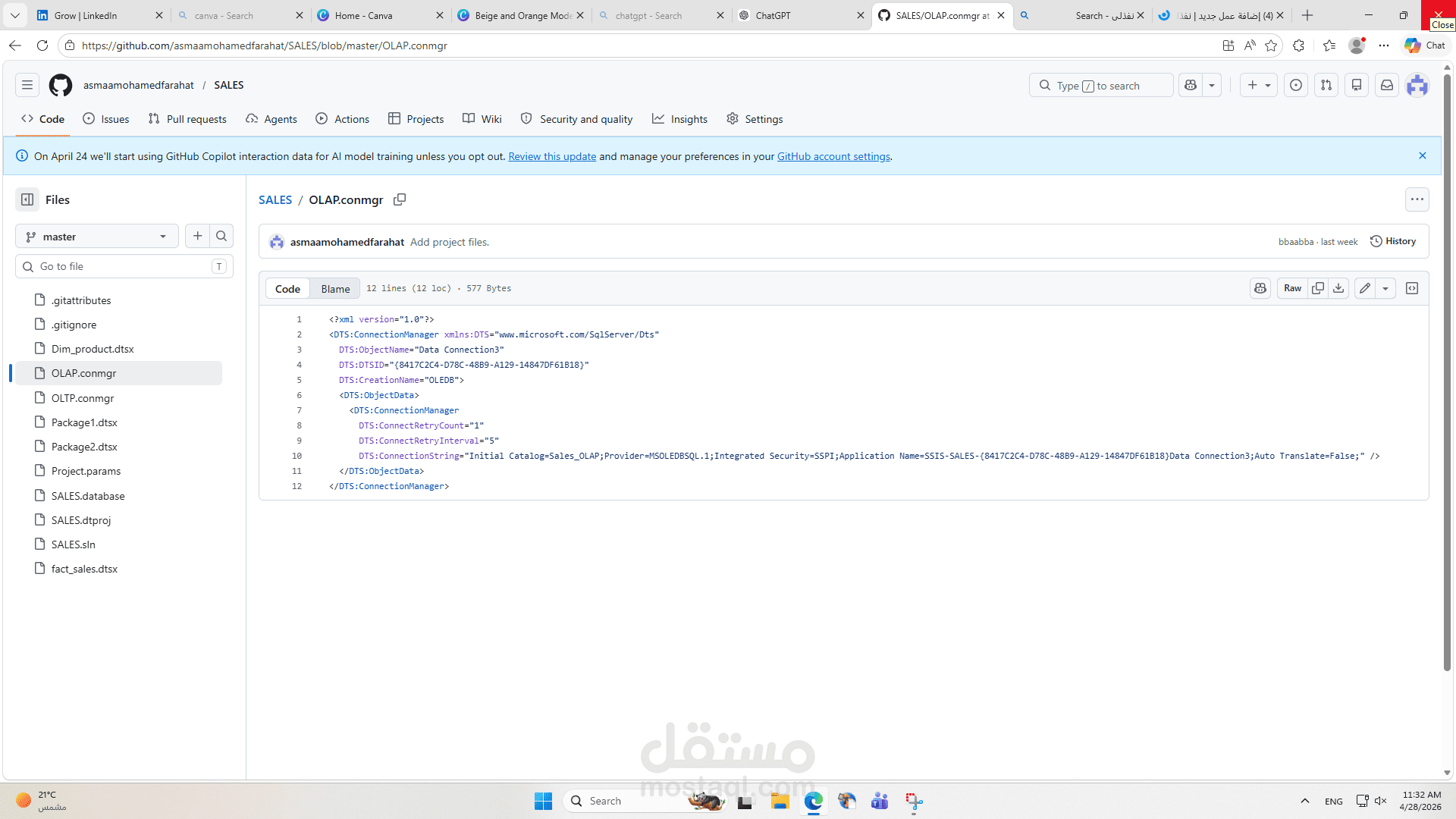
OLAP.conmgr → Connection to data warehouse
Package1.dtsx / Package2.dtsx → ETL workflows
Dim_product.dtsx → Product Dimension loading
fact_sales.dtsx → Sales Fact table loading
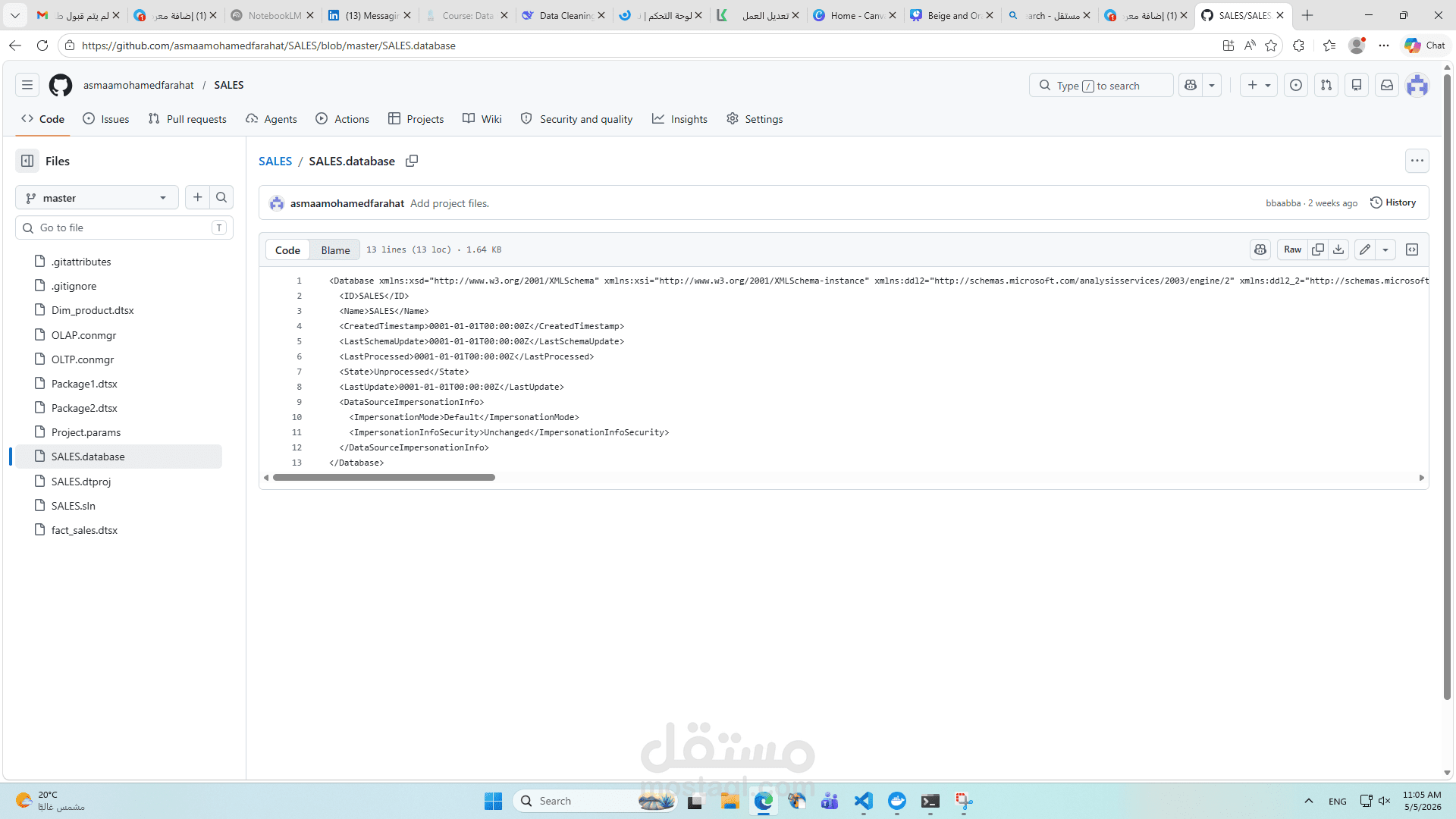
SALES.database → Data warehouse structure
ETL Process
Extract data from OLTP system
Clean and transform data (handling nulls, formatting, etc.)
Load dimension tables (e.g., Product)
Load fact table (Sales transactions)
Maintain relationships between dimensions and facts
Data Model
Fact Table: fact_sales (contains sales transactions)
Dimension Table: Dim_product (product details)
Implemented using Star Schema Design for optimized querying and reporting.
Key Features
Automated ETL pipelines using SSIS packages
Separation between OLTP and OLAP systems
Scalable data warehouse design
Efficient handling of large sales datasets
Structured data ready for BI tools
Business Value
Enables faster and more efficient reporting
Supports data-driven decision-making
Improves data consistency and quality
Provides a single source of truth for sales data