Management of hypertensive emergencies: a practical approach
تفاصيل العمل
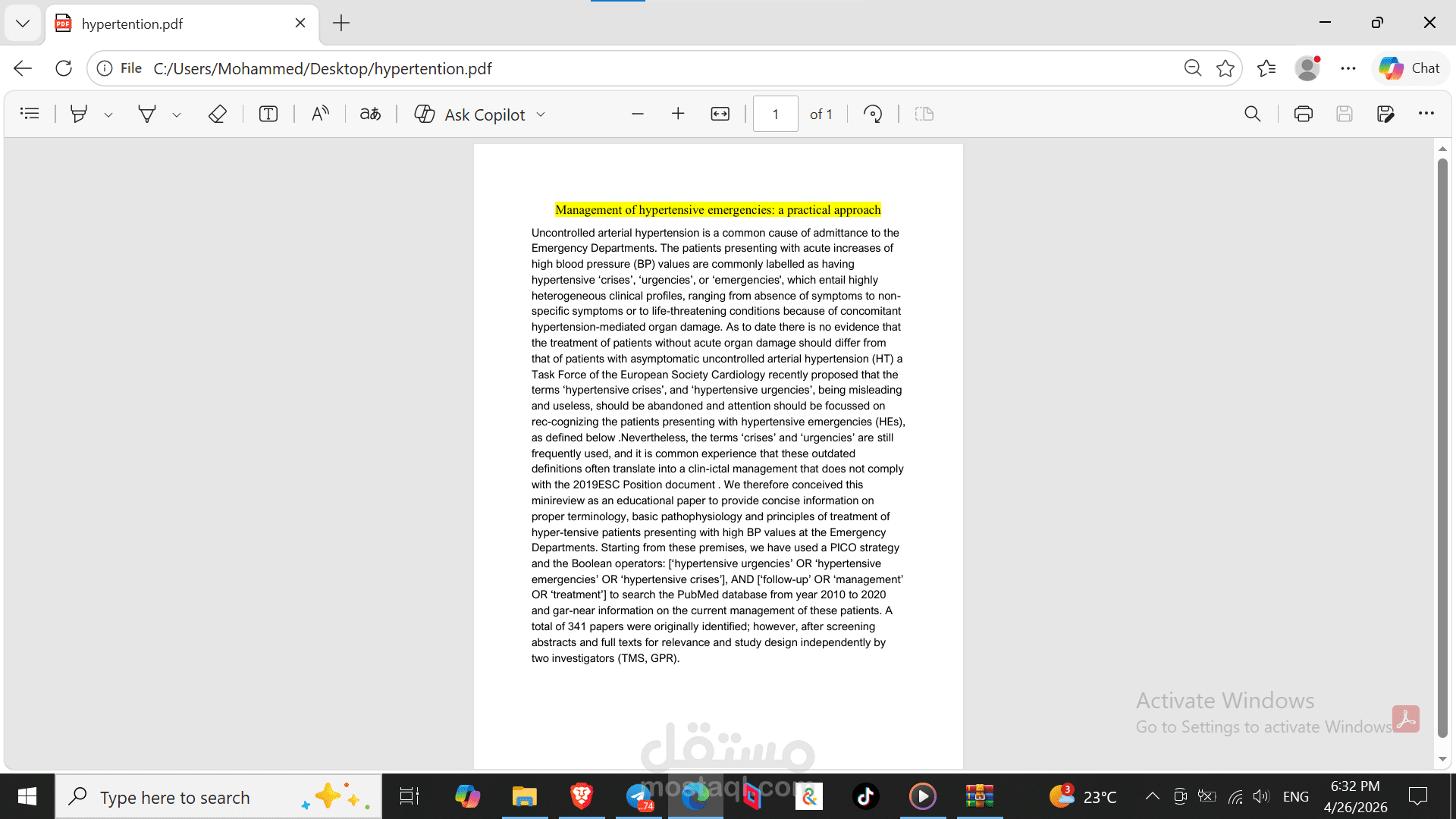
This article provides a practical, evidence-based overview of the management of Hypertensive emergencies, focusing on rapid assessment, risk stratification, and immediate therapeutic interventions to prevent end-organ damage.
The work outlines the pathophysiology of severe blood pressure elevation and emphasizes the importance of distinguishing hypertensive emergencies from urgencies. It highlights clinical presentations involving critical organs such as the brain, heart, kidneys, and eyes, including conditions like Hypertensive encephalopathy and Acute pulmonary edema.
A step-by-step management approach is presented, covering:
Initial patient stabilization and monitoring
Recommended blood pressure reduction targets
Selection and use of intravenous antihypertensive agents
Continuous monitoring in critical care settings
The article also discusses commonly used medications such as Labetalol and Nicardipine, including their indications, mechanisms of action, and dosing considerations in emergency settings.