Cloud-Based Smart Healthcare Ticketing System
تفاصيل العمل
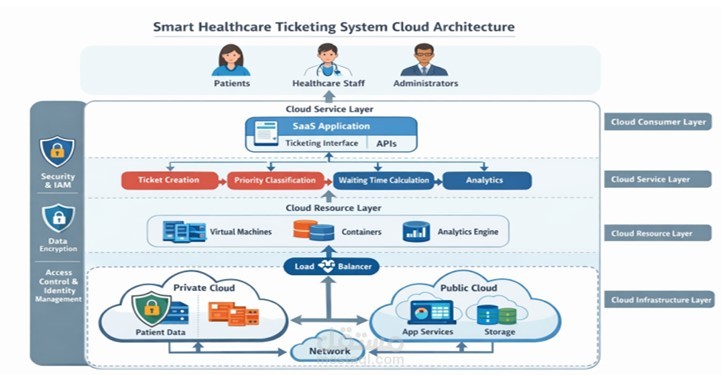
Hospitals and medical centers in the Gaza Strip face immense pressure due to limited
resources, high population density, and a constantly increasing demand for healthcare
services. Most of these institutions rely on manual or local appointment and waiting
management systems, which are often inefficient and unable to handle large patient
volumes. As a result, patients suffer from long waiting times, overcrowded clinics,
mismanagement of patient tickets, and delays in receiving appropriate medical care,
particularly in critical and emergency cases.
This gap highlights the need for an intelligent, cloud-based healthcare appointment
management system that dynamically manages patient waiting lists, prioritizes medical
cases, and directs patients to the appropriate departments. Such a system is crucial,
especially in congested and resource-limited environments, where cloud computing offers
scalability, high availability, remote access, and cost-effectiveness, thereby improving
hospital operational efficiency, reducing overcrowding, and enhancing the patient experience
through intelligent scheduling, real-time tracking, and data-driven decision-making.