Ai document generator
تفاصيل العمل
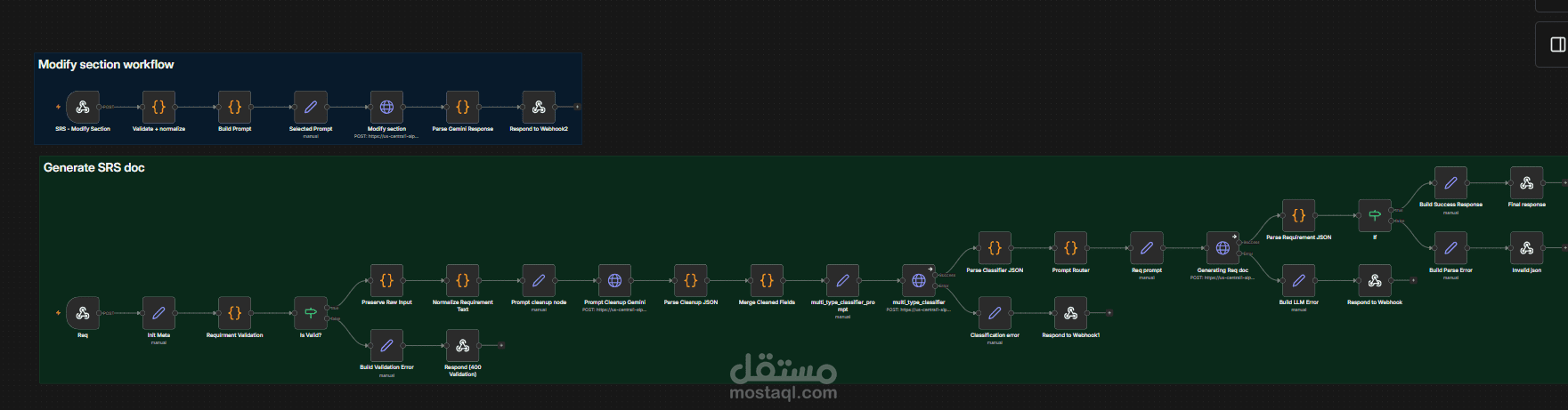
Project Overview
I designed and built an AI-powered Document Engineering Platform that transforms raw, unstructured user input into production-ready software engineering deliverables, including:
Software Requirements Specification (SRS)
Technical Proposal
High-Level Design (HLD)
Low-Level Design (LLD)
The platform acts as an AI-assisted architecture workspace for solution architects and engineering teams, enabling them to move from vague ideas to structured, enterprise-grade documentation through an intelligent, iterative workflow.
At its core, the system combines LLM orchestration, structured generation pipelines, and human-in-the-loop approval flows to ensure both speed and accuracy.
My Role
I led the end-to-end system design and implementation, including:
AI workflow architecture (n8n + LLM orchestration)
Prompt engineering and structured generation design
Backend pipeline design and document lifecycle management
Frontend integration strategy (interactive SRS workspace)
System scalability and production-readiness decisions
This was built as a production-grade system, not a prototype.
Architecture & Approach
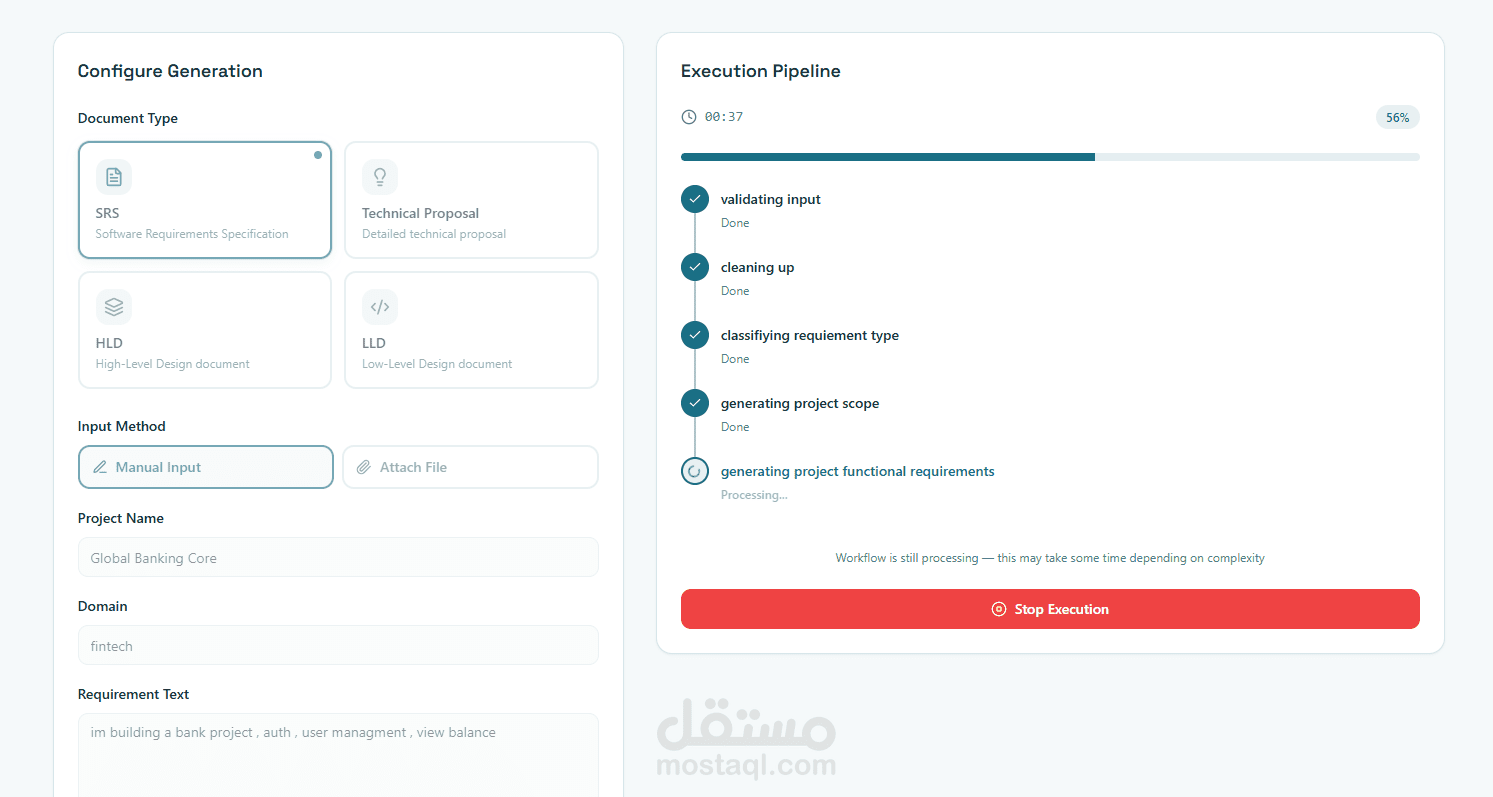
The system follows a pipeline-driven, backend-first architecture:
Input ingestion (messy or structured requirements)
AI classification & normalization
Structured document generation (modular sections)
Human approval & iteration loop
Multi-document transformation pipeline (SRS → Proposal → HLD → LLD)
Final document export (DOCX/PDF)
A key design principle was strict structure enforcement with flexible user interaction, ensuring outputs remain consistent while still editable.
Tech Stack & Frameworks
Frontend: React (Lovable platform for rapid UI prototyping)
Backend / Orchestration: n8n (self-hosted workflow engine)
AI Models: Google Vertex AI (Gemini)
Cloud: Google Cloud Platform
Document Processing: Custom DOCX generation pipelines
Data Handling: JSON-based structured schemas
Key Engineering Contributions
1. AI-Powered Requirements Understanding
Designed a classification and transformation system that can handle multiple input types:
Vision-only ideas
Raw feature lists
Semi-structured requirements
Enterprise-level requirement dumps
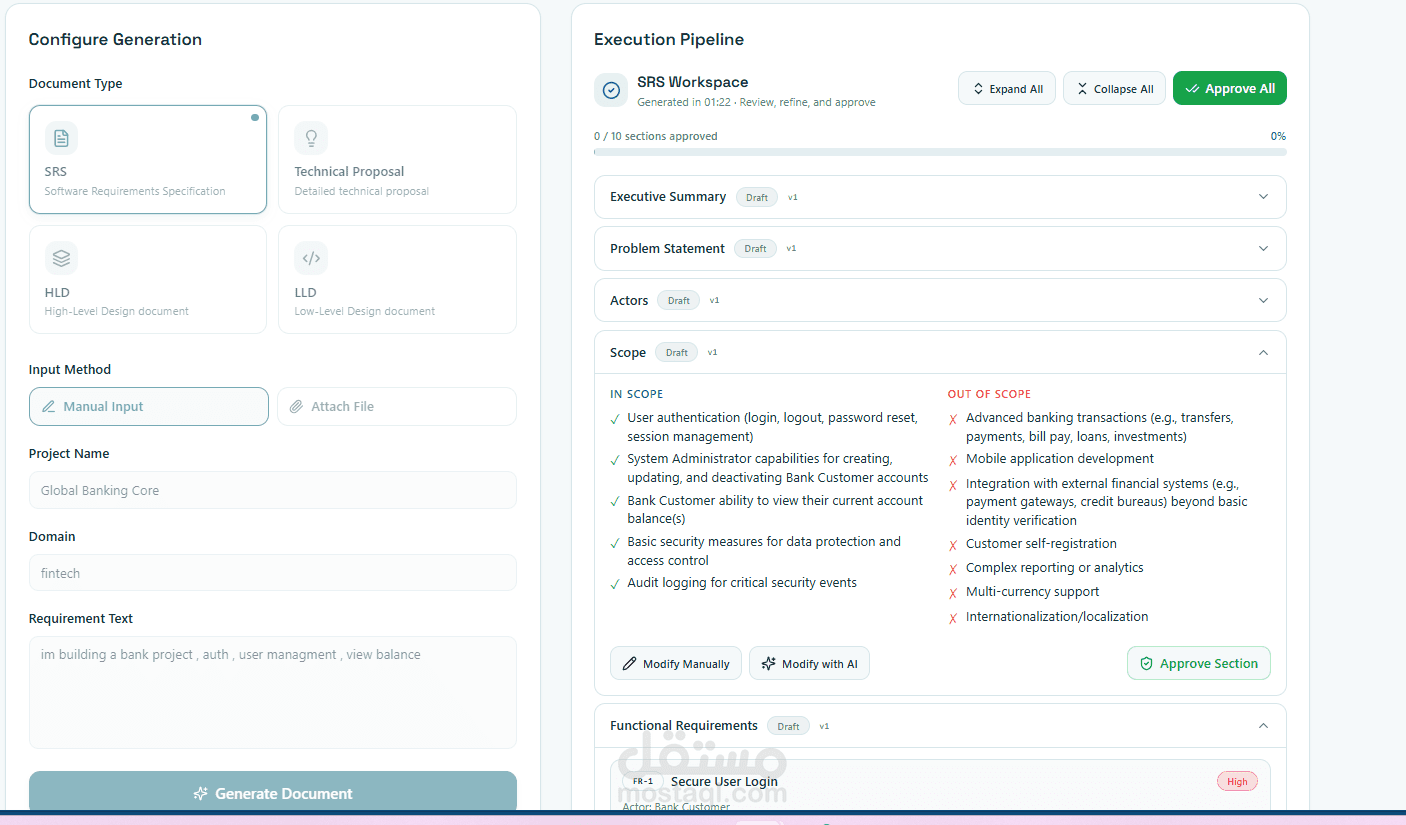
Each input is automatically classified and expanded into a complete SRS baseline, including:
Functional Requirements (FR)
Non-Functional Requirements (NFR)
Scope / Out of Scope
Assumptions, Constraints, Risks
2. Structured Document Generation Pipeline
Built a modular LLM generation system where:
Each section (e.g., Scope, FRs, Risks) is generated independently
Outputs follow strict JSON schemas
Sections are merged into consistent, professional documents
This ensures:
High reliability
Easy debugging and regeneration
Section-level editing and refinement
3. Human-in-the-Loop Approval System
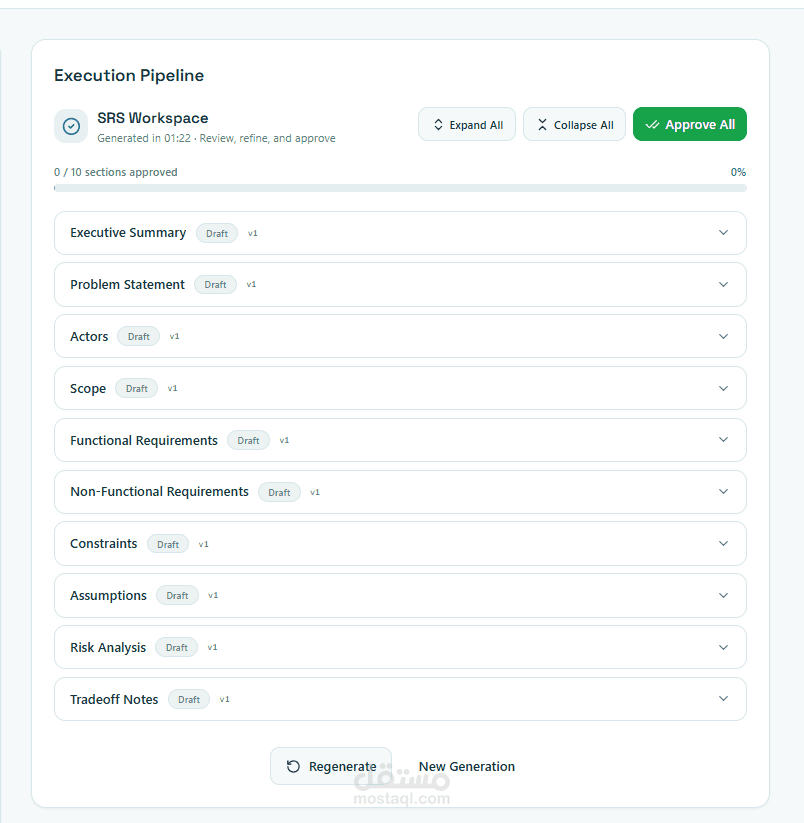
Implemented an interactive document workspace with:
Section-level approval / de-approval
AI-assisted refinement per section
Expand / collapse controls for large documents
Controlled regeneration without breaking structure
This bridges the gap between AI automation and real engineering workflows.
4. Multi-Stage Engineering Pipeline
Designed a progressive document pipeline:
SRS → Technical Proposal → HLD → LLD
Each stage:
Uses the previous document as input
Refines and expands system detail
Maintains cross-document consistency
This creates a full engineering lifecycle system, not just a generator.
5. Prompt Engineering & Output Control
Developed production-grade prompt strategies to ensure:
Strict JSON-only outputs (no hallucinated structure)
No unintended feature additions
Consistent terminology and tone
Alignment with real-world engineering standards
Also implemented:
Section-aware prompting
Context injection (cross-section awareness)
Safe refinement rules (no breaking changes)
6. Document Export & Professional Formatting
Built a system to generate client-ready deliverables:
Structured DOCX export
Consistent formatting across sections
Tables for FRs, NFRs, and risks
Enterprise-ready presentation (branding-ready)
Key Strengths of the System
AI + workflow orchestration (not just prompting)
Strong separation of structure, logic, and presentation
Handles messy real-world input (not ideal inputs only)
Human-in-the-loop validation (critical for enterprise use)
Fully extensible for additional document types or domains
Outcome
The platform enables teams to:
Convert vague ideas into structured engineering artifacts
Accelerate solution architecture and proposal creation
Maintain consistency across all design documents
Reduce time from concept to implementation planning
It effectively acts as a design accelerator for engineering teams, combining AI speed with human control.