Geometric Objects
تفاصيل العمل
1
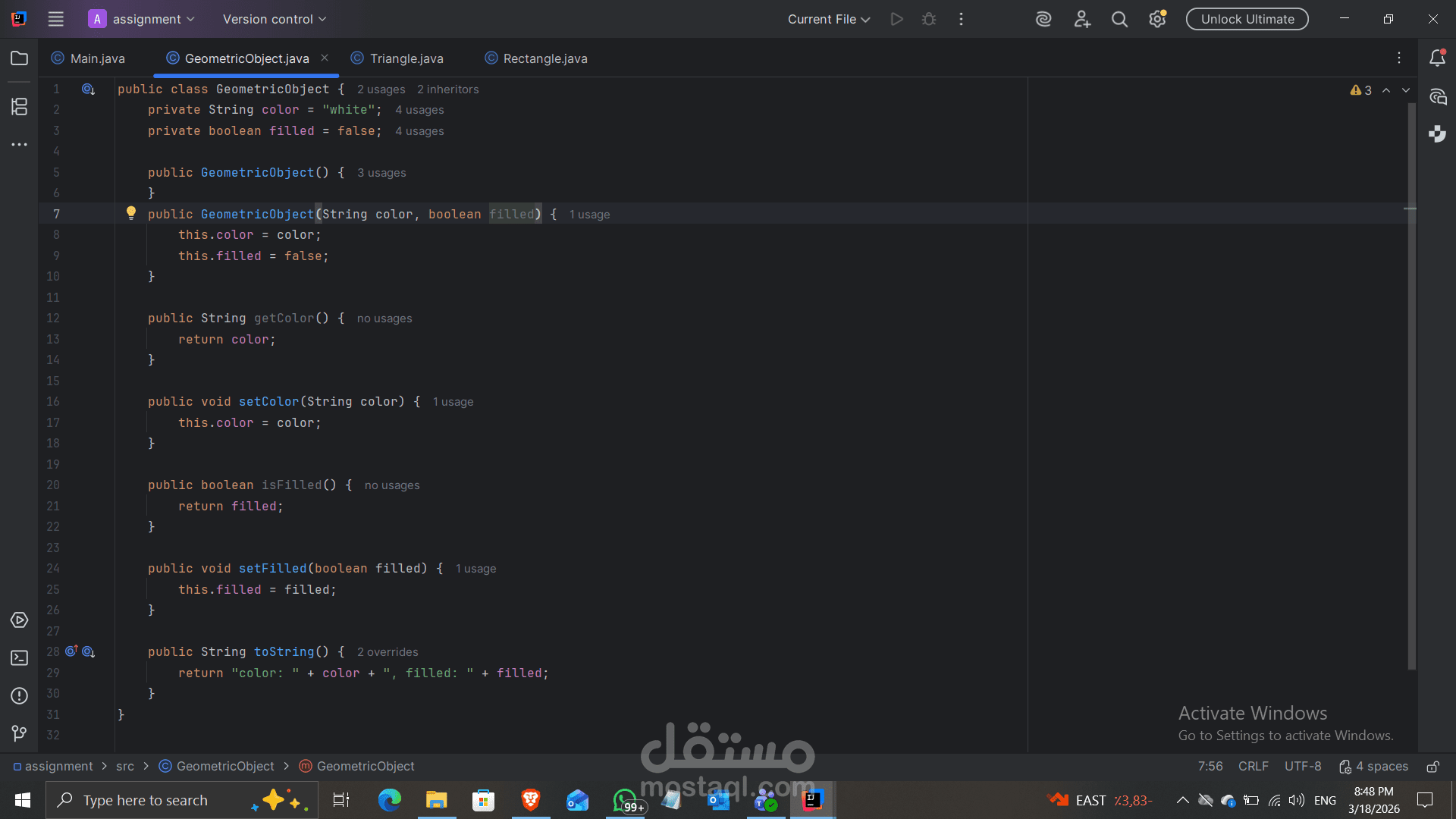
Design a class named GeometricObject. This class contains:
color: color name of the object (default value: “white”)
filled: indicates if the object is filled with color or not (default value: false)
no argument constructor: create a GeometricObject with default values for arguments
argument constructor: create a GeometricObject with specified color and filled values
toString: method returns a string description of the object
Design a class named Triangle that inherits (extends) from GeometricObject. This class contains:
side1: first side of the triangle with default value 1.0
side2: second side of the triangle with default value 1.0
side3: third side of the triangle with default value 1.0
no argument constructor: creates a triangle with default values
constructor: creates a triangle with specified side1, side2, and side3 values
getArea(): a method that returns the area of the triangle
getPerimeter(): a method that returns the perimeter of the triangle
toString(): method returns a string description of the triangle object like that:
“Triangle: side1 = $side1, side2 = $side2, side3 = $side3”
Design a class named Rectangle that inherits (extends) from GeometricObject. This class contains:
height: the height of the rectangle with a default value 1.0
width: the width of the rectangle with a default value 1.0
no argument constructor: creates a rectangle with default values
constructor: creates a rectangle with specified width, height, color, and filled values
getArea(): a method that returns the area of the rectangle
getPerimeter(): a method that returns the perimeter of the rectangle
toString(): method returns a string description of the rectangle object like that:
“Rectangle: height = $height, width = $width”