EtherChannel Implementation
تفاصيل العمل
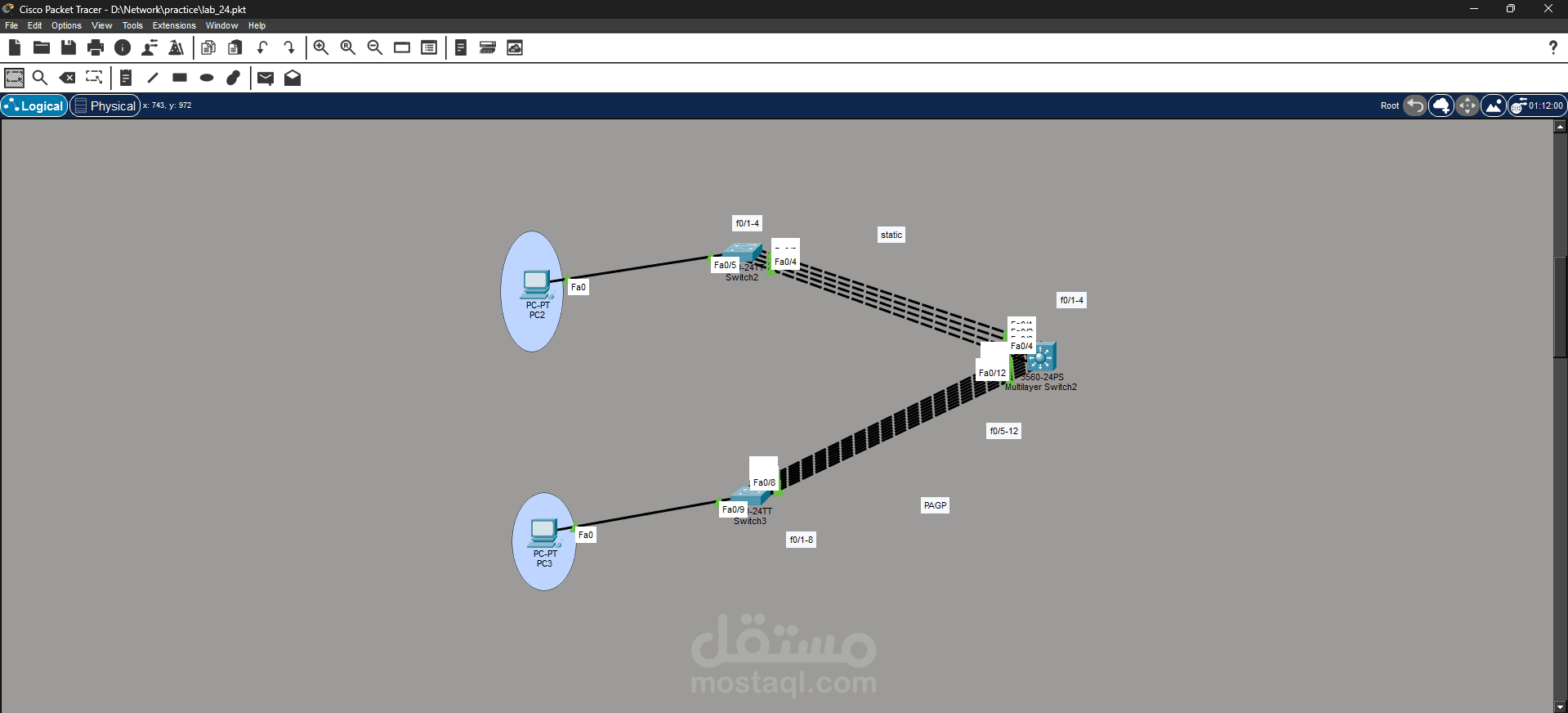
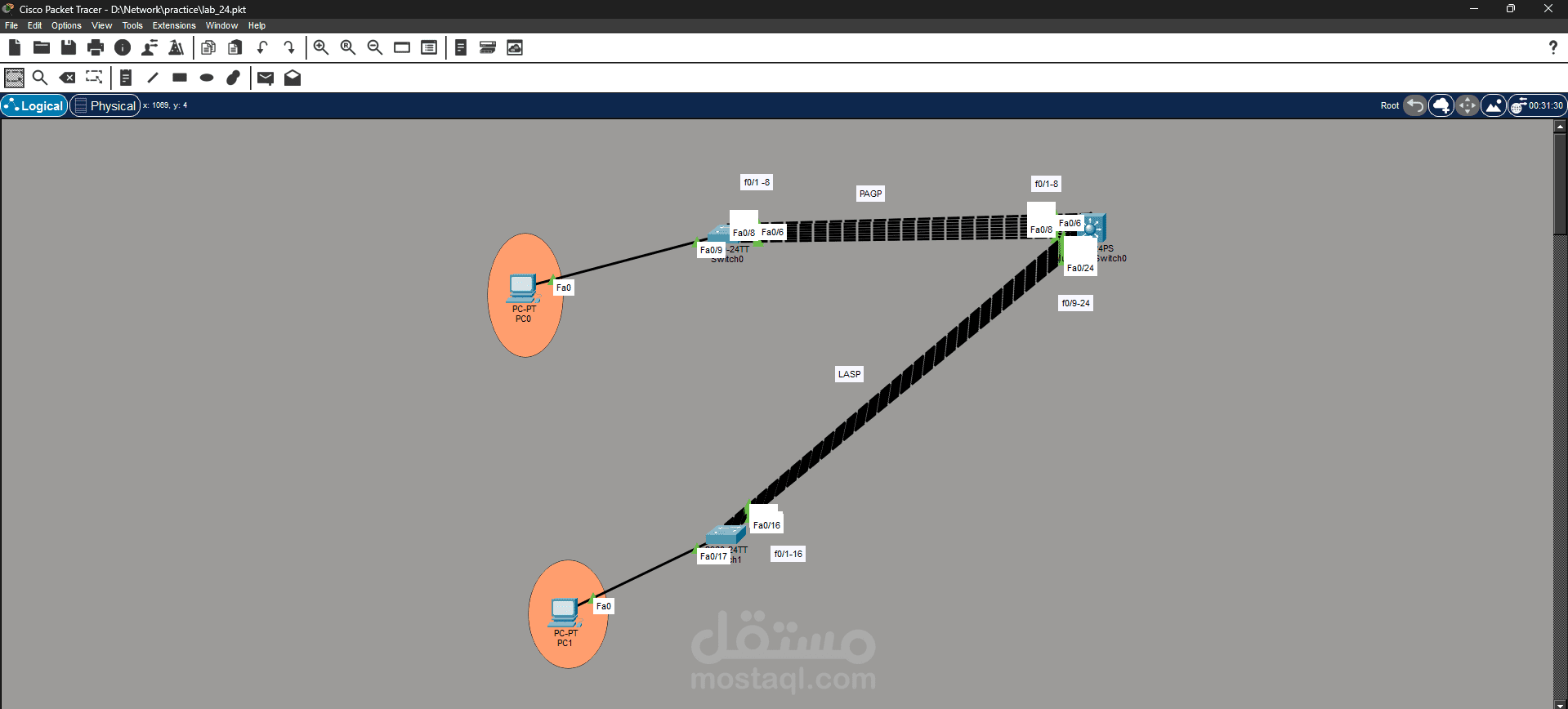
Hands-on Networking Lab | EtherChannel Implementation
In this lab, I practiced implementing EtherChannel using Cisco Packet Tracer to understand how multiple physical links between switches can be bundled into a single logical connection. This approach helps increase bandwidth, improve redundancy, and enhance overall network performance.
The topology included multiple switches, including a multilayer switch and access switches connected to PCs, where several FastEthernet interfaces were grouped together to form EtherChannel links.
? What I implemented:
• Configured Static EtherChannel by manually bundling multiple interfaces into a single port-channel without using a negotiation protocol.
• Implemented PAgP (Port Aggregation Protocol), a Cisco proprietary protocol, by configuring one side in auto mode and the other in desirable mode to allow automatic EtherChannel negotiation.
• Tested LACP (Link Aggregation Control Protocol), the IEEE standard for EtherChannel, using active and passive modes for dynamic link aggregation.
? Verification & Results:
After completing the configuration, I verified connectivity between PCs connected to different switches and confirmed that traffic was successfully forwarded through the aggregated links.
This lab helped me gain a deeper understanding of how EtherChannel improves bandwidth utilization, provides redundancy, and enables load balancing across multiple physical interfaces in enterprise networks.
Hands-on labs like this strengthen my knowledge of Layer 2 technologies and switch-to-switch connectivity in real-world network environments.