Gate-Level Arithmetic Logic Unit (ALU) Design Using Basic Logic Gates
تفاصيل العمل
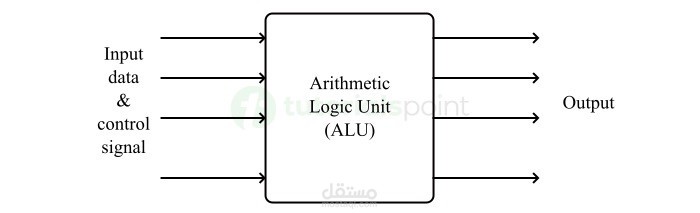
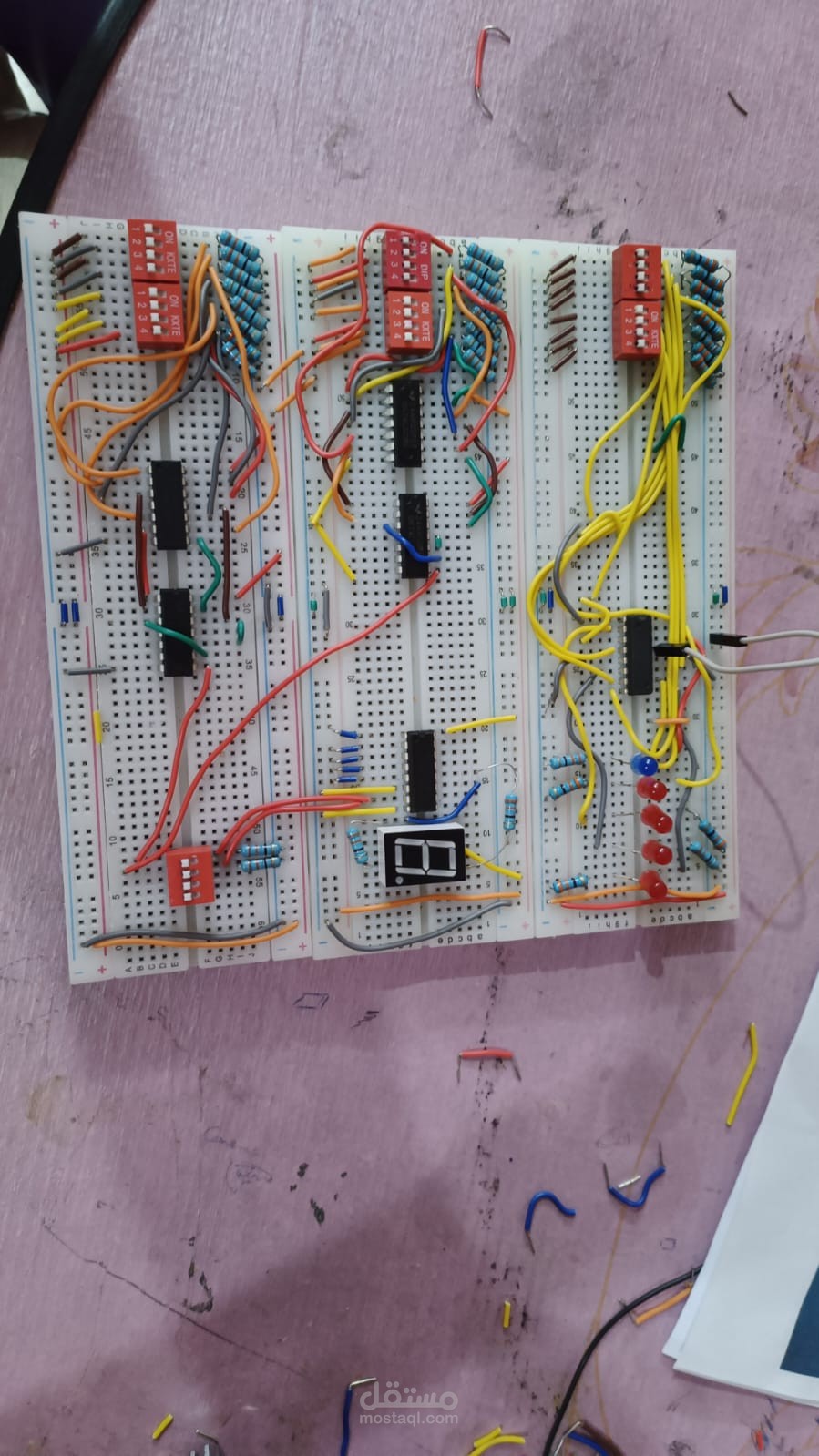
The Arithmetic Logic Unit (ALU) is one of the most important components in any digital processor. It performs fundamental arithmetic and logical operations that allow computers to process data and make decisions. In this project, a simple ALU is designed and implemented using basic digital logic gates such as AND, OR, NOT, and XOR gates.
The main objective of this project is to demonstrate how arithmetic and logical operations can be constructed from basic building blocks of digital electronics. The designed ALU is capable of performing several operations including logical operations (AND, OR) and basic arithmetic functions such as addition and subtraction on binary inputs.
The circuit is built at the gate level, which helps in understanding how complex computational systems inside microprocessors are actually formed from simple logic gates. By combining these gates in a structured way, the ALU processes binary data and produces the correct output based on the selected operation.
This project helps students understand key concepts in digital electronics, computer architecture, and logic circuit design. It also provides practical experience in designing and testing digital systems, which is essential for fields such as embedded systems, computer engineering, and hardware design.