Play with Children: Building Skills Through Fun
تفاصيل العمل
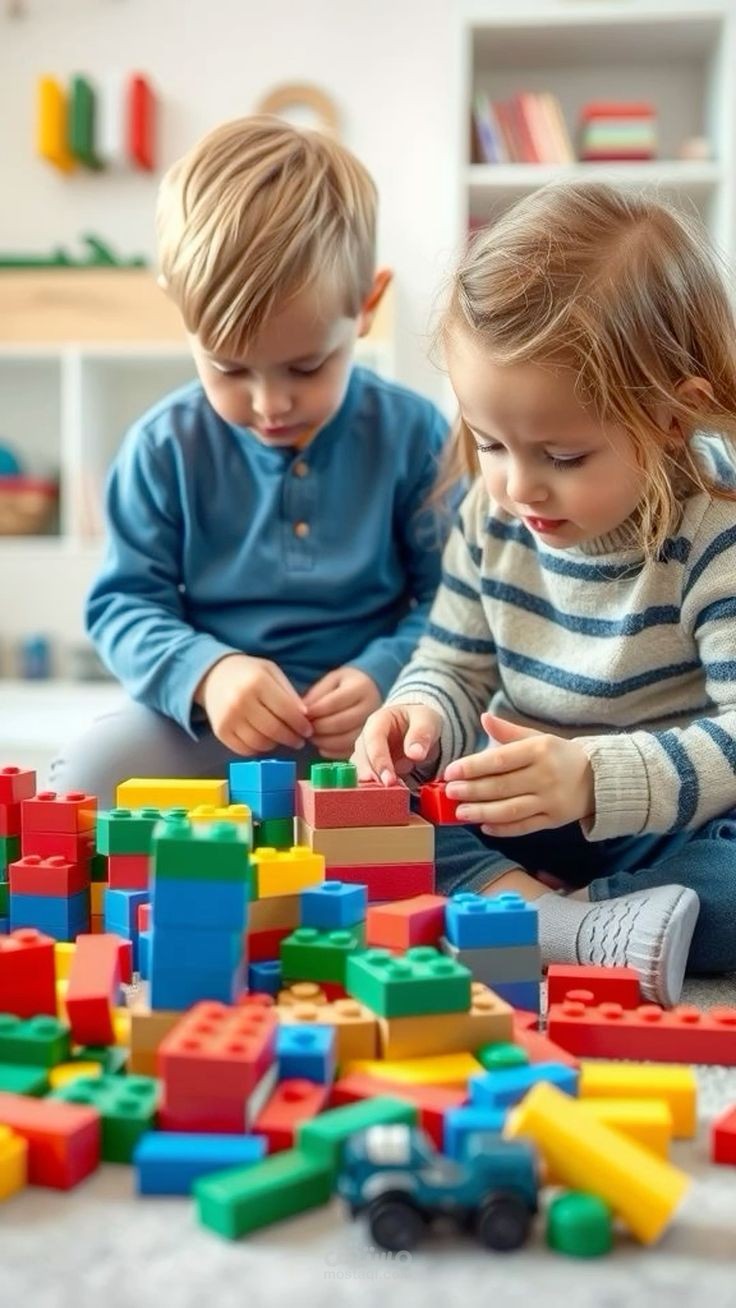
Play is one of the most powerful tools for a child’s growth. It is not only a source of joy but also a pathway to developing essential skills that shape their future. When children engage in play, they explore, experiment, and learn in ways that formal teaching alone cannot provide.
Emotional Development
Play helps children express feelings and build emotional resilience. Through games, they experience excitement, frustration, and success, learning how to manage emotions in a safe environment. Role‑playing or imaginative play allows them to process real‑life situations, strengthening their ability to cope with challenges.
Cognitive Growth
Play stimulates the brain and enhances thinking skills. Activities such as puzzles, building blocks, or storytelling encourage problem‑solving, creativity, and imagination. These experiences improve memory, language, and logical reasoning. For example, when children construct towers or invent stories, they practice planning, sequencing, and critical thinking.
Physical Skills
Active play supports healthy physical development. Running, climbing, dancing, or ball games improve coordination, balance, and strength. Even simple activities like drawing or stacking toys enhance fine motor skills. Outdoor play, in particular, gives children opportunities to explore their environment and develop a strong connection with nature.
Social Learning
Play teaches children how to interact with others. Group games, sharing toys, or cooperative activities introduce concepts of teamwork, empathy, and fairness. Children learn patience, respect, and communication by negotiating rules or resolving conflicts during play. These social lessons prepare them for school and future relationships.
Creativity and Imagination
Play opens the door to creativity. Whether through art, music, or pretend games, children use imagination to create new worlds and ideas. This nurtures innovation and self‑expression, skills that remain valuable throughout life. Creative play also boosts confidence, as children see their ideas come to life.
Practical Benefits of Play
Encourages independence and decision‑making.
Strengthens concentration and attention span.
Provides a safe outlet for energy and curiosity.
Builds resilience by teaching children to try again after failure.
Conclusion
Play is not a luxury—it is a necessity for healthy child development. Through play, children grow emotionally, cognitively, physically, and socially. They learn to express themselves, solve problems, cooperate with others, and explore their creativity. Every playful moment contributes to building confident, capable individuals ready to face the world. By valuing play as an essential part of childhood, we invest in the skills and strengths that will guide children throughout their lives.