Meta Kaggle Analysis
تفاصيل العمل
For Meta Kaggle Hackathon, I analyzed Kernels and Competitions datasets to learn about community and coding habits changes over time. This was not just about analyzing numbers. It was about understanding how people learn, compete, and grow together through data.
Using the Meta Kaggle datasets, I looked into things like how many kernels (code notebooks) were being created, how much code lines was written, how team sizes shifted, and what kinds of rewards seemed to drive engagement. These metrics helped me piece together a broader view of what really keeps the Kaggle community active.
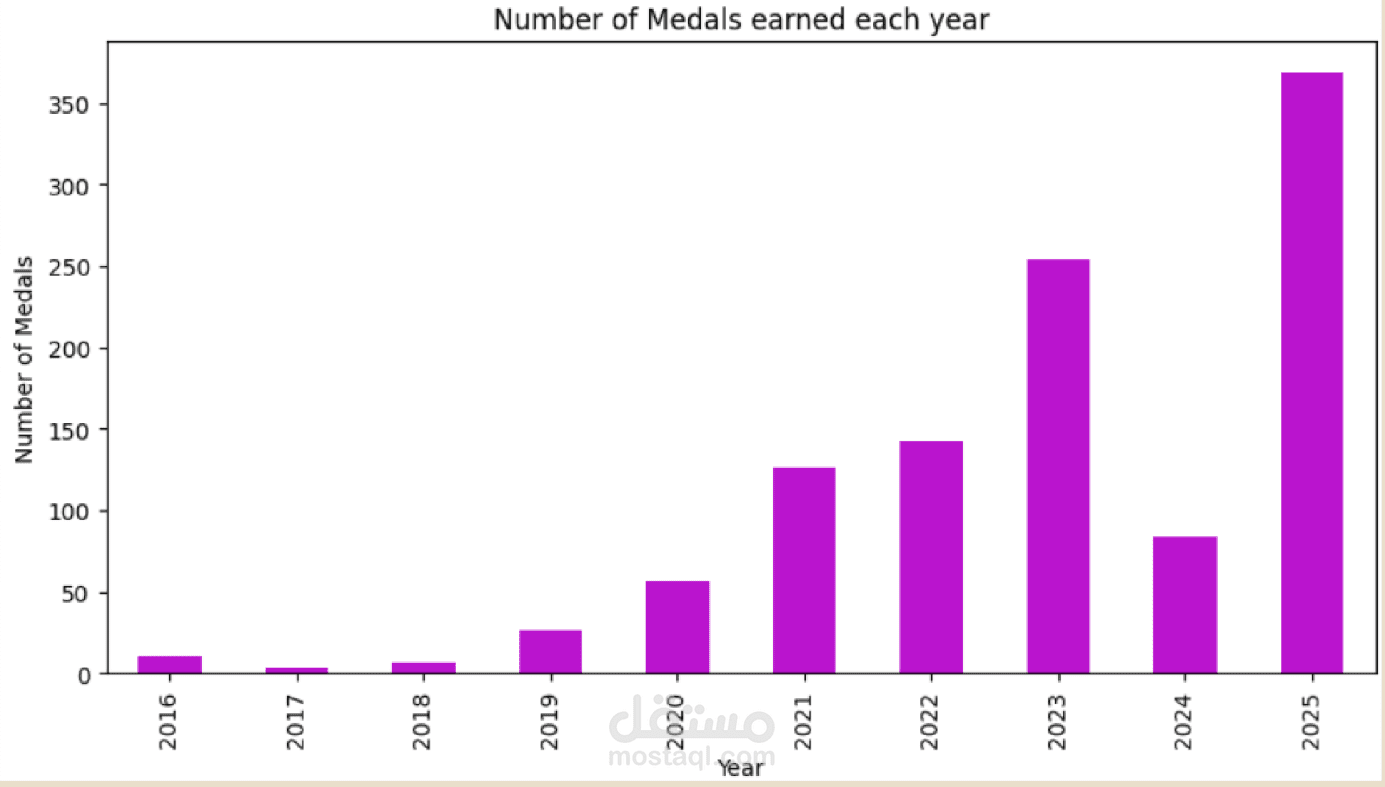
One of the most interesting things I found was a huge spike in kernel activity during 2020. It makes sense — with more time at home during the pandemic, many people turned to learning and coding. But even with all that activity, medal counts was not a lot, which shows that not all coding is about winning — sometimes it is just about growth.
I also noticed that team sizes have slowly gotten smaller since 2022, and that both cash prizes and knowledge rewards are the big motivators. In 2024, the number of teams and number of submissions were the highest among all years.
This project helped me appreciate the Kaggle community on a deeper level — not just as a coder, but as a learner, collaborator, and explorer in the world of data science.