Comparative Genomics of Variola virus
تفاصيل العمل
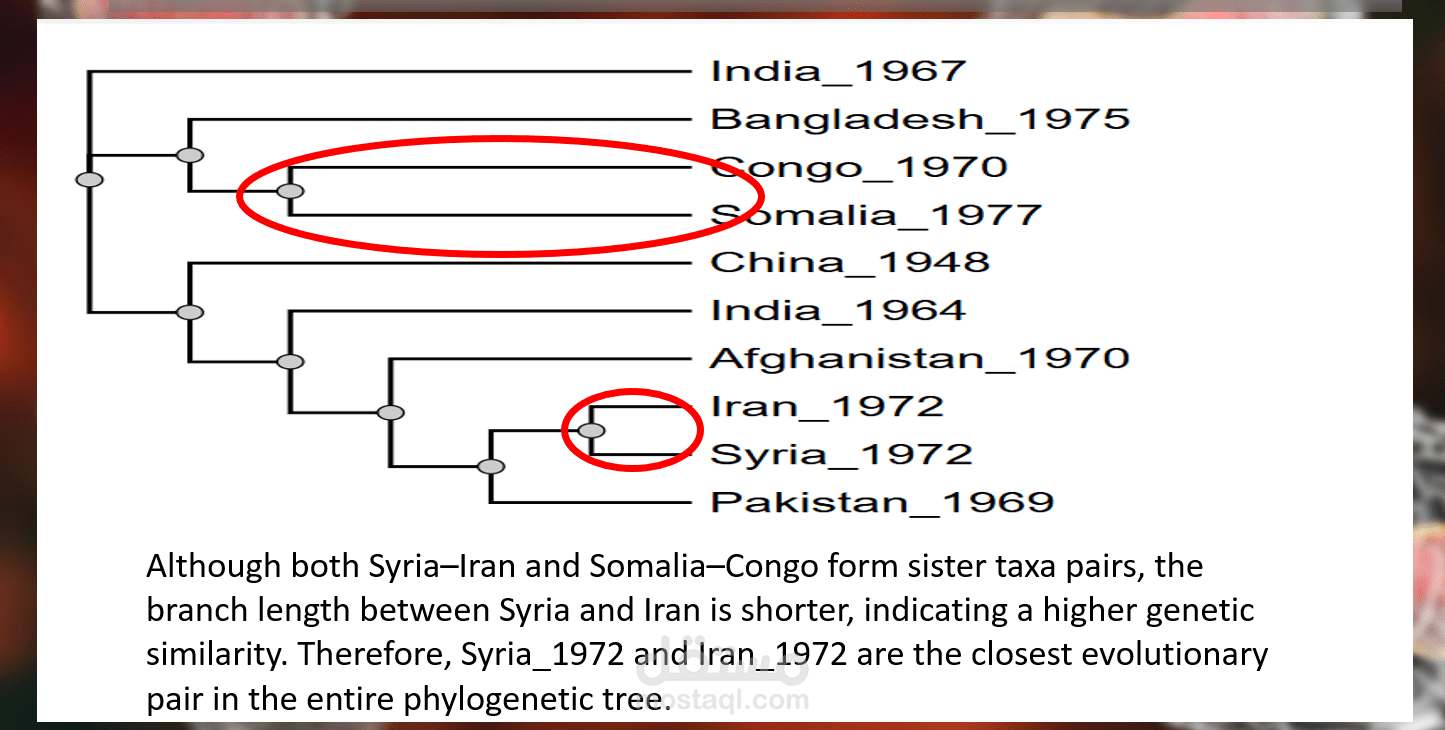
Comparative Genomics of Variola Virus is a bioinformatics-based study analyzing the whole genomes of ten historical Variola virus strains collected between 1948 and 1977. Using automated sequence retrieval, MAFFT alignment, and FastTree phylogenetic reconstruction, the study identifies conserved core genomic regions and variable terminal regions associated with viral evolution. Phylogenetic analysis reveals close evolutionary relationships between geographically related strains, particularly Syria_1972 and Iran_1972. Functional analysis of an epidermal growth factor (EGF)-like gene demonstrates strong conservation across most strains, with notable divergence in Somalia_1977. The findings contribute to understanding Variola virus evolution, functional stability, and historical genomic diversity.