Early Detection of High-Cost Health Insurance Individuals
تفاصيل العمل
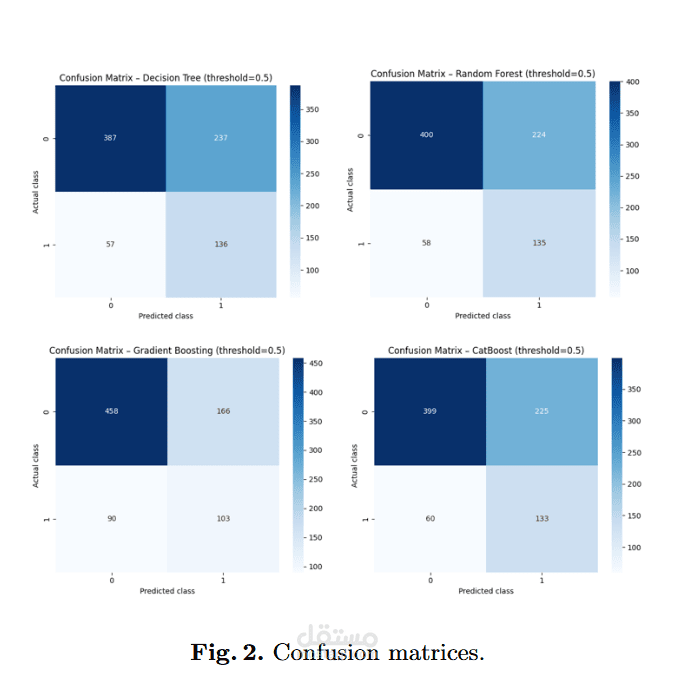
This work aims to identify possible future costs insured individuals based on data about medication reimbursements collected from an Algerian health insurance company. Supervised machine learning approaches are implemented by employing Classification methods : Decision Tree, Random forest, Gradient Boosting Machine and Cat-boost. The obtained results highlight strong predictive performance, particularly for tree-based models, with Random Forest being as the most effective approach. This last was selected based on the recall metric, and the F1-score because it provides the best trade-off between them. Note that the results are consistent with studies previously reported in the literature. In fact, early detection of High-Cost Health Insurance Individuals can be a major strategic target for the healthcare system as it helps to rationalize reimbursements, reduces waste and implement an effective public health policy which impacts the social and the economic performance of a country. It also offers a good perspective in analyzing atypical consumption behaviors and fraud detection.