Designing a Secure Network Infrastructure for DFS (Digital Finance Services)
تفاصيل العمل
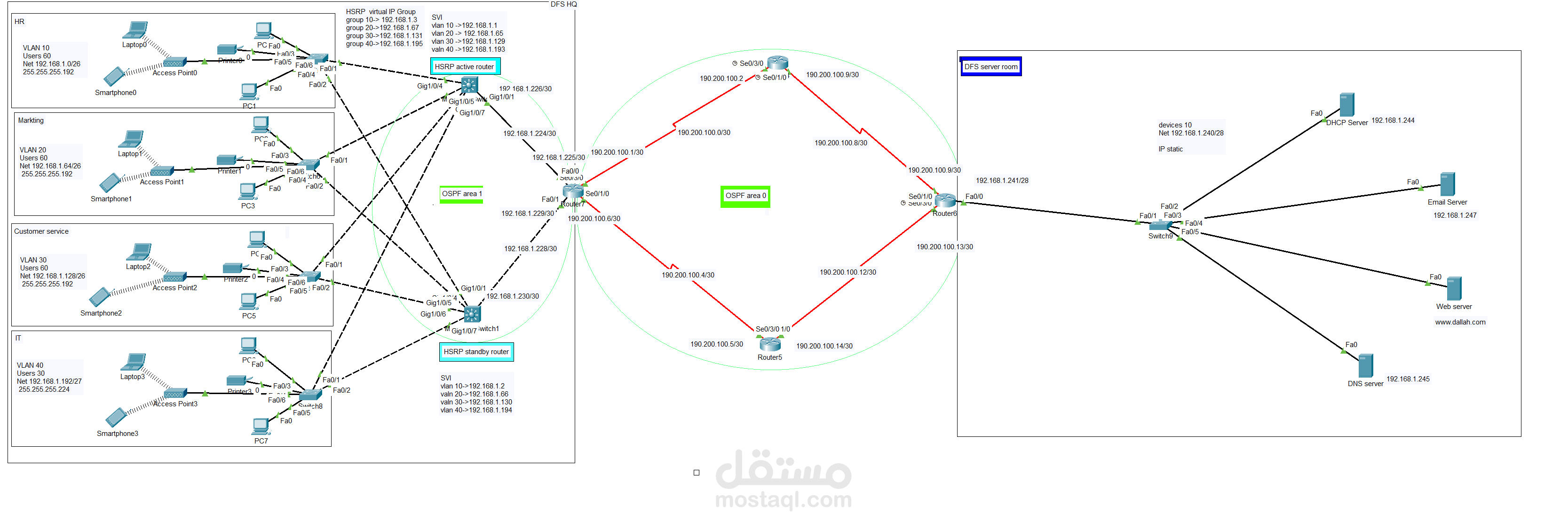
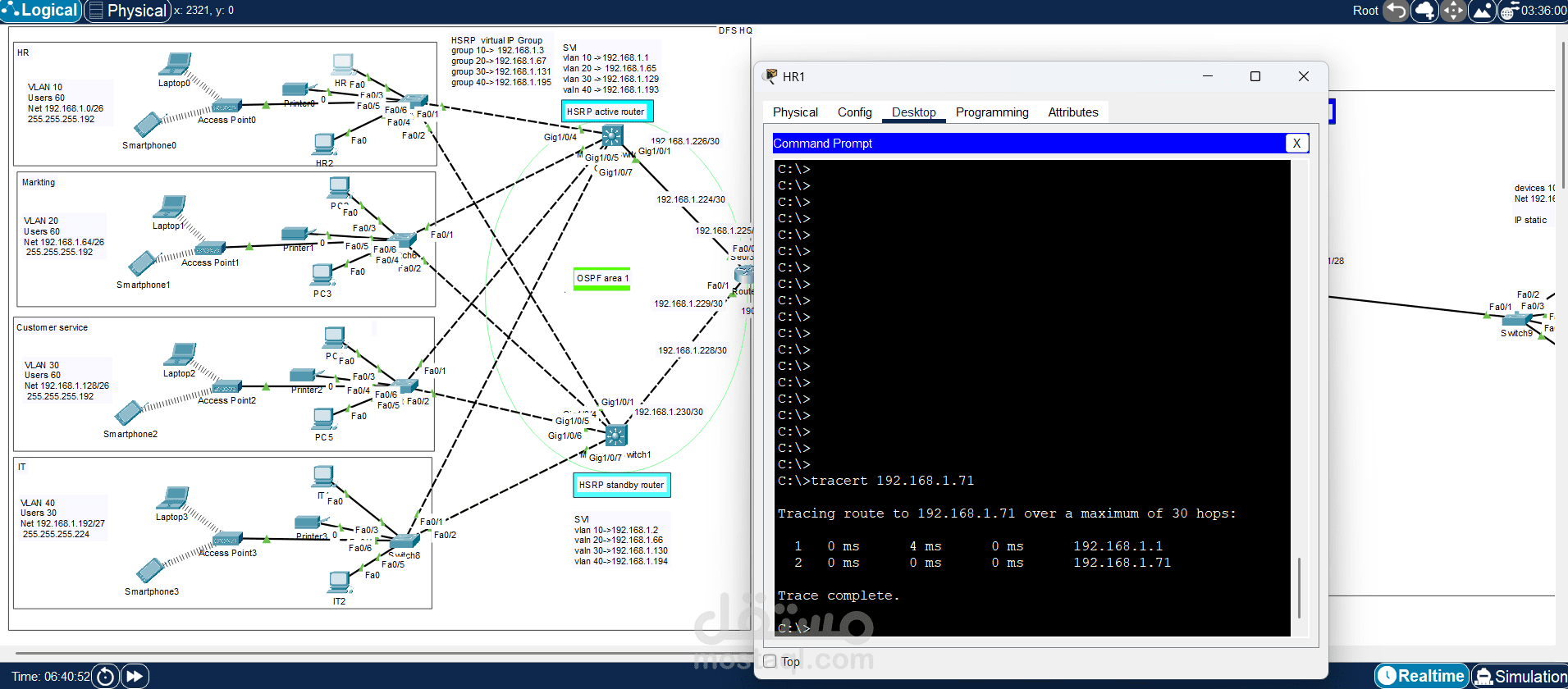
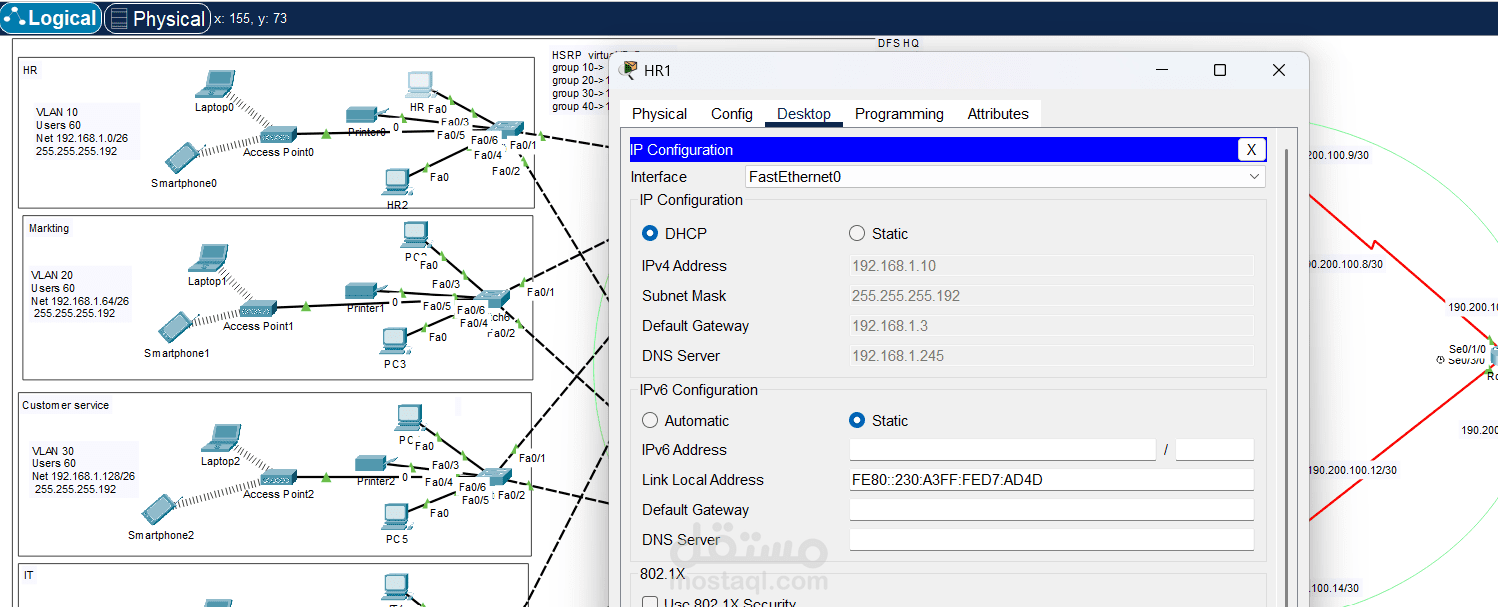
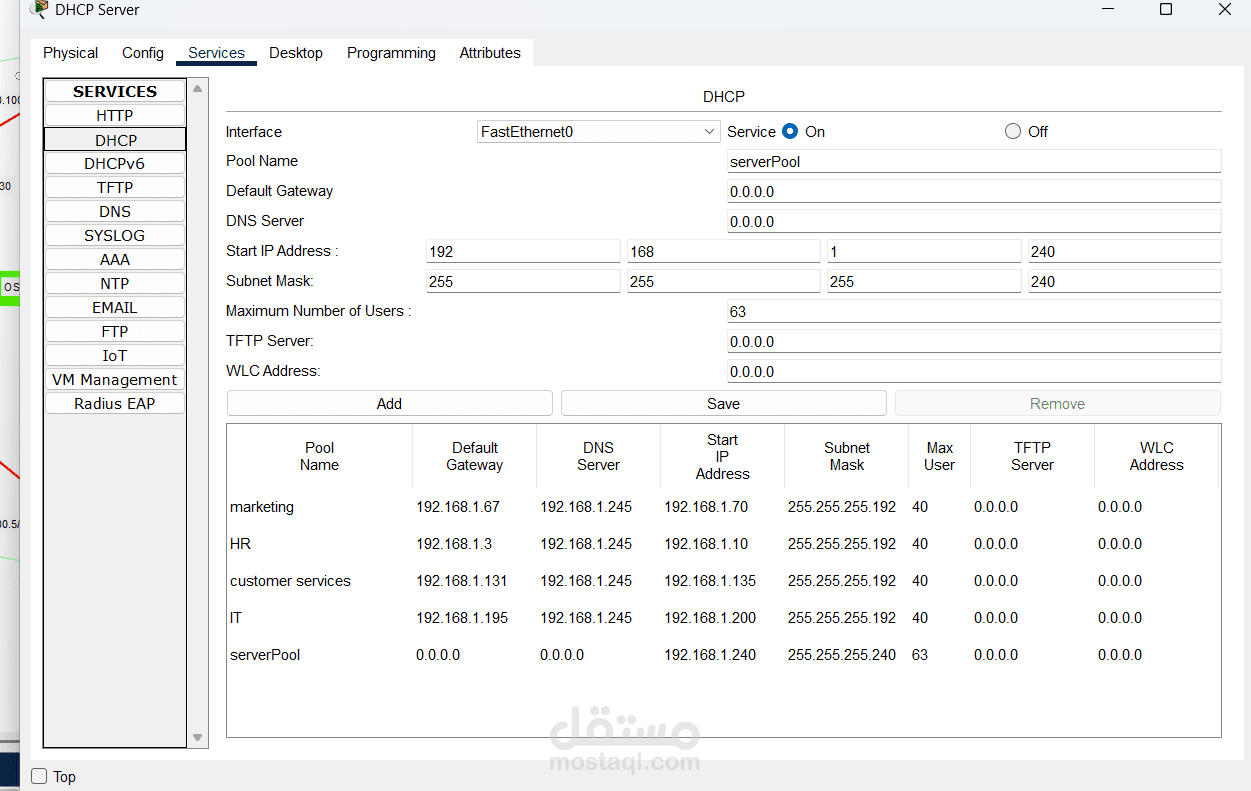
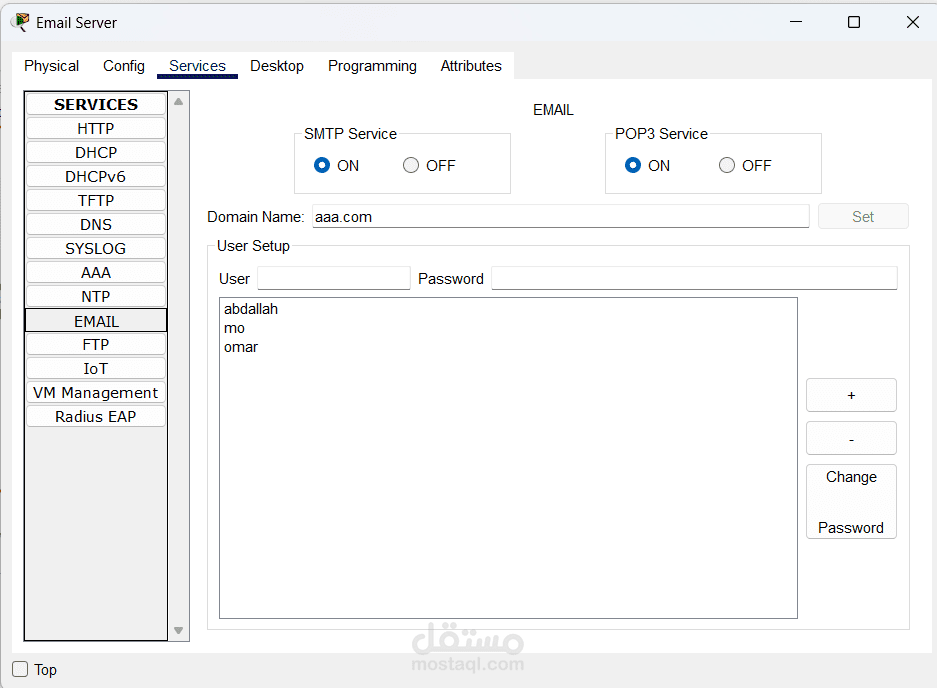
Small businesses are increasingly vulnerable to network security attacks, which can lead to financial loss, downtime, and a loss of customer trust. A recent survey in the UK showed that 37% of small businesses lost customers and 17% lost revenue due to downtime. This emphasizes why network security must be a top priority, even for smaller organizations.
I recently worked on a network design project for DFS, a well-established small finance service provider offering online finance solutions. DFS was previously relying on third-party IT services, but rapid business expansion prompted the move to an in-house network infrastructure, including LAN, WAN, and external server connectivity.
Key Project Highlights:
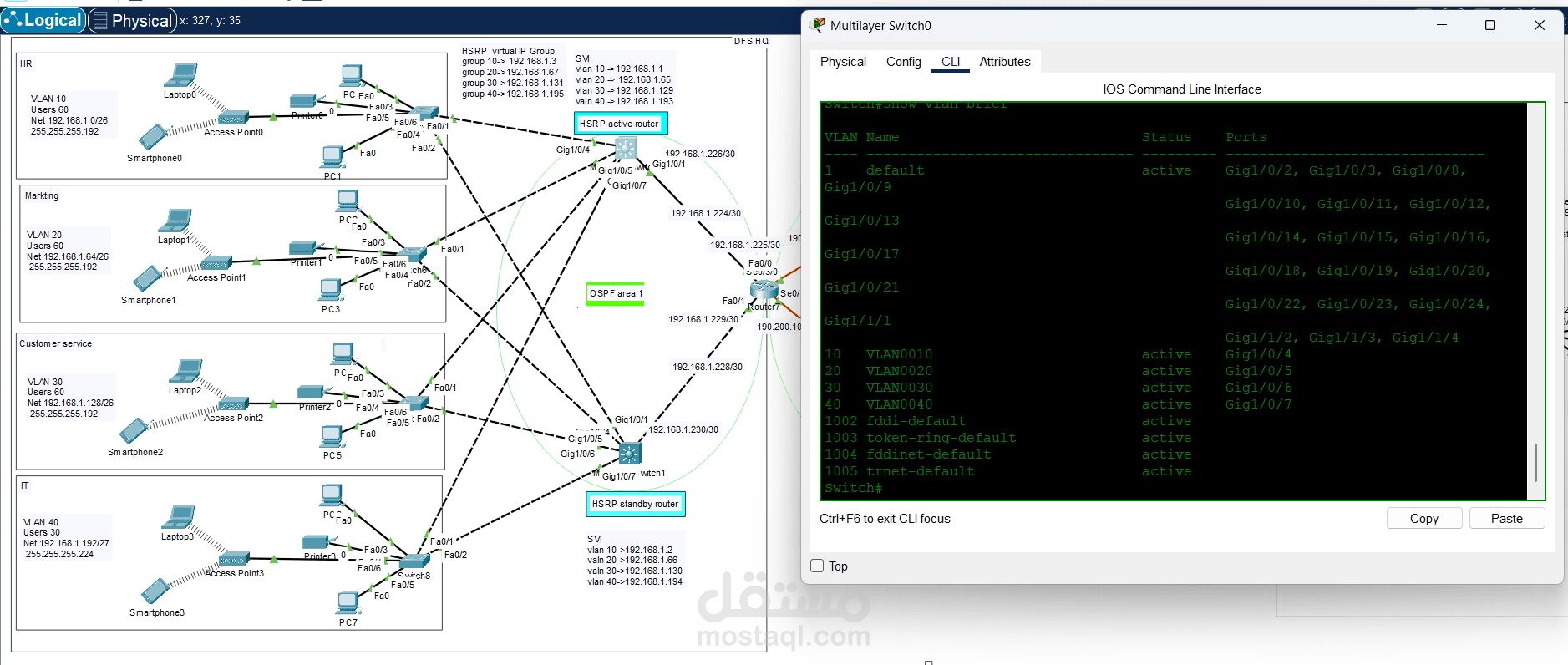
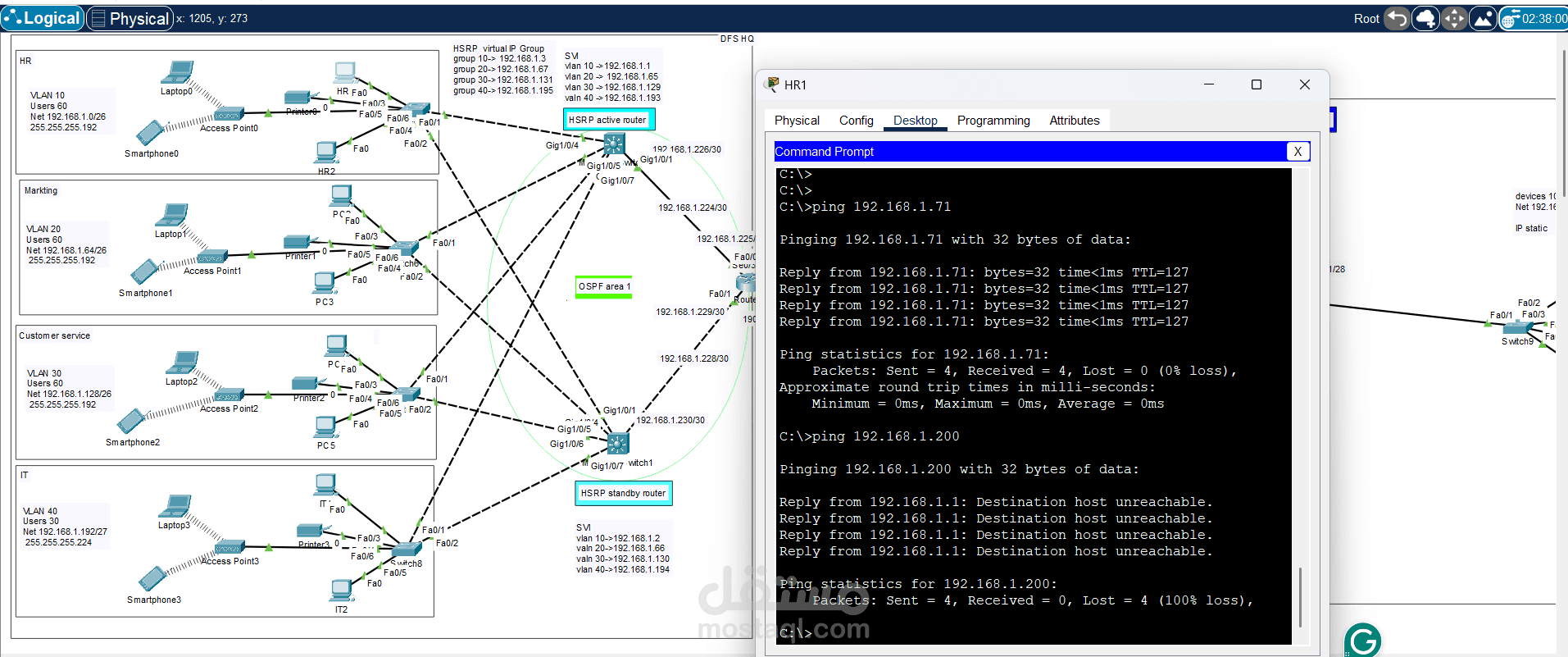
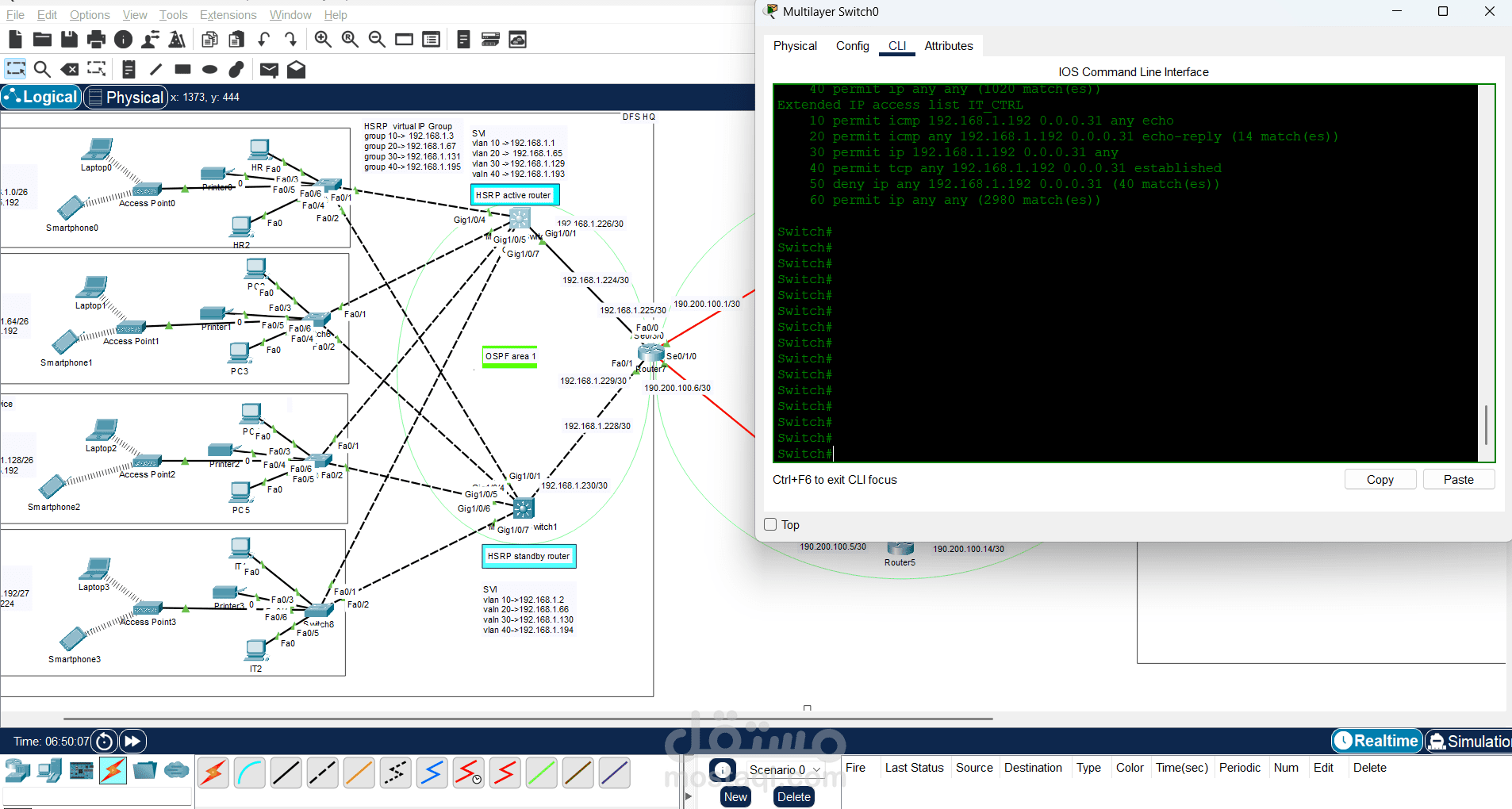
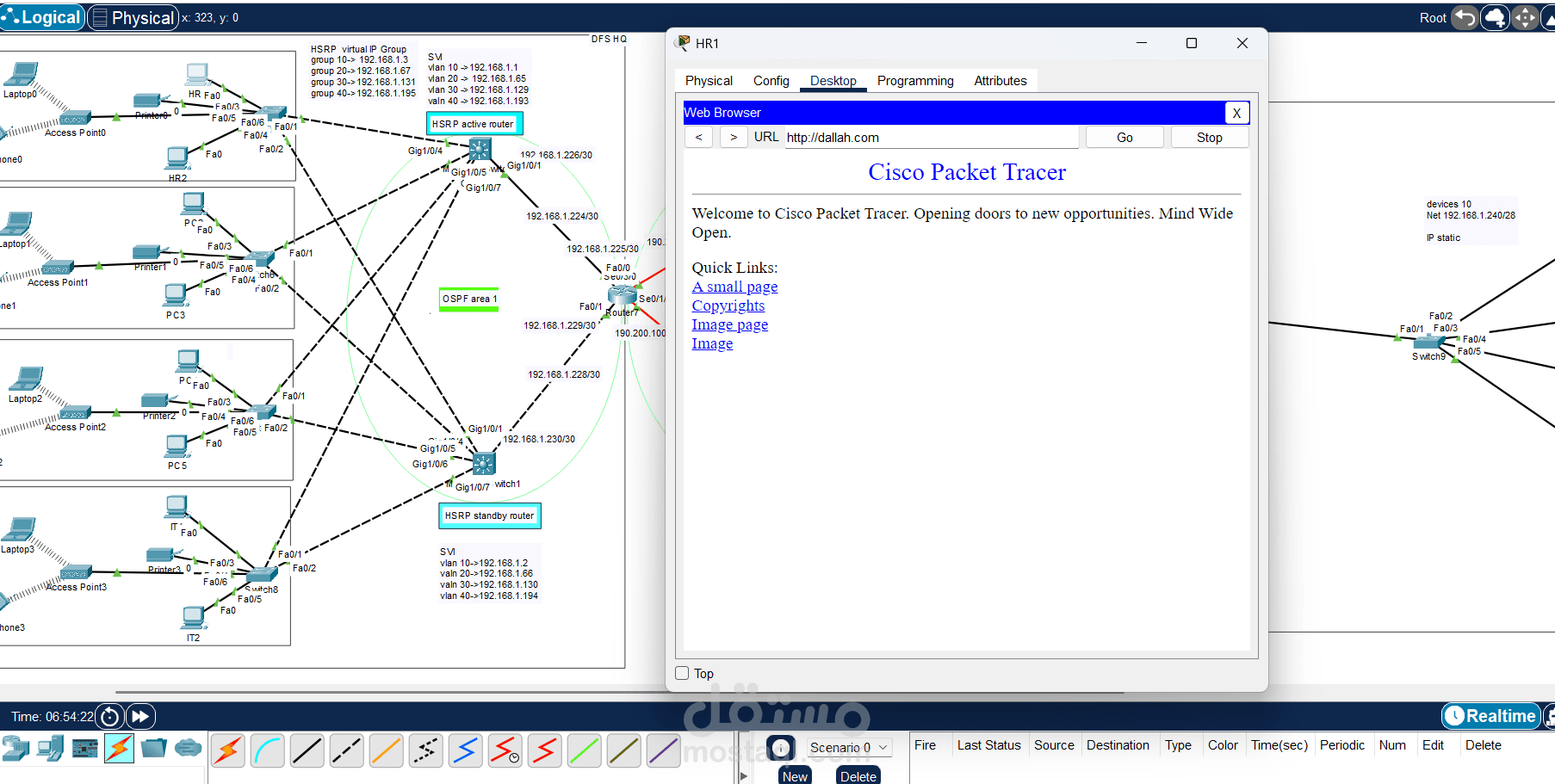
-Designed a Hierarchical LAN with separate network segments for each department (HR, IT, Customer service, Marketing) to ensure internal security and isolation.
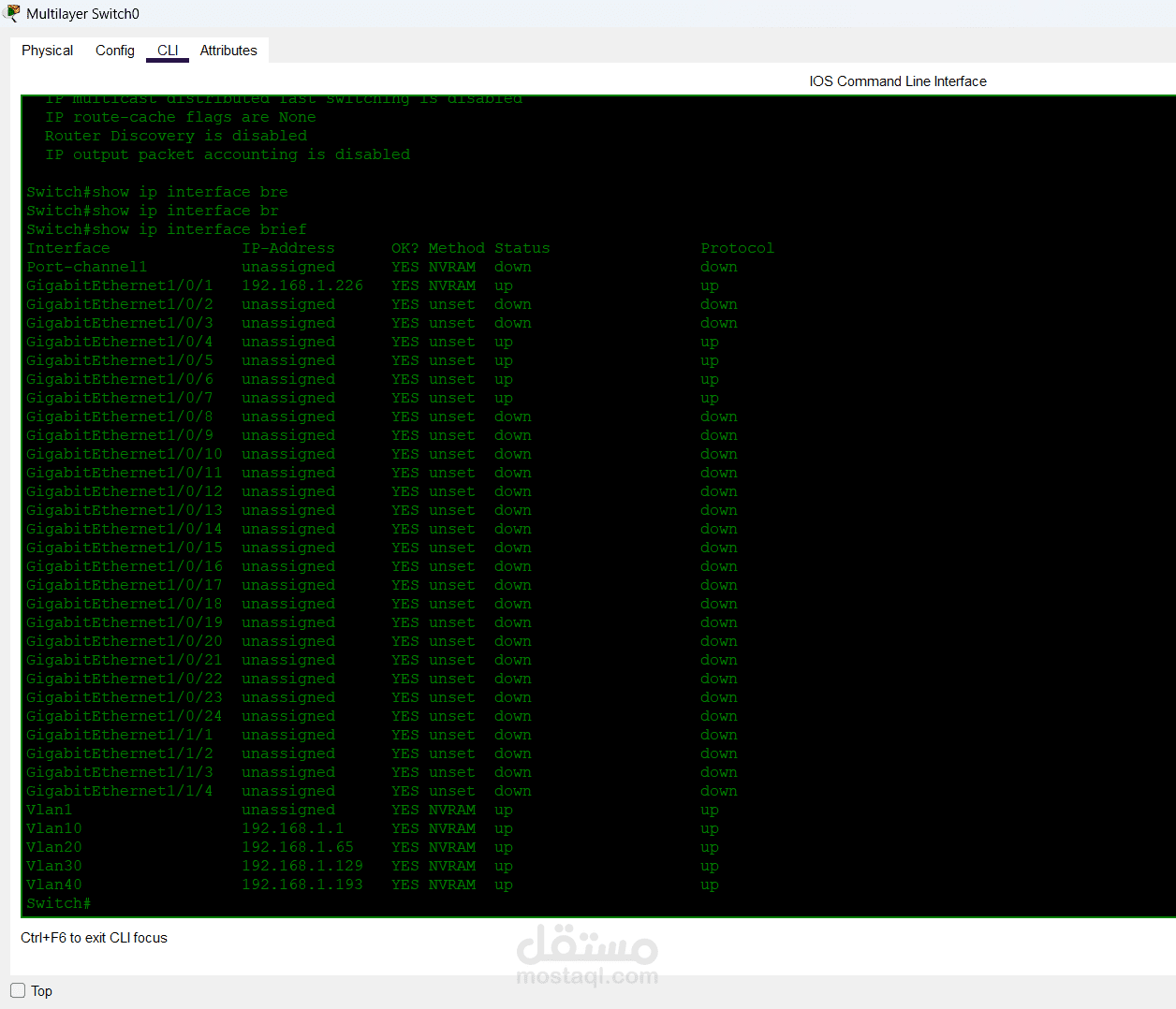
-Configured VLANs for each department and implemented 802.1Q trunking for inter-VLAN routing, allowing secure and efficient communication between departments.
-Developed a structured IP addressing and subnetting plan for all departmental networks.
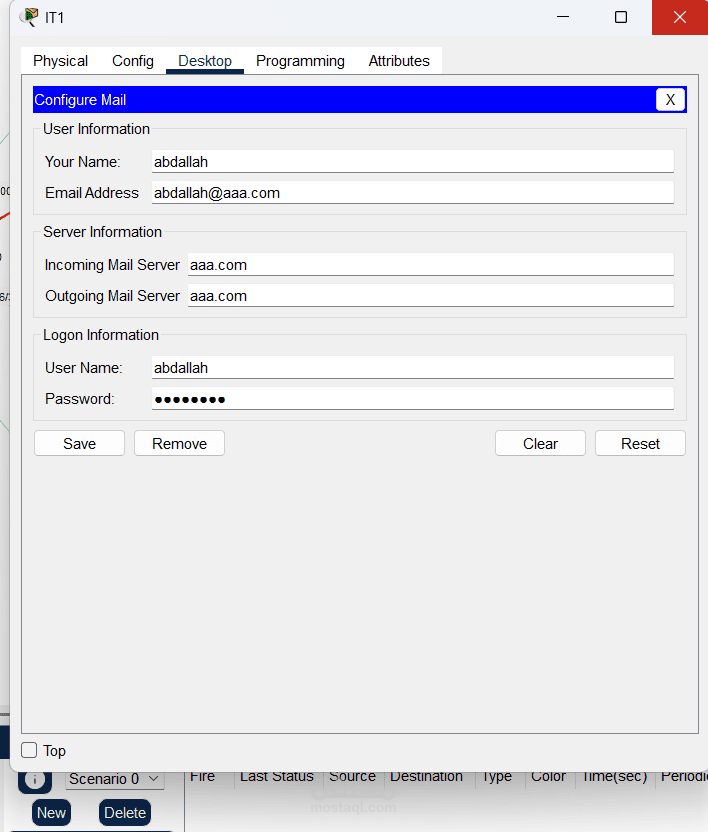
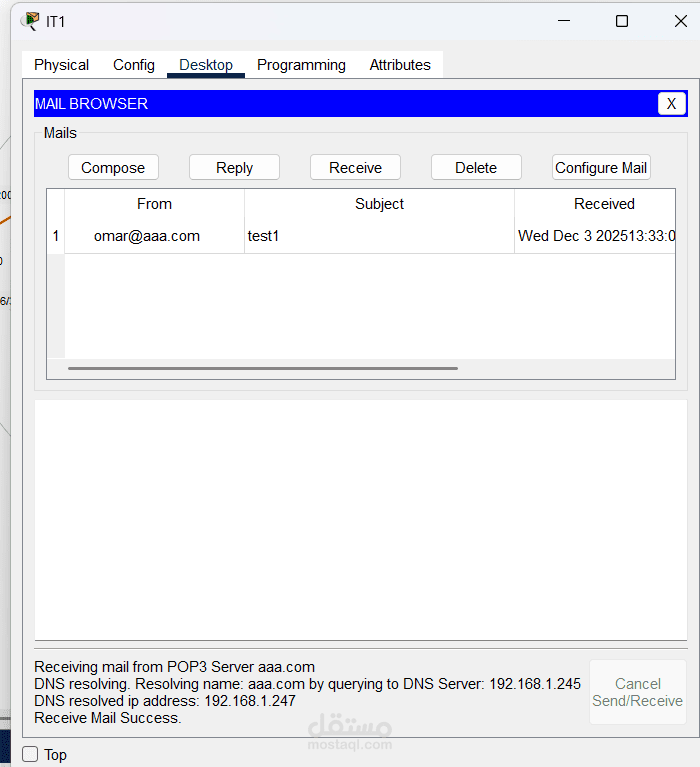
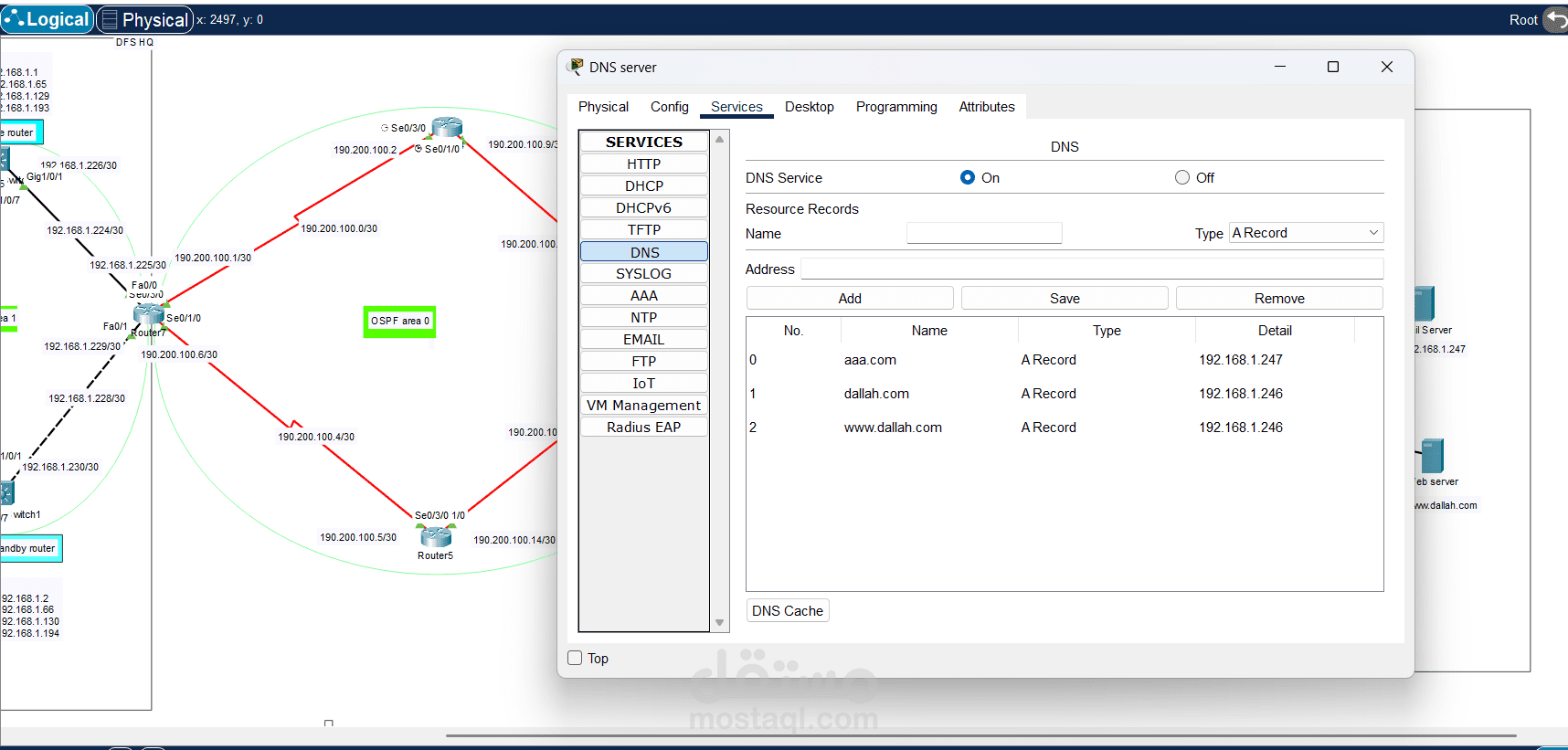
-Connected the LAN to an external server-side location hosting DNS, Web, and Email servers via WAN for critical services.
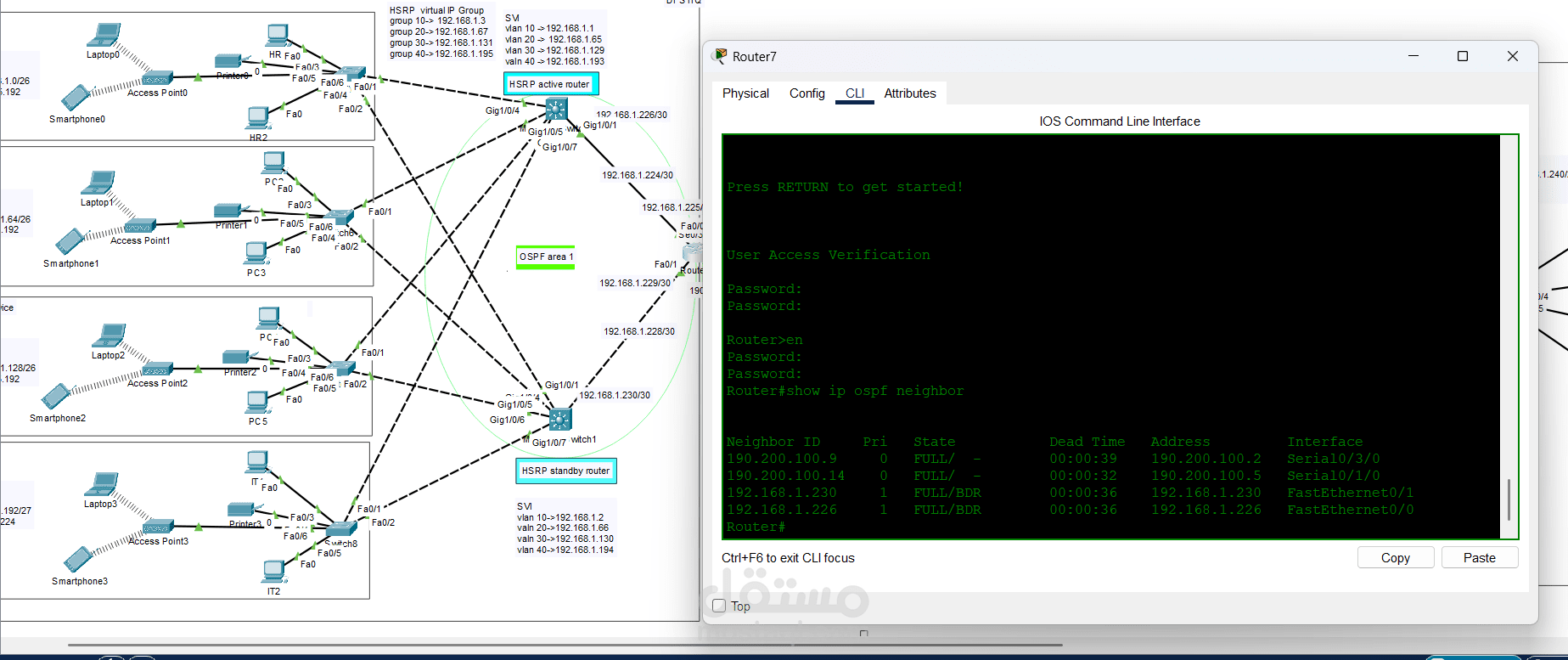
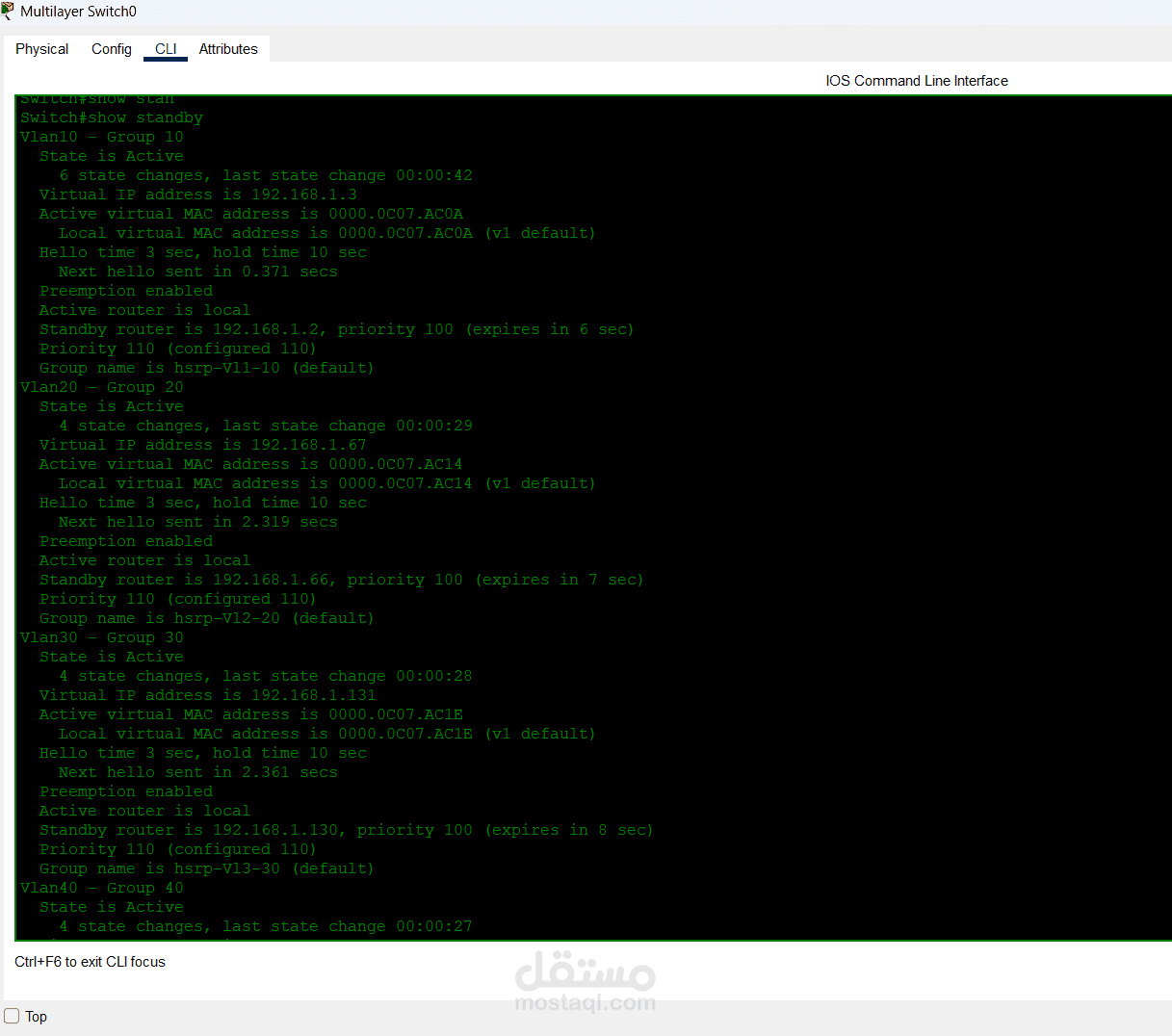
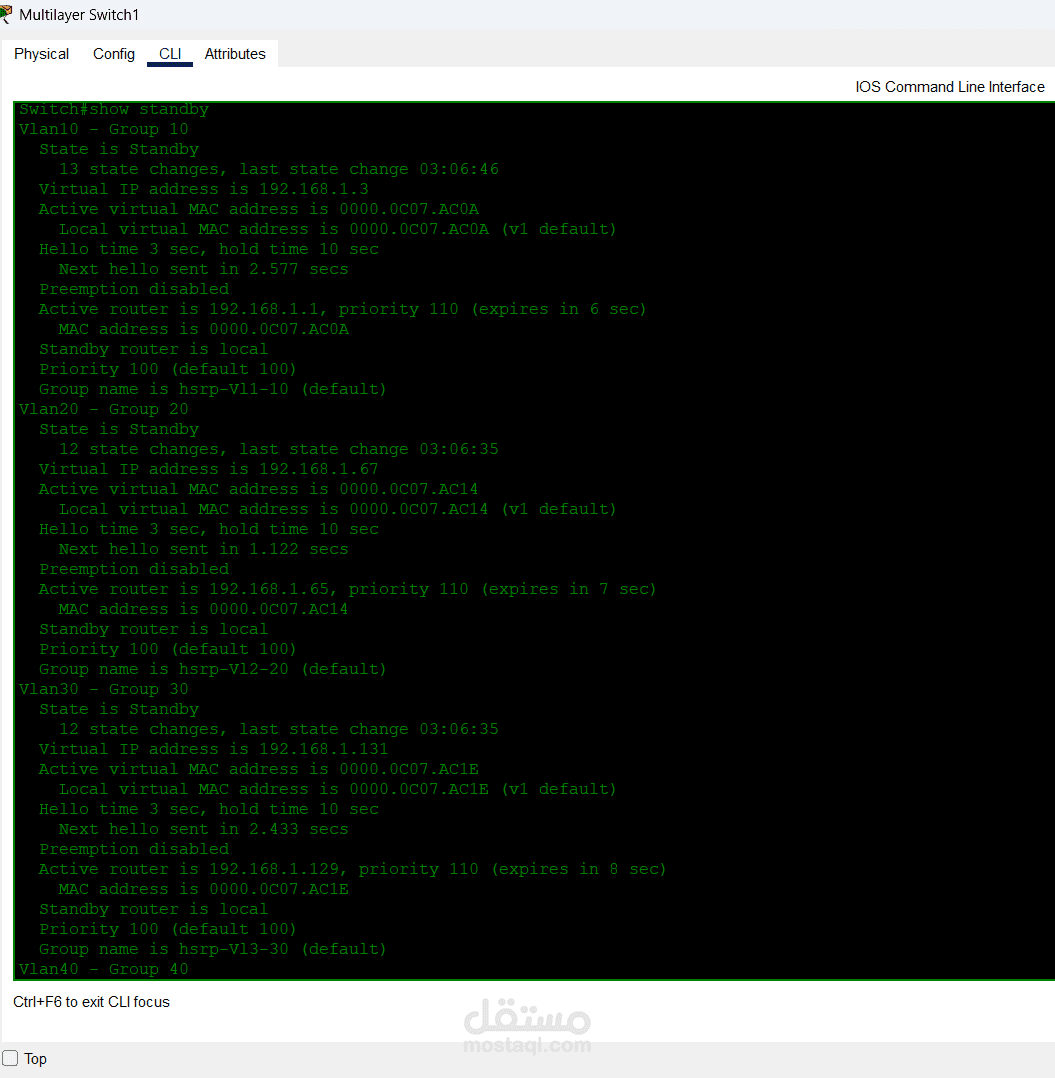
-HSRB protocol applied to enhance efficiency and network stability.
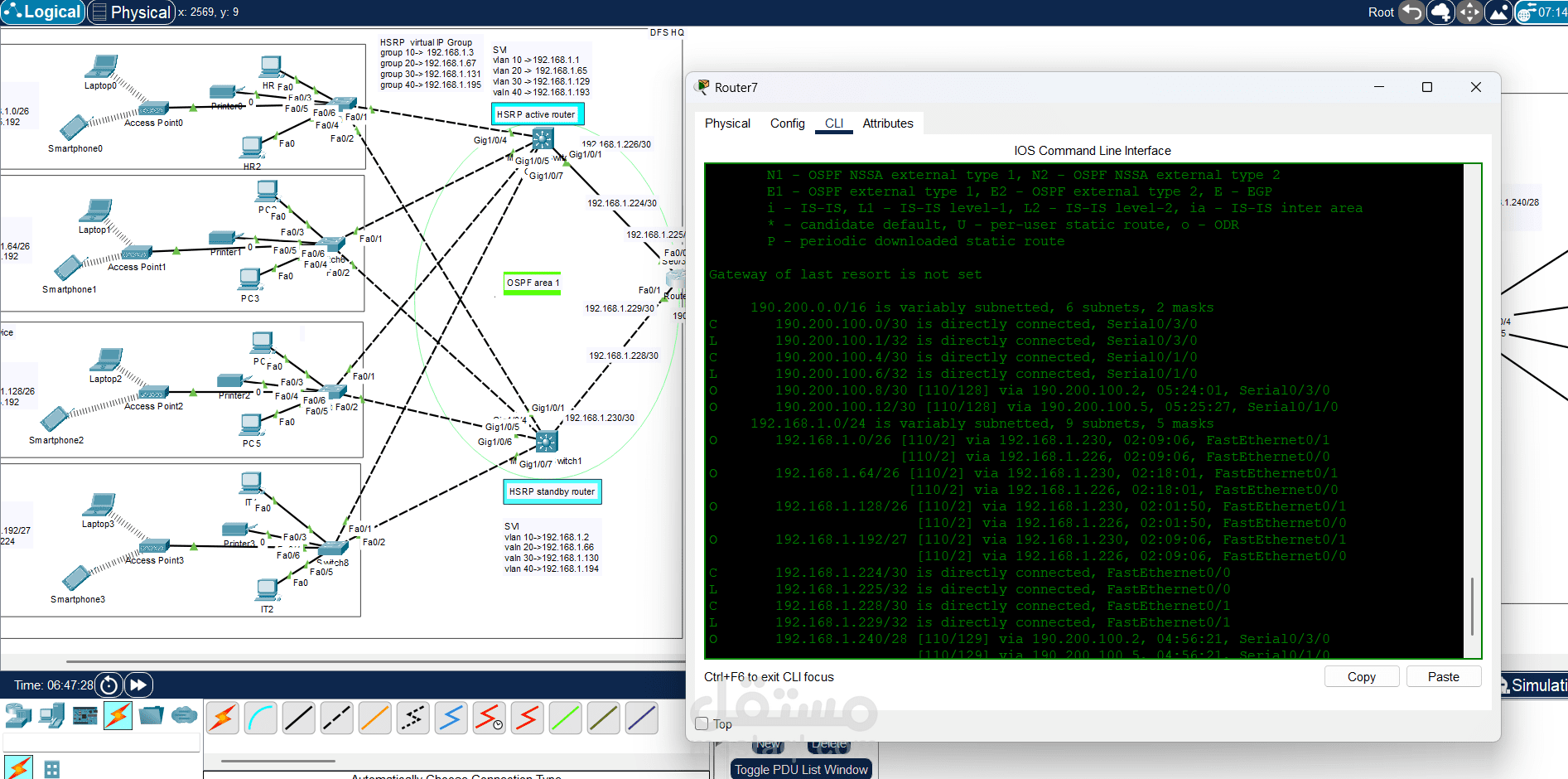
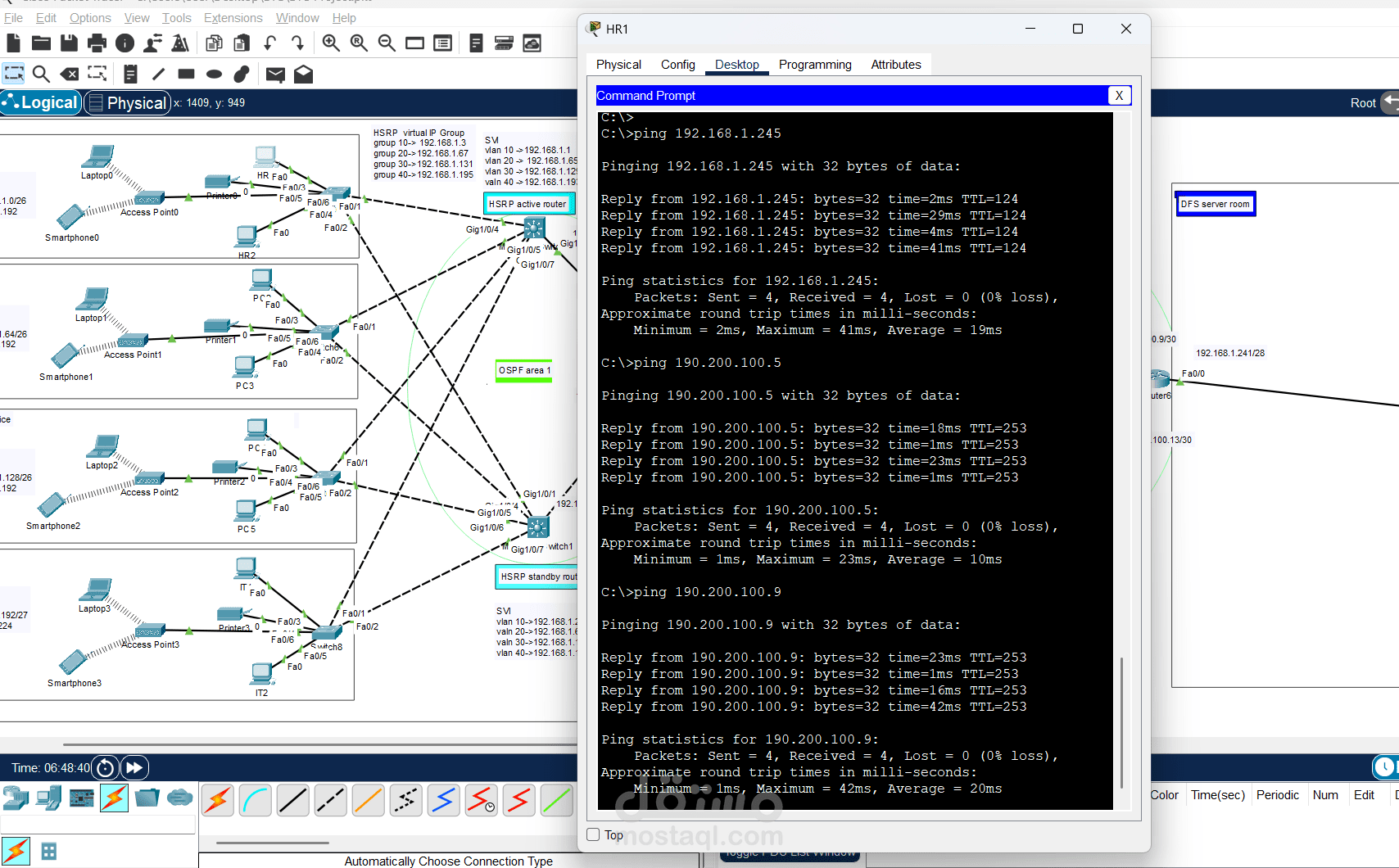
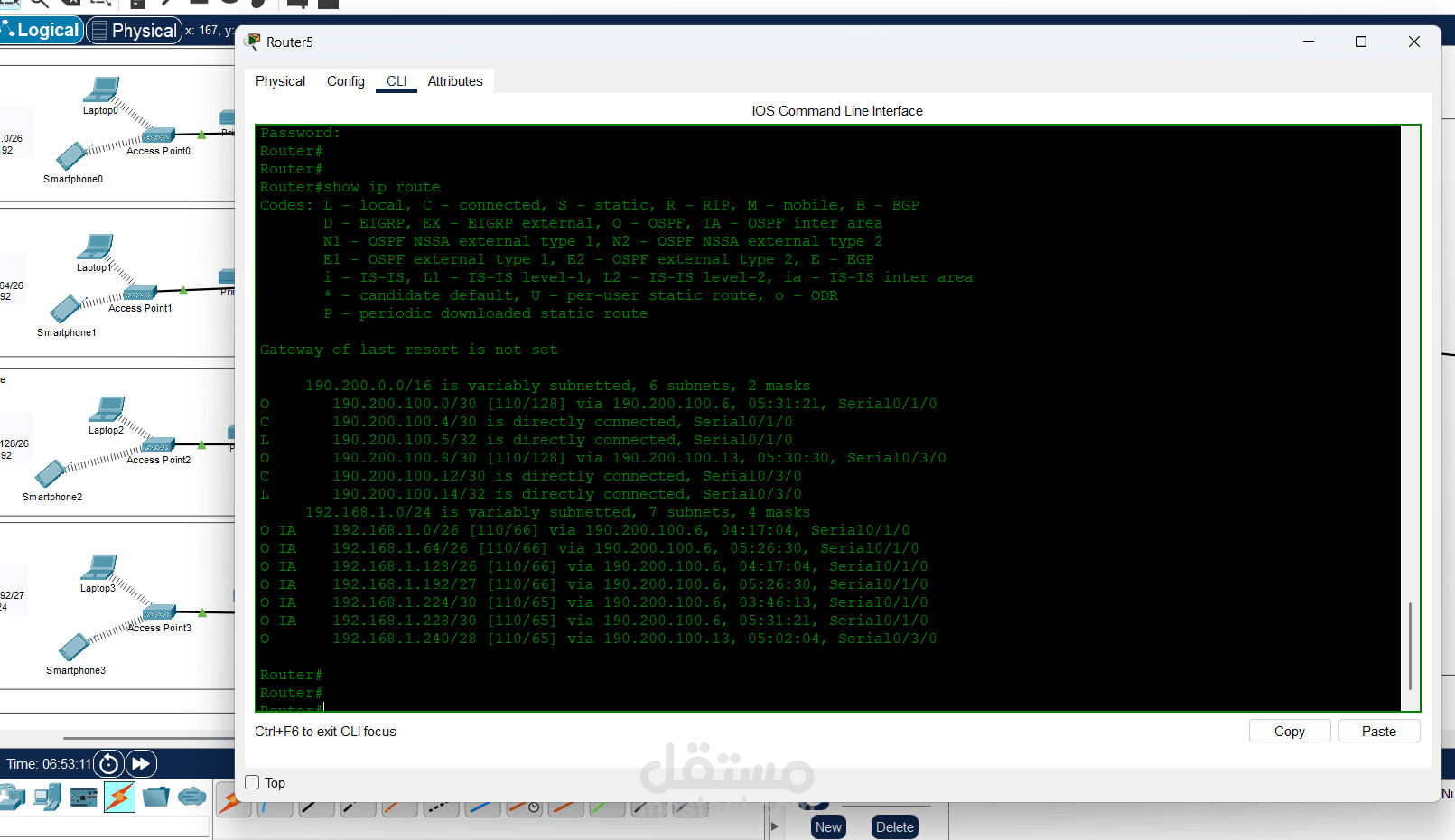
-Configured DHCP servers for automatic IP assignment and OSPF dynamic routing to manage WAN traffic efficiently.
-Secured network devices by applying encrypted passwords for console access, user access, and privileged exec modes.
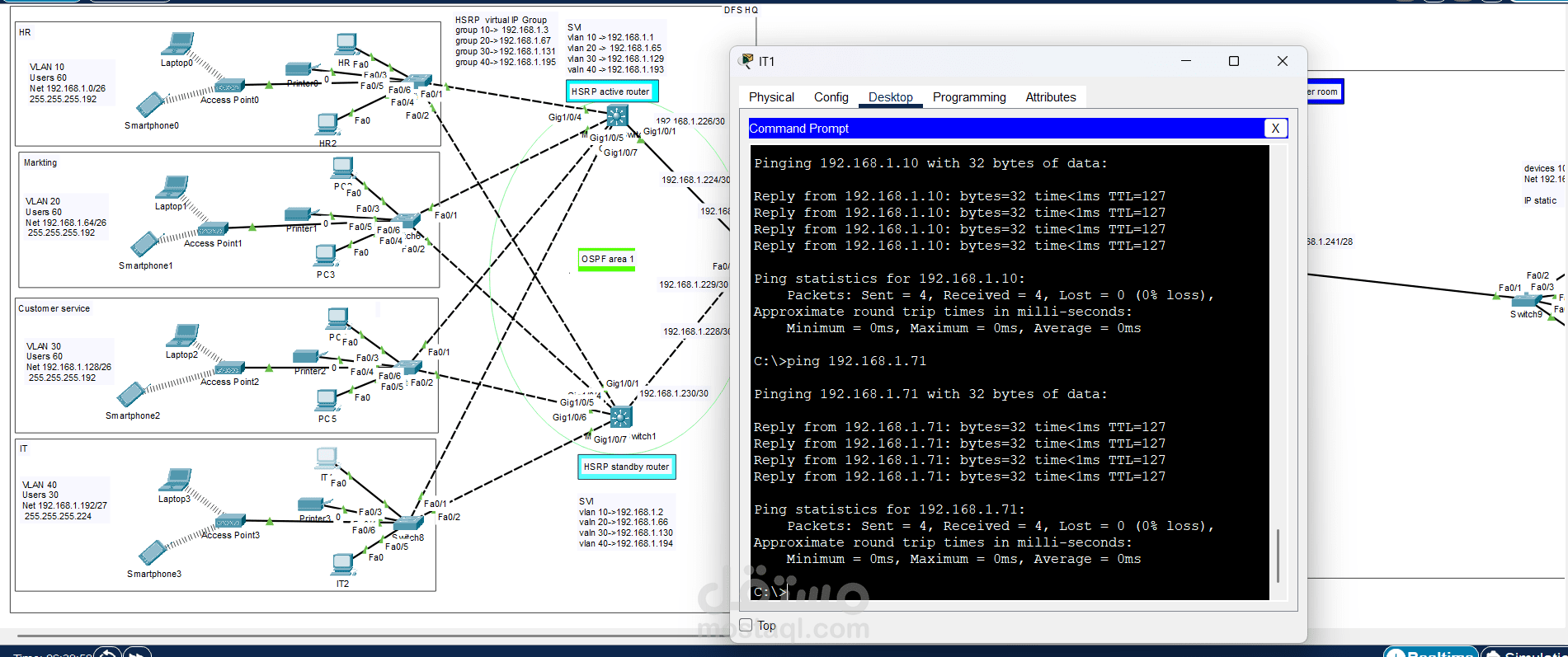
-Ensured IT users have full access to ping all departmental devices for network monitoring and troubleshooting, while keeping other departments isolated.
Business Impact:
-Strengthened the confidentiality, integrity, and availability (CIA) of network communications.
-Laid the foundation for scalable and secure network growth as DFS continues to expand.
-Established departmental network segmentation to minimize risks and maintain operational efficiency.