single cylinder engine block
تفاصيل العمل
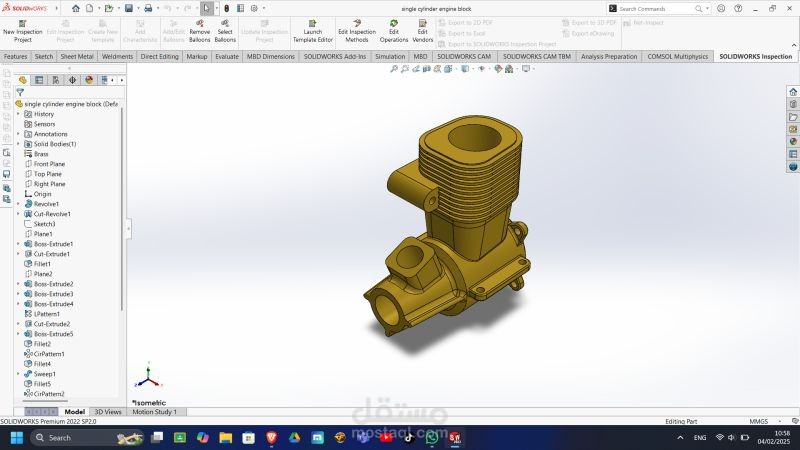
A single-cylinder engine block serves as the main housing and support for the engine's single cylinder, along with the other critical components. Here's a more detailed look at its functions:
1-Housing the Cylinder: The engine block provides the cavity for the cylinder where the piston moves up and down, generating power through combustion.
2-Support for Engine Components: In a single-cylinder engine, the block supports key components like the piston, crankshaft, connecting rod, and camshaft (if present). The engine block ensures these parts are properly aligned and function together efficiently.
3-Structural Integrity: The block provides strength and rigidity to withstand the internal pressures of combustion. It holds the components together securely to prevent failure under stress.
4-Coolant and Oil Circulation: The engine block contains passages for coolant to regulate the temperature of the engine and prevent overheating. It also has oil passages for lubricating the moving parts, reducing friction and wear.
5-Mounting Points: It often includes points where other engine components (like the cylinder head, intake and exhaust manifolds, or engine mounts) are attached.