4 stroke engine
تفاصيل العمل
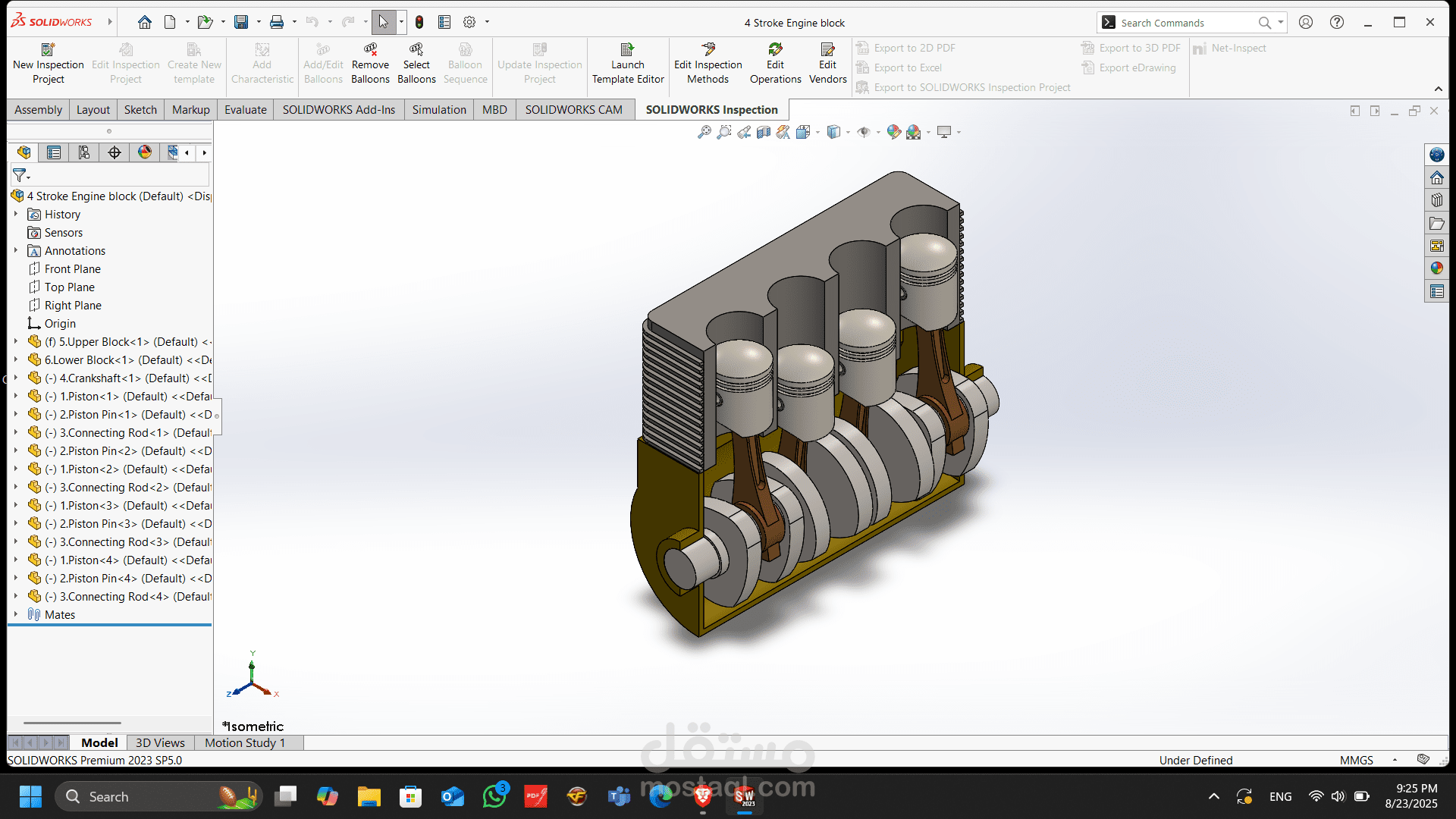
A 4-stroke engine works through four distinct stages (or "strokes") of the piston inside the cylinder. These four strokes are:
1. Intake Stroke
Purpose: Draw air-fuel mixture (in gasoline engines) or just air (in diesel engines) into the cylinder.
What happens:
The intake valve opens.
The piston moves down from top dead center (TDC) to bottom dead center (BDC).
This creates a vacuum that pulls in the air-fuel mixture.
2. Compression Stroke
Purpose: Compress the air-fuel mixture to increase its energy potential.
What happens:
The intake valve closes.
The piston moves up from BDC to TDC.
This compresses the mixture, making it more volatile.
3. Power Stroke (Combustion Stroke)
Purpose: Generate power to move the vehicle.
What happens:
At the top of the compression stroke, a spark plug ignites the compressed air-fuel mixture (in gasoline engines). In diesel engines, fuel is injected into compressed hot air, causing auto-ignition.
This explosion forces the piston down, producing mechanical energy that turns the crankshaft.
4. Exhaust Stroke
Purpose: Expel burnt gases (exhaust) from the cylinder.
What happens:
The exhaust valve opens.
The piston moves up from BDC to TDC again.
This pushes the spent gases out through the exhaust valve.