complying lifts ce
تفاصيل العمل
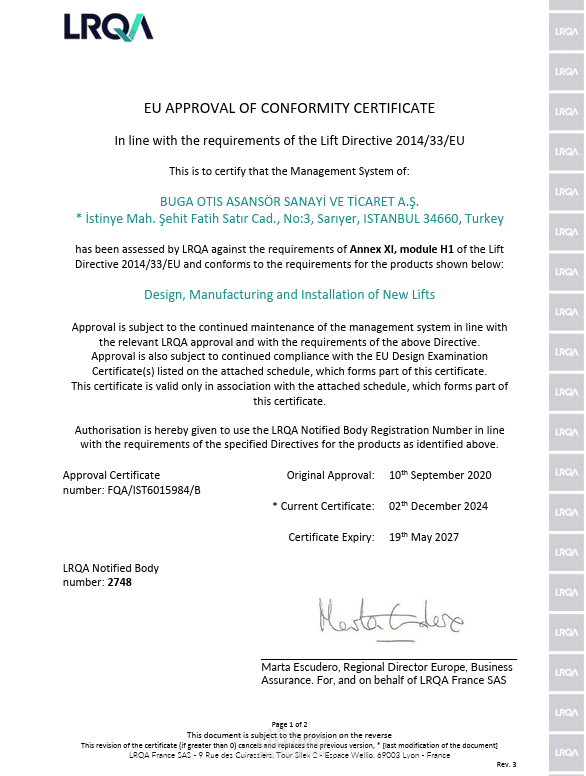
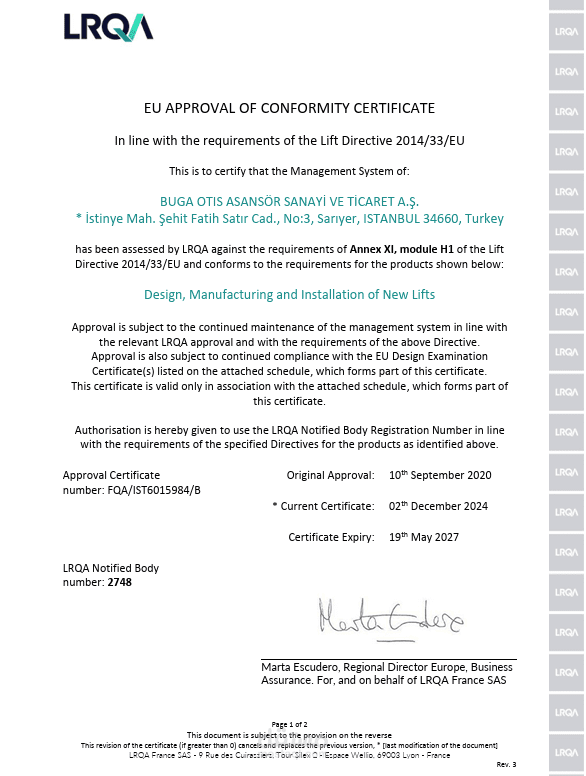
o ensure that lifts (elevators) comply with the EU Directive, you must adhere primarily to Directive 2014/33/EU — the Lifts Directive — which harmonizes safety and performance requirements for lifts and their safety components across the European Economic Area (EEA).
Here’s a step-by-step guide to compliance:
1. Understand the Scope
Directive 2014/33/EU applies to:
New lifts permanently installed in buildings/constructions for transporting people or people and goods.
Safety components for use in such lifts (e.g., door locks, overspeed governors, safety gears).
It does not cover:
Construction site hoists.
Mine winding gear.
Theatre lifts.
Military/airport emergency lifts.
Railway or maritime equipment.
2. Essential Health and Safety Requirements (EHSRs)
The core of compliance is meeting the EHSRs outlined in Annex I of the Directive, covering:
Strength and durability of materials.
Safety of users (e.g., door protection, emergency stops).
Protection against falling or trapping.
Accessibility (aligned with disability requirements).
Safe maintenance access.
Machine room safety.
Electrical safety and electromagnetic compatibility.
3. Use Harmonized Standards
While not mandatory, applying EU harmonized standards creates a "presumption of conformity" with the EHSRs. Key standards include:
EN 81-20: Safety rules for construction and installation of passenger/service lifts.
EN 81-50: Design rules, calculations, examinations, and tests.
EN 81-21: For lifts in existing buildings (if applicable).
EN 81-70: Accessibility for persons with disabilities.
Check the latest list in the Official Journal of the EU (OJEU).