Data-Driven Insights: Global Laptop Sales Dashboard
تفاصيل العمل
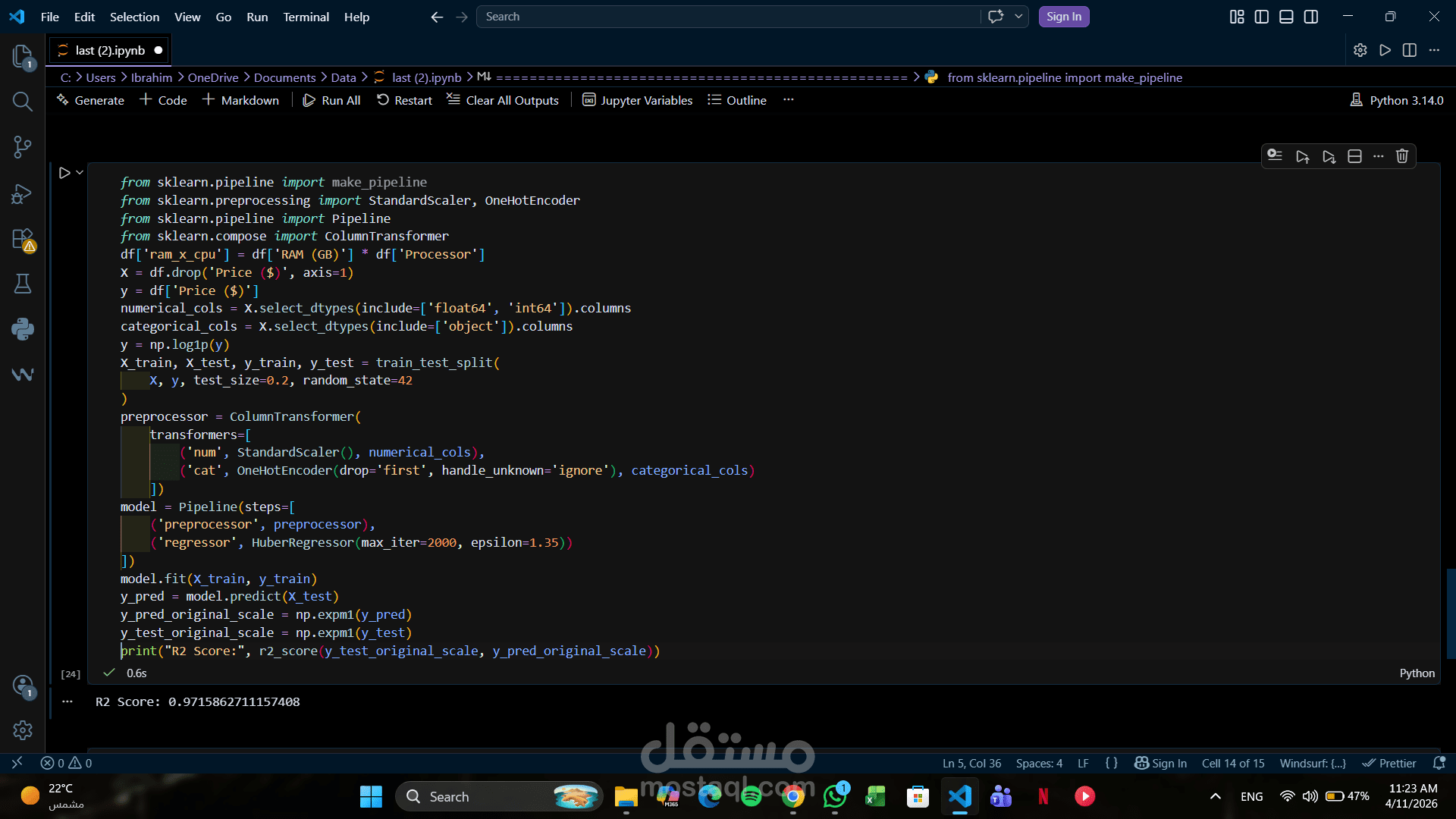
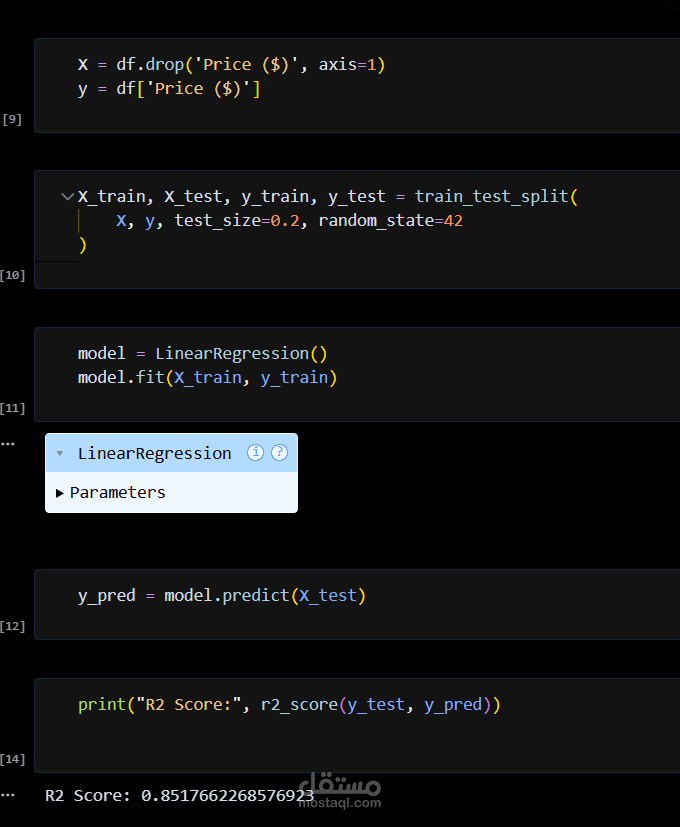
This screenshot shows the Python code used to build the machine learning model behind your "Laptop Dashboard." It looks like you're using VS Code with a Jupyter Notebook to predict laptop prices.
Here is a simple explanation of what the code is doing:
1. Data Preparation
Feature Engineering: It creates a new category called ram_x_cpu by multiplying RAM and Processor values.
Splitting Data: It separates the "Price" (what it wants to predict) from the other details and splits the data into a Training set (to learn) and a Test set (to check accuracy).
Log Transformation: It uses np.log1p(y) on the price. This is a clever trick to handle price data that has a wide range, making it easier for the model to learn.
2. The Pipeline (The "Brain")
Preproccesor: It automatically handles different types of data. It scales numbers (so big numbers don't confuse the model) and encodes categories (turning words like "Dell" or "Apple" into numbers the computer understands).
The Model: It uses a HuberRegressor. This is a robust type of regression that is good at ignoring "outliers" (laptops that are unusually cheap or expensive).
3. The Results
Scaling Back: Since the price was "logged" earlier, the code uses np.expm1 to turn the predictions back into actual dollar amounts.
Accuracy: At the bottom, you can see the R2 Score: 0.9715. This matches the 97% Model Accuracy shown on your dashboard! It means your model is very accurate at predicting laptop prices based on their specs.