Architecture Collage
تفاصيل العمل
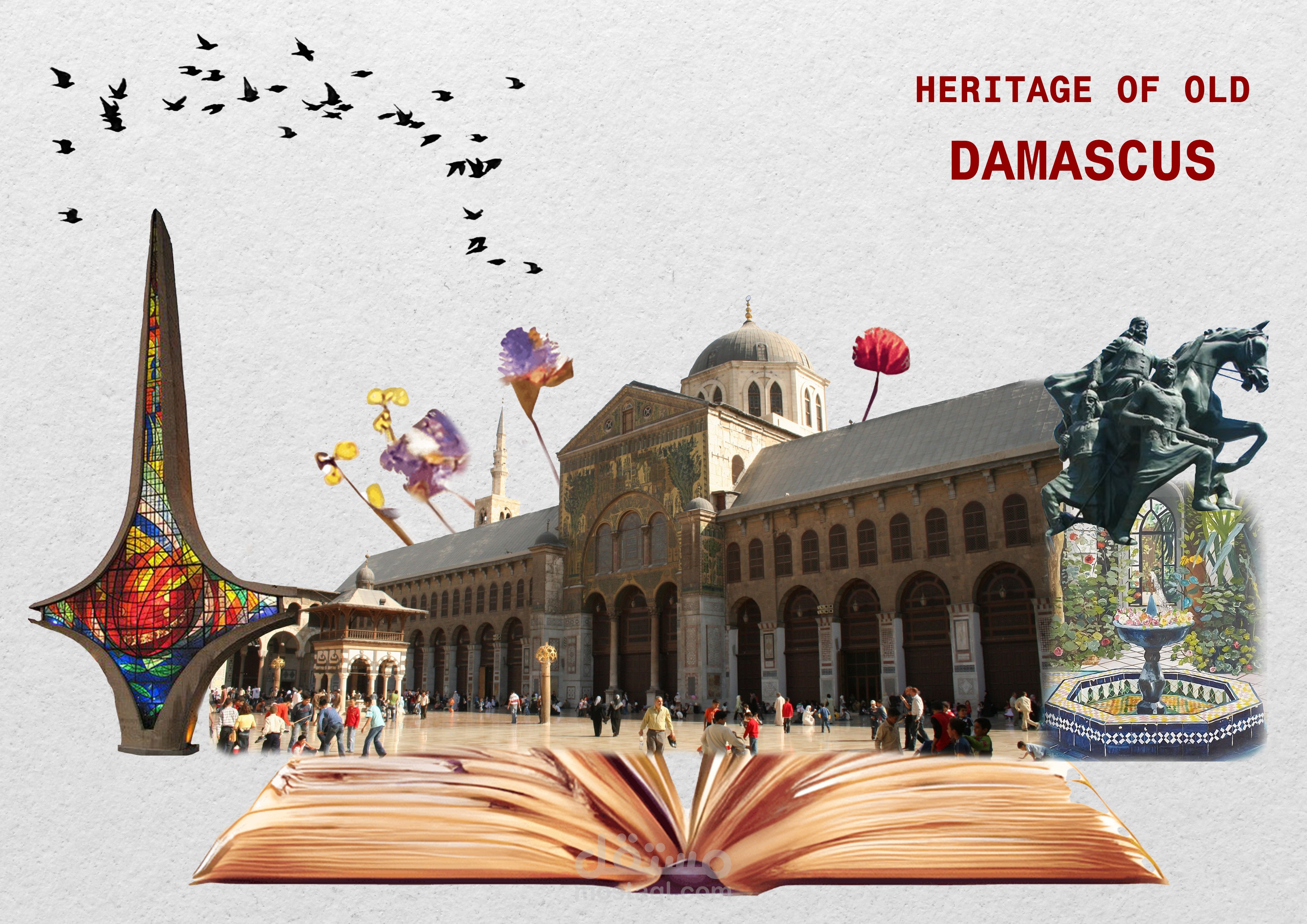
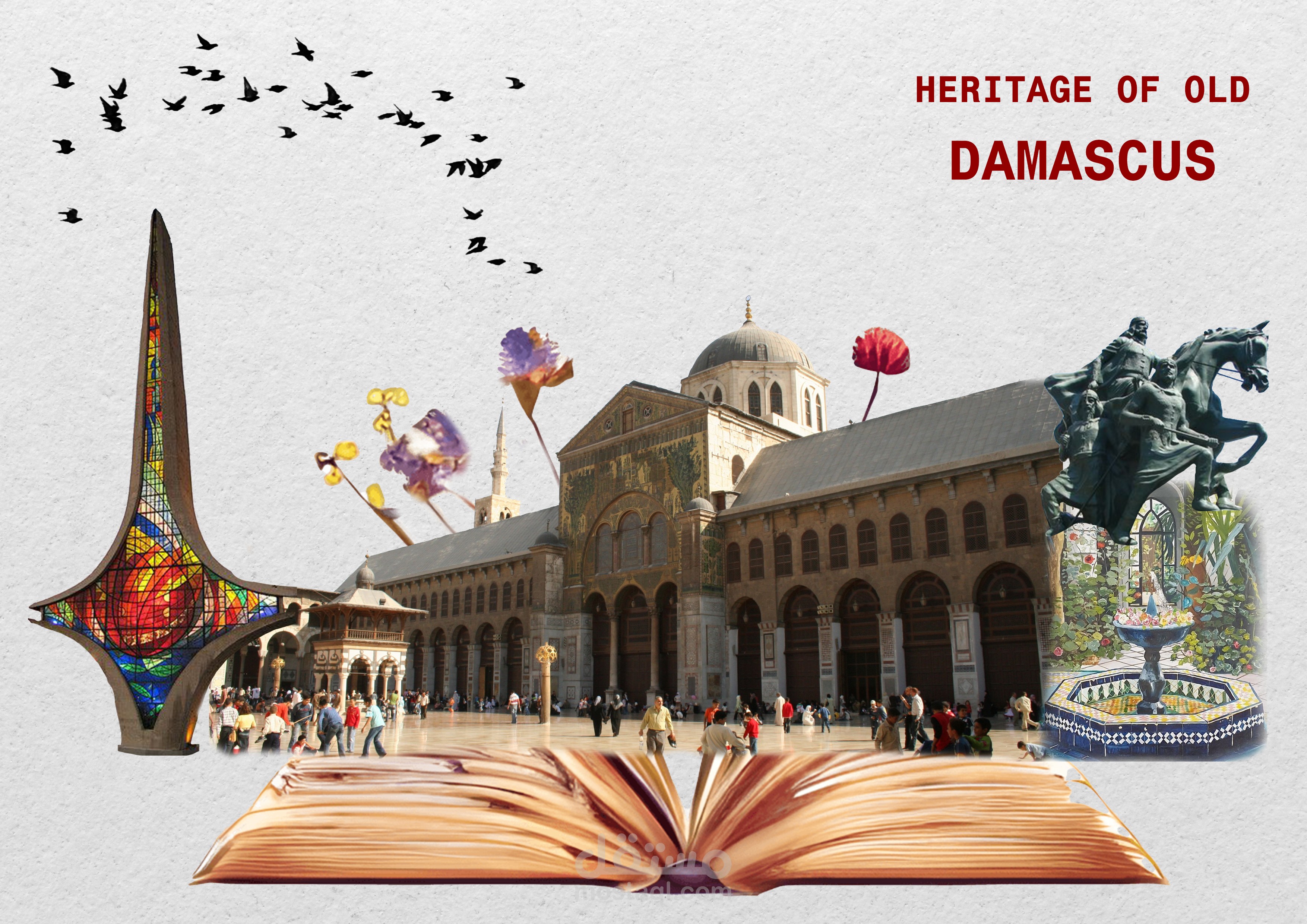
Damascus has always been more than a city — it’s a living archive of human knowledge, craftsmanship, and cultural identity.
Before the war, its streets echoed with the sounds of artisans at work: wood carving in Al-Noufara, copper hammering in Al-Midan, weaving in Al-Qanawat.
Knowledge was not only read, but made by hand, passed through generations in family workshops, mosques, and madrasas.
Damascus was known for its deep connection between education, beauty, and tradition — an urban culture rooted in storytelling, community, and skill.
️ Challenge:
The war disrupted this fabric. Many artisans fled. Workshops closed. Generational skills were lost.
Much of the intangible heritage—craftsmanship, oral history, and traditional learning—has faded in daily life.
But this knowledge holds cultural value. It defines the soul of Damascus. If lost, we lose part of the city’s identity.
️ Design Response:
Revive heritage through experience.
Make the library a place not only to read — but to witness, practice, and pass on cultural memory.
Integrate craft studios, archive galleries, and interactive zones to bring fading knowledge into daily use.
Use Damascene materials and reinterpret courtyard typologies, shaded colonnades, and traditional geometries in modern form.
Connect spaces for making and learning, where artisans, students, and elders can meet.