Smart Delivery
تفاصيل العمل
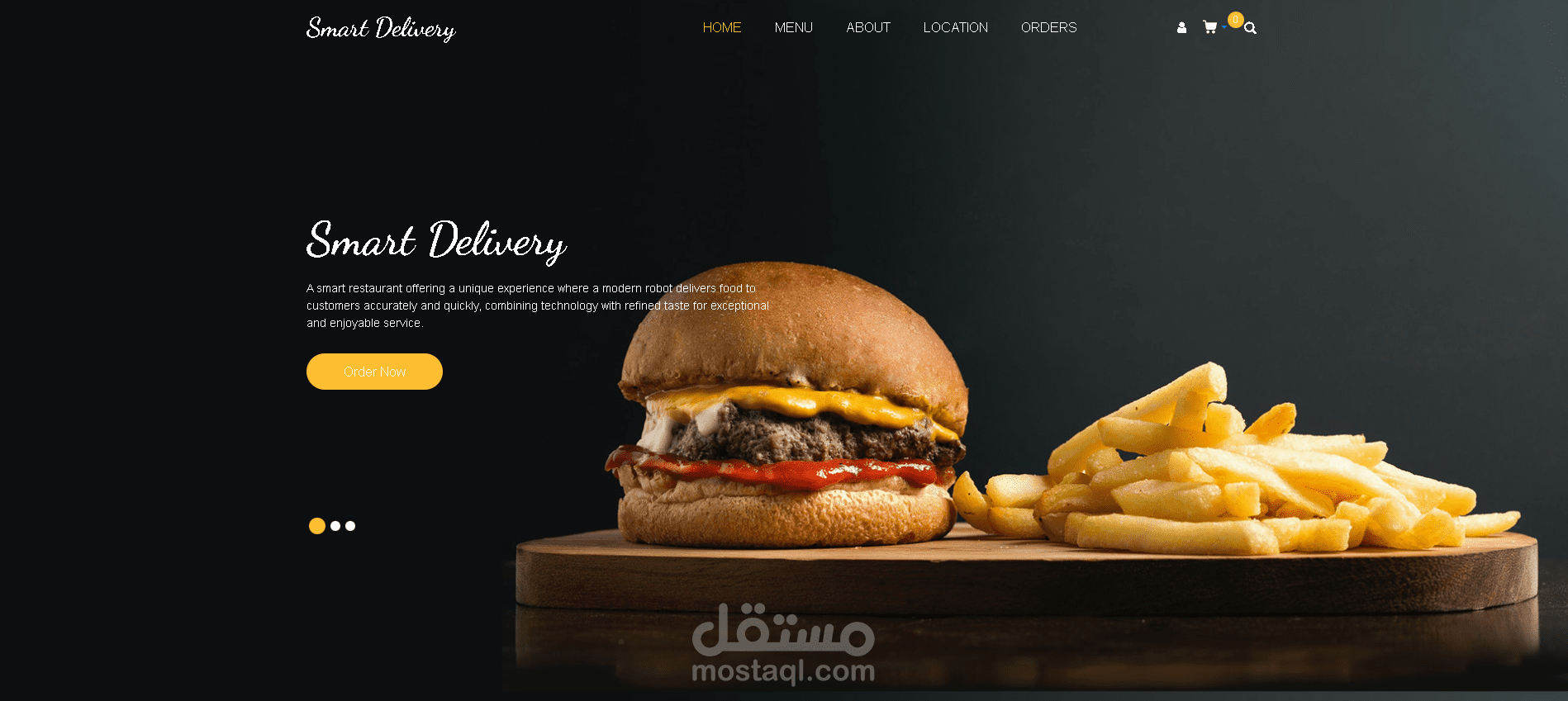
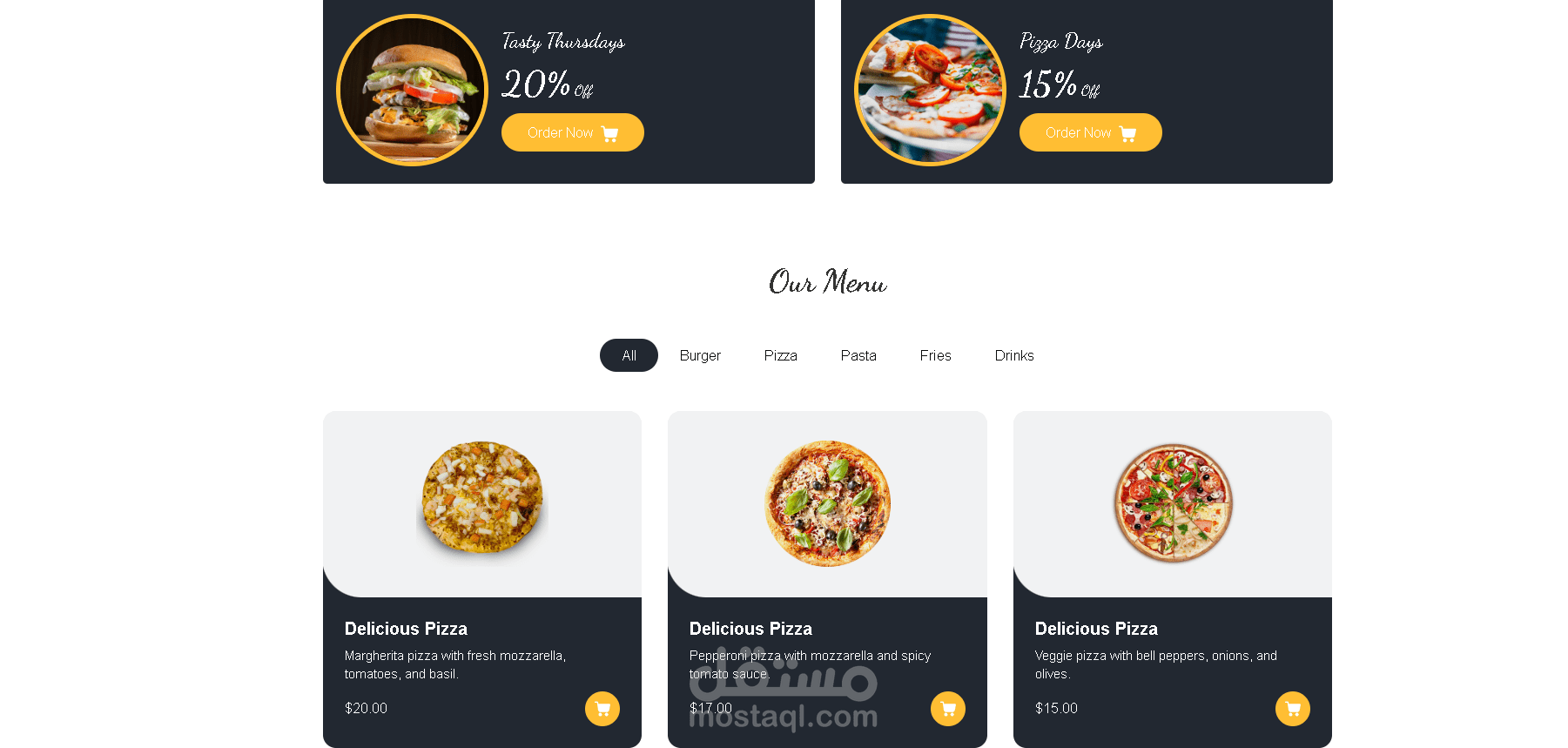
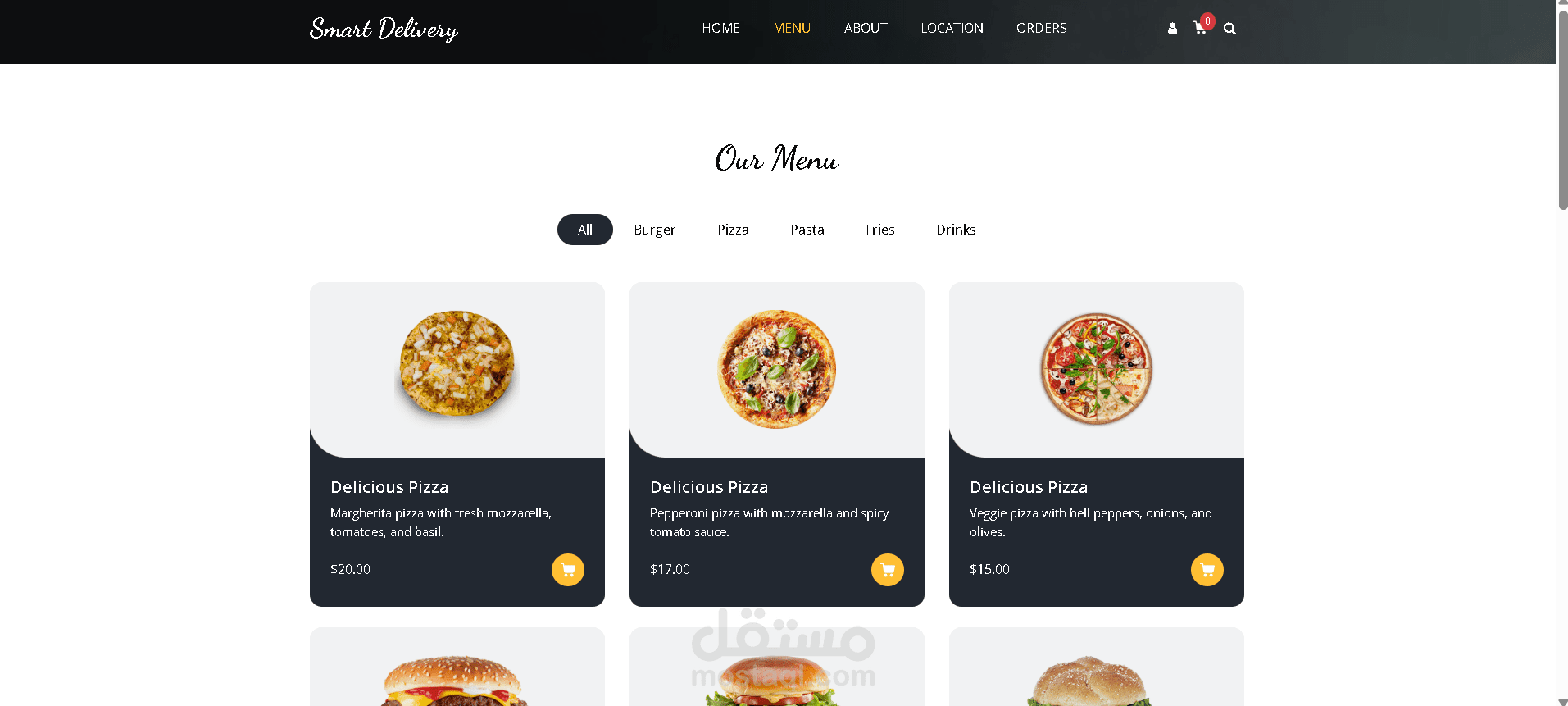
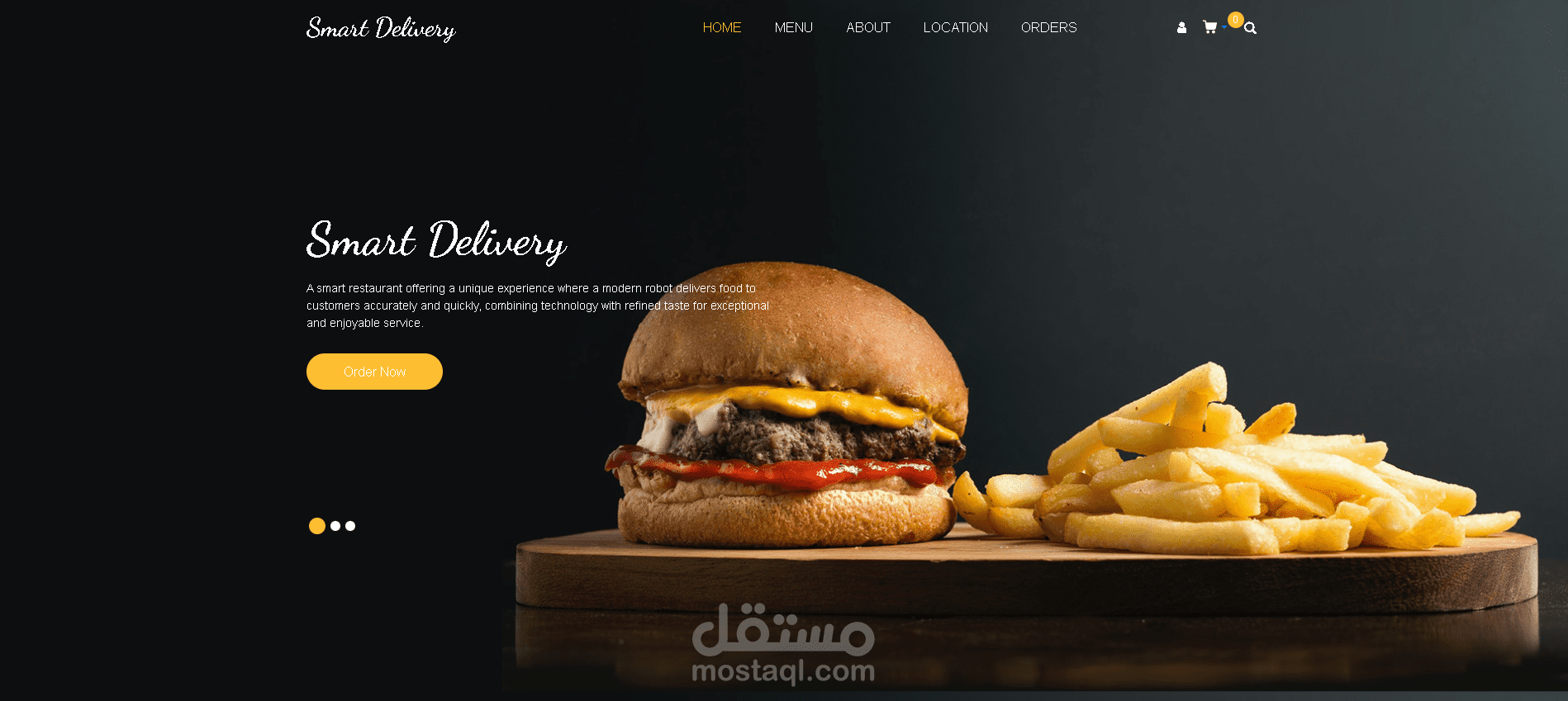
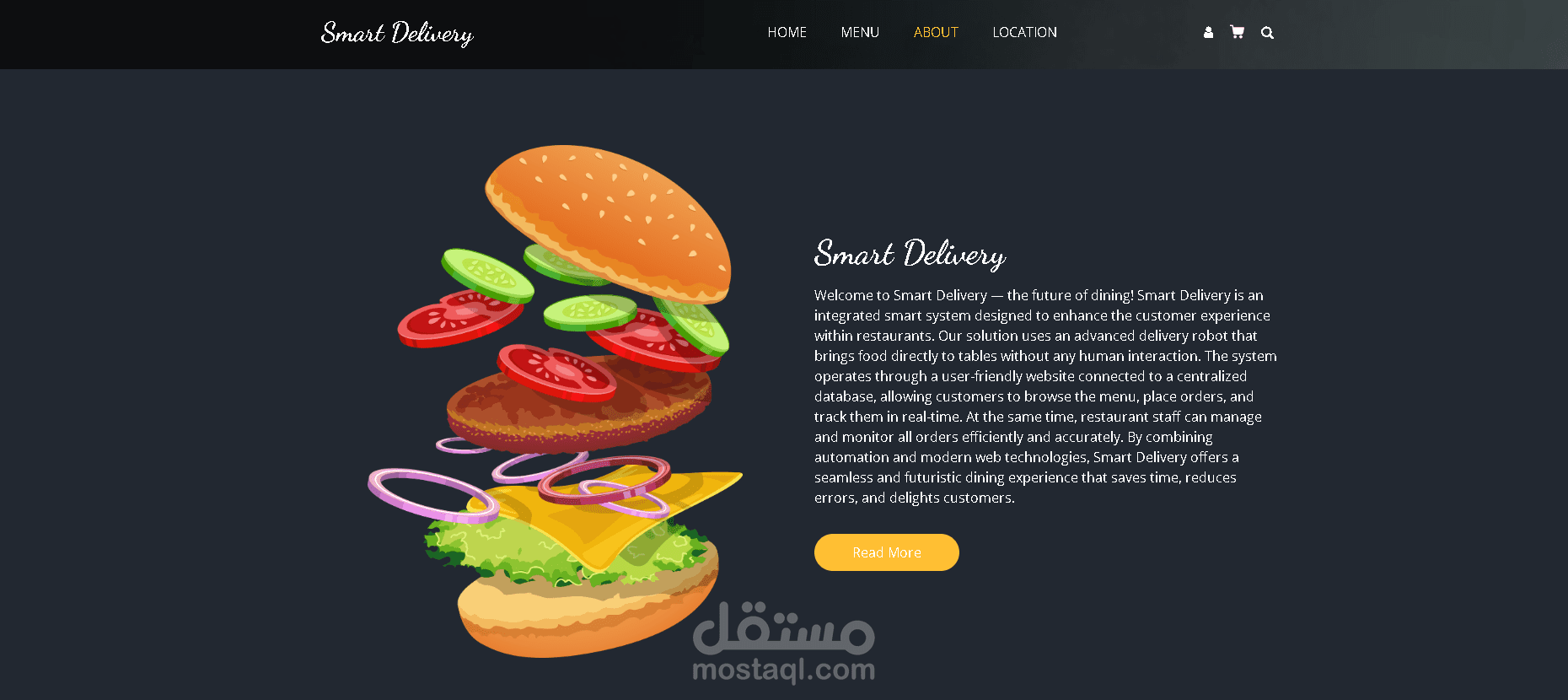
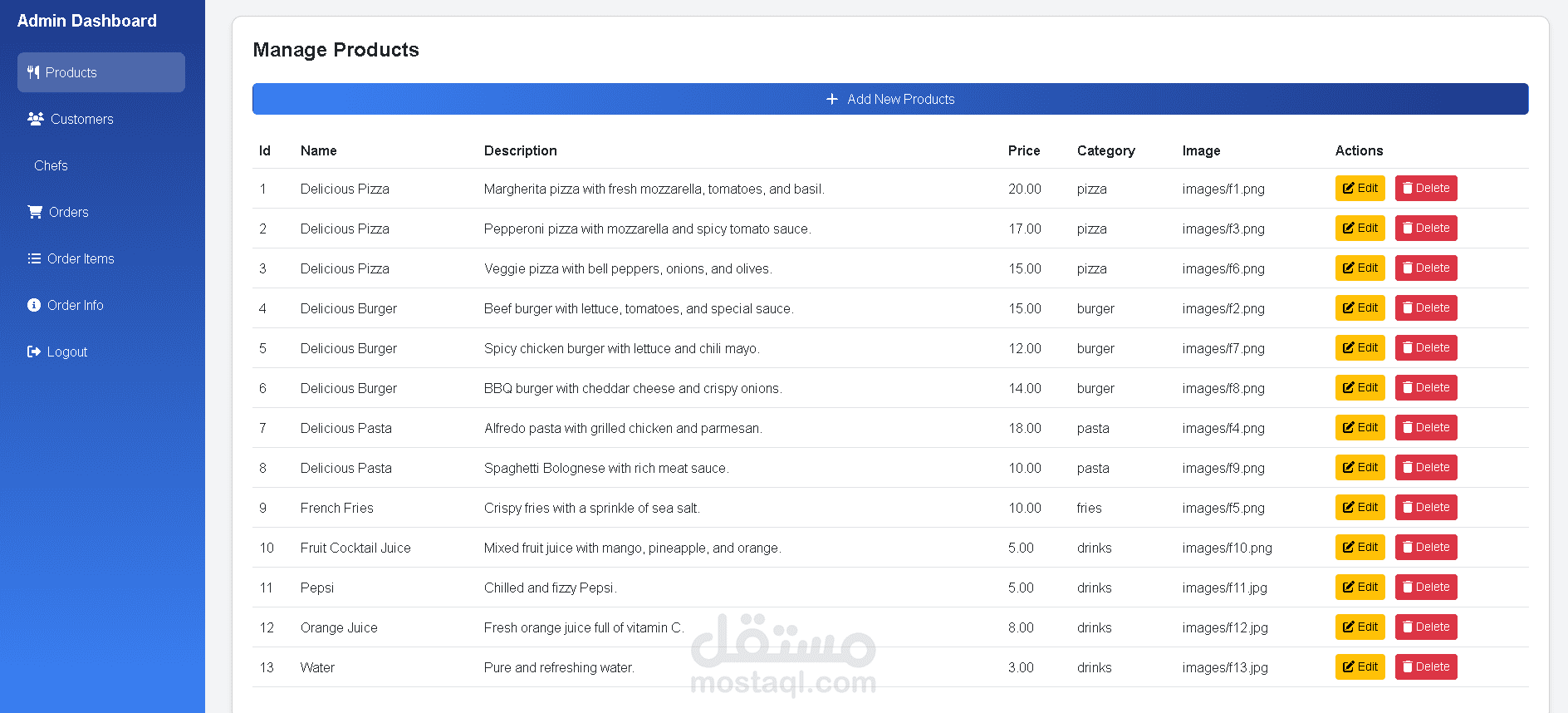
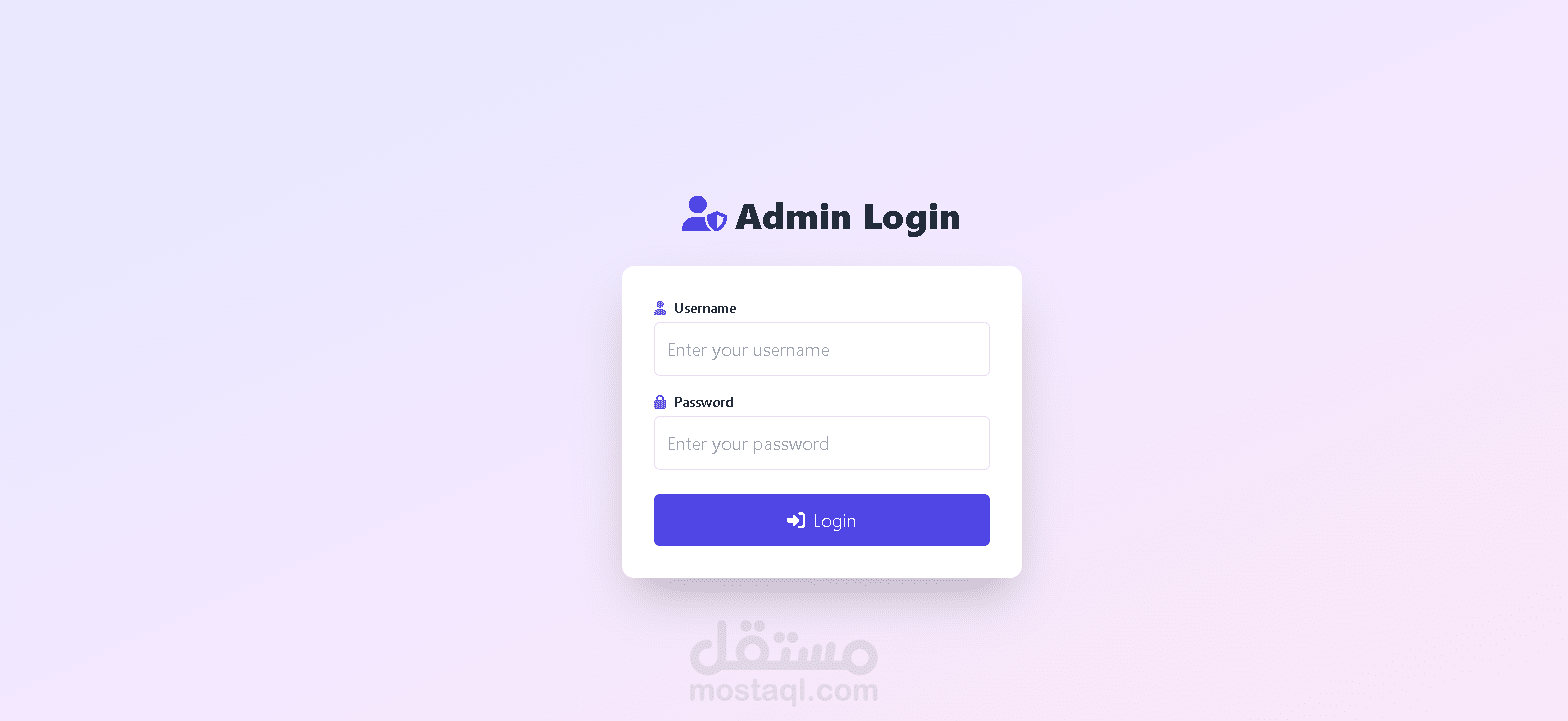
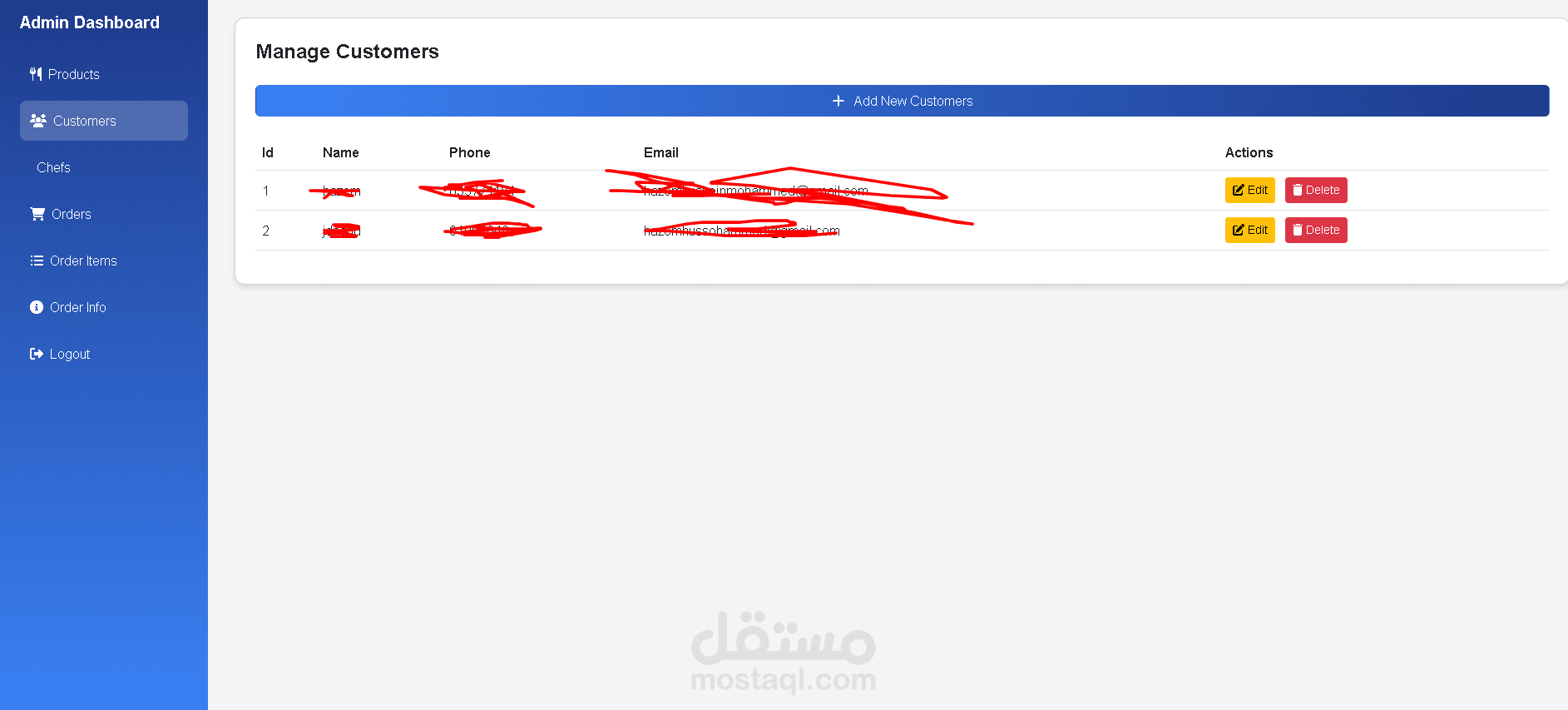
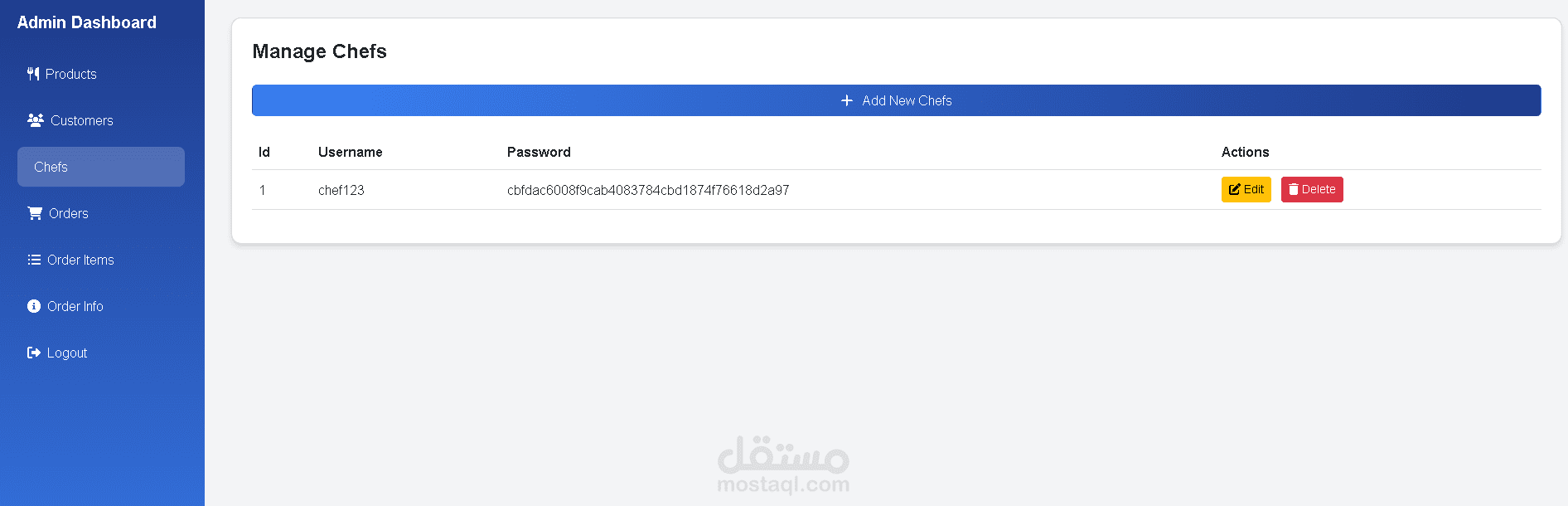
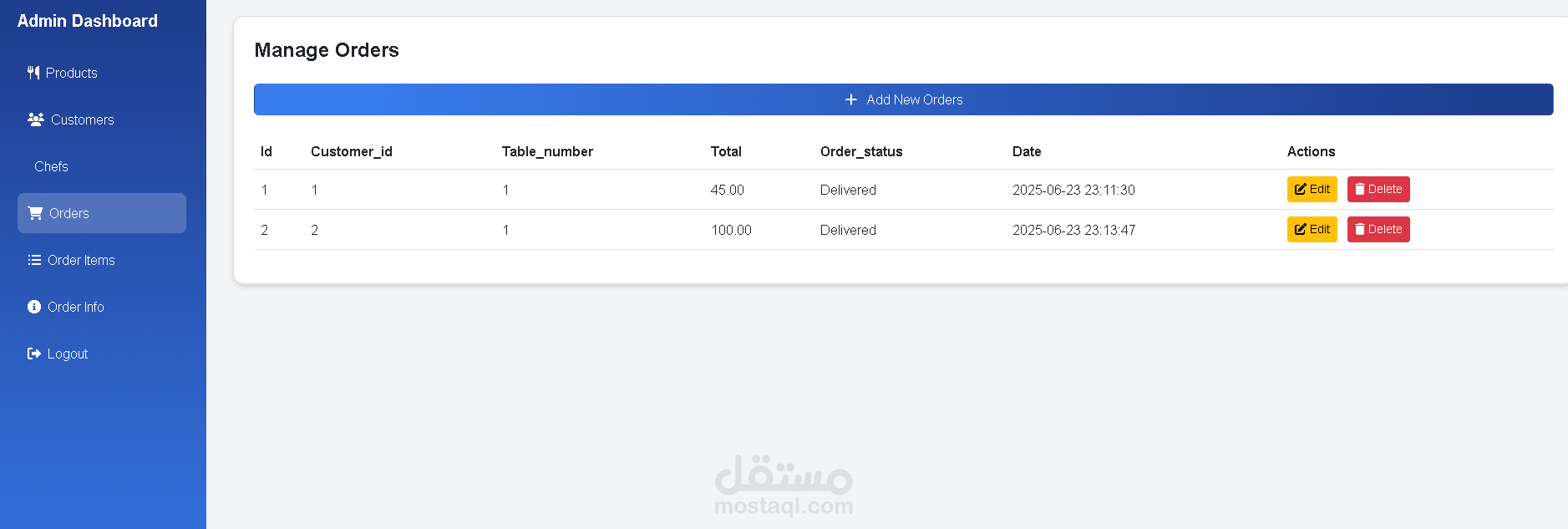
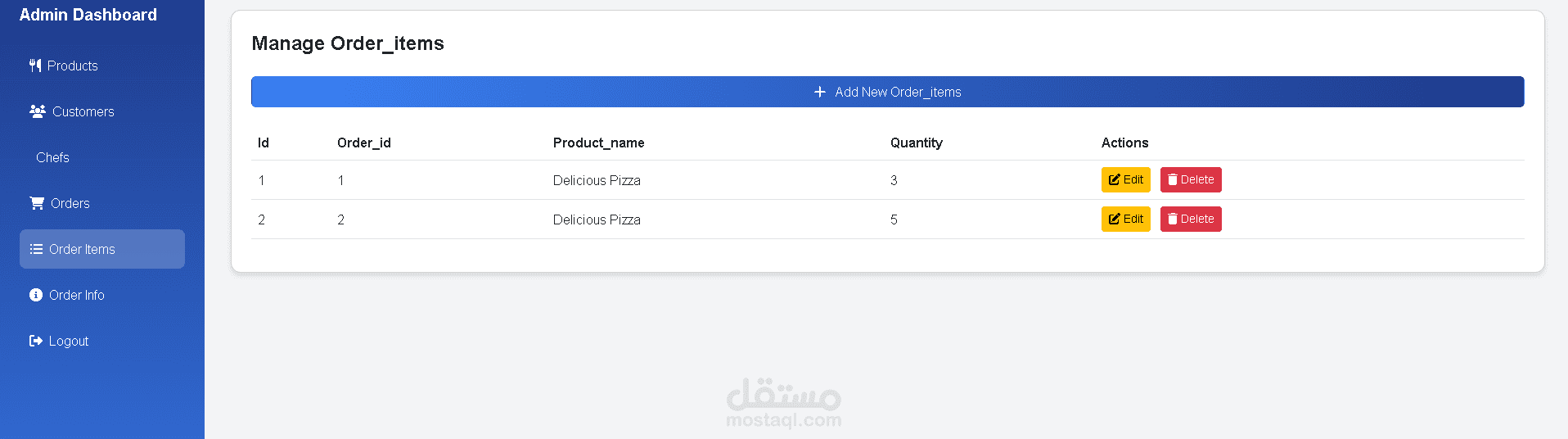
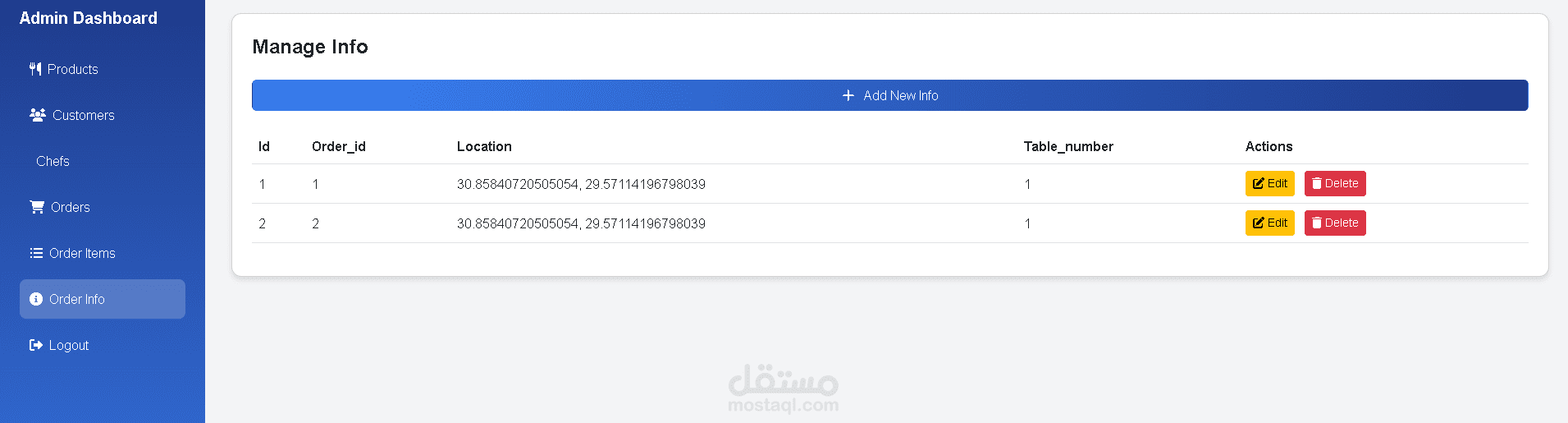
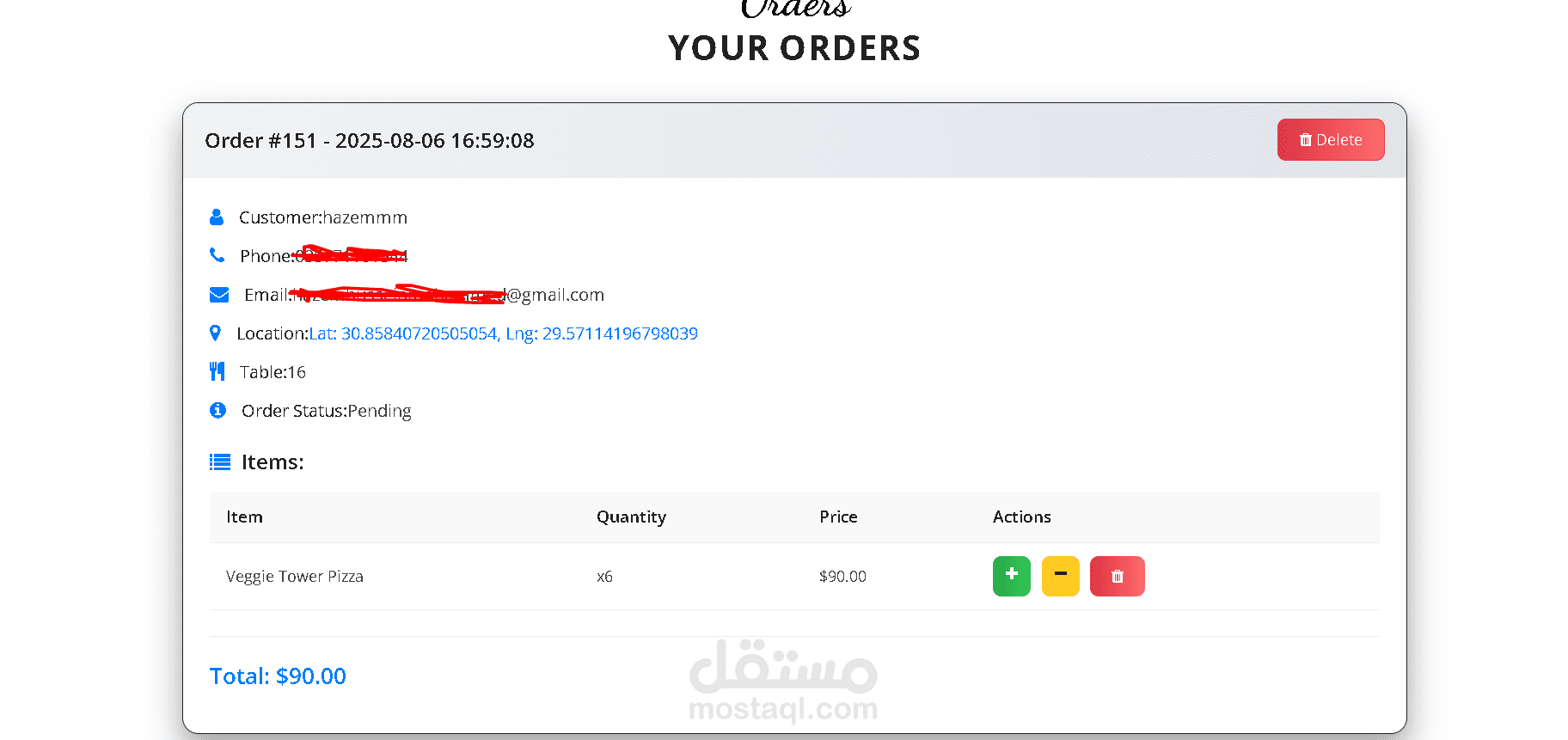
Technical Explanation of the Web System Components
The project's web system was built using an integrated stack of technologies that cover the frontend, backend, and database, as detailed below.
1. Frontend Development
This is everything the user sees and interacts with directly in their browser. It was built using:
HTML (HyperText Markup Language): This is the core language used to build the structure of all site pages, such as defining headings, paragraphs, lists, and data input forms (like the login form and the order page).
CSS (Cascading Style Sheets): CSS was used to design and style the entire visual appearance of the website. It controlled the colors, fonts, margins, and positioning of elements, which gave the site its visual identity.
Bootstrap: This is a CSS and JavaScript framework that was primarily used for two key reasons:
Rapid Development: It offers pre-built components (like buttons, navbars, and tables) which accelerated the design process.
Responsive Design: Most importantly, it provides a grid system that makes the website automatically adapt to different screen sizes, ensuring it works perfectly on desktops, tablets, and phones.
2. Backend Development
This is the hidden part of the system that runs on the server and handles the application logic and data management. It was built using:
PHP (Hypertext Preprocessor): This was the primary server-side programming language. In this project, its responsibilities included:
Data Processing: Receiving and handling data submitted from forms (like login credentials or order details).
Database Communication: Establishing a secure connection with the MySQL database to retrieve data (e.g., displaying the menu) or store it (e.g., saving a new order).
Session Management: Creating secure sessions for the admin and chef after they log in, ensuring that each user can only access their designated pages.
3. Database
MySQL: This is the relational database management system that was used to store all of the project's data in an organized and structured way. Tables were created to store:
User Data: Usernames and hashed passwords for the admin and chefs.
Menu Items: Item names, descriptions, prices, and their images.
Orders: Every order placed, along with its details and its current status ("New," "Preparing," "Ready").