heart attack
تفاصيل العمل
Project Overview
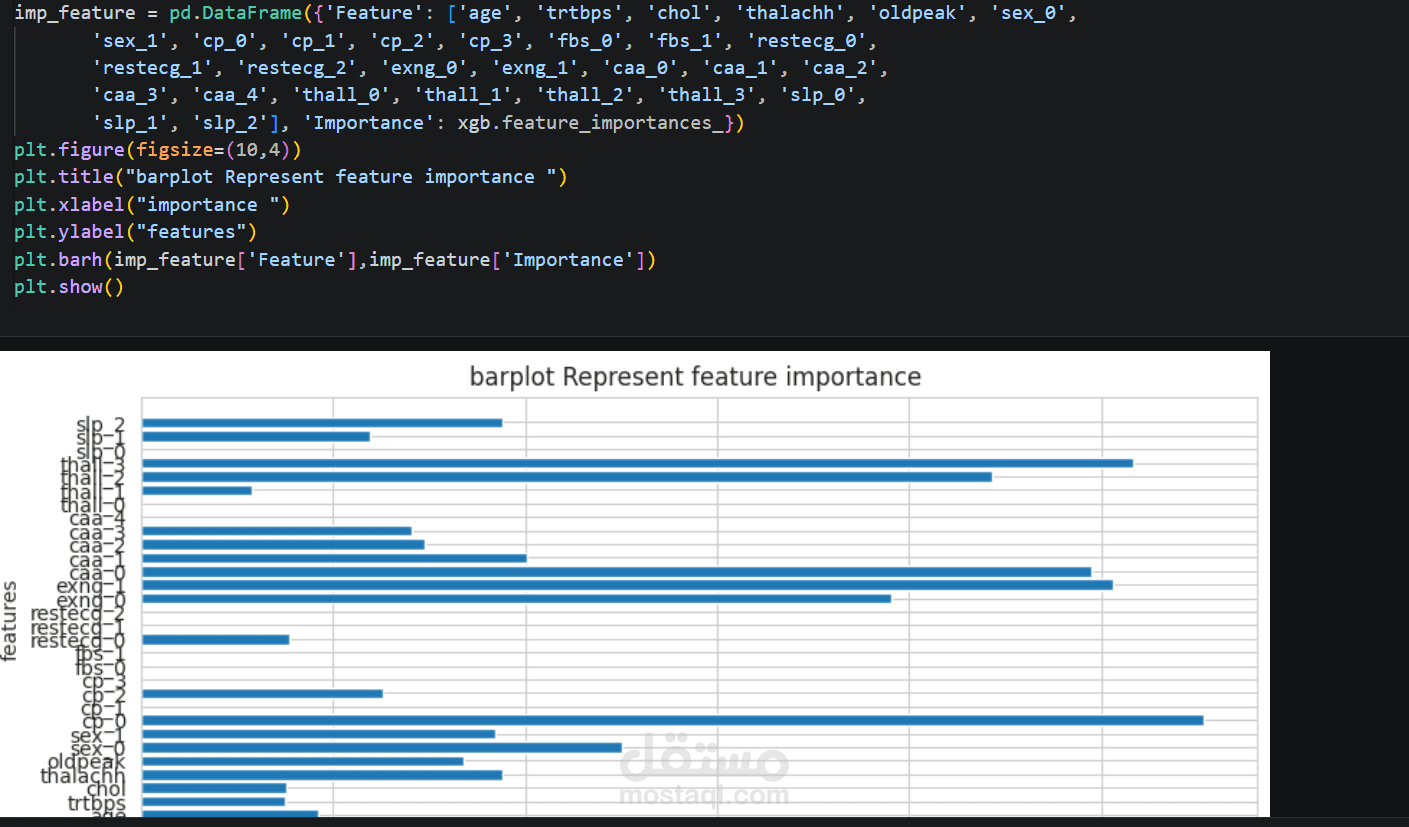
This project aims to develop a machine learning model to predict the risk of heart attacks in individuals. The model leverages historical patient data and machine learning algorithms to identify individuals at high risk of heart attacks. By analyzing various medical features such as age, gender, cholesterol levels, and blood pressure, the model provides valuable insights for early detection and potential intervention.
Problem Statement
Heart attacks are a leading cause of death worldwide, making early detection crucial. The goal of this project is:
Accurate Prediction: Develop a model that accurately predicts the likelihood of a heart attack. Early Intervention: Enable timely medical intervention, potentially saving lives. Improved Healthcare: Empower medical professionals with data-driven insights for better decision-making.
Models Used
Multiple supervised machine learning models were explored, including:
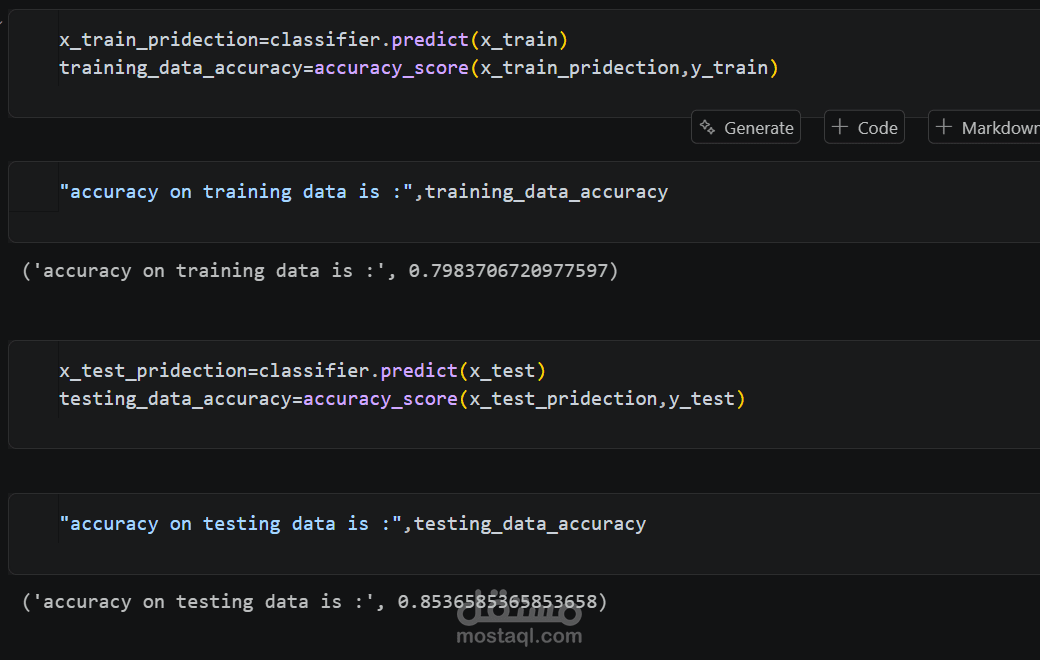
Random Forest: Accuracy 88.52% Logistic Regression: Accuracy 86.88% Support Vector Machine (SVM): Accuracy 85.24% Extreme Gradient Boosting (XGBoost): Accuracy 81.96%
Methodology
Data Acquisition: Historical patient data was collected, ensuring quality and completeness. Data Preprocessing: Cleaning and transforming the data, addressing missing values. Model Selection: Various machine learning algorithms were evaluated to select the best performing one. Model Training: The models were trained and fine-tuned using cross-validation. Model Evaluation: Performance was evaluated based on accuracy, precision, and recall.
Technologies Used
Python: Programming language used for data manipulation and modeling. Pandas: Library for data handling and transformation. Scikit-learn: For machine learning model development and evaluation. Streamlit: To create an interactive web-based dashboard for predictions.
Dashboard
An interactive dashboard was developed using Streamlit to allow real-time predictions. Users can input patient data such as age, cholesterol levels, and blood pressure to get an immediate heart attack risk prediction.
Results and Impact
High Accuracy: The model demonstrated high predictive accuracy, making it a useful tool for early detection of heart attack risks. Potential to Save Lives: Early detection enables timely intervention, improving patient outcomes. Data-Driven Insights: Medical professionals can leverage the insights provided by the model to make informed decisions. Future Directions Feature Engineering: Explore new features and their combinations to improve model performance. Model Enhancements: Investigate advanced techniques, such as deep learning, for even higher accuracy. Dataset Expansion: Incorporate additional data sources to improve the robustness of the model.