Build ML Models
تفاصيل العمل

It seems you’re referring to a "Machine" project, likely a typo for "Machine Learning" based on the context and images provided. The images depict a car price prediction project using machine learning techniques in a Jupyter Notebook environment. Here’s a brief overview based on the visuals:
### Project Overview
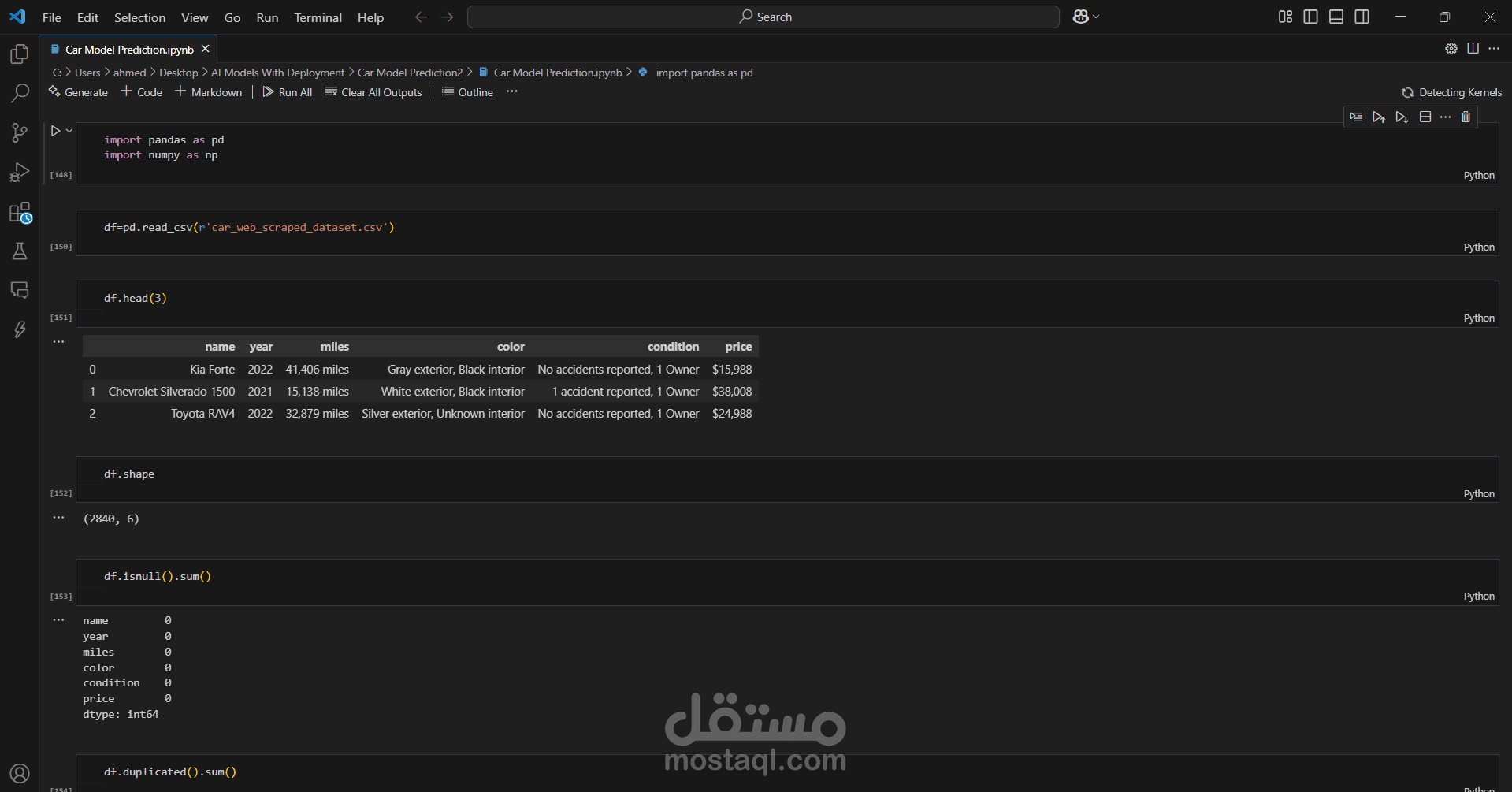
The project "Car Model Prediction" uses a dataset (car_web_scrapped_dataset.csv) containing car details such as name, year, miles, color, condition, and price. The goal is to predict car prices based on features like miles, year, and condition.
### Data Analysis
- *Dataset Structure*: The dataset has 2640 rows and 6 columns, with no missing values (df.isnull().sum()) or duplicates (df.duplicated().sum()).
- *Visualization*:
- A scatter plot shows the relationship between miles and price, indicating a general downward trend—higher mileage correlates with lower prices, with most cars priced between $0 and $15,000 and mileage up to 150,000 miles.
- A scatter plot of year vs. price suggests newer cars (2020-2025) tend to have higher prices, with some outliers up to $25,000.
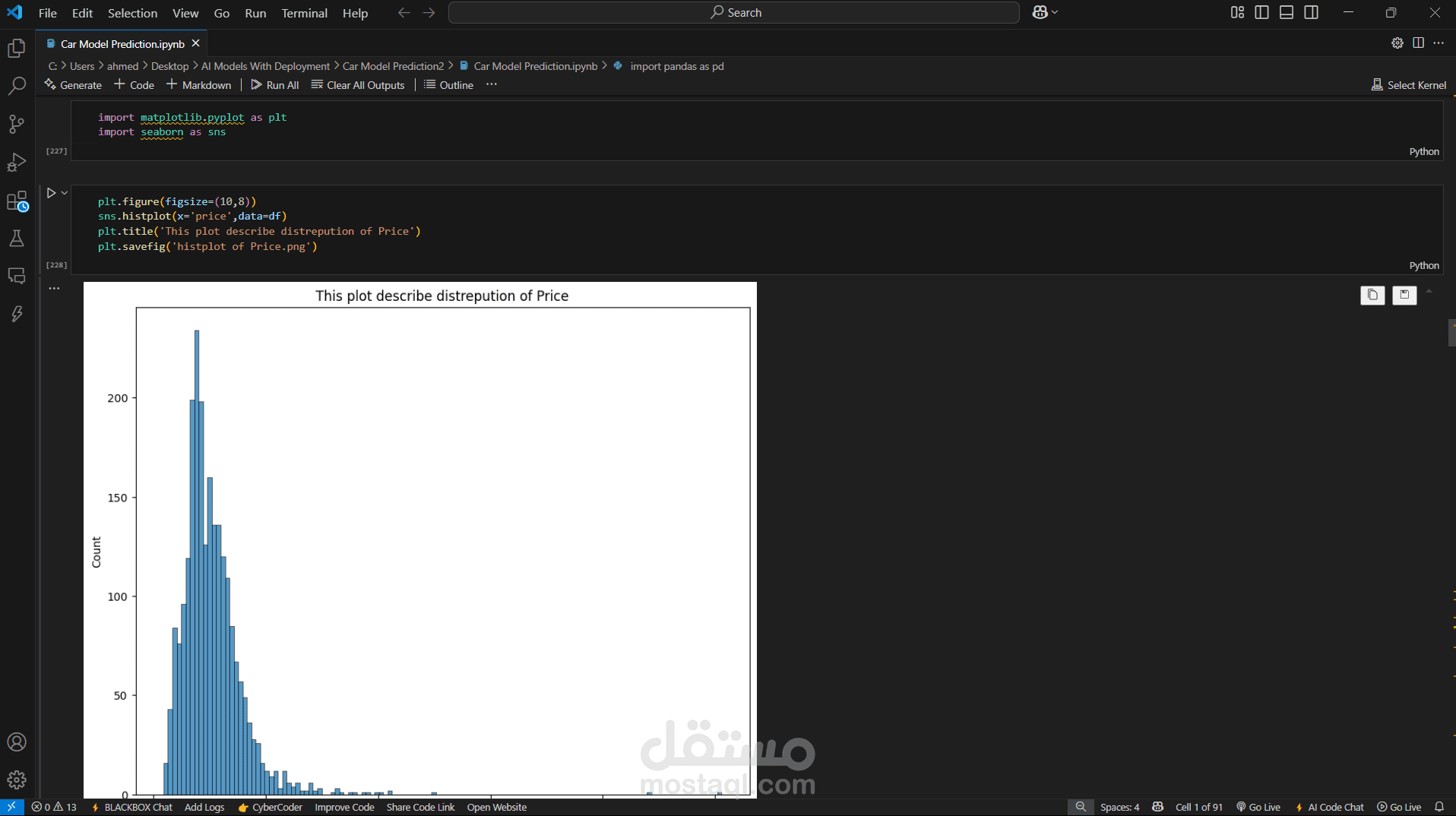
- A histogram of price distribution shows most cars are priced below $10,000, with a sharp decline in frequency for higher prices.
### Correlation Analysis
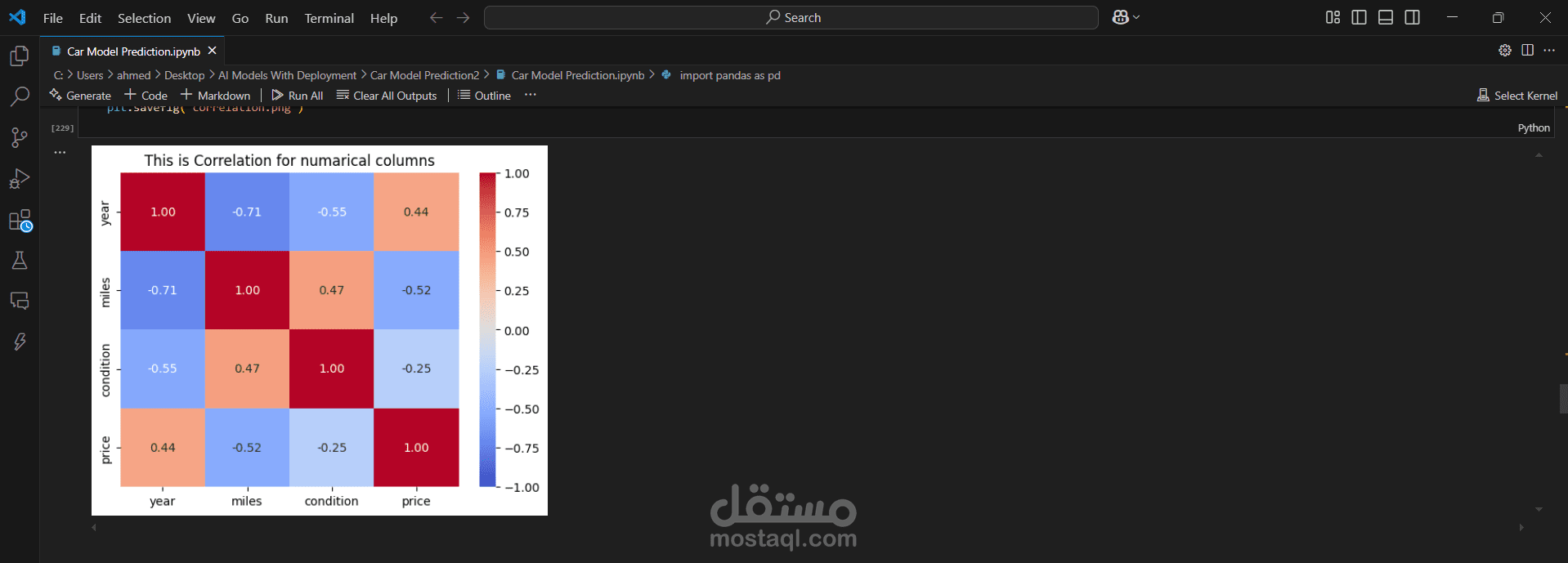
- A correlation heatmap reveals:
- Strong positive correlation (1.00) between variables and themselves.
- Moderate negative correlation (-0.71) between miles and year, and (-0.52) between miles and price, indicating older cars with higher mileage tend to be cheaper.
- Weak correlations between condition and other variables (-0.25 to -0.55).
### Machine Learning Model
- *Features and Target*: Miles is used as the feature (X), and price as the target (y).
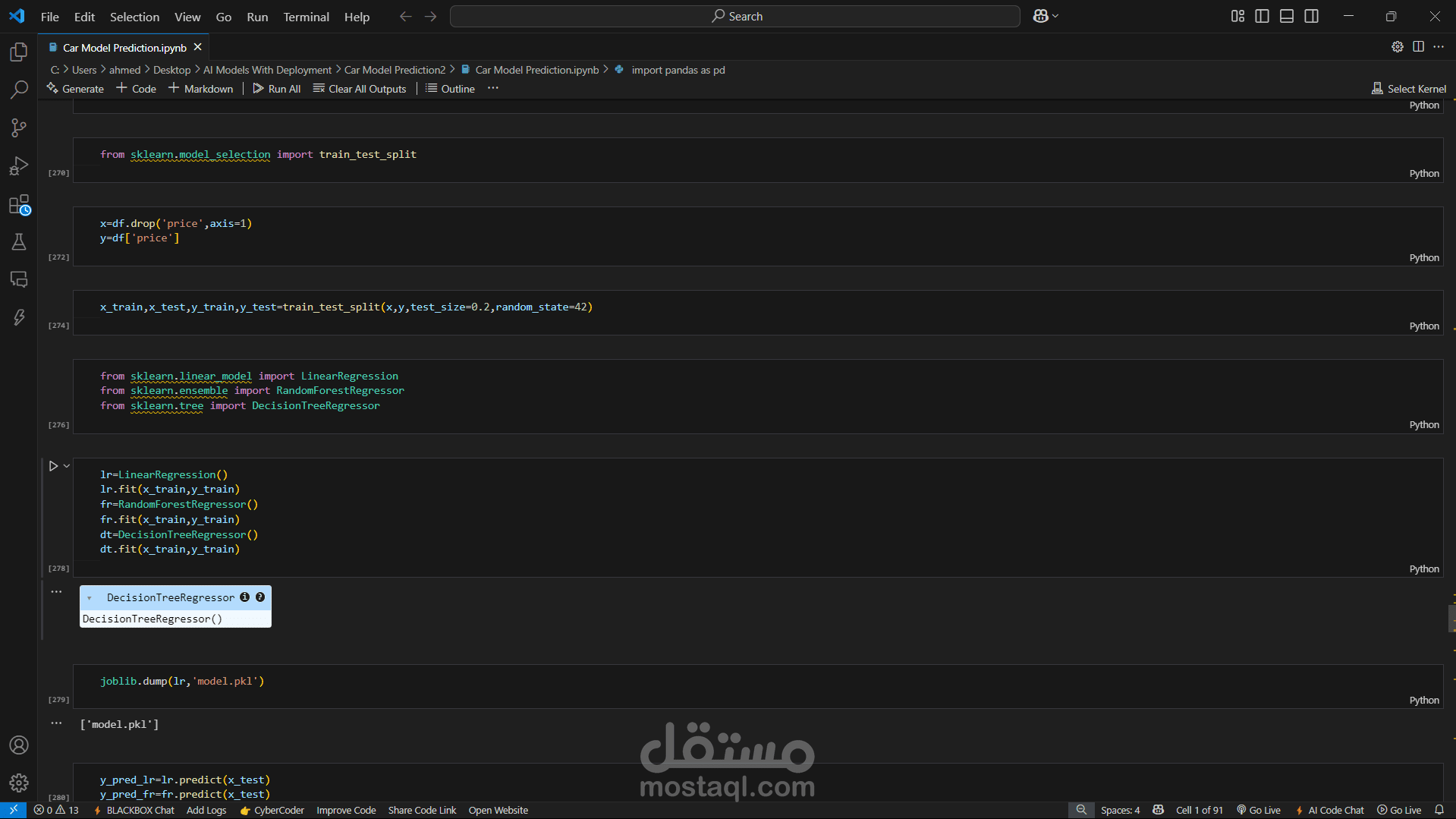
- *Train-Test Split*: The data is split into training (80%) and testing (20%) sets with a random state of 42.
- *Models Tested*:
- Linear Regression
- Random Forest Regressor
- Decision Tree Regressor
- *Training*: Each model is trained on X_train and y_train.
- *Deployment*: The trained Decision Tree Regressor model is saved using joblib.dump to a file (model.pkl) for future use.
### Deployment
The project likely involves deploying the model, possibly using Gradio or a similar tool (as seen in your previous projects), to allow real-time price predictions based on input features.
This project demonstrates a practical application of machine learning for car price prediction, leveraging data visualization and multiple regression models. If you have specific questions or want further details, feel free to ask!