A Critique of Dee's Role as Spokesperson and savior in Alice Walker’s Everyday Use
تفاصيل العمل
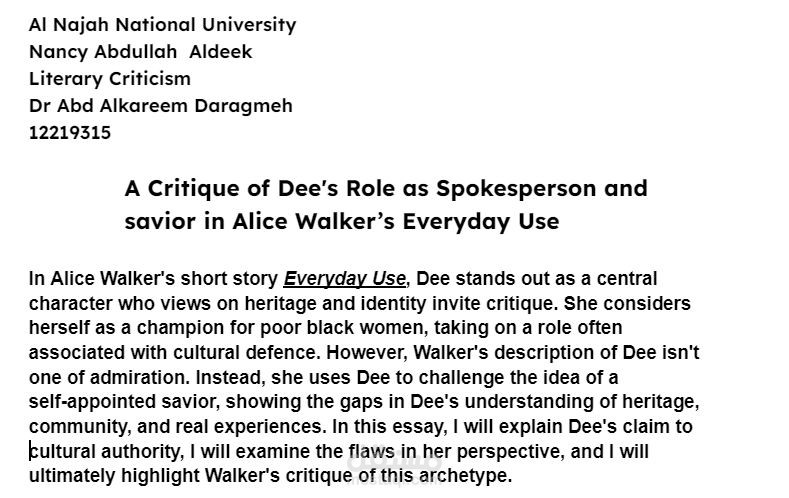
In this article, I critique the roles of spokesperson and savior as portrayed in Alice Walker's *Everyday Use*. I analyze how the characters navigate their cultural identities and the significance of heritage in their lives. The work delves into the complexities of mother-daughter relationships and the differing perspectives on heritage and identity. By examining the motivations and actions of each character, I highlight the tensions between tradition and modernity, as well as the implications of viewing one’s culture as a commodity. This critique aims to foster a deeper understanding of Walker’s commentary on identity, empowerment, and the struggles within African American communities.