Encephalitis
تفاصيل العمل
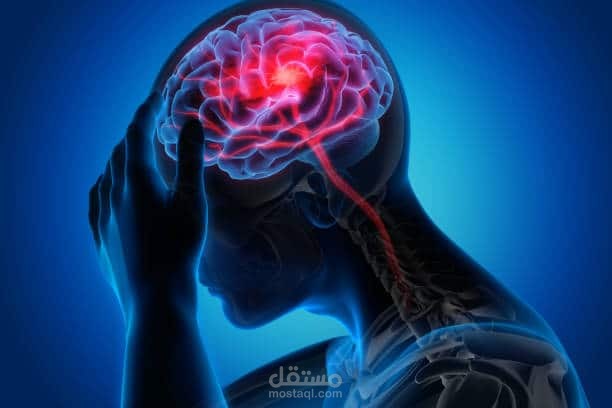
Encephalitis
What is encephalitis?
It is a serious medical condition that affects brain tissues
and can lead to problems with neurological and motor
functions.
Causes of encephalitis
There are several reasons that lead to its occurrence,
which include:
Viral encephalitis: Its occurrence is caused by certain
viruses such as the herpes virus, which travels through
the nerve to the skin and then to the brain,
enteroviruses, and some viruses transmitted by ticks and
mosquitoes, which are the most common.
There are also some viruses that can cause infections,
transmitted through animals like the rabies virus
transmitted by dogs.
Bacterial encephalitis: caused by bacteria such as
those causing meningitis and listeriosis.
Autoimmune encephalitis: It occurs due to abnormal
immune reactions in the body for an unknown reason,
and sometimes it can happen due to the presence of
chronic diseases such as cancer and diabetes.
Fungal encephalitis: Caused by certain fungi such as
histoplasma.
Symptoms of encephalitis
Encephalitis causes many symptoms, which vary in
occurrence depending on the type of inflammation.
Symptoms of infectious encephalitis (viral,
bacterial): In this case, the affected person feels
symptoms similar to those of the flu, which include:
● Fever (the patient's temperature may reach
39.4degrees Celsius or higher).
● Headache.
● Feeling tired and exhausted.
● Joint and muscle pain.
● Severe nausea and vomiting.
● The intense confusion.
And these symptoms are often followed by more severe
symptoms such as:
● Seizures.
● Muscle weakness.
● Stiff neck.
● Motor disorders (inability to move certain areas of
the face and body).
● Psychological disorders (anxiety, and depression).
● Inability to speak or hear.
● These symptoms may appear hours or days after
the infection.
Symptoms of autoimmune encephalitis: In this
case, the symptoms may develop slowly and become
more severe, causing life-threatening neurological
symptoms if not treated immediately, such as:
● Loss of consciousness.
● Dizziness, vertigo.
● Memory loss.
● Difficulty breathing.
● Some sudden psychological changes that may
occur unexpectedly, such as severe outbursts of
anger without reason.
Symptoms of encephalitis in infants:
Encephalitis can occur in infants and cause the following
symptoms:
● Swelling in the infant's skull.
● Continuous crying that is difficult to calm.
● Vomiting.
● Rise in temperature.
● Stiffening of the body.
● Lethargy and not waking up for feeding.
Is encephalitis dangerous?
Encephalitis is considered a serious disease due to its
severe impact on the brain, its rapid progression if not
properly managed, and the difficulty in diagnosing it in
some cases, which leads to many risks and
complications that may result in death.
Complications of encephalitis
● Paralysis: It can lead to partial or complete
paralysis.
● Epilepsy: The patient may experience recurrent
seizures.
● Hearing loss.
● Speech and language problems.
● Loss of balance and coordination.
● Memory loss.
● Psychological disorders such as stress and
depression.
● Swallowing difficulties.
● Blurred vision and sometimes loss of sight.
● Chronic fatigue.
● In severe cases, it leads to loss of consciousness
and death
When should you visit the doctor?
You should see a doctor immediately if severe symptoms
appear, preferably within24 hours of their onset to
prevent the symptoms from worsening.
Diagnosis
Diagnosis is done through some tests to determine the
cause and severity.
Laboratory tests
● Blood test: to detect the presence of viruses and
bacteria.
● Cerebrospinal fluid (CSF) examination :to detect the
presence of viruses or bacteria in the cerebrospinal
fluid.
● Bacterial sensitivity test: by taking a sample of the
infected tissue to determine the type of bacteria
causing the infection.
● Virus sensitivity test: to determine the type of virus.
● Radiological examinations:
Used to detect the presence of inflammation in the brain,
and include:
● X-rays.
● Magnetic Resonance Imaging (MRI).
● CT scan.
Treatment of encephalitis
The treatment depends on identifying the type of
inflammation and its symptoms, and most of the time,
patients receive treatment in the hospital where
healthcare providers monitor them and offer assistance
if the symptoms worsen.The treatments include the
following:
● Antibiotics: They are used in cases of bacterial
meningitis.
● Antivirals: Used in the case of viral infections.
● Antiepileptic drugs: to control recurrent seizures.
● Steroid medications: which are used to reduce
inflammation and swelling.
● Mechanical ventilation: The patient may sometimes
need oxygen support to help with breathing in
severe cases.
● Intravenous fluids: They represent a supportive
treatment in some cases to prevent dehydration.
● Immunoglobulin: used in cases of autoimmune
encephalitis.
The patient also needs rest and physical therapy in
certain cases to improve motor functions, and he also
needs psychological therapy to improve his mental
health in cases of depression and anxiety.
Signs of recovery from encephalitis
There are signs indicating the patient's response to
treatment, which include:
Early signs:
● Decrease in temperature.
● Improvement in neurological symptoms (dizziness,
confusion).
● The mental state has improved.
● Few sleep disturbances.
● Increased appetite.
● Increasing the ability to perform daily activities.
● Few seizures.
● Improvement in movement and speech ability.
Advanced tags:
● Restoration of neurological functions completely.
● Restoring the ability to speak and communicate.
● Memory improves.
● The ability to return to normal life.
● Negative result for the cerebrospinal fluid test.
● Negative result for the MRI.
● Negative result for the CT scan.
Risk factors:
There are some factors that increase the chances of
developing encephalitis, and among these factors are:
● Age: Young children under one year old and the
elderly are the most susceptible to the disease.
● Weak immune system: where the incidence of the
disease increases among people who suffer from
acquired immunodeficiency syndrome, or people
who take medications that weaken the immune
system.
● Geographical areas: where insects that transmit
the viruses causing the disease, such as
mosquitoes and ticks, are prevalent.
● Seasons: The incidence of the disease increases in
the summer due to the spread of virus-carrying
insects (mosquitoes and ticks) during this period.
● Autoimmune diseases: People with autoimmune
diseases are more prone to developing autoimmune
encephalitis.
● Smoking: Smoking increases the risk of lung
cancer, which may lead to autoimmune
encephalitis.
● Chronic diseases: The incidence increases among
individuals suffering from chronic diseases such as
diabetes and cancer.
Sources:
litis/symptoms-causes/syc-20356136
phalitis