breast_cancer (ANN)
تفاصيل العمل
Overview
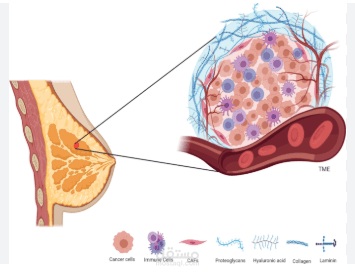
This project focuses on developing an Artificial Neural Network (ANN) model for breast cancer diagnosis. The objective is to classify breast tumors as either benign or malignant based on several features, such as mean radius, texture, perimeter, area, and smoothness. The dataset used in this project provides measurements of these characteristics for various tumors, and the goal is to accurately predict whether a tumor is cancerous or not.
Technologies Used
Python
TensorFlow and Keras for building and training the neural network
Pandas and NumPy for data manipulation
Matplotlib and Seaborn for data visualization
Steps Taken
Data Collection and Preprocessing:
Loaded the breast cancer dataset and cleaned the data by handling missing values and normalizing features for better model performance.
Exploratory Data Analysis (EDA):
Performed visual analysis to explore the distribution of features and their relationships with tumor classification (benign or malignant).
Model Building:
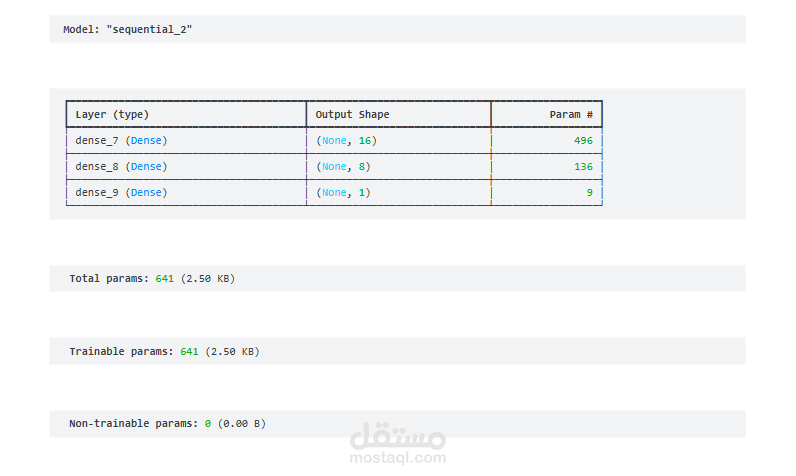
Built an ANN model using Keras with multiple layers and activation functions to classify the tumors. The model was trained on the preprocessed data.
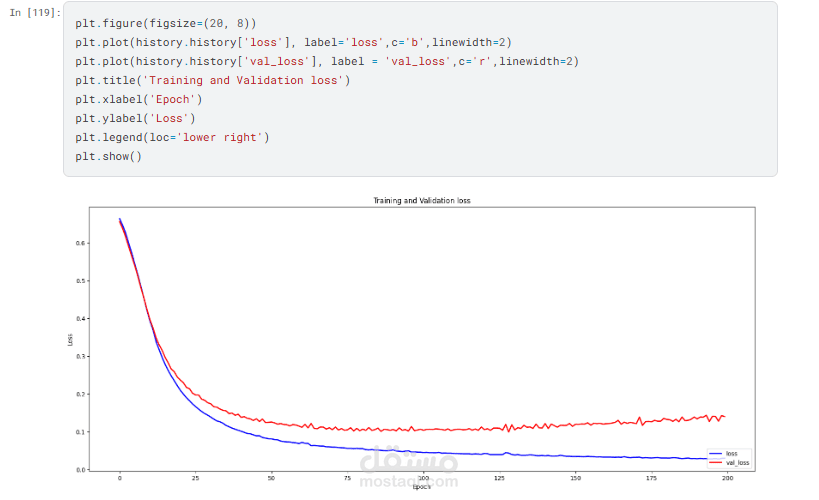
Model Evaluation:
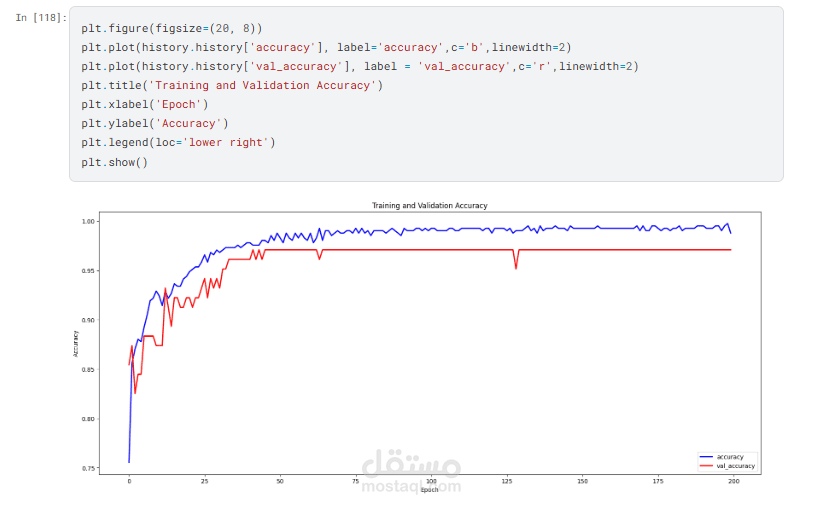
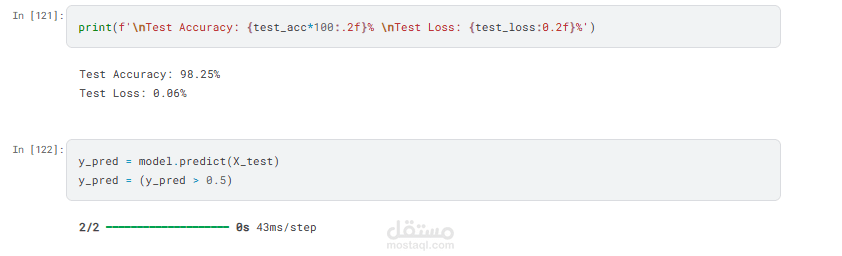
The final model achieved an impressive 98% accuracy in classifying breast tumors as benign or malignant, showing strong performance in medical diagnostic tasks.
Results
The ANN model demonstrated 98% accuracy on the test dataset, making it highly effective at distinguishing between benign and malignant tumors. The model's high performance suggests its potential for aiding in early breast cancer detection.
Applications
Early Breast Cancer Detection: The model can assist healthcare professionals in diagnosing breast cancer at an early stage, improving patient outcomes.
Medical Decision Support: The model can act as a decision support tool, providing reliable predictions to help doctors make more informed decisions.
Healthcare Automation: It can be integrated into healthcare systems for automated diagnosis, speeding up the process and reducing human error.