Temperature, Humidity, and Wind Speed Prediction Using LSTM Model
تفاصيل العمل
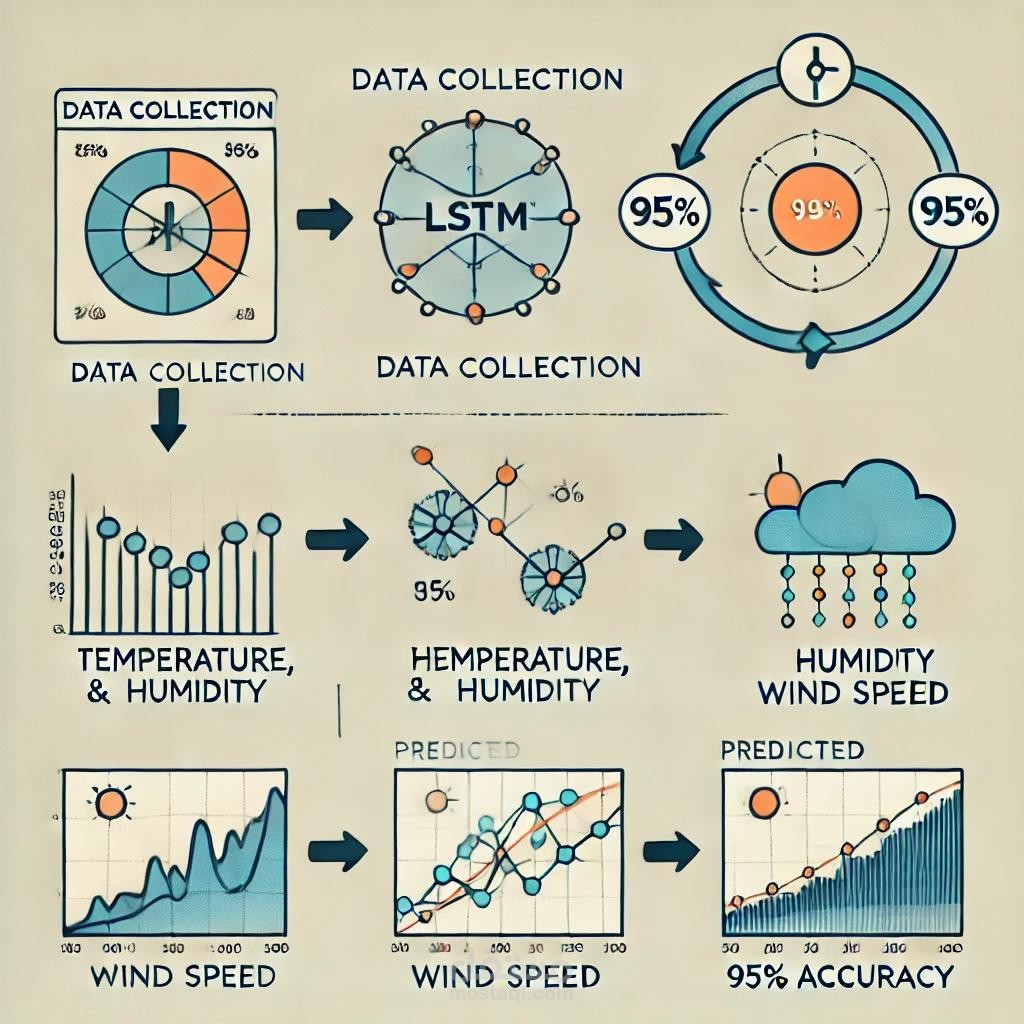
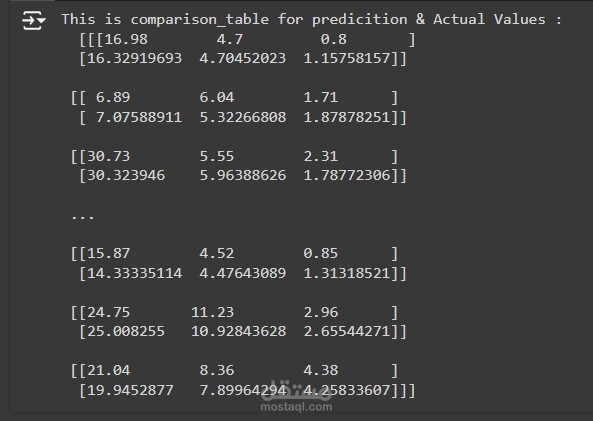
Developed a deep learning model using Long Short-Term Memory (LSTM) networks to predict key environmental parameters—temperature, humidity, and wind speed—with a focus on improving short-term weather forecasting accuracy. The model leveraged time series data collected from remote sensing devices and NASA's POWER API. Data preprocessing involved handling missing values, normalization, and time-based feature engineering to enhance model performance. This project contributed to the development of a reliable predictive system useful for climate monitoring and environmental planning.
Data and Training Process
The training process for this model incorporated historical climatic data sourced from the NASA Power website, spanning a decade. This dataset provided hourly readings of the targeted climatic elements, which were critical for the model's training phase.
The LSTM network underwent 500 epochs of training.
Achieved a prediction accuracy of 95%.
The training data comprised an extensive range of climatic observations, enabling the model to learn and adapt to various climatic patterns effectively.
Model Predictions and Visualization
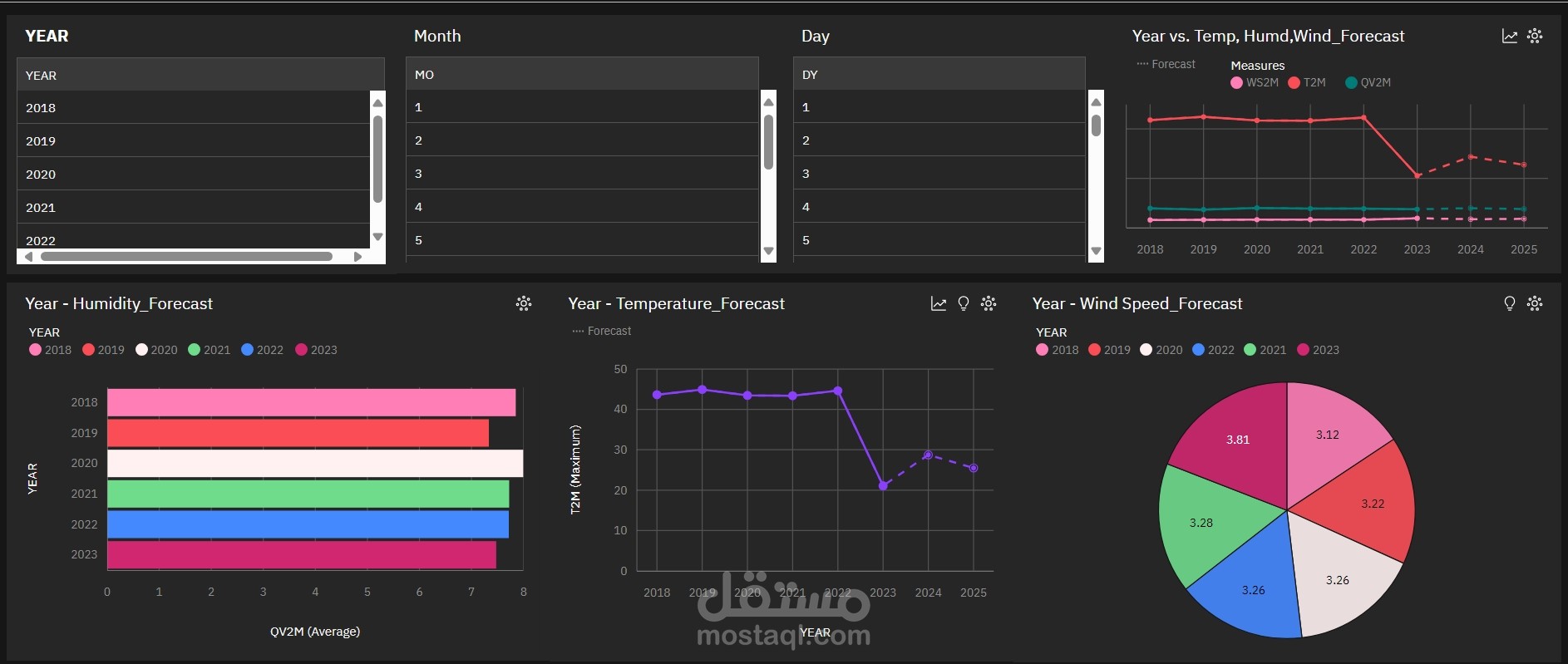
Upon completion of the training phase, the model's predictions were visualized through graphical representations, illustrating:
The relationships between each climatic element and time.
The relationships between the elements themselves and their respective ranges.
These visualizations highlighted the model's evolving accuracy across different epochs, showcasing its capability to adapt and refine its predictions over time.
Significance and Applications
This project's significance lies in its potential applications in agricultural planning and management. By providing accurate forecasts of critical climatic elements, the model offers valuable insights into how climate variability can influence crop yields, specifically for rice and wheat in Fayoum Governorate.
These insights can aid local farmers and agricultural stakeholders in making informed decisions, ultimately enhancing crop productivity and resilience against climatic fluctuations.
Conclusion
In summary, this project presents a sophisticated approach to climate prediction using deep learning, with practical implications for agricultural productivity in regions susceptible to climate change. Through the integration of advanced predictive modeling and comprehensive historical data analysis, the project demonstrates a robust methodology for understanding and mitigating the impacts of climate variability on essential crop yields.