microhomes
تفاصيل العمل
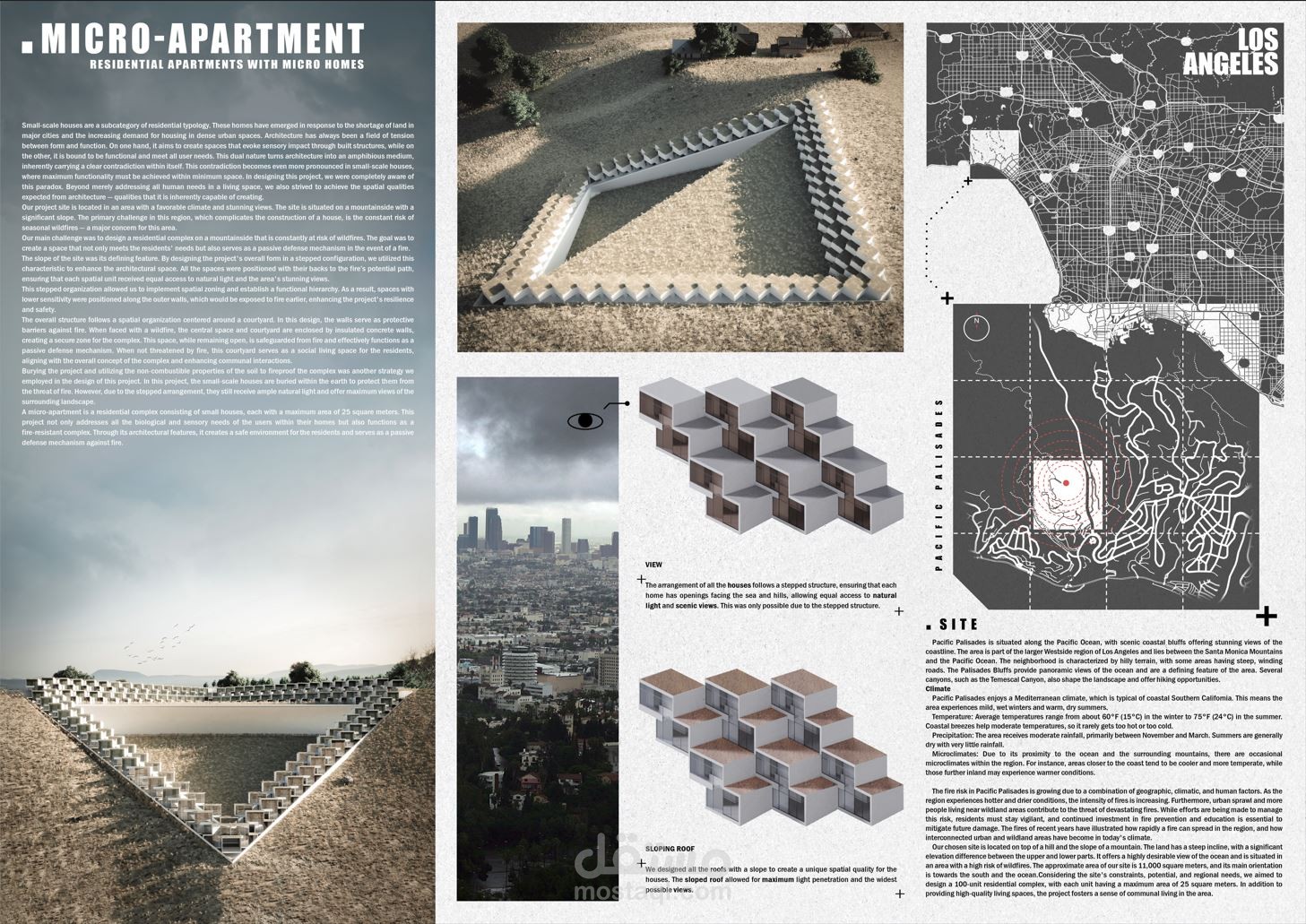
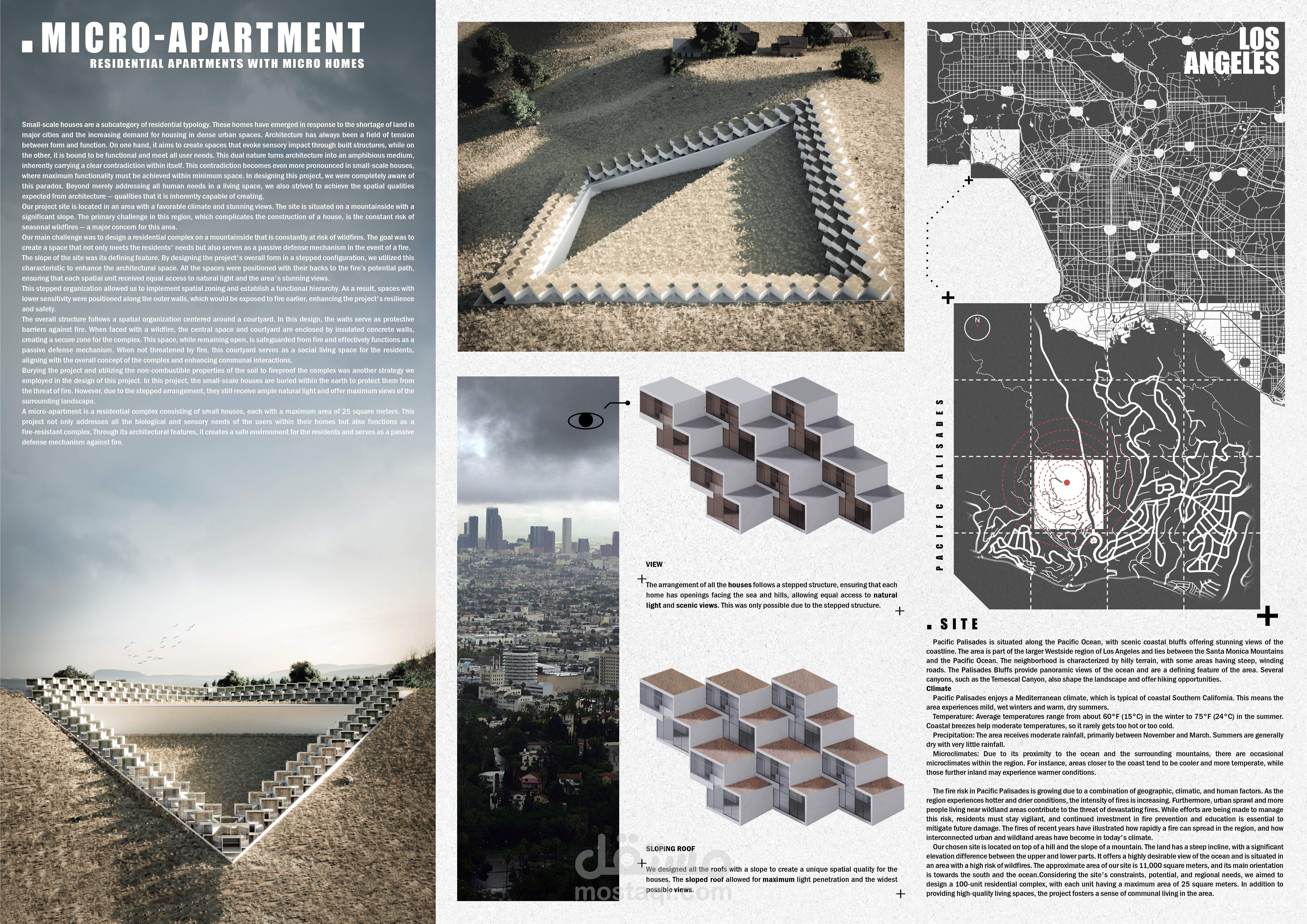
Small-scale houses are a subcategory of residential typology. These homes have emerged in response to the shortage of land in major cities and the increasing demand for housing in dense urban spaces. Architecture has always been a field of tension between form and function. On one hand, it aims to create spaces that evoke sensory impact through built structures, while on the other, it is bound to be functional and meet all user needs. This dual nature turns architecture into an amphibious medium, inherently carrying a clear contradiction within itself. This contradiction becomes even more pronounced in small-scale houses, where maximum functionality must be achieved within minimum space. In designing this project, we were completely aware of this paradox. Beyond merely addressing all human needs in a living space, we also strived to achieve the spatial qualities expected from architecture — qualities that it is inherently capable of creating.
Our project site is located in an area with a favorable climate and stunning views. The site is situated on a mountainside with a significant slope. The primary challenge in this region, which complicates the construction of a house, is the constant risk of seasonal wildfires — a major concern for this area.
Our main challenge was to design a residential complex on a mountainside that is constantly at risk of wildfires. The goal was to create a space that not only meets the residents' needs but also serves as a passive defense mechanism in the event of a fire.
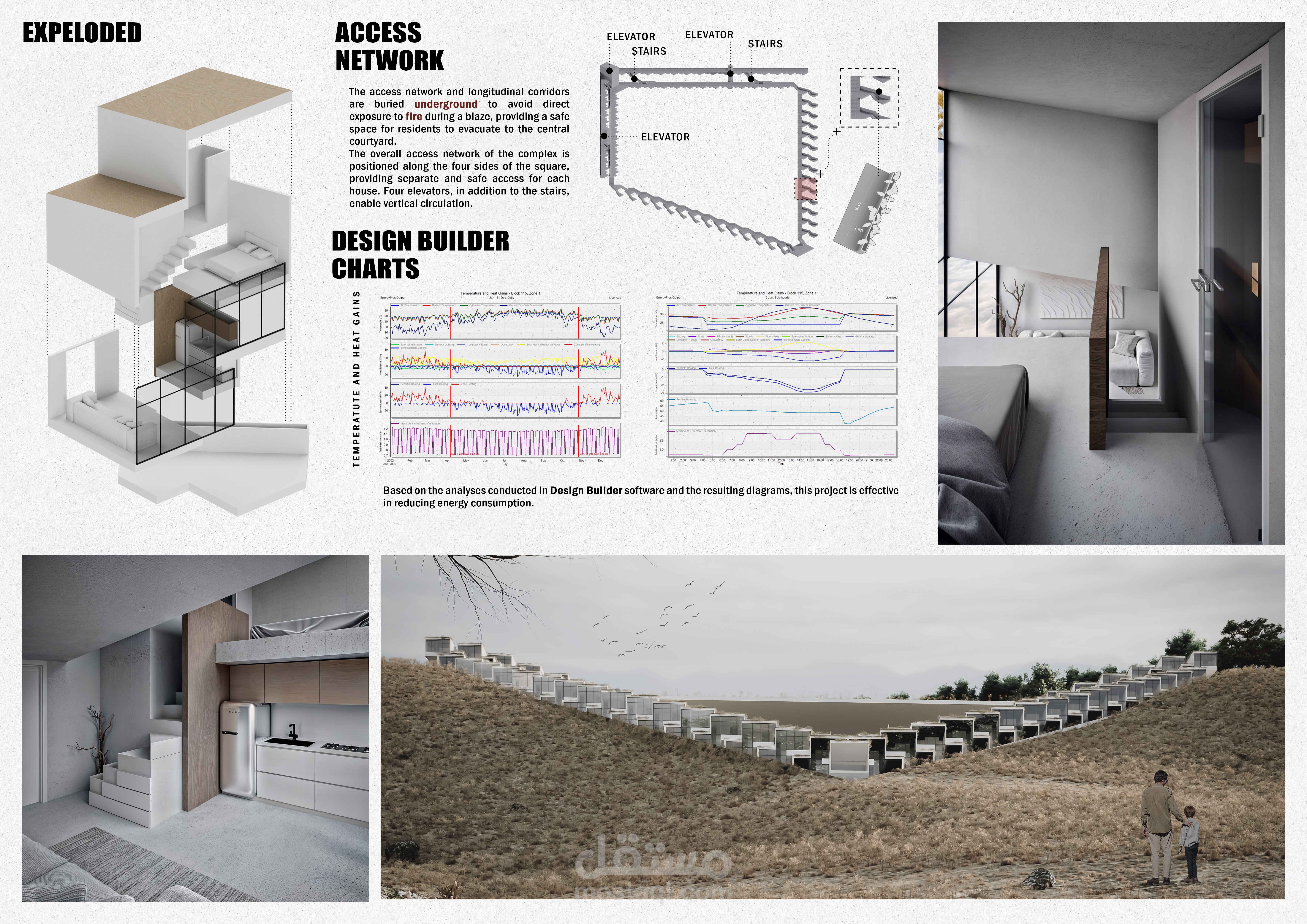
The slope of the site was its defining feature. By designing the project's overall form in a stepped configuration, we utilized this characteristic to enhance the architectural space. All the spaces were positioned with their backs to the fire’s potential path, ensuring that each spatial unit received equal access to natural light and the area's stunning views.
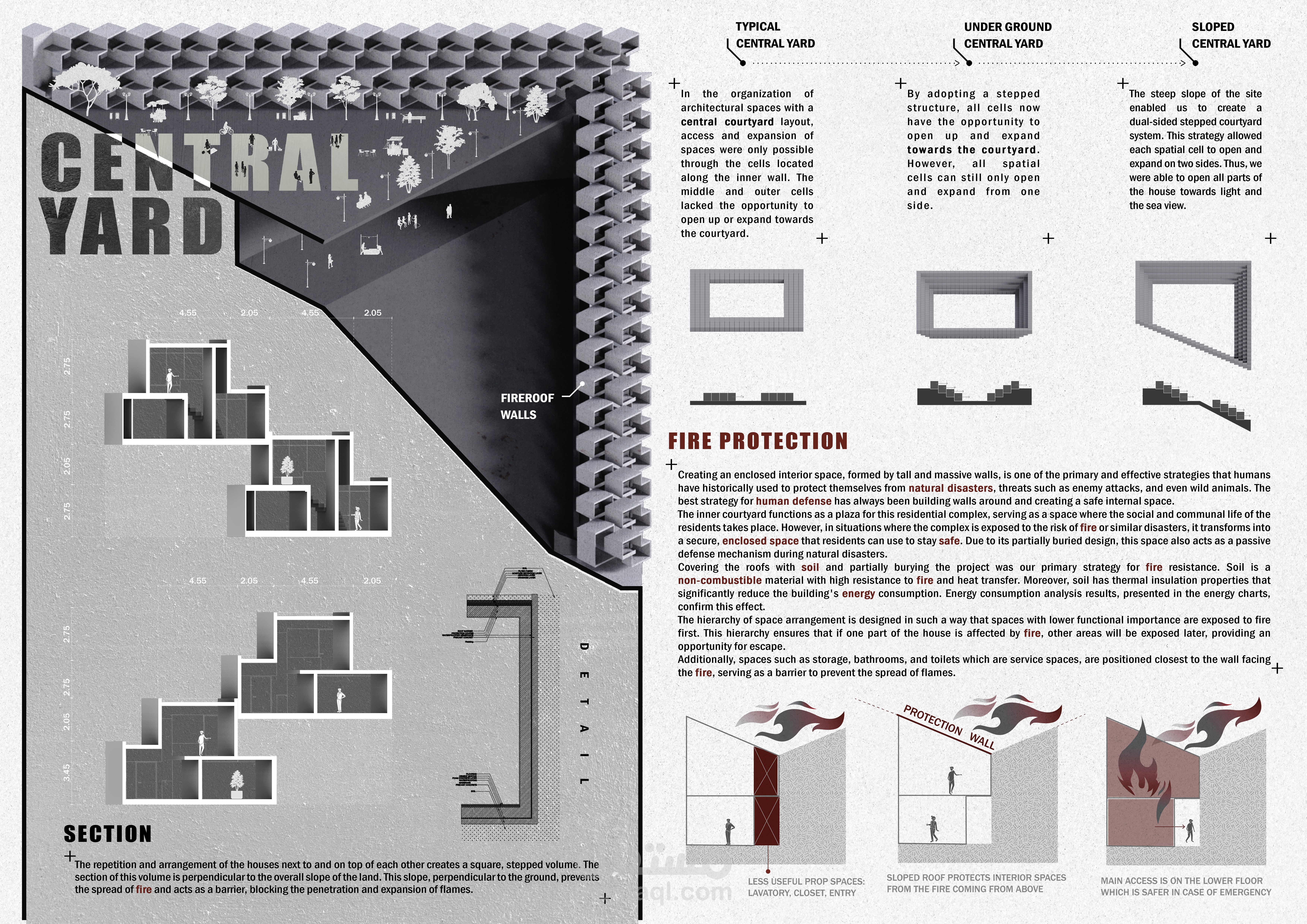
This stepped organization allowed us to implement spatial zoning and establish a functional hierarchy. As a result, spaces with lower sensitivity were positioned along the outer walls, which would be exposed to fire earlier, enhancing the project's resilience and safety.
The overall structure follows a spatial organization centered around a courtyard. In this design, the walls serve as protective barriers against fire. When faced with a wildfire, the central space and courtyard are enclosed by insulated concrete walls, creating a secure zone for the complex. This space, while remaining open, is safeguarded from fire and effectively functions as a passive defense mechanism. When not threatened by fire, this courtyard serves as a social living space for the residents, aligning with the overall concept of the complex and enhancing communal interactions.
Burying the project and utilizing the non-combustible properties of the soil to fireproof the complex was another strategy we employed in the design of this project. In this project, the small-scale houses are buried within the earth to protect them from the threat of fire. However, due to the stepped arrangement, they still receive ample natural light and offer maximum views of the surrounding landscape.
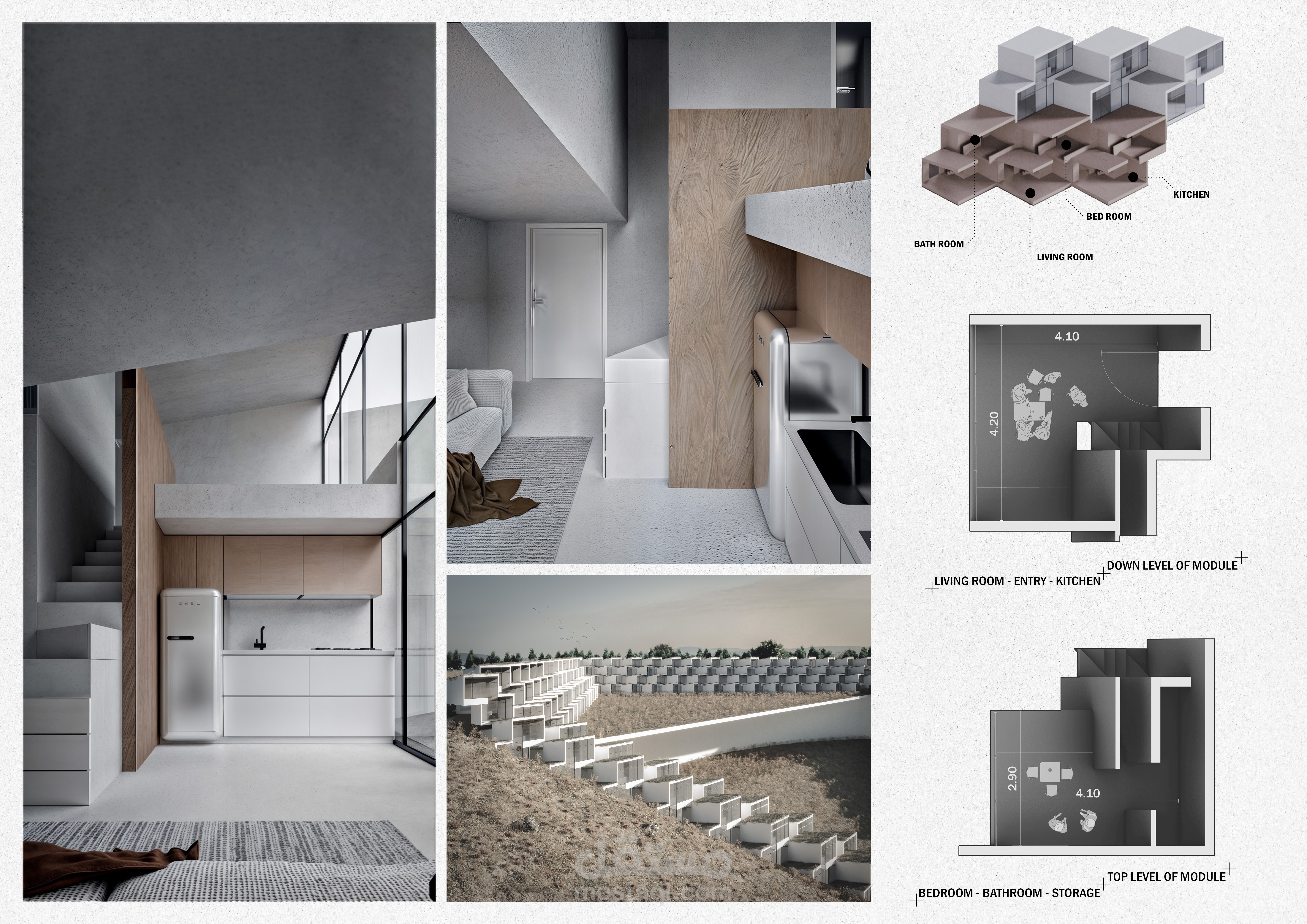
A micro-apartment is a residential complex consisting of small houses, each with a maximum area of 25 square meters. This project not only addresses all the biological and sensory needs of the users within their homes but also functions as a fire-resistant complex. Through its architectural features, it creates a safe environment for the residents and serves as a passive defense mechanism against fire.