Mouth hygiene
تفاصيل العمل
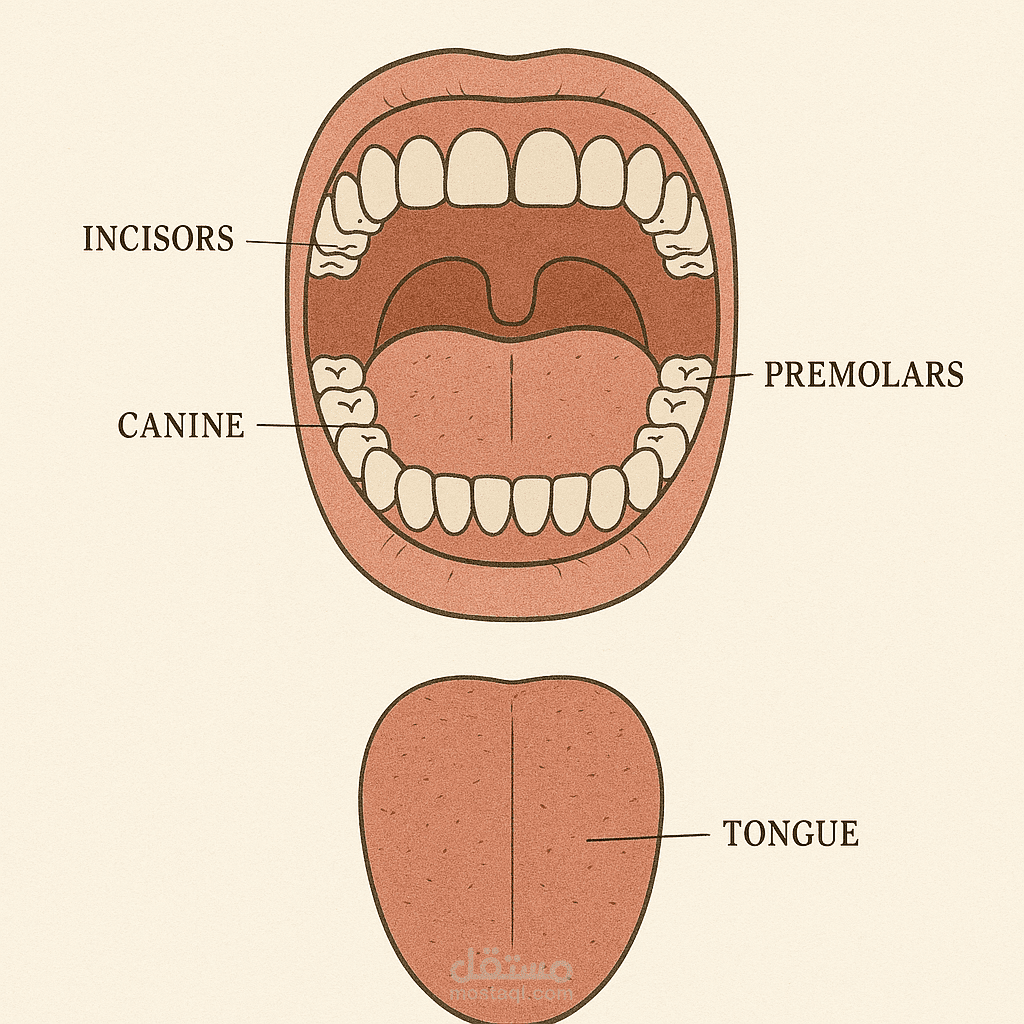
Dental caries (cavities) progress through several stages in the human mouth, starting as minor enamel damage and eventually leading to severe decay if untreated. Here’s how caries develop:
1. Formation of Plaque (Initial Stage)
Food particles, especially sugary and starchy foods, combine with bacteria in the mouth to form a sticky film called dental plaque.
Plaque contains harmful bacteria that produce acid, which begins attacking the tooth enamel.
2. Enamel Demineralization (White Spots Stage)
The acid starts dissolving minerals (calcium and phosphate) in the enamel, causing white or chalky spots to appear on the tooth surface.
At this stage, fluoride (in toothpaste or treatments) can help repair early damage through remineralization.
3. Enamel Decay (Cavity Formation Begins)
If demineralization continues, small holes (cavities) start forming in the enamel.
Since enamel has no nerves, there’s usually no pain at this stage, making early cavities hard to detect without a dental exam.
4. Dentin Involvement (Increased Sensitivity & Pain)
The decay reaches the dentin, the softer layer beneath the enamel.
This leads to increased tooth sensitivity to hot, cold, or sweet foods.
At this point, professional dental treatment (like fillings) is required to prevent further damage.
5. Pulp Infection (Severe Pain & Swelling)
If the cavity is untreated, decay reaches the pulp, the innermost part of the tooth containing nerves and blood vessels.
This results in severe pain, inflammation, and possible infection.
A root canal may be needed to remove infected tissue and save the tooth.
6. Abscess Formation (Advanced Decay & Risk of Tooth Loss)
Bacteria spread beyond the pulp, forming a dental abscess, a painful infection that can cause swelling and pus formation.
This can lead to tooth loss, and if the infection spreads, it may cause systemic health problems.
Prevention & Treatment
Brushing twice a day with fluoride toothpaste.
Flossing daily to remove plaque between teeth.
Limiting sugar intake to reduce bacterial growth.
Regular dental check-ups for