Breast-Cancer-Classification
تفاصيل العمل

Breast Cancer Classification Using Machine Learning
Breast cancer is one of the most common and life-threatening diseases, making early detection crucial for effective treatment. This project aims to develop a machine learning model to classify breast cancer as benign or malignant based on diagnostic data.
Project Overview
Objective: Build a predictive model that accurately classifies breast cancer tumors.
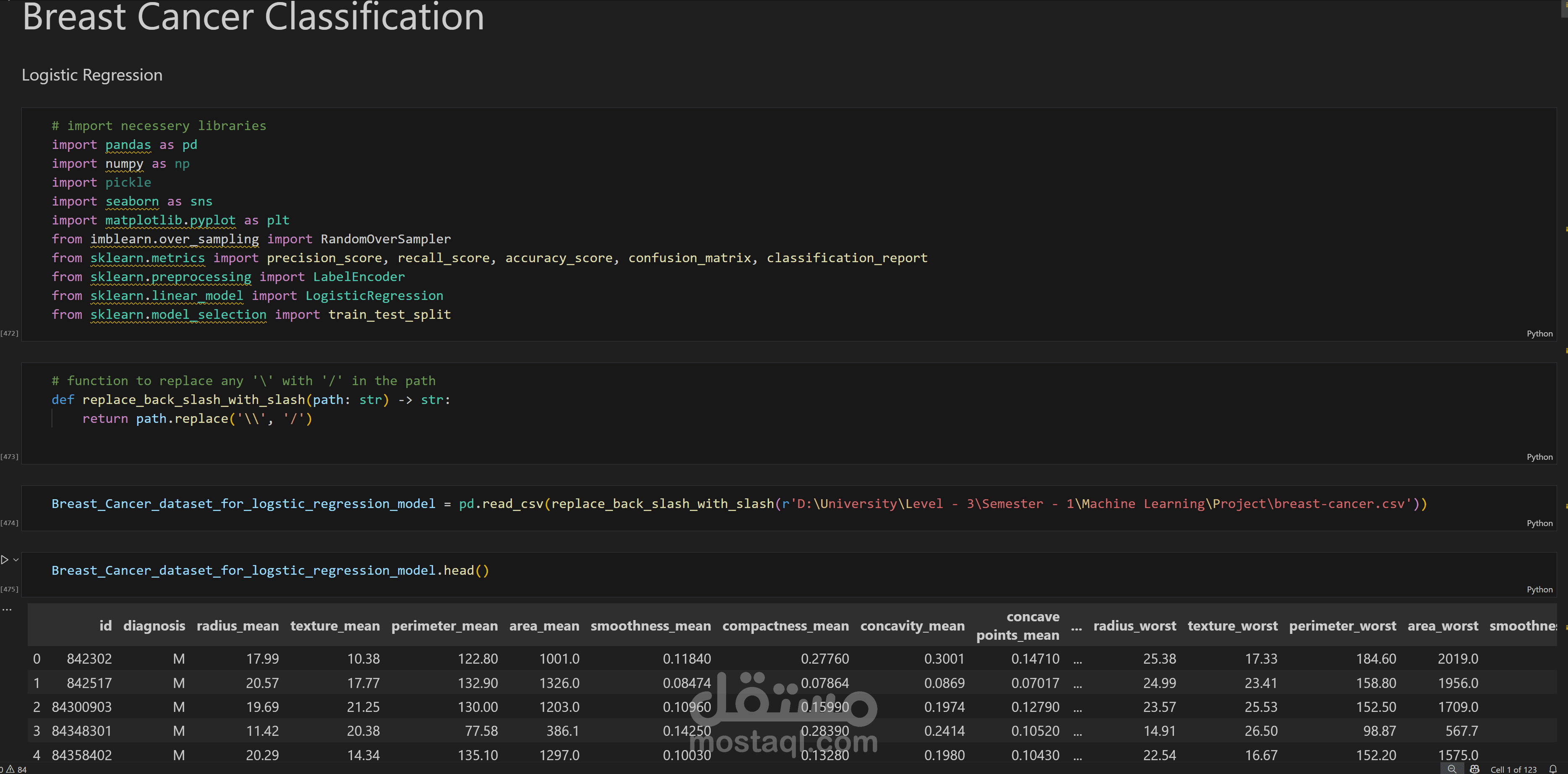
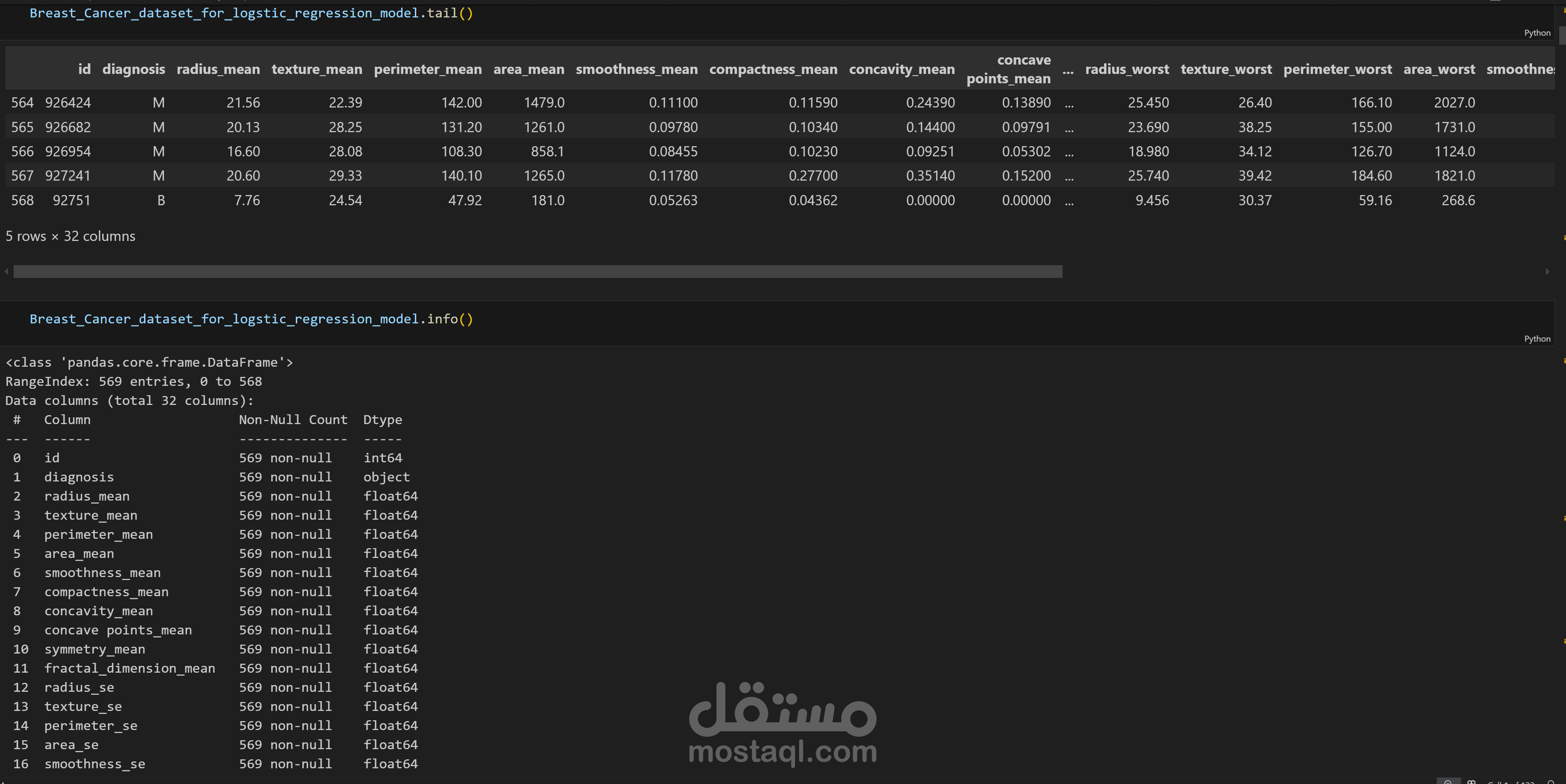
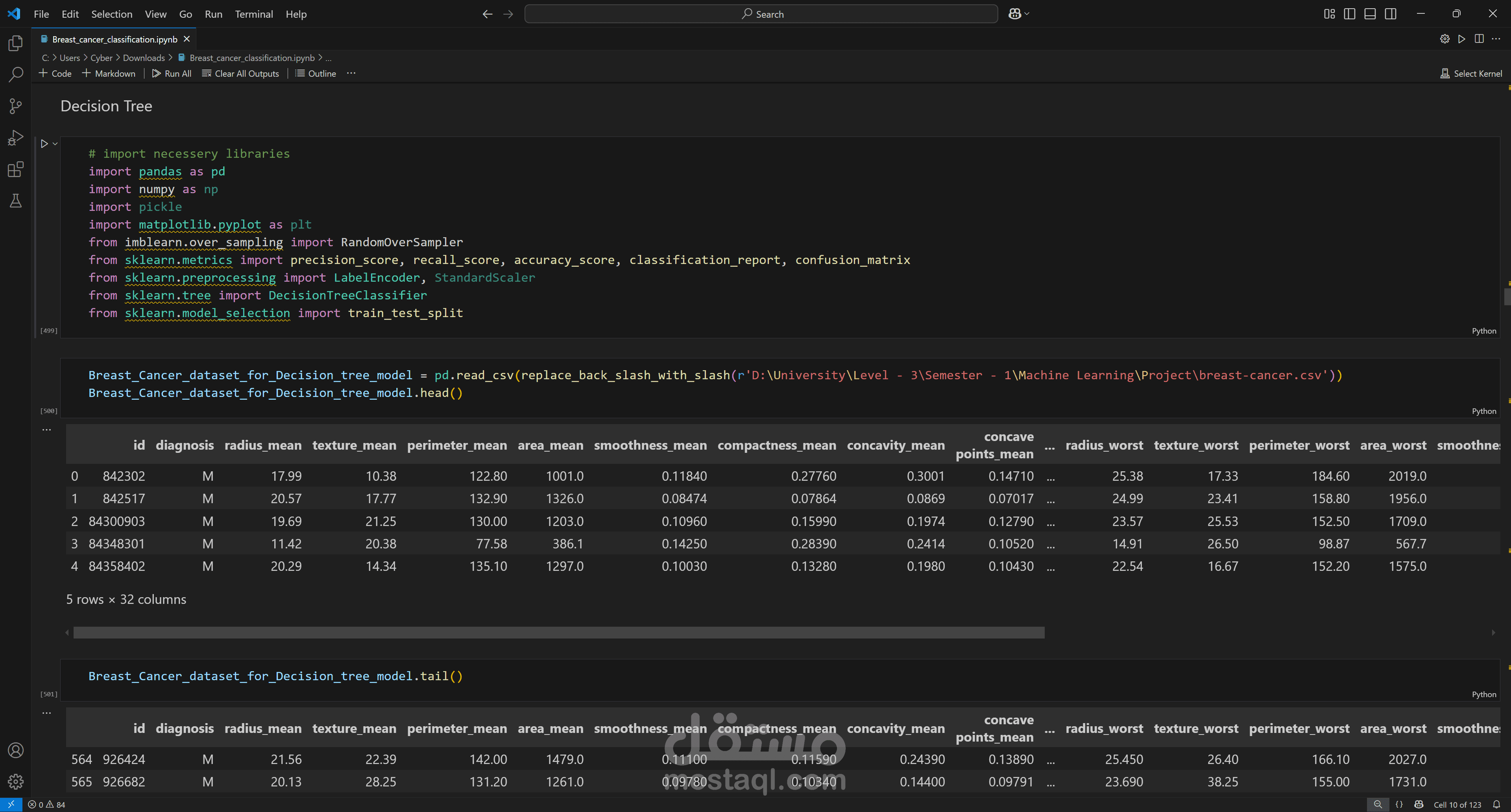
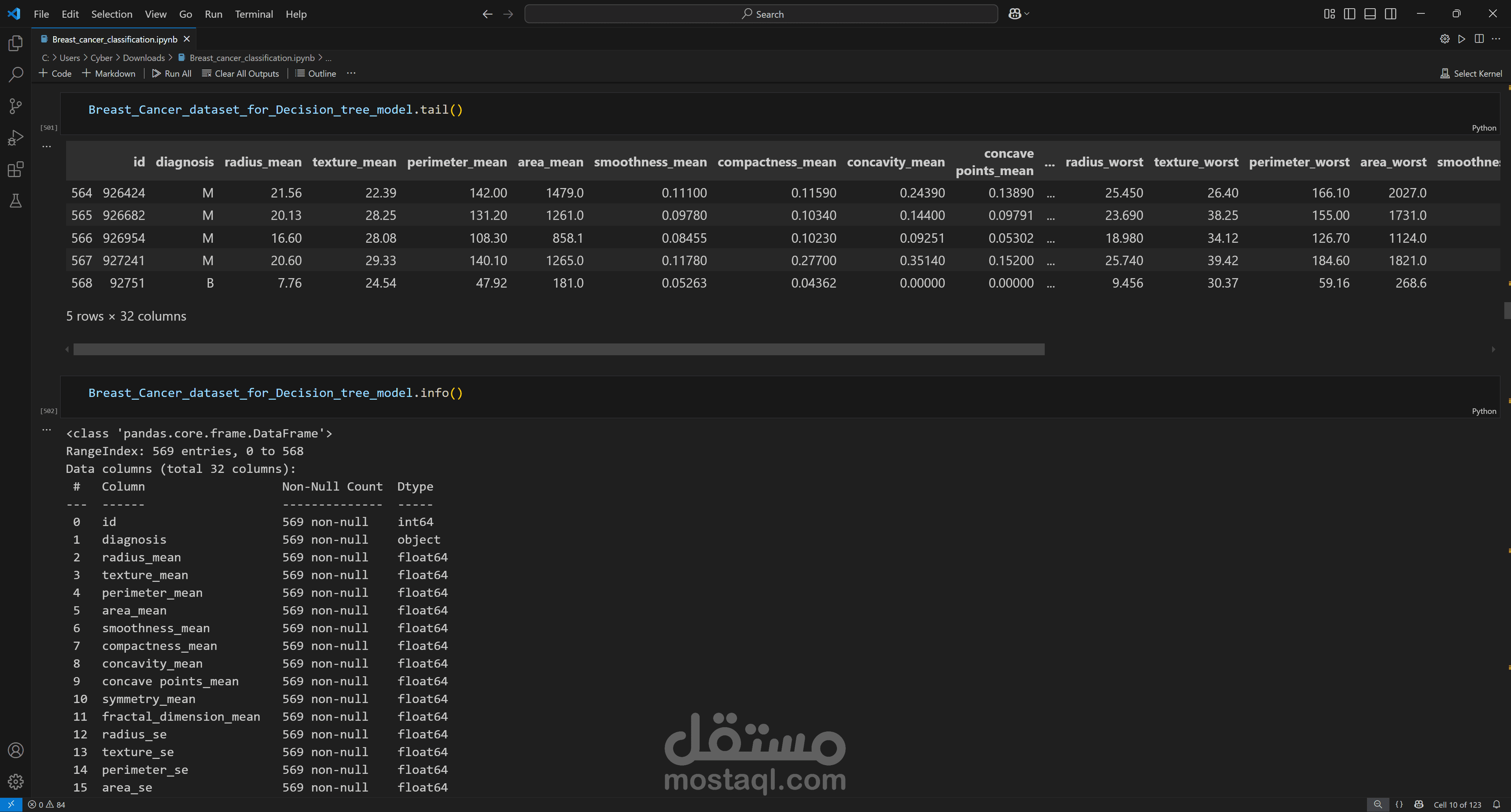
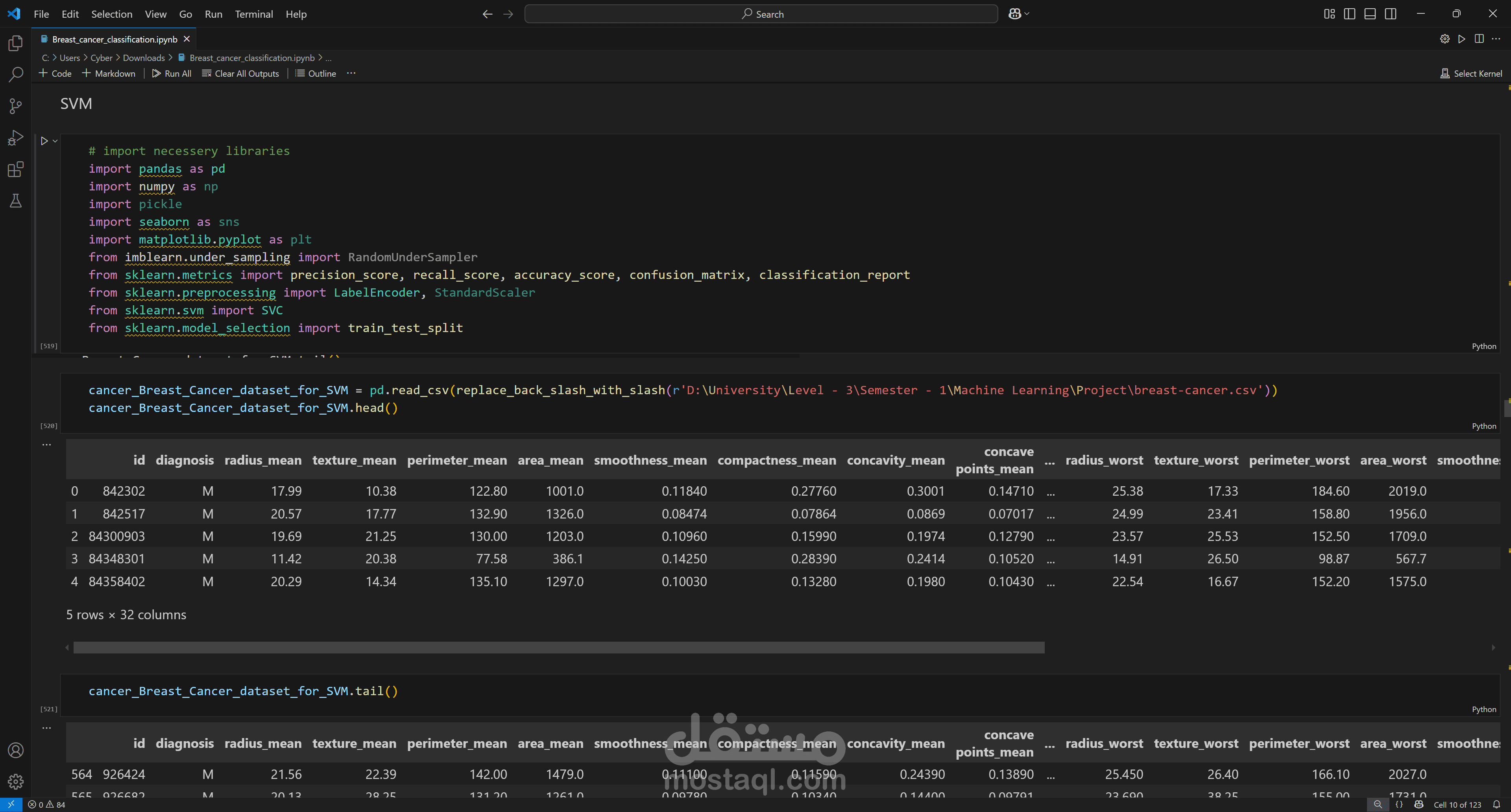
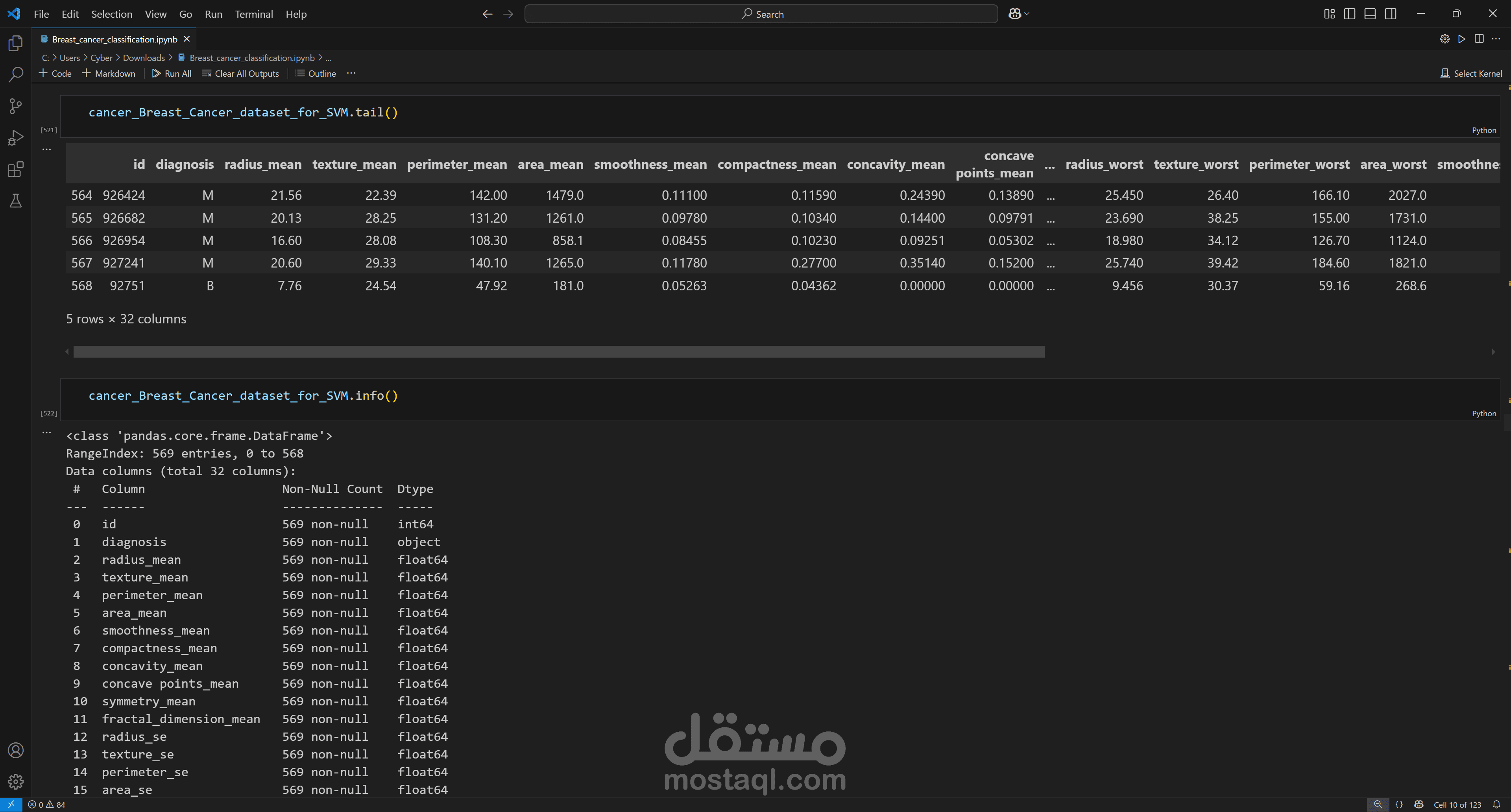
Dataset: The Wisconsin Breast Cancer Dataset (WBCD), containing features extracted from digitized images of fine needle aspirate (FNA) biopsies.
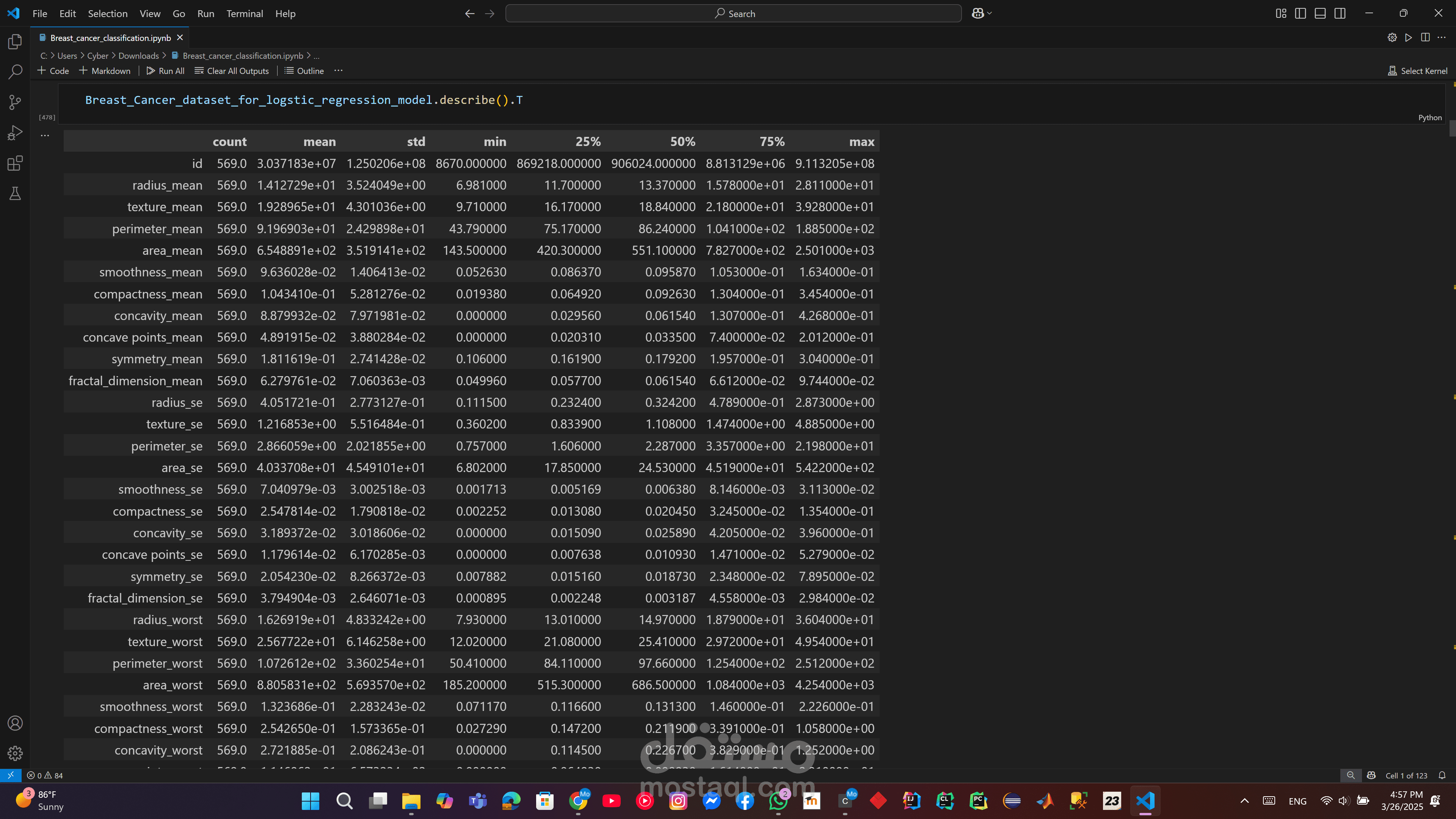
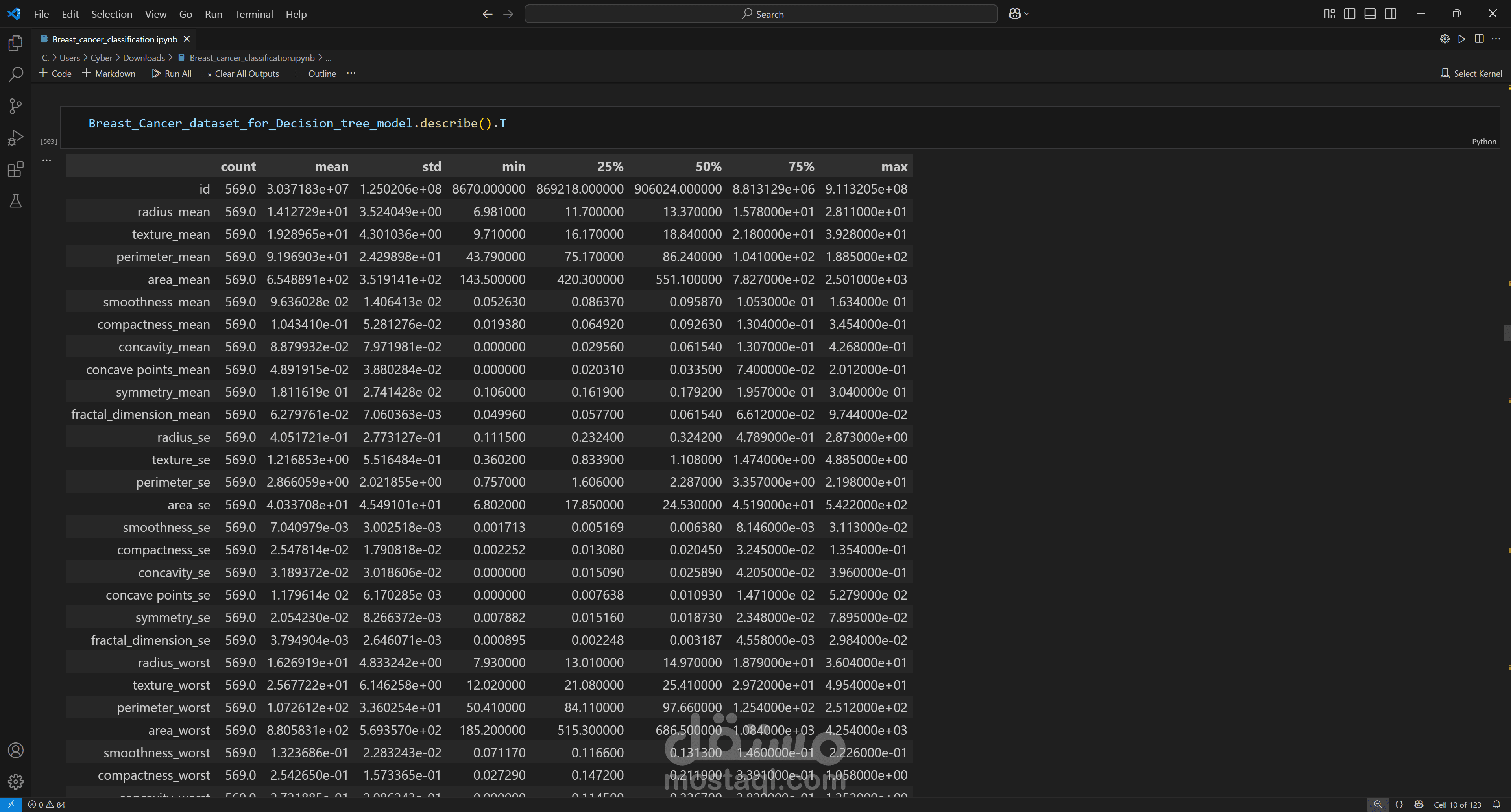
Features: Includes attributes such as mean radius, texture, perimeter, area, smoothness, compactness, and other shape-related characteristics of the tumor cells.
Methodology
Data Preprocessing:
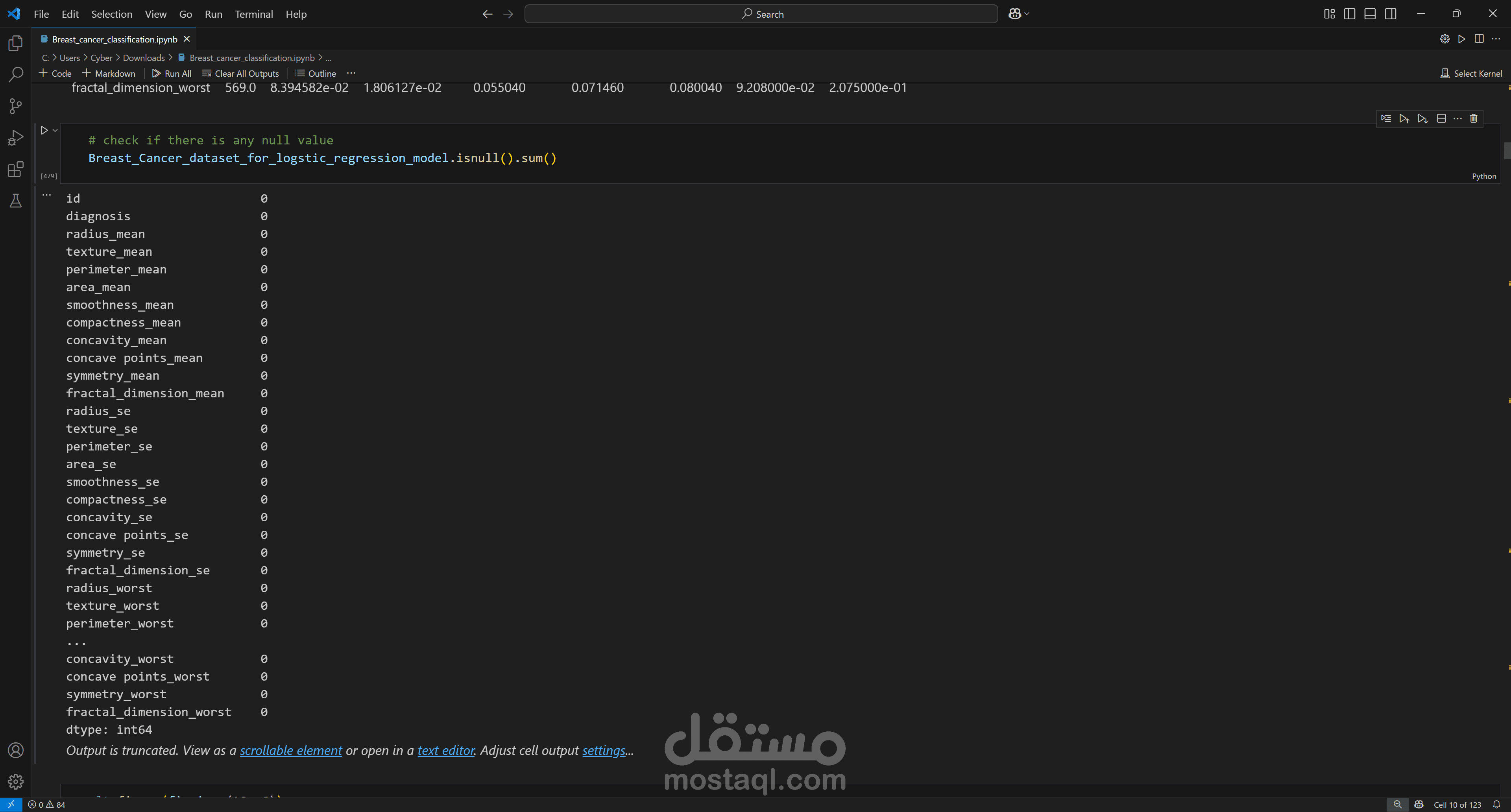
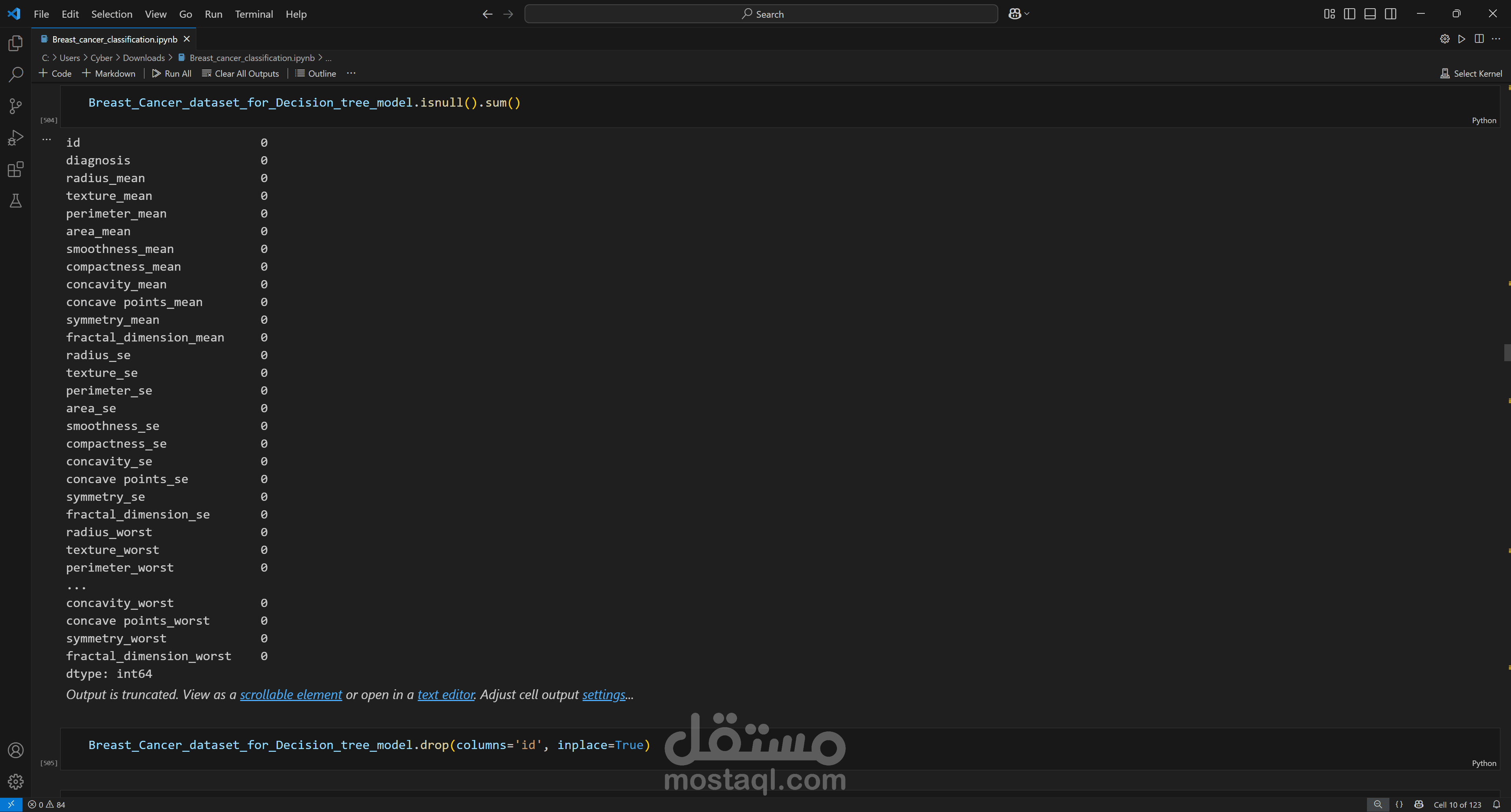
Handling missing values and outliers.
Feature scaling and normalization for consistency.
Exploratory Data Analysis (EDA):
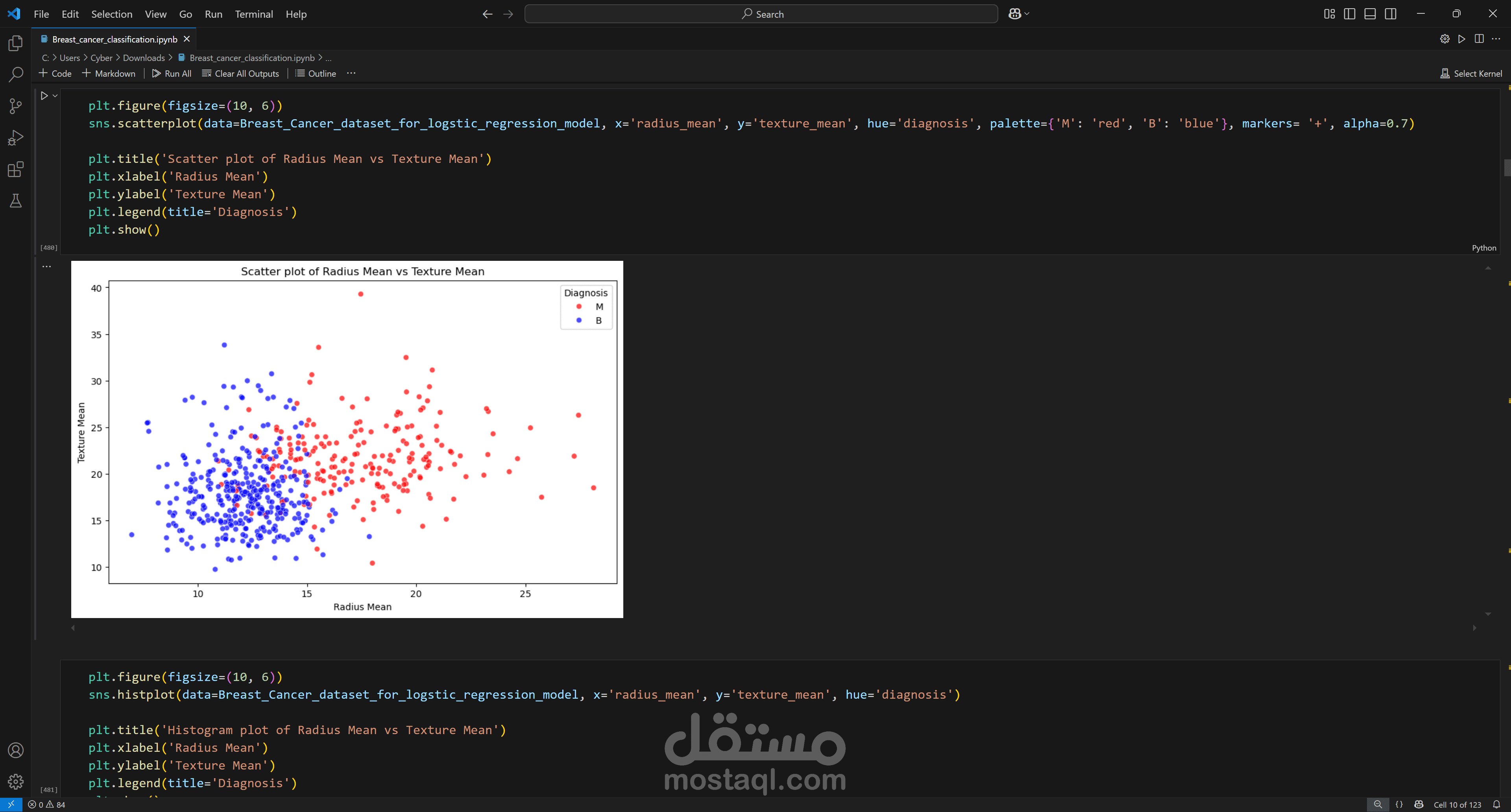
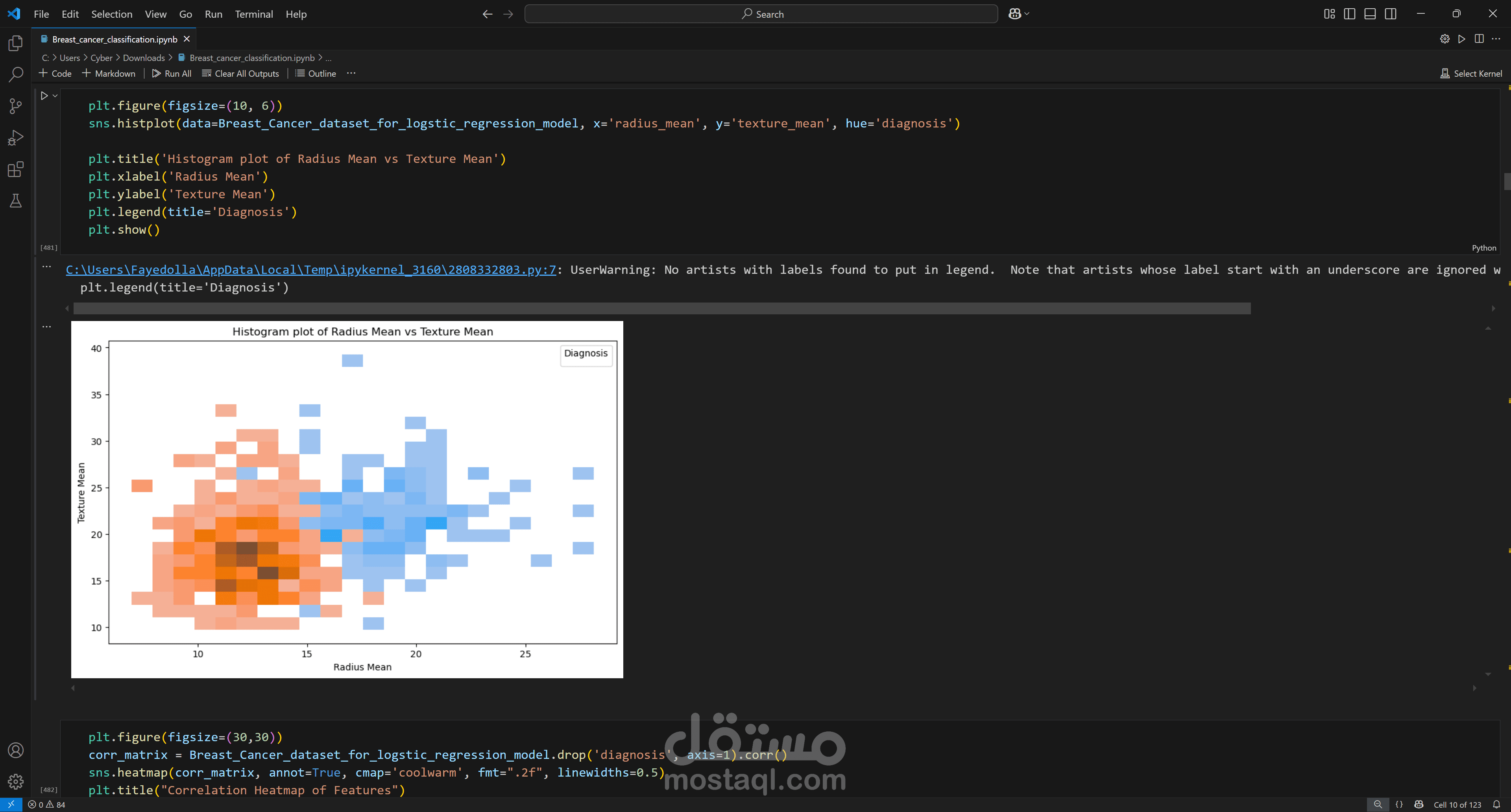
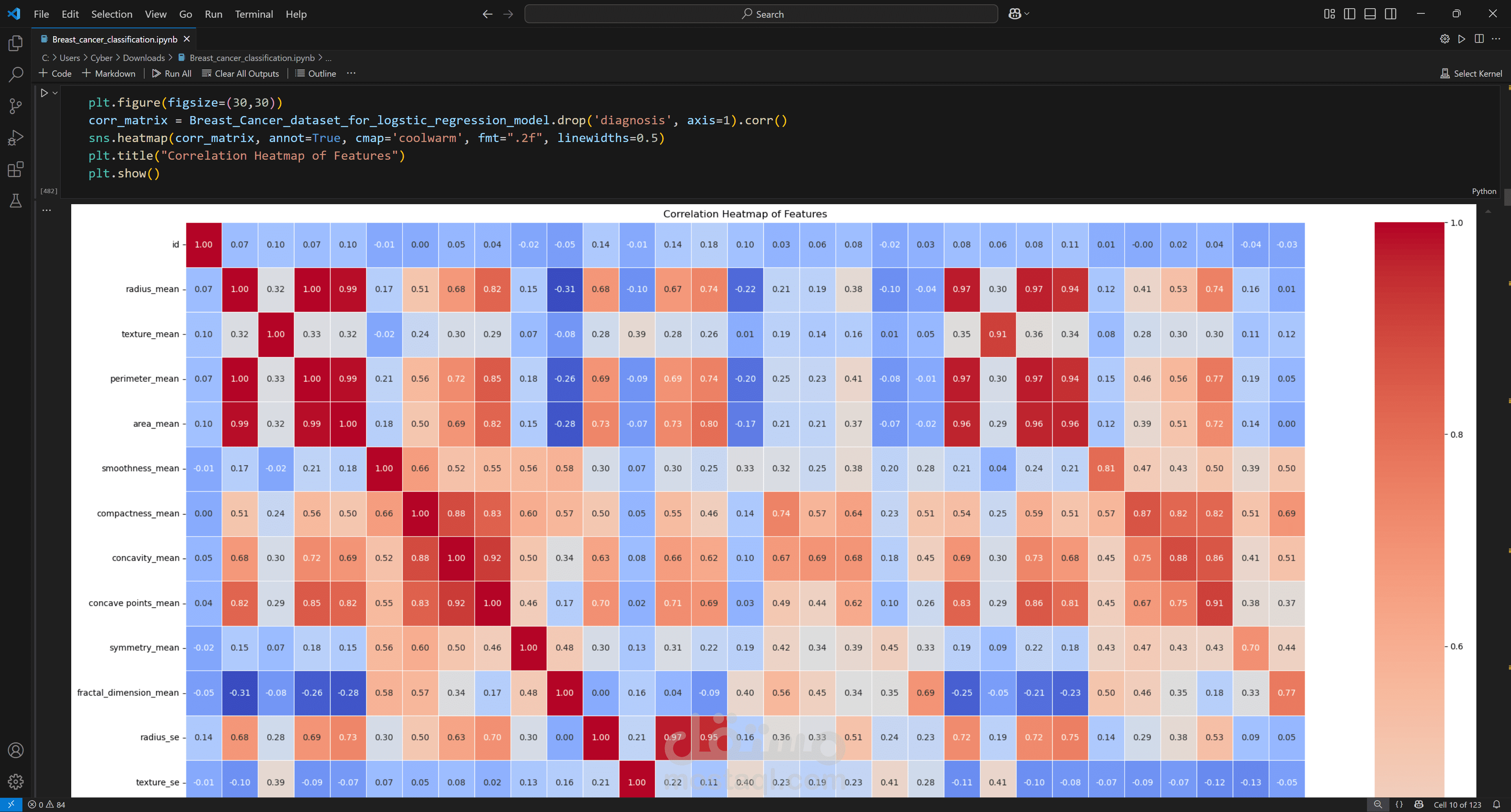
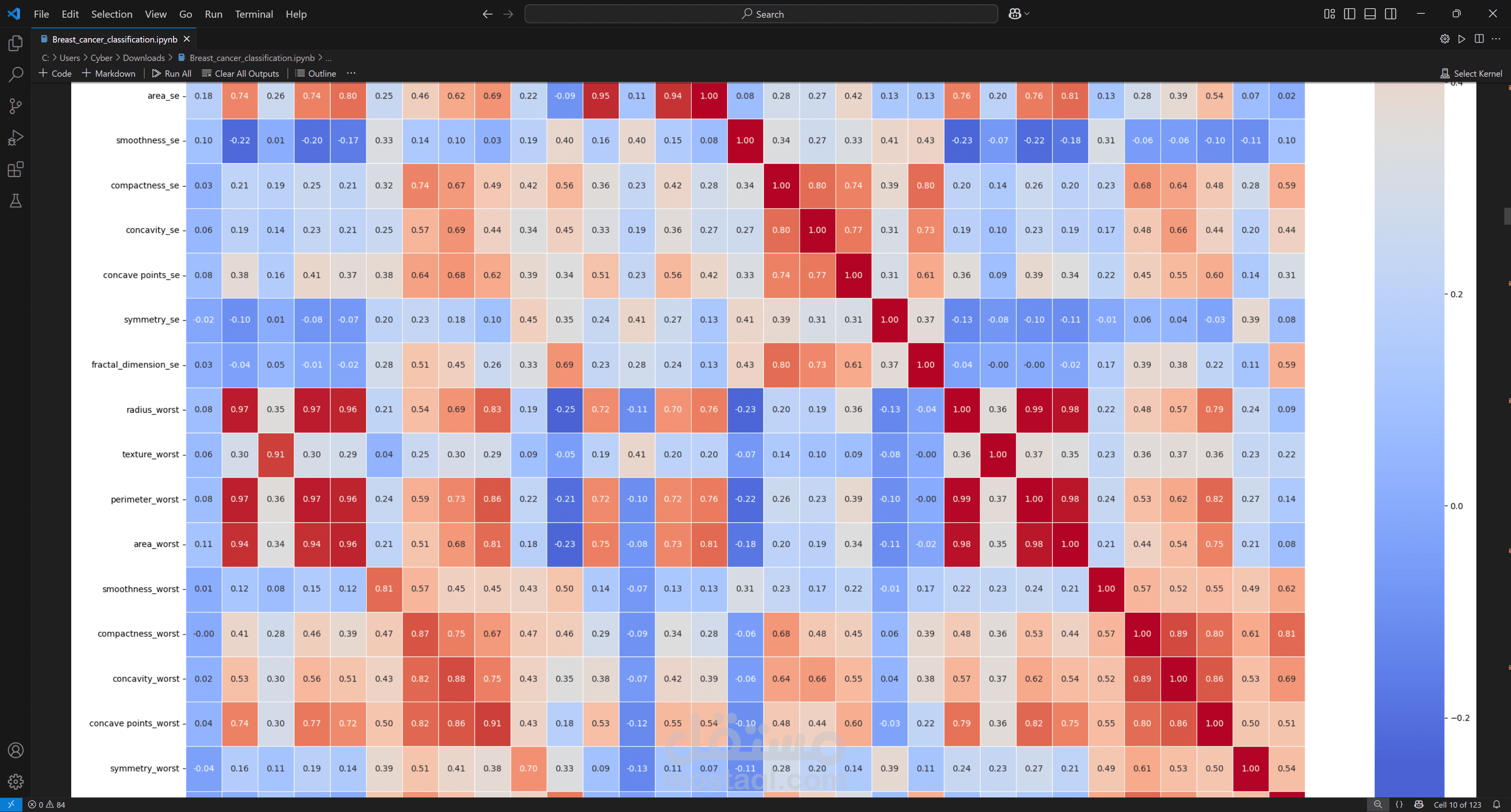
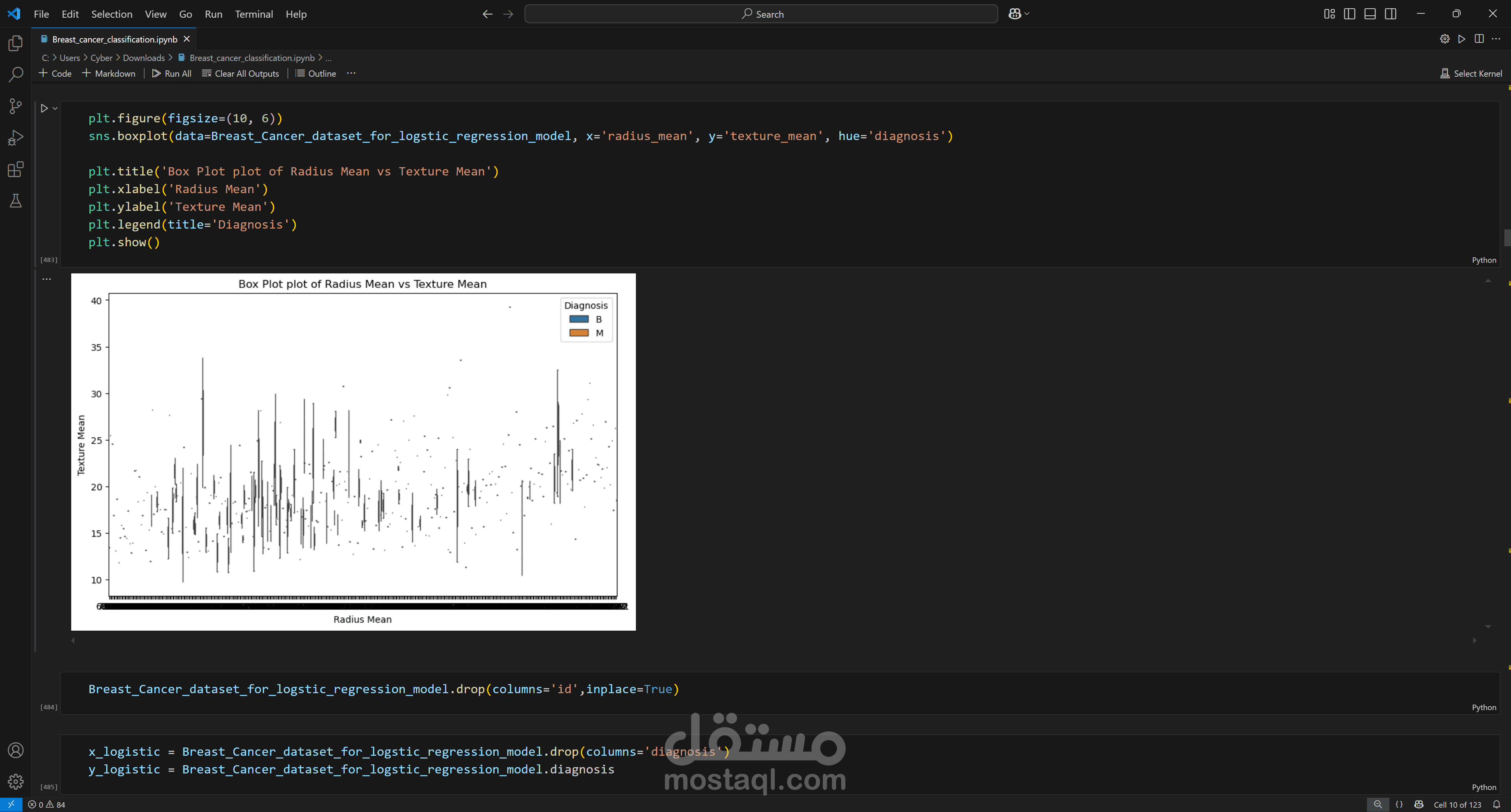
Visualizing feature distributions and correlations.
Identifying key attributes that influence classification.
Dimensionality Reduction (if applicable):
Principal Component Analysis (PCA) to reduce redundancy and improve model efficiency.
Model Selection & Training:
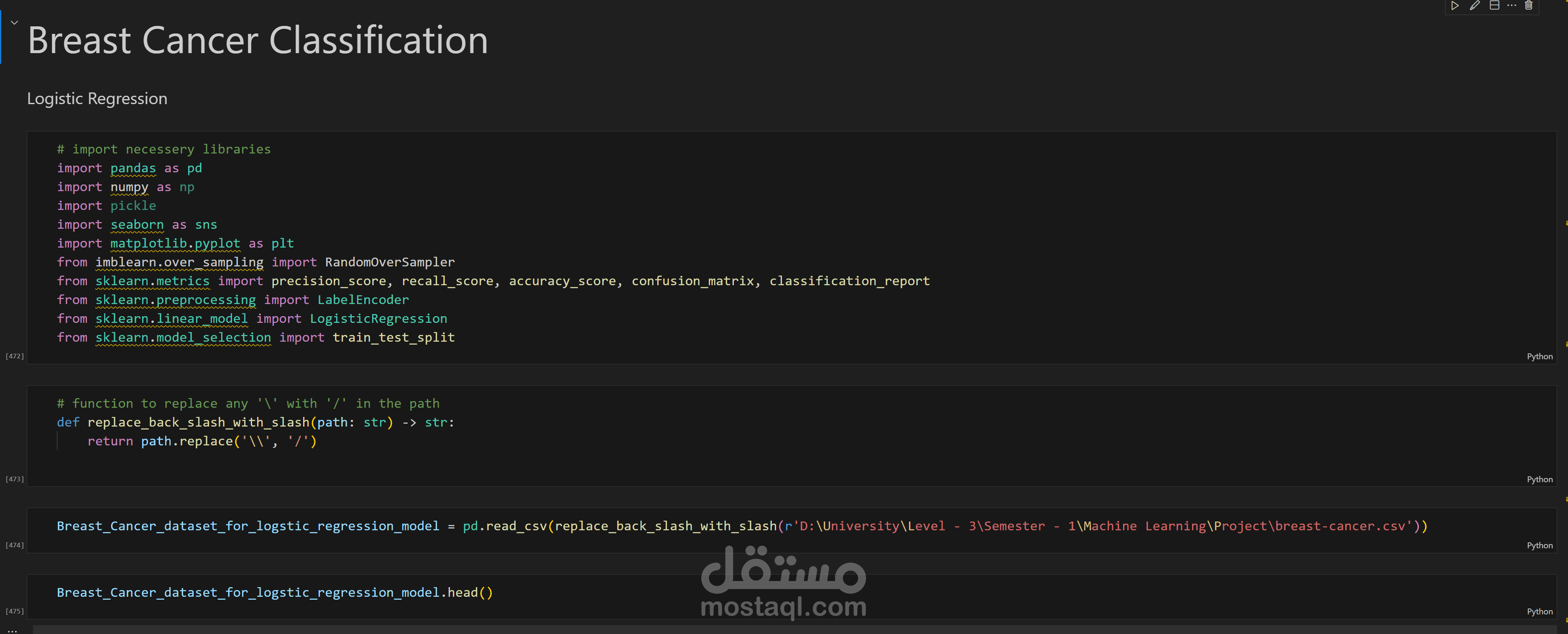
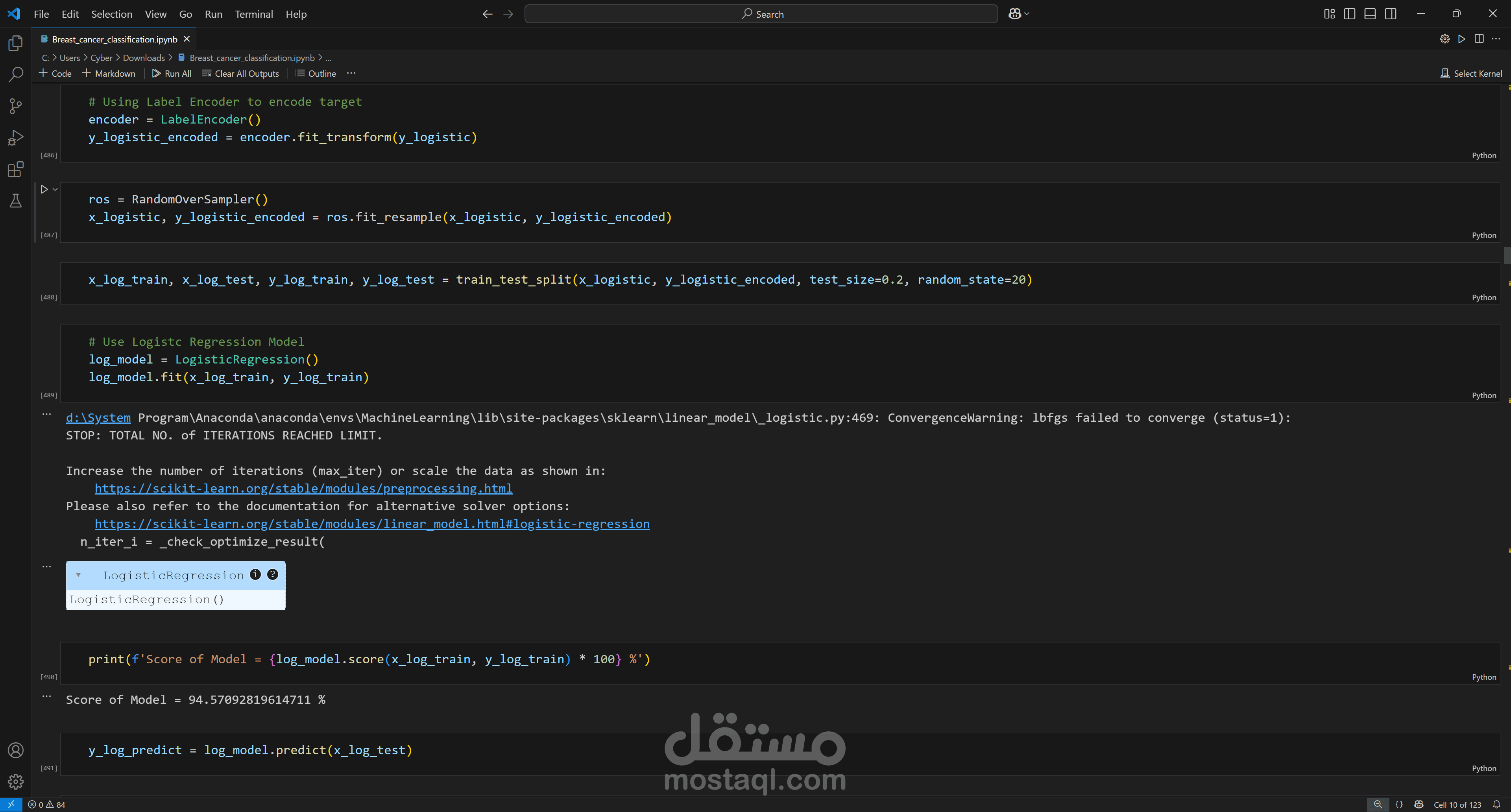
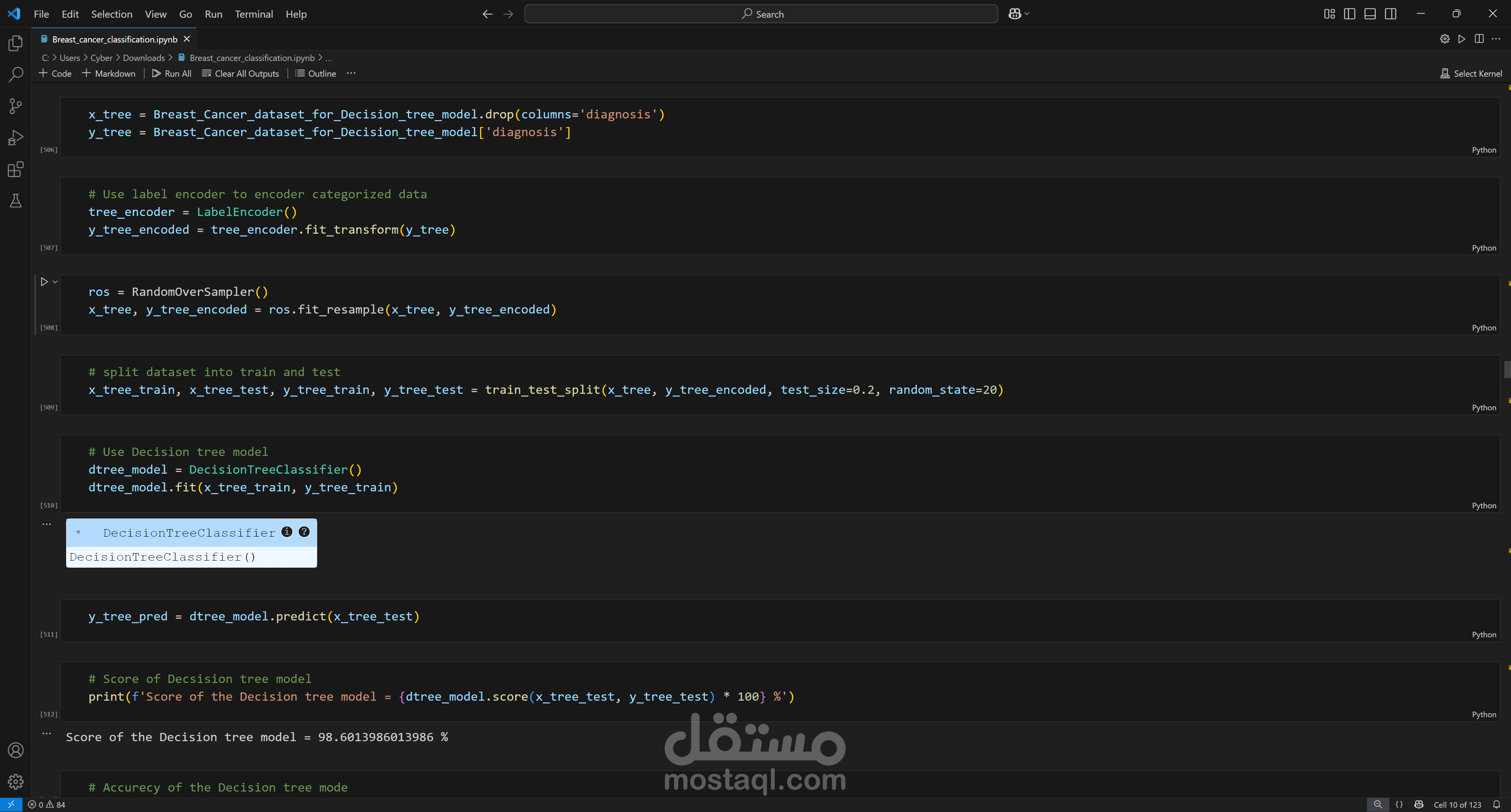
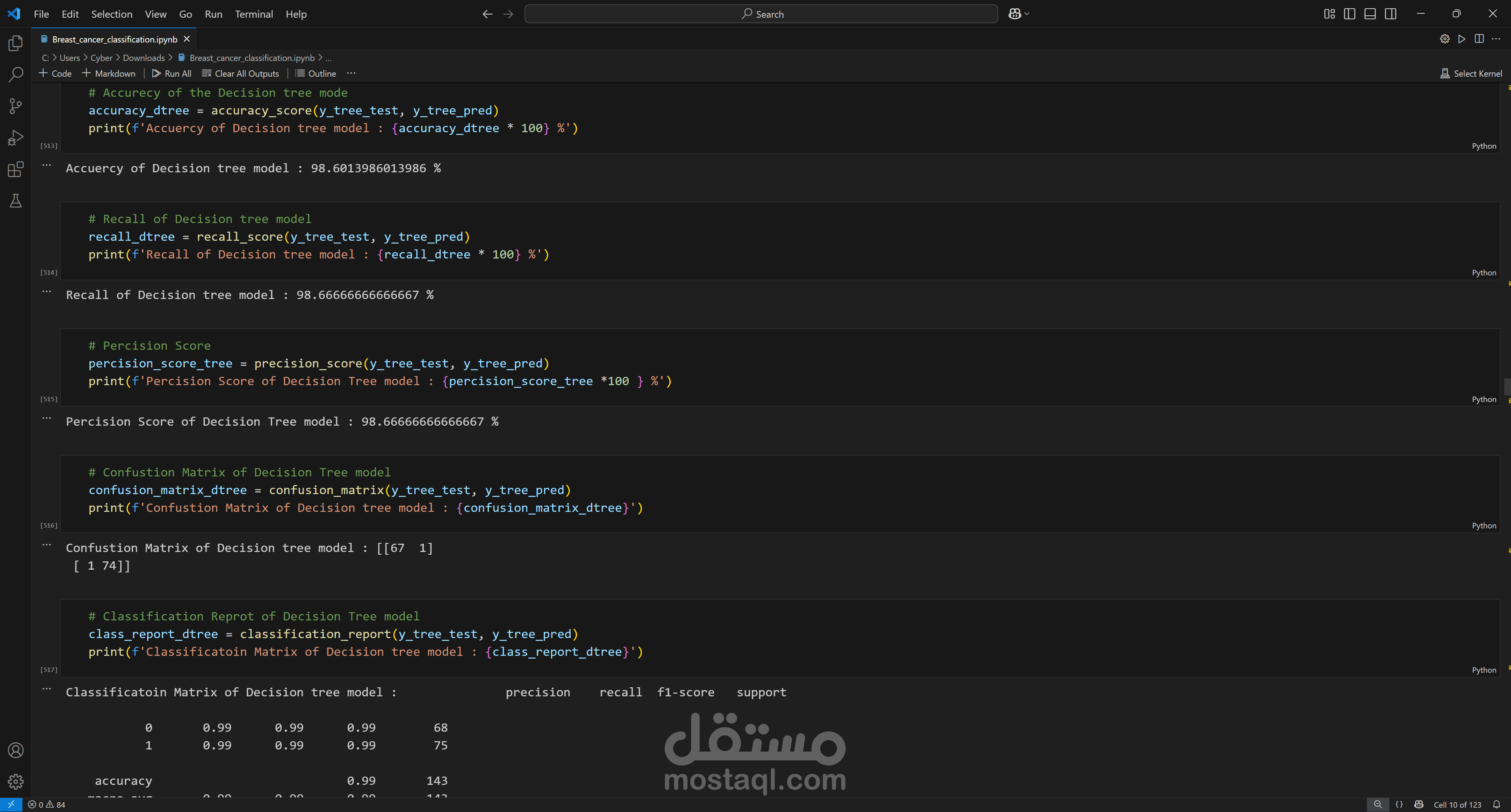
Training multiple classifiers like Logistic Regression, Random Forest, Support Vector Machines (SVM), and Neural Networks.
Using cross-validation to assess performance.
Hyperparameter Tuning:
Applying Grid Search or Bayesian Optimization to fine-tune models for optimal performance.
Evaluation Metrics:
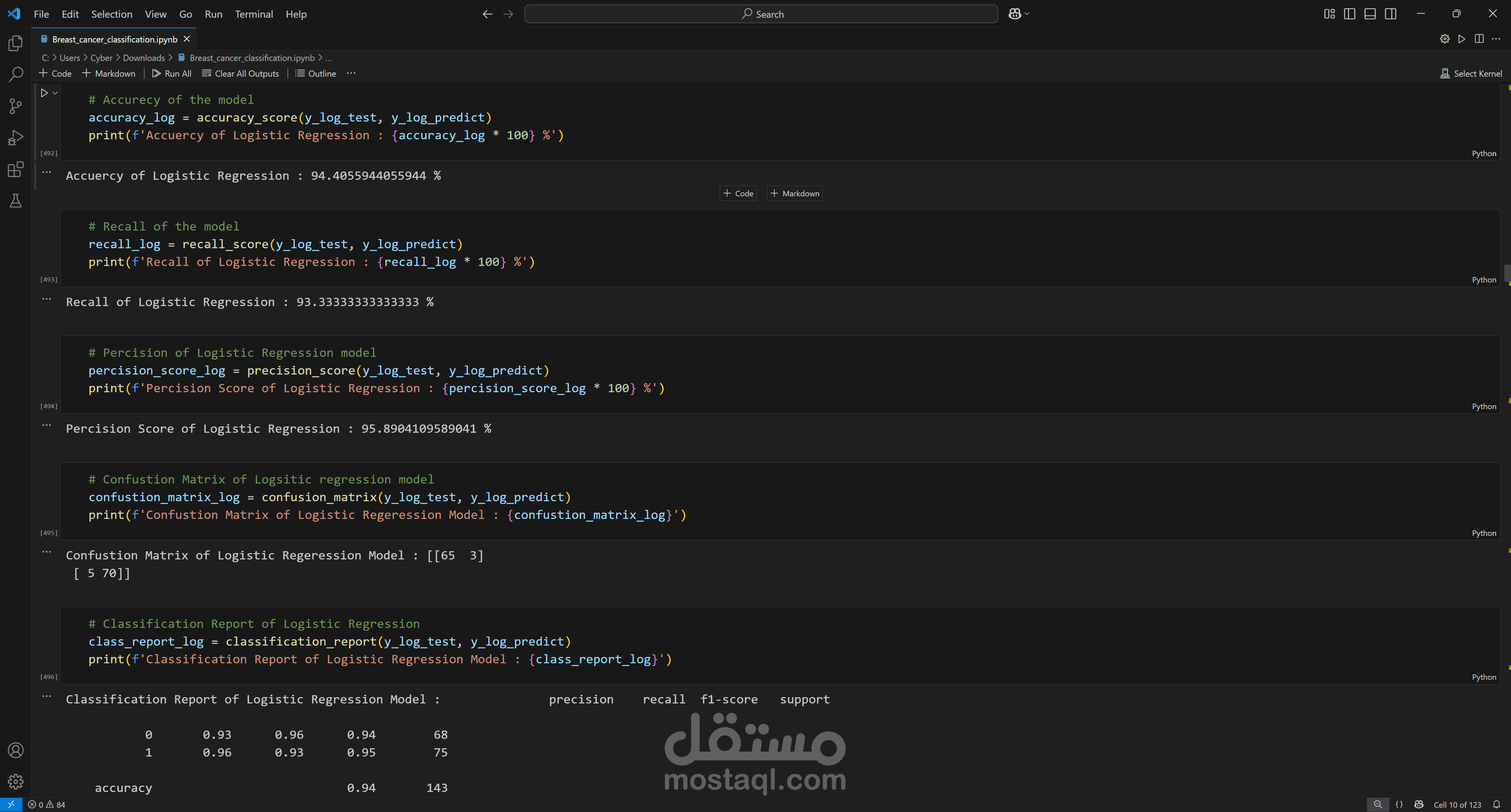
Accuracy, Precision, Recall, F1-Score, and ROC-AUC to assess the effectiveness of each model.
Results & Conclusion
The best-performing model achieves high accuracy and a strong ROC-AUC score, ensuring reliable predictions.
Insights from the model help highlight key factors influencing breast cancer classification.
The approach can be further improved using deep learning techniques such as Convolutional Neural Networks (CNNs) for image-based diagnosis.
Technologies & Tools Used
Python (NumPy, Pandas, Scikit-learn, TensorFlow/PyTorch)
Matplotlib & Seaborn for data visualization
Jupyter Notebook for development
This project showcases how machine learning can contribute to the early detection of breast cancer, potentially aiding medical professionals in making more informed diagnoses.