Multi Class Classification
تفاصيل العمل
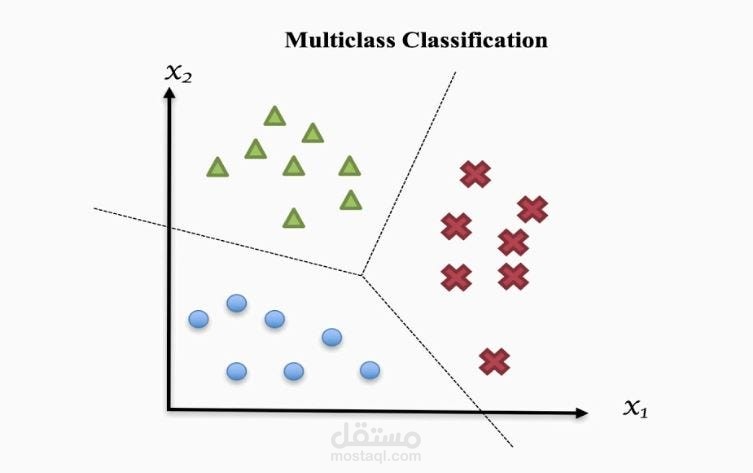
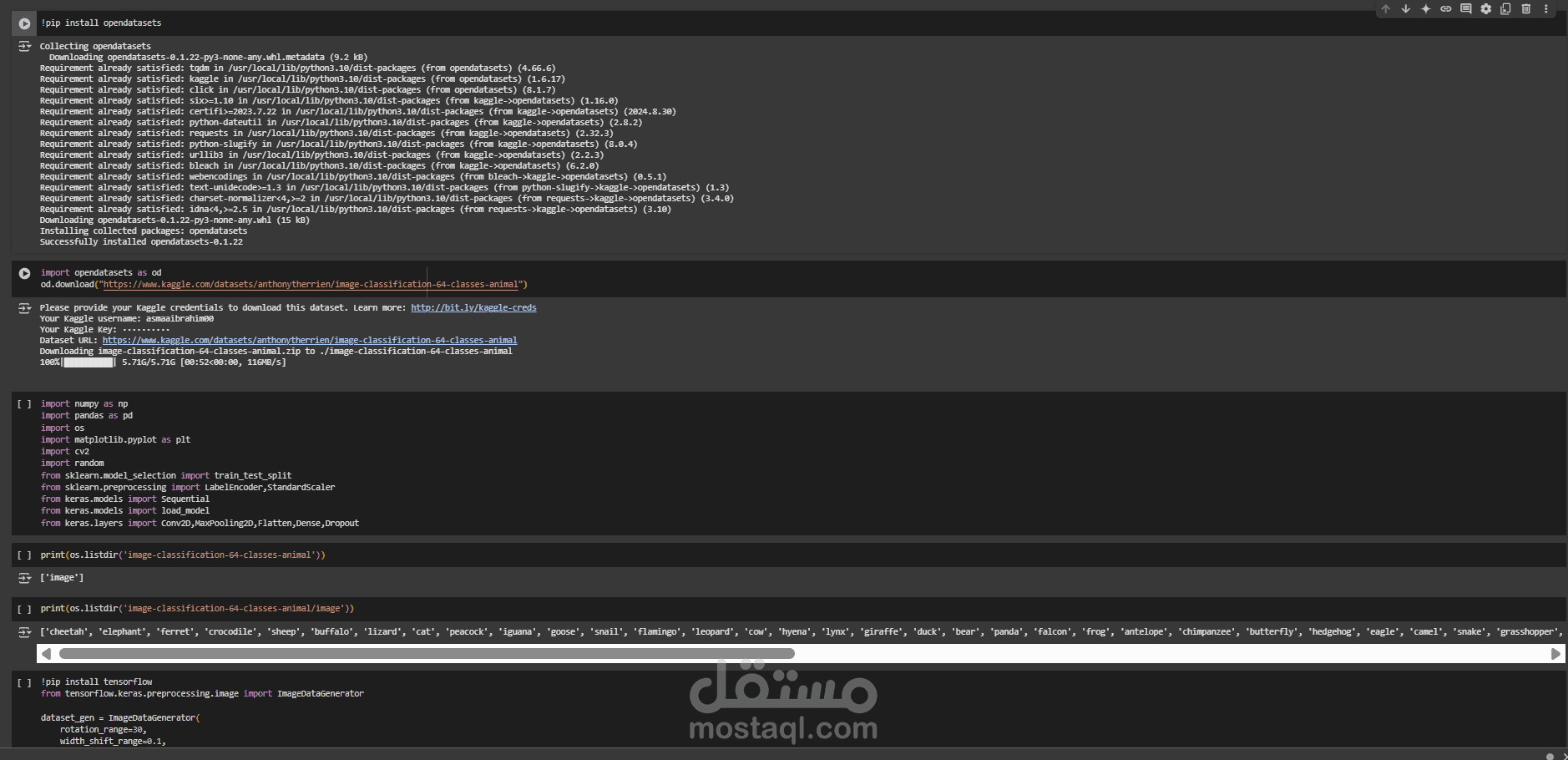
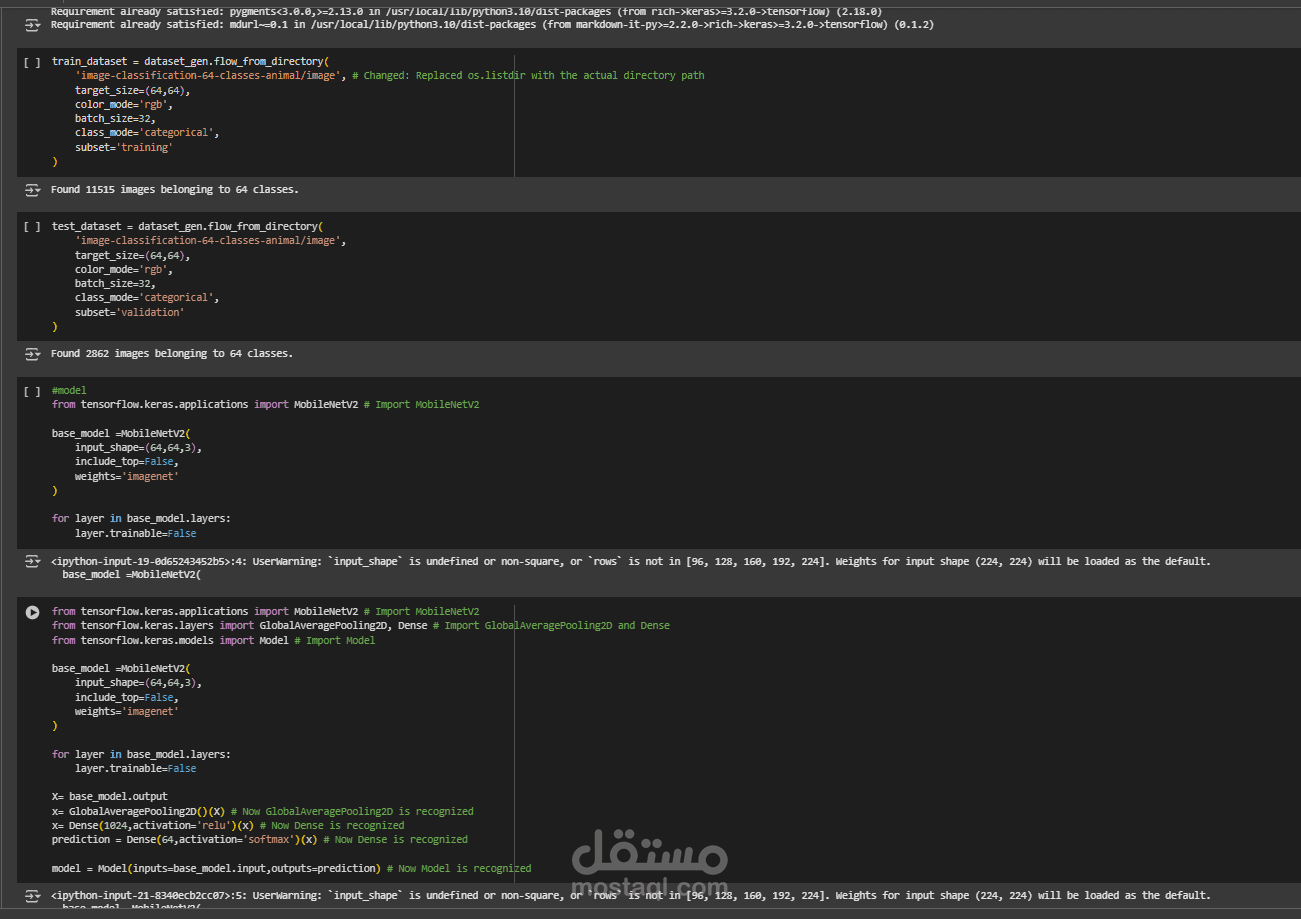
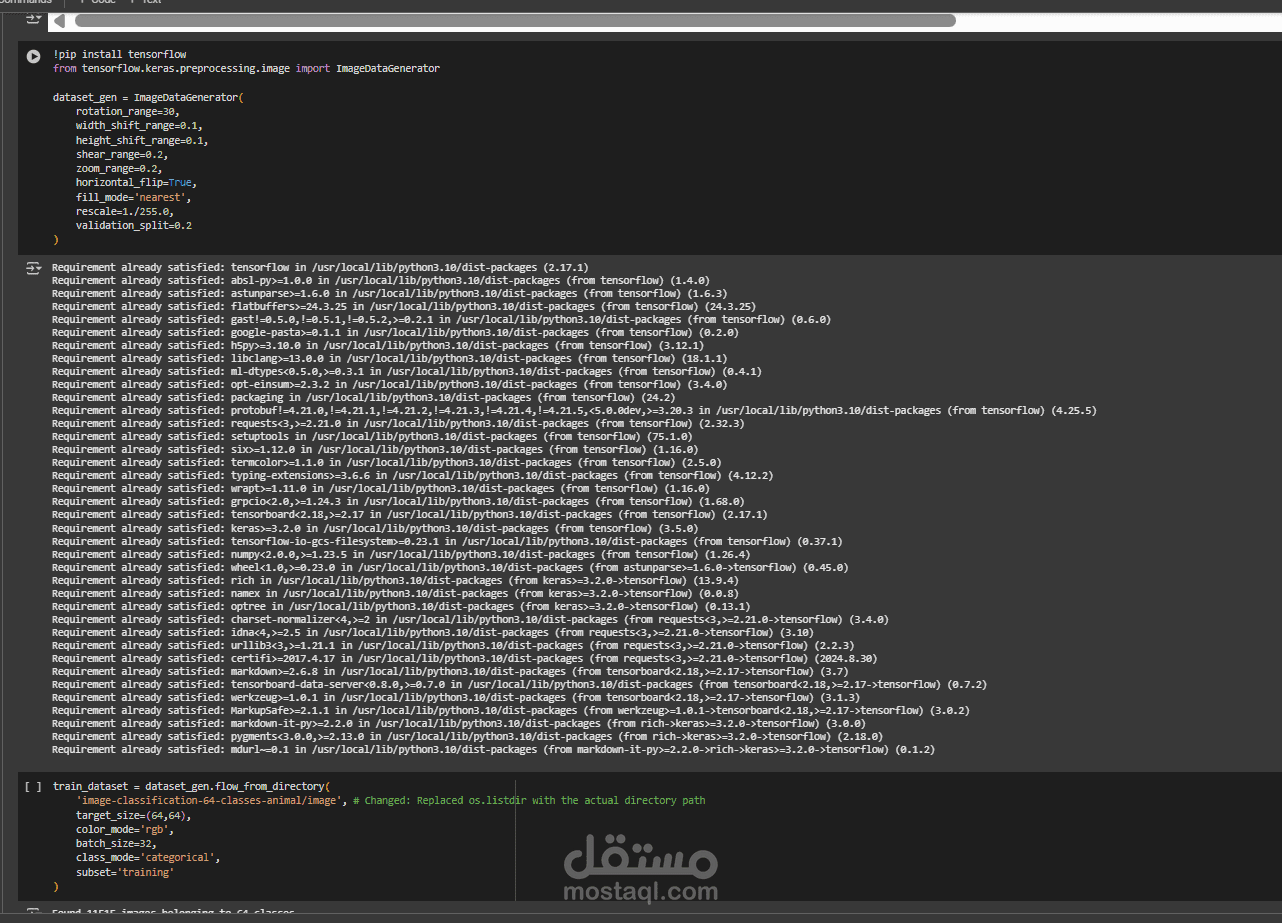
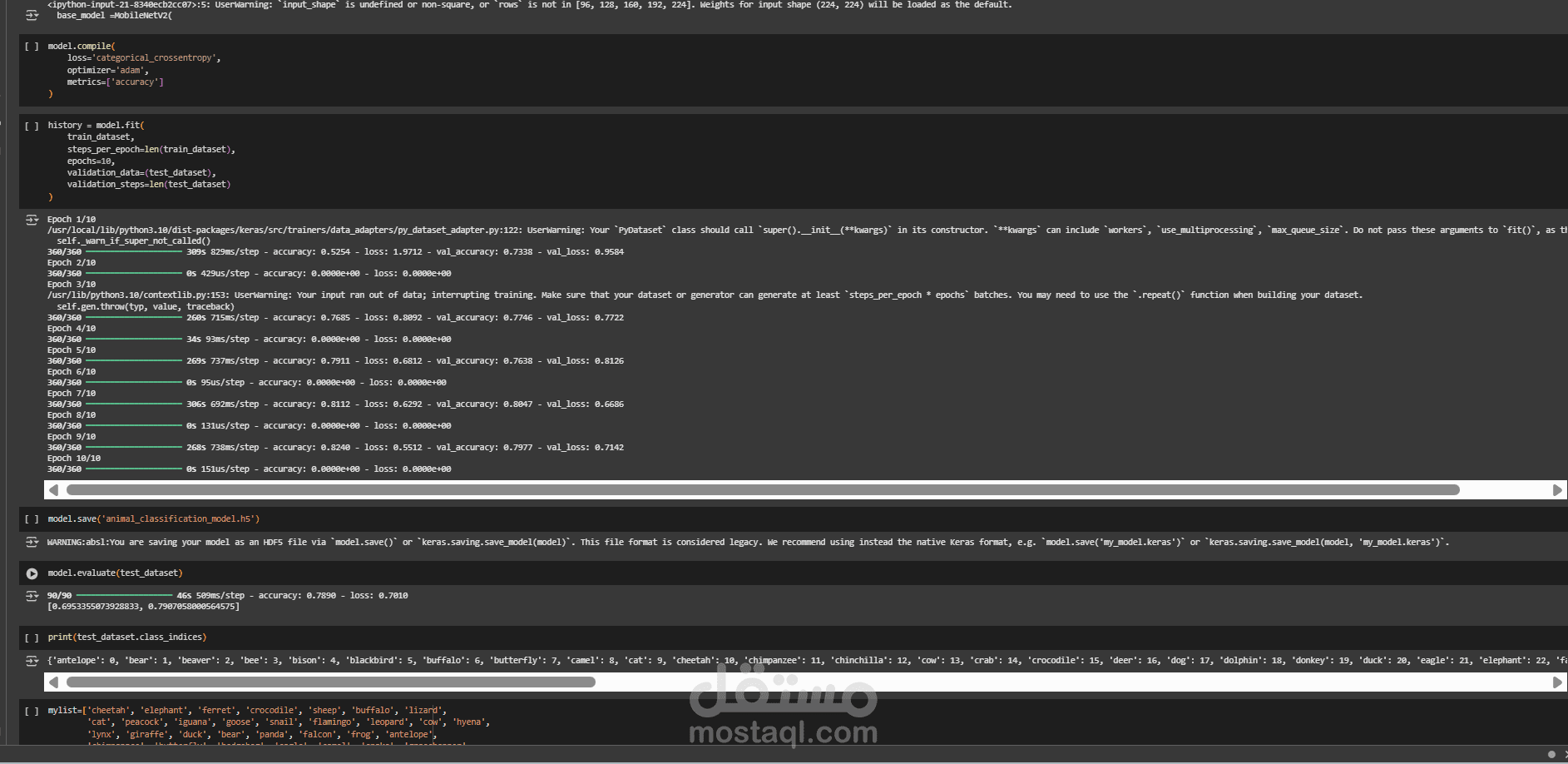
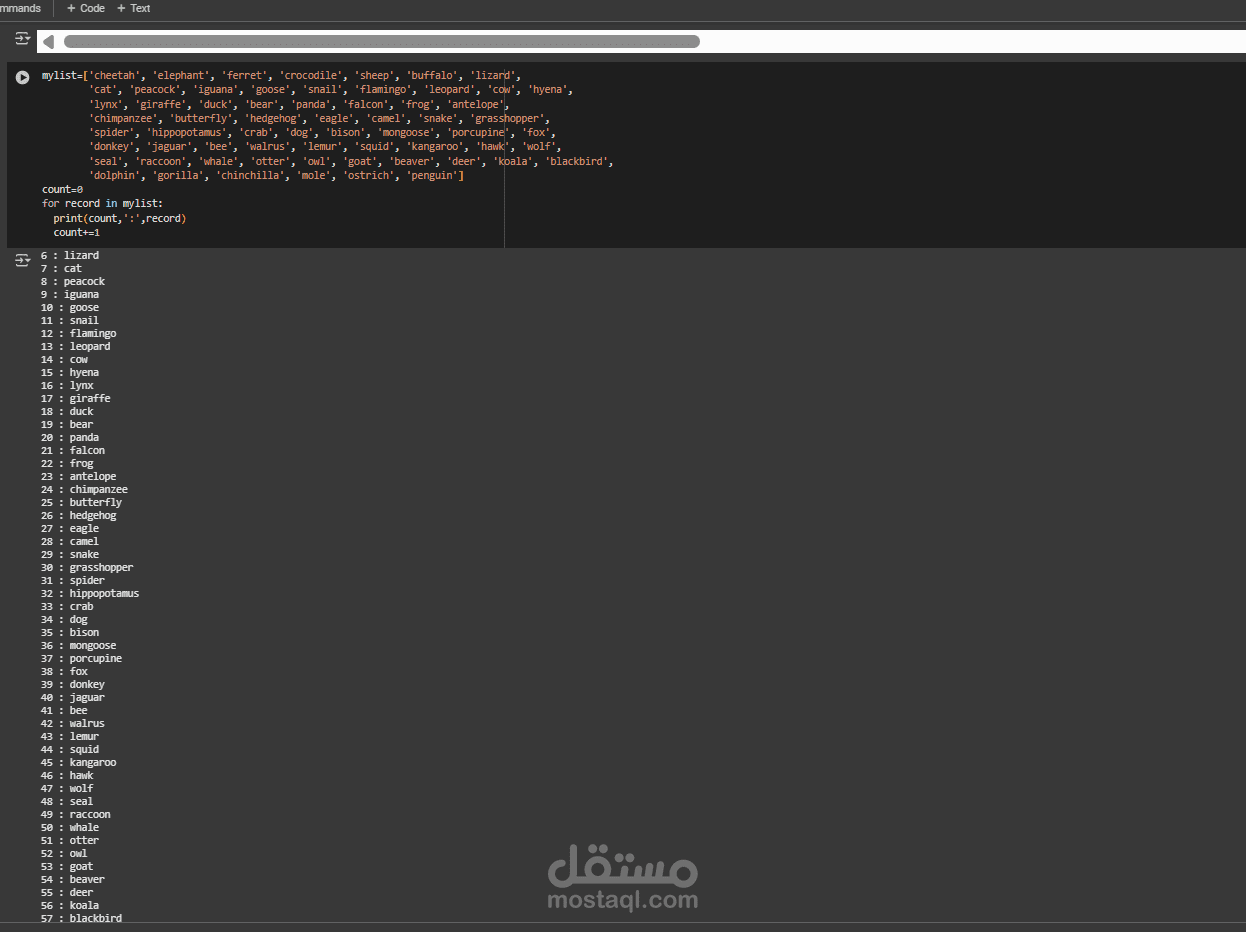
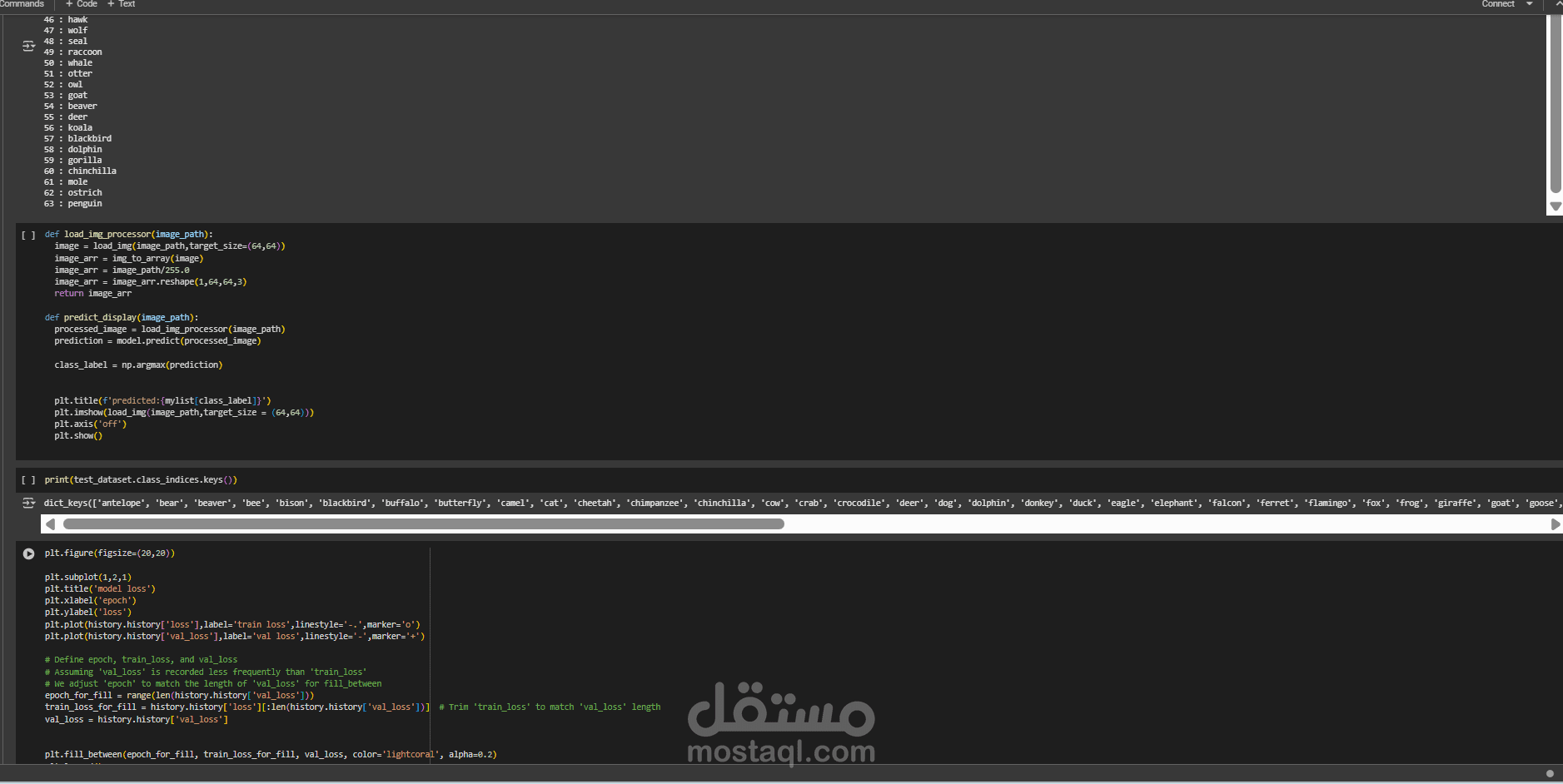
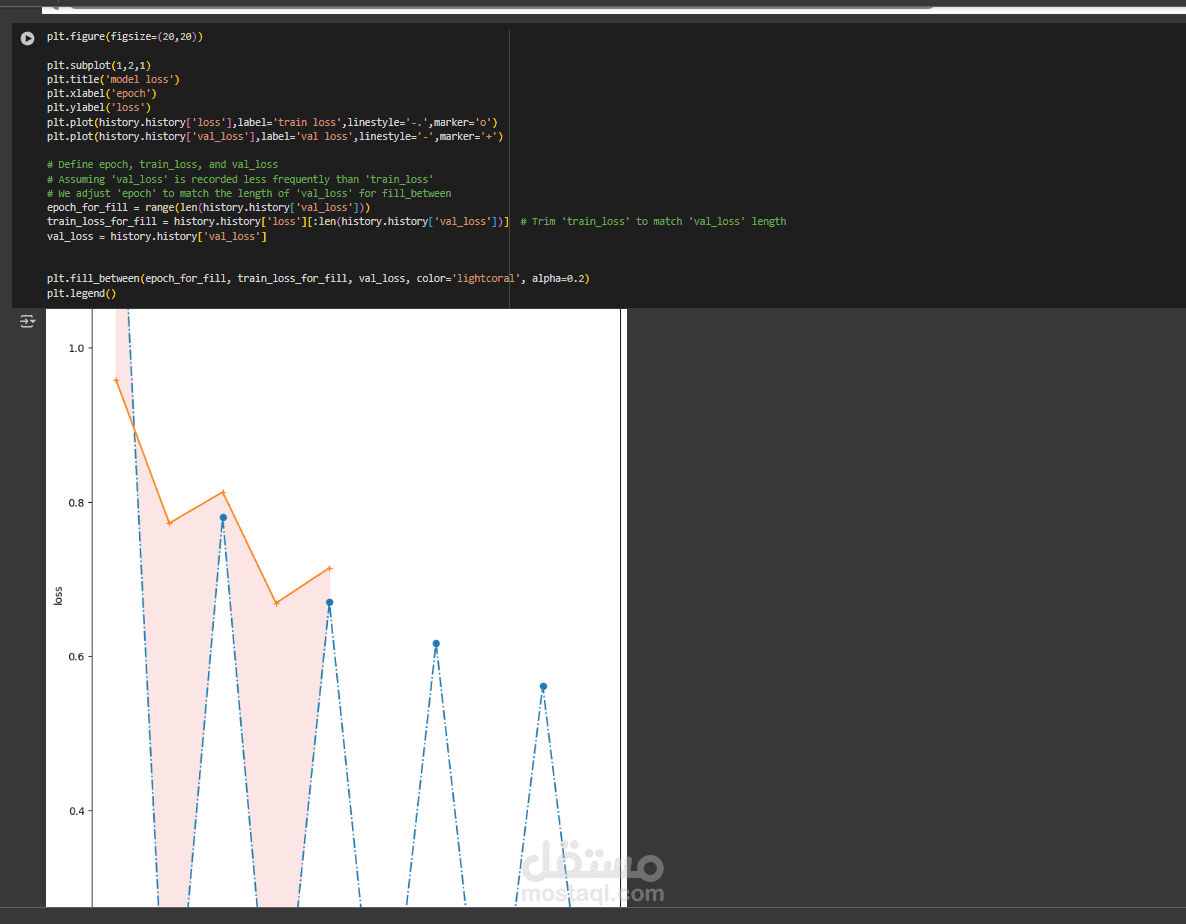
This project focuses on developing a machine learning model to classify animals into multiple categories based on their features. The model analyzes various characteristics such as images, physical attributes, or sound patterns to accurately determine the animal's species.
Project Overview
The model is trained to classify animals into multiple categories (e.g., cats, dogs, birds, reptiles, etc.).
Utilizes supervised learning techniques to recognize distinct patterns in the dataset.
Key Features & Technologies Used
1. Data Collection & Preprocessing
Used an animal dataset containing multiple species with features like images, sound frequencies, or structured data (e.g., weight, height, habitat).
Performed data cleaning, augmentation, normalization, and feature selection to enhance model accuracy.
Used OpenCV for image processing (if working with visual data).
2. Machine Learning & Deep Learning Models
Implemented and compared different classification models, including:
Convolutional Neural Networks (CNNs) for image-based classification.
Random Forest & Decision Trees for structured data classification.
Support Vector Machines (SVM) for feature-based classification.
Artificial Neural Networks (ANNs) for more complex feature extraction.
Applied One-vs-Rest (OvR) and One-vs-One (OvO) techniques for multi-class classification in traditional models.
3. Model Evaluation & Optimization
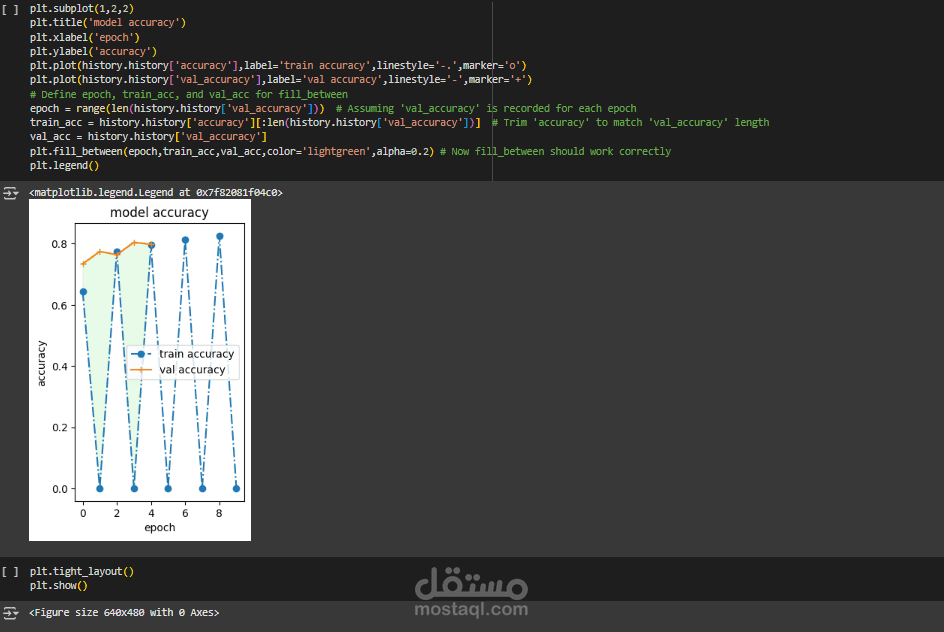
Assessed model performance using Confusion Matrix, Precision, Recall, F1-score, and ROC-AUC Curve.
Applied Hyperparameter Tuning and Cross-Validation to optimize accuracy.
4. Deployment & Real-World Applications
Developed a web-based interface using Flask or Streamlit for real-time animal classification.
Possible applications include:
Wildlife monitoring for species identification.
Pet recognition systems.
Automated sorting of animal species in research databases.
Skills Gained from the Project
Machine Learning & Deep Learning for multi-class classification.
Python & Libraries (TensorFlow, Keras, Scikit-Learn, OpenCV, NumPy, Pandas).
Computer Vision & Image Processing (if working with animal images).
Model Deployment using Flask or Streamlit for real-time predictions.