Advanced Smart Health Monitoring System
تفاصيل العمل
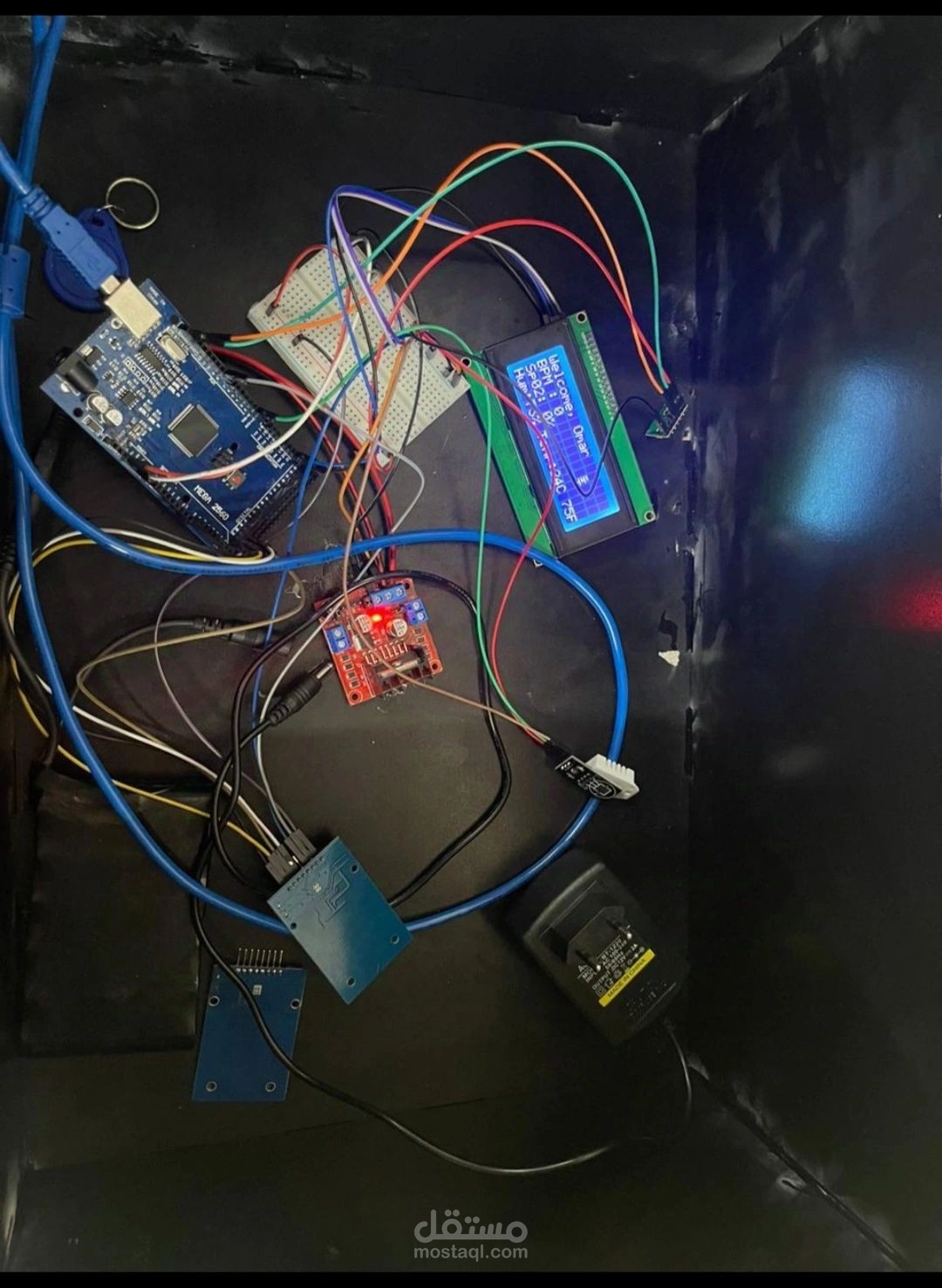
Project Overview
This system collects and processes health-related sensor data, making it accessible via IoT platforms. It helps doctors, caregivers, and users track critical health parameters remotely.
Key Features
IoT-Based Monitoring
Sends real-time health data to an online dashboard (Blynk, Firebase, or another cloud service).
Allows remote access for healthcare professionals.
? Vital Sign Measurements
Heart Rate & SpO2: Using a MAX30100 or MAX30102 sensor.
Body Temperature: Captured using a DS18B20 or LM35 sensor.
Blood Pressure: Integrated with a digital BP monitor module.
ECG Readings: If included, it would use an AD8232 module.
Real-Time Data Visualization
Data is displayed in an IoT dashboard (possibly ThingSpeak, Blynk, or Firebase).
Alerts are triggered if vitals go out of normal range.
️ Alert System
Sends SMS or email alerts in case of abnormalities.
Uses buzzer or LED indicators for local alerts.
Low Power & Portability
Runs on a Li-ion/LiPo battery with an energy-efficient design.
Can be worn or placed near patients for easy use.
Hardware Components (Expected)
ESP32/ESP8266 → Handles IoT connectivity & data processing.
MAX30100/MAX30102 → Pulse oximeter & heart rate sensor.
LM35/DS18B20 → Temperature sensor.
AD8232 (if ECG is included) → Electrocardiogram module.
OLED Display (Optional) → To display real-time readings.
Software & Code (Based on GitHub Repo)
Uses Arduino IDE or PlatformIO for firmware development.
C/C++ for embedded programming with ESP32/ESP8266.
Integrates Blynk, Firebase, or MQTT for IoT communication.
Potential Applications
Remote Patient Monitoring – For elderly & critically ill patients.
Smart Wearable Devices – Could be developed into a smartwatch or smart band.
Hospital IoT Integration – For real-time patient monitoring in hospitals.